

Livingstones toerako vs Schalowtoerako
Tauraco livingstonii versus Tauraco schalowi
Speel een quiz met Livingstones toerako en Schalowtoerako
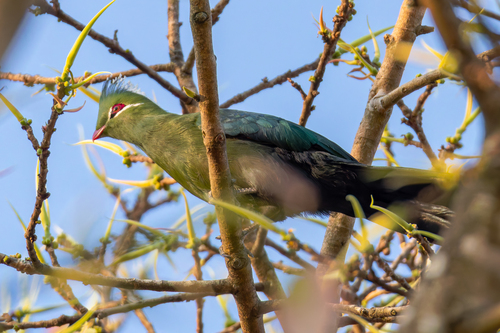 Livingstones toerako
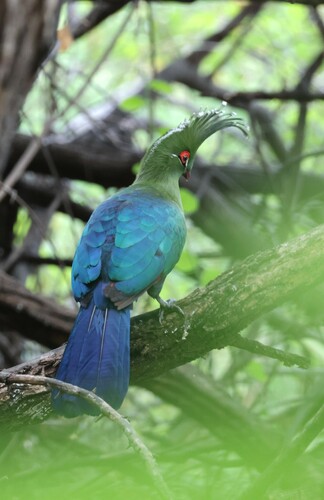 Schalowtoerako
Kort gezegd
Het meest betrouwbare veldkenmerk om Livingstones toerako van Schalowtoerako te scheiden is de kuif: Schalowtoerako heeft een opmerkelijk lange, witgetipte kuif, de langste onder de toerako's, terwijl de kuif van Livingstones toerako korter en minder opvallend is. Wanneer ze zitten, let op de lengte en vorm van de kuif en de algehele kleur—Schalowtoerako toont een koper-jade groene kleur die vervaagt naar iriserend blauw richting de staart, terwijl Livingstones toerako meer uniform groen is. Beide soorten hebben rode vluchtveren, maar Schalowtoerako is lichter en kleiner van lichaam. Onvolwassen of vliegende vogels worden zelden verward als de kuif zichtbaar is, maar wees voorzichtig met slechte uitzichten waar grootte en subtiele kleurverschillen moeilijk te beoordelen zijn.
Herkenningstips
- Kuif lengte en vorm: Schalowtoerako heeft een zeer lange, witgetipte kuif—de langste onder de toerako's. De kuif van Livingstones toerako is korter en minder opvallend. Dit is het enige meest betrouwbare kenmerk bij zittende vogels van alle leeftijden.
- Kuif kleur: De kuif van Schalowtoerako is witgetipt en steekt af tegen het groene hoofd. Livingstones toerako mist de witte punt en heeft een meer gedempte kuif.
- Algehele kleur: Schalowtoerako toont een koper-jade groene lichaamskleur die vervaagt naar een donker iriserend blauw nabij de staart. Livingstones toerako is meer uniform groen, zonder het sterke blauwe staartcontrast.
- Gezichtspatroon: Schalowtoerako heeft rode huid rond het oog, omrand met witte veren, wat een opvallend gezicht geeft. De gezichtshuid en het verenkleed van Livingstones toerako zijn minder contrasterend.
- Snavelkleur: Beide hebben kleine rode snavels, dus dit is geen nuttige scheiding.
- Vluchtveren: Beide soorten hebben rode vluchtveren, wat typisch is voor toerako's en niet diagnostisch tussen deze twee.
- Lichaamsgrootte en -vorm: Livingstones toerako is zwaarder en robuuster (318g vs. 243g). Schalowtoerako is lichter en slanker, maar grootte is moeilijk te beoordelen tenzij je directe vergelijking of ervaring hebt.
- Vleugelvorm: Schalowtoerako heeft korte, ronde vleugels, aangepast voor korte vluchten. Dit kan zijn vlucht meer fladderig laten lijken, maar de verschillen zijn subtiel.
- Staartkleur: De staart van Schalowtoerako is iriserend blauw, vooral zichtbaar in goed licht. De staart van Livingstones toerako is minder blauw en meer groenachtig overall.
- Habitat en verspreiding: Als je in het kustgebied van Mozambique, Zuid-Afrika, of de laaglandbossen van zuidoost-Afrika bent, wordt Livingstones verwacht. Schalowtoerako komt in deze gebieden niet voor.
- Gedrag: Beide soorten zijn boombewonend en fruitetend, en bewegen zich door de boomtoppen met korte vluchten. Gedrag is geen sterke scheiding tenzij kuifdisplay wordt gezien.
- Onvolwassen vogels: Er zijn geen onderscheidende juvenile of onvolwassen vleugelpatronen beschreven voor beide soorten, dus focus op kuif en gezichtspatroon, zelfs bij jonge vogels.
- Geslachtsverschillen: Er is geen seksueel dimorfisme beschreven, dus alle kenmerken gelden voor beide seksen.
- Seizoensvariatie: Er zijn geen seizoensgebonden verenkleedveranderingen opgemerkt voor beide soorten.
- Valkuilen: Slechte uitzichten kunnen de kuif korter doen lijken of gezichtspatronen verdoezelen. In dergelijke gevallen, vertrouw op verspreiding en algehele kleurindruk, maar wees voorzichtig met overlap in groene tinten.
Grootte
Livingstones toerako is duidelijk zwaarder, met een gemiddelde van 318g vergeleken met Schalowtoerako op 243g ([wikidata]). Schalowtoerako wordt ook beschreven als licht voor een toerako, met een lichaamslengte van 15–17 inch. In het veld lijkt Livingstones toerako robuuster en steviger, terwijl Schalowtoerako slanker en lichter is, wat merkbaar kan zijn bij directe vergelijking of met ervaring. Echter, grootte alleen kan misleidend zijn zonder referentie, vooral op afstand of in dichte begroeiing.
Verenkleed
Er zijn geen leeftijdspecifieke vleugel- of vluchtpatroonverschillen beschreven voor beide soorten, dus focus op volwassen en algemeen verenkleed. Schalowtoerako valt op door zijn zeer lange, witgetipte kuif—dit is diagnostisch bij volwassenen en zichtbaar in de meeste zittende of close-up uitzichten. Zijn lichaam is een koper-jade groene kleur, die overgaat in een donker iriserend blauw richting de staart, en hij heeft rode huid rond de ogen, omrand met witte veren. Livingstones toerako heeft daarentegen een kortere kuif en is meer uniform groen overall, zonder de uitgesproken blauwe staart en de dramatische witgetipte kuif. Beide soorten hebben rode vluchtveren, maar dit is geen nuttige scheiding tussen hen. Het gezichtspatroon is opvallender bij Schalowtoerako door de rode huid en de witte veeromranding rond het oog.
Gedrag
Beide soorten zijn fruitetend en boombewonend, en bewegen zich typisch door de boomtoppen met korte, springende vluchten. De kortere, rondere vleugels van Schalowtoerako zijn aangepast voor korte vluchten, wat zijn vlucht fladderiger en minder direct kan laten lijken dan die van Livingstones. Echter, gedrag is over het algemeen vergelijkbaar en geen sterke scheiding tenzij kuifdisplay wordt waargenomen.
Habitat
Livingstones toerako wordt aangetroffen in de subtropische laaglanden van zuidoost-Afrika, inclusief geïsoleerde populaties in Burundi, en breder van het zuiden van Tanzania tot het oosten en zuiden van Malawi, oostelijk Zimbabwe, Mozambique, en de subtropische kust van Zuid-Afrika ([wikipedia]). Het verspreidingsgebied van Schalowtoerako is hier niet gespecificeerd, maar het overlapt niet uitgebreid met dat van Livingstones. Als je in het kustgebied van Mozambique of Zuid-Afrika bent, is de kans veel groter dat je Livingstones tegenkomt; Schalowtoerako is afwezig in deze gebieden. De habitatvoorkeur is verder vergelijkbaar: beide geven de voorkeur aan bosrijke of beboste gebieden.