

Motmot

リビングストンエボシドリ 対 シャローエボシドリ

Tauraco livingstonii 対 Tauraco schalowi

リビングストンエボシドリとシャローエボシドリのクイズ
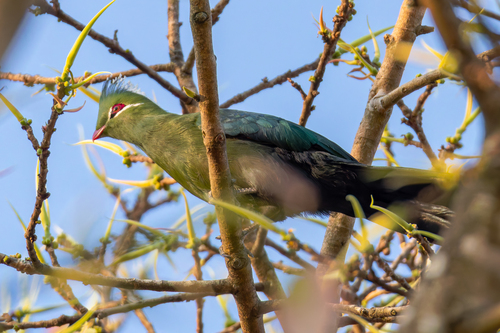
リビングストンエボシドリ (Tauraco livingstonii) リビングストンエボシドリ
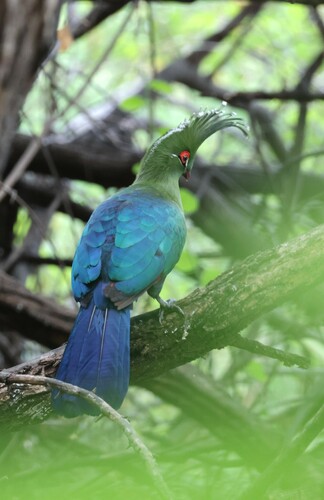
シャローエボシドリ (Tauraco schalowi) シャローエボシドリ

メディア

読み込み中…

要点

リビングストンエボシドリとシャローエボシドリを区別する最も信頼できるフィールドマークは冠羽です:シャローエボシドリは特に長く、白い先端の冠羽を持ち、エボシドリの中で最も長いです。一方、リビングストンエボシドリの冠羽は短く、目立ちません。止まっているときは、冠羽の長さと形、全体の色合いに注目してください—シャローエボシドリは銅色の翡翠緑から尾に向かって虹色の青に変わりますが、リビングストンエボシドリはより均一に緑です。両種とも赤い飛行羽を持っていますが、シャローエボシドリは体が軽く、小型です。未熟な鳥や飛んでいる鳥は、冠羽が見える場合は混同されることはほとんどありませんが、サイズや微妙な色の違いを判断するのが難しい場合は注意が必要です。

識別のコツ

  1. Crest length and shape: シャローエボシドリは非常に長く、白い先端の冠羽を持っています—エボシドリの中で最も長いです。リビングストンエボシドリの冠羽は短く、目立ちません。これは、すべての年齢の止まっている鳥において最も信頼できるマークです。
  2. Crest color: シャローエボシドリの冠羽は白い先端があり、緑の頭部に対して目立ちます。リビングストンエボシドリは白い先端がなく、より控えめな冠羽を持っています。
  3. Overall coloration: シャローエボシドリは、尾に近づくにつれて暗い虹色の青に変わる銅色の翡翠緑の体を示します。リビングストンエボシドリは、強い青い尾のコントラストがなく、より均一に緑です。
  4. Facial pattern: シャローエボシドリは目の周りに赤い皮膚があり、白い羽毛で縁取られており、印象的な顔の外観を持っています。リビングストンエボシドリの顔の皮膚と羽毛は、コントラストが少ないです。
  5. Bill color: 両種とも小さな赤いくちばしを持っているため、これは有用な区別にはなりません。
  6. Flight feathers: 両種とも赤い飛行羽を持っており、これはエボシドリに典型的であり、これら二つの間での診断にはなりません。
  7. Body size and shape: リビングストンエボシドリは重く、がっしりしています(318g対243g)。シャローエボシドリは軽く、スリムですが、サイズは直接比較や経験がないと判断が難しいです。
  8. Wing shape: シャローエボシドリは短く、丸みを帯びた翼を持ち、短い飛行に適応しています。これにより、飛行がよりひらひらとした印象を与えるかもしれませんが、違いは微妙です。
  9. Tail color: シャローエボシドリの尾は虹色の青で、良い光の中で特に目立ちます。リビングストンエボシドリの尾は、全体的に青が少なく、より緑がかっています。
  10. Habitat and range: もしあなたがモザンビークの沿岸、南アフリカ、または南東アフリカの低地森林にいるなら、リビングストンエボシドリが期待されます。シャローエボシドリはこれらの地域には生息していません。
  11. Behavior: 両種とも樹上性で果実食性であり、短い飛行で樹冠を移動します。行動は、冠羽のディスプレイが見られない限り、強い区別にはなりません。
  12. Immature birds: どちらの種にも特徴的な幼鳥や未熟な翼のパターンは記載されていないため、若い鳥でも冠羽と顔のパターンに注目してください。
  13. Sex differences: 性的二形は記載されていないため、すべてのマークは両性に適用されます。
  14. Seasonal variation: どちらの種にも季節的な羽毛の変化は記載されていません。
  15. Pitfalls: 見えにくい場合、冠羽が短く見えたり、顔のパターンが隠れたりすることがあります。そのような場合は、範囲と全体の色の印象に頼り、緑のトーンの重複に注意してください。

大きさ

リビングストンエボシドリは明らかに重く、平均318gで、シャローエボシドリは243gです ([wikidata])。シャローエボシドリはエボシドリとしては軽いとされ、体長は15〜17インチです。フィールドでは、リビングストンエボシドリはがっしりとしており、より頑丈に見えますが、シャローエボシドリはスリムで軽く、直接比較や経験がある場合に目立つかもしれません。しかし、サイズだけでは、特に距離がある場合や密な葉の中では、誤解を招くことがあります。

羽色

どちらの種にも年齢特有の翼や飛行パターンの違いは記載されていないため、成鳥と一般的な羽毛に注目してください。シャローエボシドリは非常に長く、白い先端の冠羽で際立っています—これは成鳥において診断的であり、ほとんどの止まっているまたは近くの視点で見ることができます。体は銅色の翡翠緑で、尾に向かって暗い虹色の青に変わり、目の周りには赤い皮膚があり、白い羽毛で縁取られています。対照的に、リビングストンエボシドリは短い冠羽を持ち、全体的により均一に緑で、強い青い尾と劇的な白い先端の冠羽が欠けています。両種とも赤い飛行羽を持っていますが、これは彼らの間で有用な区別にはなりません。顔のパターンは、目の周りの赤い皮膚と白い羽毛の縁取りにより、シャローエボシドリの方がより印象的です。

行動

両種とも果実食性で樹上性であり、通常は短い跳躍飛行で樹冠を移動します。シャローエボシドリの短く、丸みを帯びた翼は短い飛行に適応しており、これによりその飛行がリビングストンエボシドリよりもひらひらとした印象を与えるかもしれません。しかし、行動は一般的に似ており、冠羽のディスプレイが観察されない限り、強い区別にはなりません。

生息環境

リビングストンエボシドリは南東アフリカの亜熱帯低地に生息し、ブランディに孤立した個体群があり、南タンザニアから東および南マラウイ、東ジンバブエ、モザンビーク、南アフリカの亜熱帯沿岸に広く分布しています ([wikipedia])。シャローエボシドリの分布はここでは指定されていませんが、リビングストンエボシドリとは広く重複していません。もしあなたがモザンビークの沿岸や南アフリカにいるなら、リビングストンエボシドリがはるかに可能性が高いです。シャローエボシドリはこれらの地域には存在しません。生息地の好みはそれ以外は似ており、両者とも森林や木立のある地域を好みます。

より良い説明を送る

比較と同じ項目を使ってください。文章はすぐに公開されます。

The most reliable field mark to separate Livingstone's Turaco from Schalow's Turaco is the crest: Schalow's Turaco has a notably long, white-tipped crest, the longest among turacos, while Livingstone's Turaco's crest is shorter and less prominent. When perched, look for the length and shape of the crest and the overall coloration—Schalow's shows a coppery-jade green fading to iridescent blue toward the tail, while Livingstone's is more uniformly green. Both species have red flight feathers, but Schalow's Turaco is lighter and smaller-bodied. Immature or flying birds are rarely confused if the crest is visible, but beware of poor views where size and subtle color differences are hard to judge.

  1. Crest length and shape: Schalow's Turaco has a very long, white-tipped crest—the longest among turacos. Livingstone's Turaco's crest is shorter and less conspicuous. This is the single most reliable mark in perched birds of all ages.
  2. Crest color: Schalow's crest is white-tipped and stands out against the green head. Livingstone's lacks the white tip and has a more subdued crest.
  3. Overall coloration: Schalow's Turaco shows a coppery-jade green body that fades to a dark iridescent blue near the tail. Livingstone's is more uniformly green, without the strong blue tail contrast.
  4. Facial pattern: Schalow's has red skin around the eye, lined with white feathers, giving a striking facial appearance. Livingstone's facial skin and feathering is less contrasting.
  5. Bill color: Both have small red bills, so this is not a useful separator.
  6. Flight feathers: Both species have red flight feathers, which is typical for turacos and not diagnostic between these two.
  7. Body size and shape: Livingstone's is heavier and bulkier (318g vs. 243g). Schalow's is lighter and slimmer, but size is hard to judge unless you have direct comparison or experience.
  8. Wing shape: Schalow's has short, rounded wings, adapted for short flights. This may make its flight appear more fluttery, but differences are subtle.
  9. Tail color: Schalow's tail is iridescent blue, especially apparent in good light. Livingstone's tail is less blue and more greenish overall.
  10. Habitat and range: If you are in coastal Mozambique, South Africa, or the lowland forests of southeastern Africa, Livingstone's is expected. Schalow's does not occur in these areas.
  11. Behavior: Both species are arboreal and frugivorous, moving through the canopy with short flights. Behavior is not a strong separator unless crest display is seen.
  12. Immature birds: No distinctive juvenile or immature wing patterns are described for either species, so focus on crest and facial pattern even in young birds.
  13. Sex differences: No sexual dimorphism is described, so all marks apply to both sexes.
  14. Seasonal variation: No seasonal plumage changes are noted for either species.
  15. Pitfalls: Poor views can make the crest look shorter or obscure facial patterns. In such cases, rely on range and overall color impression, but beware overlap in green tones.

Livingstone's Turaco is distinctly heavier, averaging 318g compared to Schalow's Turaco at 243g ([wikidata]). Schalow's Turaco is also described as light for a turaco, with a body length of 15–17 inches. In the field, Livingstone's appears bulkier and more robust, while Schalow's is slimmer and lighter, which may be noticeable in direct comparison or with experience. However, size alone can be misleading without a reference, especially at a distance or in dense foliage.

No age-specific wing or flight pattern differences are described for either species, so focus on adult and general plumage. Schalow's Turaco stands out for its very long, white-tipped crest—this is diagnostic in adults and visible in most perched or close-up views. Its body is a coppery-jade green, shifting to a dark iridescent blue toward the tail, and it has red skin around the eyes, lined with white feathers. Livingstone's Turaco, in contrast, has a shorter crest and is more uniformly green overall, lacking the pronounced blue tail and the dramatic white-tipped crest. Both species have red flight feathers, but this is not a useful separator between them. The facial pattern is more striking in Schalow's due to the red skin and white feather lining around the eye.

Both species are frugivorous and arboreal, typically moving through the canopy with short, bounding flights. Schalow's Turaco's shorter, rounder wings are adapted for short flights, which may make its flight appear more fluttery and less direct than Livingstone's. However, behavior is generally similar and not a strong separator unless crest display is observed.

Livingstone's Turaco is found in the subtropical lowlands of southeastern Africa, including isolated populations in Burundi, and more widely from southern Tanzania to eastern and southern Malawi, eastern Zimbabwe, Mozambique, and the subtropical coast of South Africa ([wikipedia]). Schalow's Turaco's range is not specified here, but it does not overlap extensively with Livingstone's. If you are in coastal Mozambique or South Africa, Livingstone's is much more likely; Schalow's is absent from these areas. Habitat preference is otherwise similar: both favor forested or wooded areas.

変更を破棄しますか?

保存していない編集があります。今離れると失われます。

リビングストンエボシドリ · シャローエボシドリ · 苦手な鳥