

Motmot

Grote saffraangors vs Gewone saffraangors

Sicalis auriventris versus Sicalis flaveola

Speel een quiz met Grote saffraangors en Gewone saffraangors
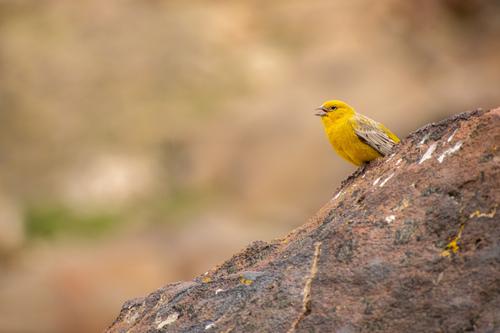
Grote saffraangors (Sicalis auriventris) Grote saffraangors
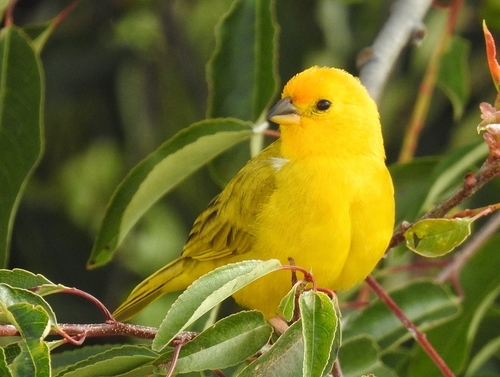
Gewone saffraangors (Sicalis flaveola) Gewone saffraangors

Media

Laden…

Kort gezegd

The most reliable field mark between Greater Yellow-Finch and Saffron Finch is size: Greater Yellow-Finch is nearly three times heavier and noticeably bulkier. If you see a yellow Sicalis in high-altitude grasslands or shrublands of Argentina or Chile, it's almost certainly Greater Yellow-Finch; Saffron Finch prefers lowland open areas and is much more widespread. Both species are bright yellow finches, but their structure, habitat, and overall jizz differ markedly. Immature or female-plumaged birds can be confusing, so pay close attention to body size, bill bulk, and context.

Herkenningstips

  1. Size is the quickest separator: Greater Yellow-Finch is much larger and heavier than Saffron Finch. If the bird looks chunky and robust, favor Greater Yellow-Finch; if small and dainty, favor Saffron Finch. This works for all ages and sexes.
  2. Habitat context is critical: Only expect Greater Yellow-Finch in high-altitude shrubland or grassland in Argentina and Chile. Saffron Finch is a lowland species, common in open areas, gardens, and even cities across much of South America.
  3. Overall color tone: Greater Yellow-Finch is a richer, deeper yellow (especially males), while Saffron Finch is paler, more saffron or lemon-yellow. This is subtle and can overlap, especially in worn or immature birds.
  4. Bill structure: Greater Yellow-Finch has a heavier, more conical bill, matching its larger body. Saffron Finch's bill is finer and more delicate. This can be seen well in profile views.
  5. Jizz and posture: Greater Yellow-Finch often appears more upright and solid, with a bulkier presence. Saffron Finch is more slender and active, often foraging on the ground or in low vegetation.
  6. Flock composition: If you see a group of large, golden-yellow finches in highland grassland, they're likely Greater Yellow-Finch. Mixed flocks in lowland areas are more likely to include Saffron Finch.
  7. Geographic range: Greater Yellow-Finch is not found north of central Argentina and Chile, while Saffron Finch is widespread from Colombia and Venezuela south to northern Argentina, and has been introduced to islands and urban areas.
  8. Urban and agricultural presence: Saffron Finch is common in towns, gardens, and agricultural fields. Greater Yellow-Finch avoids such habitats.
  9. Sex and age pitfalls: Females and immatures of both species are duller and less distinctly yellow, but size and habitat remain reliable clues. Do not rely solely on color intensity in these cases.
  10. No strong flight or wing pattern differences: With current sources, do not attempt to separate these species on the basis of upperwing or flight pattern, especially in juveniles or immatures.
  11. Voice is not a primary separator: No distinctive vocal differences are documented in the available notes; use other marks first.
  12. If in doubt, use a combination: When plumage is ambiguous, combine size, habitat, and bill structure for the most reliable identification.
  13. Beware of overlap in northern Argentina: Both species can occur in this region, so extra care is needed—fall back on size and habitat.
  14. Do not over-rely on color alone: Lighting, molt, and wear can make both species look paler or brighter than usual.
  15. Remember the extremes: Saffron Finch is never as large or robust as Greater Yellow-Finch, and Greater Yellow-Finch is never as small or delicate as Saffron Finch.

Grootte

Greater Yellow-Finch is significantly larger and heavier (55.0g) compared to Saffron Finch (19.2g) [wikidata]. In the field, Greater Yellow-Finch appears bulkier and more robust, with a heavier build. Saffron Finch is noticeably smaller, more delicate, and lighter in hand and appearance. This size difference is often apparent even at a distance, especially when seen side-by-side or with familiar species for scale.

Verenkleed

No detailed age-specific wing or flight pattern differences are documented in the available sources for these two species. Both are primarily yellow, but Greater Yellow-Finch tends to be a deeper, more saturated yellow, especially in adult males, while Saffron Finch is a paler, more saffron or lemon-yellow. In both species, females and immatures are duller, but the overall color tone remains a clue: Greater Yellow-Finch is more golden, Saffron Finch more washed-out. Without detailed notes on juvenile or immature wing patterns, plumage separation relies mainly on overall color intensity and distribution, which can be subtle and variable.

Gedrag

Behavioral differences are not strongly diagnostic with the available information. Both species are social and often seen in small flocks, but Greater Yellow-Finch may appear more sluggish and deliberate due to its larger size, while Saffron Finch is more active and agile, often foraging in open grassy areas or near human habitation. Saffron Finch is also more likely to be seen in urban or suburban settings.

Habitat

Habitat is a strong separator. Greater Yellow-Finch is restricted to high-altitude shrubland, temperate grassland, and degraded forest in Argentina and Chile [wikipedia]. Saffron Finch, by contrast, is widespread in lowland open and semi-open areas across much of South America, especially outside the Amazon Basin, and is common in urban, agricultural, and garden settings. If you are in high Andean grassland or shrubland, Saffron Finch is very unlikely; if you are in lowland towns, fields, or parks, Saffron Finch is much more likely.

Stuur een betere beschrijving

Gebruik dezelfde onderdelen als de vergelijking. Je tekst staat meteen live.

The most reliable field mark between Greater Yellow-Finch and Saffron Finch is size: Greater Yellow-Finch is nearly three times heavier and noticeably bulkier. If you see a yellow Sicalis in high-altitude grasslands or shrublands of Argentina or Chile, it's almost certainly Greater Yellow-Finch; Saffron Finch prefers lowland open areas and is much more widespread. Both species are bright yellow finches, but their structure, habitat, and overall jizz differ markedly. Immature or female-plumaged birds can be confusing, so pay close attention to body size, bill bulk, and context.

  1. Size is the quickest separator: Greater Yellow-Finch is much larger and heavier than Saffron Finch. If the bird looks chunky and robust, favor Greater Yellow-Finch; if small and dainty, favor Saffron Finch. This works for all ages and sexes.
  2. Habitat context is critical: Only expect Greater Yellow-Finch in high-altitude shrubland or grassland in Argentina and Chile. Saffron Finch is a lowland species, common in open areas, gardens, and even cities across much of South America.
  3. Overall color tone: Greater Yellow-Finch is a richer, deeper yellow (especially males), while Saffron Finch is paler, more saffron or lemon-yellow. This is subtle and can overlap, especially in worn or immature birds.
  4. Bill structure: Greater Yellow-Finch has a heavier, more conical bill, matching its larger body. Saffron Finch's bill is finer and more delicate. This can be seen well in profile views.
  5. Jizz and posture: Greater Yellow-Finch often appears more upright and solid, with a bulkier presence. Saffron Finch is more slender and active, often foraging on the ground or in low vegetation.
  6. Flock composition: If you see a group of large, golden-yellow finches in highland grassland, they're likely Greater Yellow-Finch. Mixed flocks in lowland areas are more likely to include Saffron Finch.
  7. Geographic range: Greater Yellow-Finch is not found north of central Argentina and Chile, while Saffron Finch is widespread from Colombia and Venezuela south to northern Argentina, and has been introduced to islands and urban areas.
  8. Urban and agricultural presence: Saffron Finch is common in towns, gardens, and agricultural fields. Greater Yellow-Finch avoids such habitats.
  9. Sex and age pitfalls: Females and immatures of both species are duller and less distinctly yellow, but size and habitat remain reliable clues. Do not rely solely on color intensity in these cases.
  10. No strong flight or wing pattern differences: With current sources, do not attempt to separate these species on the basis of upperwing or flight pattern, especially in juveniles or immatures.
  11. Voice is not a primary separator: No distinctive vocal differences are documented in the available notes; use other marks first.
  12. If in doubt, use a combination: When plumage is ambiguous, combine size, habitat, and bill structure for the most reliable identification.
  13. Beware of overlap in northern Argentina: Both species can occur in this region, so extra care is needed—fall back on size and habitat.
  14. Do not over-rely on color alone: Lighting, molt, and wear can make both species look paler or brighter than usual.
  15. Remember the extremes: Saffron Finch is never as large or robust as Greater Yellow-Finch, and Greater Yellow-Finch is never as small or delicate as Saffron Finch.

Greater Yellow-Finch is significantly larger and heavier (55.0g) compared to Saffron Finch (19.2g) [wikidata]. In the field, Greater Yellow-Finch appears bulkier and more robust, with a heavier build. Saffron Finch is noticeably smaller, more delicate, and lighter in hand and appearance. This size difference is often apparent even at a distance, especially when seen side-by-side or with familiar species for scale.

No detailed age-specific wing or flight pattern differences are documented in the available sources for these two species. Both are primarily yellow, but Greater Yellow-Finch tends to be a deeper, more saturated yellow, especially in adult males, while Saffron Finch is a paler, more saffron or lemon-yellow. In both species, females and immatures are duller, but the overall color tone remains a clue: Greater Yellow-Finch is more golden, Saffron Finch more washed-out. Without detailed notes on juvenile or immature wing patterns, plumage separation relies mainly on overall color intensity and distribution, which can be subtle and variable.

Behavioral differences are not strongly diagnostic with the available information. Both species are social and often seen in small flocks, but Greater Yellow-Finch may appear more sluggish and deliberate due to its larger size, while Saffron Finch is more active and agile, often foraging in open grassy areas or near human habitation. Saffron Finch is also more likely to be seen in urban or suburban settings.

Habitat is a strong separator. Greater Yellow-Finch is restricted to high-altitude shrubland, temperate grassland, and degraded forest in Argentina and Chile [wikipedia]. Saffron Finch, by contrast, is widespread in lowland open and semi-open areas across much of South America, especially outside the Amazon Basin, and is common in urban, agricultural, and garden settings. If you are in high Andean grassland or shrubland, Saffron Finch is very unlikely; if you are in lowland towns, fields, or parks, Saffron Finch is much more likely.

Wijzigingen weggooien?

Je hebt niet-opgeslagen wijzigingen. Als je nu weggaat, gaan die verloren.

Grote saffraangors · Gewone saffraangors · Mijn lastige vogels