

Chirigüe Grande vs Chirigüe Azafranado
Sicalis auriventris frente a Sicalis flaveola
Juega un quiz con Chirigüe Grande y Chirigüe Azafranado
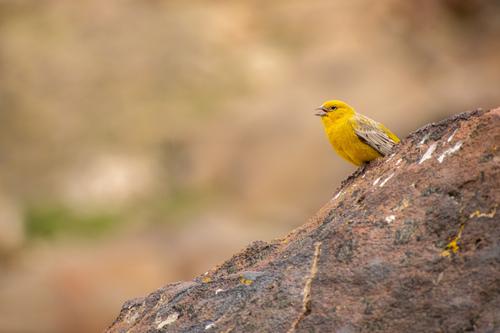 Chirigüe Grande
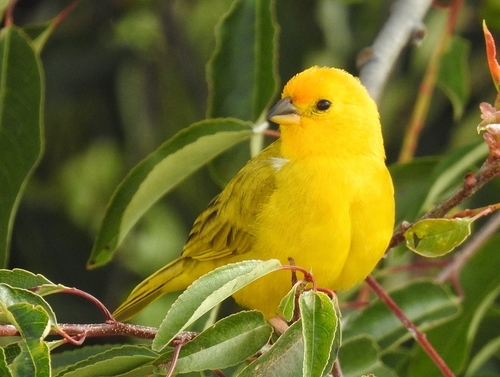 Chirigüe Azafranado
En breve
La marca de campo más confiable entre Chirigüe Grande y Chirigüe Azafranado es el tamaño: Chirigüe Grande es casi tres veces más pesado y notablemente más robusto. Si ves un Sicalis amarillo en pastizales o matorrales de alta montaña en Argentina o Chile, casi con certeza es Chirigüe Grande; Chirigüe Azafranado prefiere áreas abiertas de tierras bajas y es mucho más extendido. Ambas especies son pinzones amarillos brillantes, pero su estructura, hábitat y apariencia general difieren marcadamente. Las aves inmaduras o con plumaje de hembra pueden ser confusas, así que presta mucha atención al tamaño del cuerpo, la robustez del pico y el contexto.
Consejos de identificación
- El tamaño es el separador más rápido: Chirigüe Grande es mucho más grande y pesado que Chirigüe Azafranado. Si el ave parece robusta y sólida, favorece a Chirigüe Grande; si es pequeña y delicada, favorece a Chirigüe Azafranado. Esto funciona para todas las edades y sexos.
- El contexto del hábitat es crítico: Solo espera encontrar Chirigüe Grande en matorrales o pastizales de alta montaña en Argentina y Chile. Chirigüe Azafranado es una especie de tierras bajas, común en áreas abiertas, jardines e incluso ciudades en gran parte de Sudamérica.
- Tono de color general: Chirigüe Grande es un amarillo más rico y profundo (especialmente los machos), mientras que Chirigüe Azafranado es más pálido, más azafranado o amarillo limón. Esto es sutil y puede superponerse, especialmente en aves desgastadas o inmaduras.
- Estructura del pico: Chirigüe Grande tiene un pico más pesado y cónico, que coincide con su cuerpo más grande. El pico de Chirigüe Azafranado es más fino y delicado. Esto se puede ver bien en vistas de perfil.
- Apariencia y postura: Chirigüe Grande a menudo parece más erguido y sólido, con una presencia más robusta. Chirigüe Azafranado es más esbelto y activo, a menudo buscando alimento en el suelo o en vegetación baja.
- Composición de la bandada: Si ves un grupo de grandes pinzones amarillo dorado en pastizales de alta montaña, probablemente sean Chirigüe Grande. Las bandadas mixtas en áreas de tierras bajas son más propensas a incluir Chirigüe Azafranado.
- Rango geográfico: Chirigüe Grande no se encuentra al norte del centro de Argentina y Chile, mientras que Chirigüe Azafranado es ampliamente distribuido desde Colombia y Venezuela hacia el sur hasta el norte de Argentina, y ha sido introducido en islas y áreas urbanas.
- Presencia urbana y agrícola: Chirigüe Azafranado es común en pueblos, jardines y campos agrícolas. Chirigüe Grande evita tales hábitats.
- Trampas de sexo y edad: Las hembras y los inmaduros de ambas especies son más apagados y menos distintivamente amarillos, pero el tamaño y el hábitat siguen siendo pistas confiables. No te bases únicamente en la intensidad del color en estos casos.
- No hay diferencias fuertes en el patrón de vuelo o alas: Con las fuentes actuales, no intentes separar estas especies basándote en el patrón de las alas o de vuelo, especialmente en juveniles o inmaduros.
- La voz no es un separador primario: No se han documentado diferencias vocales distintivas en las notas disponibles; usa otras marcas primero.
- Si tienes dudas, usa una combinación: Cuando el plumaje es ambiguo, combina tamaño, hábitat y estructura del pico para la identificación más confiable.
- Cuidado con la superposición en el norte de Argentina: Ambas especies pueden ocurrir en esta región, así que se necesita un cuidado extra; recurre al tamaño y hábitat.
- No te bases demasiado en el color solo: La iluminación, la muda y el desgaste pueden hacer que ambas especies se vean más pálidas o brillantes de lo habitual.
- Recuerda los extremos: Chirigüe Azafranado nunca es tan grande o robusto como Chirigüe Grande, y Chirigüe Grande nunca es tan pequeño o delicado como Chirigüe Azafranado.
Tamaño
Chirigüe Grande es significativamente más grande y pesado (55.0g) en comparación con Chirigüe Azafranado (19.2g) [wikidata]. En el campo, Chirigüe Grande parece más robusto y sólido, con una construcción más pesada. Chirigüe Azafranado es notablemente más pequeño, más delicado y más ligero en mano y apariencia. Esta diferencia de tamaño a menudo es evidente incluso a distancia, especialmente cuando se ve uno al lado del otro o con especies familiares para escala.
Plumaje
No se han documentado diferencias específicas de edad en el patrón de alas o vuelo en las fuentes disponibles para estas dos especies. Ambas son principalmente amarillas, pero Chirigüe Grande tiende a ser un amarillo más profundo y saturado, especialmente en machos adultos, mientras que Chirigüe Azafranado es un amarillo más pálido, más azafranado o amarillo limón. En ambas especies, las hembras y los inmaduros son más apagados, pero el tono de color general sigue siendo una pista: Chirigüe Grande es más dorado, Chirigüe Azafranado más deslavado. Sin notas detalladas sobre patrones de alas juveniles o inmaduros, la separación del plumaje se basa principalmente en la intensidad y distribución del color general, que puede ser sutil y variable.
Comportamiento
Las diferencias de comportamiento no son fuertemente diagnósticas con la información disponible. Ambas especies son sociales y a menudo se ven en pequeñas bandadas, pero Chirigüe Grande puede parecer más lento y deliberado debido a su mayor tamaño, mientras que Chirigüe Azafranado es más activo y ágil, a menudo buscando alimento en áreas abiertas de pasto o cerca de la vivienda humana. Chirigüe Azafranado también es más probable que se vea en entornos urbanos o suburbanos.
Hábitat
El hábitat es un fuerte separador. Chirigüe Grande está restringido a matorrales de alta montaña, pastizales templados y bosques degradados en Argentina y Chile [wikipedia]. Chirigüe Azafranado, en contraste, es ampliamente distribuido en áreas abiertas y semi-abiertas de tierras bajas en gran parte de Sudamérica, especialmente fuera de la cuenca del Amazonas, y es común en entornos urbanos, agrícolas y de jardines. Si estás en pastizales o matorrales andinos altos, es muy poco probable que veas Chirigüe Azafranado; si estás en pueblos, campos o parques de tierras bajas, es mucho más probable que veas Chirigüe Azafranado.