

Motmot

Grote kraagparadijsvogel vs Langsnavelbrilvogel

Lophorina latipennis versus Rukia longirostra

Speel een quiz met Grote kraagparadijsvogel en Langsnavelbrilvogel

Grote kraagparadijsvogel (Lophorina latipennis) Grote kraagparadijsvogel
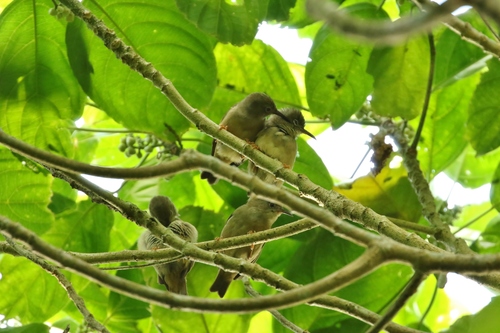
Langsnavelbrilvogel (Rukia longirostra) Langsnavelbrilvogel

Media

Laden…

Kort gezegd

The most reliable way to separate Greater Lophorina from Long-billed White-eye is by overall structure and plumage: Greater Lophorina males are strikingly black with iridescent blue-green breast and elaborate feather capes, while Long-billed White-eyes are plain, small, pale brownish-olive birds with a distinctively long, decurved bill and orange legs. Females and young Greater Lophorina are reddish-brown with barred buff underparts, but still bulkier and darker than any white-eye. In flight or perched, the white-eye's long, slender bill and compact body contrast sharply with the lophorina's more robust build and, in males, flamboyant display features. Habitat and range are also diagnostic: Greater Lophorina is a New Guinea montane specialist, while Long-billed White-eye is endemic to Pohnpei, Micronesia.

Herkenningstips

  1. Size: Greater Lophorina is about twice as long and much bulkier than Long-billed White-eye; use this when both are seen near familiar species or objects.
  2. Bill shape: Long-billed White-eye has a long, slender, decurved bill—very different from the stouter, straight bill of lophorina. This is obvious in profile views.
  3. Adult male plumage: Male Greater Lophorina is glossy black with iridescent blue-green breast and crown, and a dramatic feather cape—no white-eye is remotely similar.
  4. Female/immature plumage: Female and young lophorina are reddish-brown above with barred buff below, darker and richer than the uniform pale brownish-olive of the white-eye.
  5. Leg color: Long-billed White-eye has orange legs, a subtle but useful mark at close range; lophorina legs are not described as orange.
  6. Eye-ring: While not detailed in the notes, white-eyes typically show a pale eye-ring, which is absent in lophorina.
  7. Behavior: If you see a bird performing an elaborate display with a cape and shield, it's a male lophorina. White-eyes never display in this way.
  8. Feeding behavior: Long-billed White-eye is often seen feeding on nectar in the canopy, sometimes with other small birds; lophorina forages differently and is more often seen displaying or moving alone.
  9. Habitat and range: If you are in New Guinea montane forest, suspect lophorina; if on Pohnpei, it's the white-eye.
  10. Vocalizations: Listen for a high, descending 'tseer' for white-eye; loud, complex display calls for lophorina.
  11. Jizz in flight: White-eye is compact, quick, and agile; lophorina is larger, heavier, and less likely to make rapid, darting movements.
  12. Sexual dimorphism: Only lophorina shows strong sexual dimorphism; white-eye sexes are similar.
  13. Display context: Any bird seen preparing a display area or performing a dance with a feather cape is a male lophorina.
  14. Plumage pitfalls: Immature lophorina could be confused with other brown birds, but not with the much smaller, paler, and more delicate white-eye.
  15. Seasonal context: Both species are resident; plumage does not change seasonally in a way that would cause confusion.

Grootte

Greater Lophorina is significantly larger and bulkier than Long-billed White-eye. The lophorina reaches about 26 cm (10 inches) in length, while the white-eye is much smaller at 13 cm (5.1 inches). The white-eye weighs about 20 g, making it a lightweight, compact bird compared to the more robust lophorina. In the field, the size difference is obvious when seen side by side or with familiar reference species.

Verenkleed

Adult male Greater Lophorina is unmistakable: glossy black overall with an iridescent green crown, blue-green breast shield, and a long, velvety black cape that can be erected during display. Females and young lophorina are reddish-brown above with brownish-barred buff below, lacking the iridescent features but still much darker and richer in color than any white-eye. Long-billed White-eye, in contrast, is uniformly pale brownish-olive with no iridescence or strong patterning, and always shows orange legs and a white eye-ring (not explicitly mentioned in the notes but typical of white-eyes). No age-specific wing or flight pattern marks are described for either species, so separation relies on overall color, structure, and (for males) display features. Immature lophorina may be confused with other brown birds, but not with the plain, pale, and much smaller white-eye.

Gedrag

Greater Lophorina males are famous for their elaborate courtship displays: clearing a 'dance floor', calling loudly, and transforming their appearance by spreading their feather cape and breast shield into a dramatic ellipse while hopping and snapping tail feathers. Females and young are more secretive. Long-billed White-eye is a nectar-feeder, often seen foraging in the canopy or mid-story, moving quickly and quietly, rarely displaying any elaborate behavior. The lophorina's display is unique and diagnostic if observed.

Habitat

Greater Lophorina is restricted to the central and northeast montane forests of New Guinea, favoring higher elevations and dense forest. Long-billed White-eye is endemic to the island of Pohnpei in Micronesia, found in broadleaf forest and rarely in plantations, often associated with upland areas due to its nectar-feeding habits. The two species do not overlap in range or habitat, so location is a strong clue.

Geluid

Greater Lophorina males attract females with loud calls during display, but the specific call is not described in the notes. Long-billed White-eye gives a high-pitched, descending 'tseer'. If you hear a simple, descending call in Pohnpei forest, it's likely the white-eye; elaborate display calls in New Guinea montane forest point to lophorina.

Stuur een betere beschrijving

Gebruik dezelfde onderdelen als de vergelijking. Je tekst staat meteen live.

The most reliable way to separate Greater Lophorina from Long-billed White-eye is by overall structure and plumage: Greater Lophorina males are strikingly black with iridescent blue-green breast and elaborate feather capes, while Long-billed White-eyes are plain, small, pale brownish-olive birds with a distinctively long, decurved bill and orange legs. Females and young Greater Lophorina are reddish-brown with barred buff underparts, but still bulkier and darker than any white-eye. In flight or perched, the white-eye's long, slender bill and compact body contrast sharply with the lophorina's more robust build and, in males, flamboyant display features. Habitat and range are also diagnostic: Greater Lophorina is a New Guinea montane specialist, while Long-billed White-eye is endemic to Pohnpei, Micronesia.

  1. Size: Greater Lophorina is about twice as long and much bulkier than Long-billed White-eye; use this when both are seen near familiar species or objects.
  2. Bill shape: Long-billed White-eye has a long, slender, decurved bill—very different from the stouter, straight bill of lophorina. This is obvious in profile views.
  3. Adult male plumage: Male Greater Lophorina is glossy black with iridescent blue-green breast and crown, and a dramatic feather cape—no white-eye is remotely similar.
  4. Female/immature plumage: Female and young lophorina are reddish-brown above with barred buff below, darker and richer than the uniform pale brownish-olive of the white-eye.
  5. Leg color: Long-billed White-eye has orange legs, a subtle but useful mark at close range; lophorina legs are not described as orange.
  6. Eye-ring: While not detailed in the notes, white-eyes typically show a pale eye-ring, which is absent in lophorina.
  7. Behavior: If you see a bird performing an elaborate display with a cape and shield, it's a male lophorina. White-eyes never display in this way.
  8. Feeding behavior: Long-billed White-eye is often seen feeding on nectar in the canopy, sometimes with other small birds; lophorina forages differently and is more often seen displaying or moving alone.
  9. Habitat and range: If you are in New Guinea montane forest, suspect lophorina; if on Pohnpei, it's the white-eye.
  10. Vocalizations: Listen for a high, descending 'tseer' for white-eye; loud, complex display calls for lophorina.
  11. Jizz in flight: White-eye is compact, quick, and agile; lophorina is larger, heavier, and less likely to make rapid, darting movements.
  12. Sexual dimorphism: Only lophorina shows strong sexual dimorphism; white-eye sexes are similar.
  13. Display context: Any bird seen preparing a display area or performing a dance with a feather cape is a male lophorina.
  14. Plumage pitfalls: Immature lophorina could be confused with other brown birds, but not with the much smaller, paler, and more delicate white-eye.
  15. Seasonal context: Both species are resident; plumage does not change seasonally in a way that would cause confusion.

Greater Lophorina is significantly larger and bulkier than Long-billed White-eye. The lophorina reaches about 26 cm (10 inches) in length, while the white-eye is much smaller at 13 cm (5.1 inches). The white-eye weighs about 20 g, making it a lightweight, compact bird compared to the more robust lophorina. In the field, the size difference is obvious when seen side by side or with familiar reference species.

Adult male Greater Lophorina is unmistakable: glossy black overall with an iridescent green crown, blue-green breast shield, and a long, velvety black cape that can be erected during display. Females and young lophorina are reddish-brown above with brownish-barred buff below, lacking the iridescent features but still much darker and richer in color than any white-eye. Long-billed White-eye, in contrast, is uniformly pale brownish-olive with no iridescence or strong patterning, and always shows orange legs and a white eye-ring (not explicitly mentioned in the notes but typical of white-eyes). No age-specific wing or flight pattern marks are described for either species, so separation relies on overall color, structure, and (for males) display features. Immature lophorina may be confused with other brown birds, but not with the plain, pale, and much smaller white-eye.

Greater Lophorina males are famous for their elaborate courtship displays: clearing a 'dance floor', calling loudly, and transforming their appearance by spreading their feather cape and breast shield into a dramatic ellipse while hopping and snapping tail feathers. Females and young are more secretive. Long-billed White-eye is a nectar-feeder, often seen foraging in the canopy or mid-story, moving quickly and quietly, rarely displaying any elaborate behavior. The lophorina's display is unique and diagnostic if observed.

Greater Lophorina is restricted to the central and northeast montane forests of New Guinea, favoring higher elevations and dense forest. Long-billed White-eye is endemic to the island of Pohnpei in Micronesia, found in broadleaf forest and rarely in plantations, often associated with upland areas due to its nectar-feeding habits. The two species do not overlap in range or habitat, so location is a strong clue.

Greater Lophorina males attract females with loud calls during display, but the specific call is not described in the notes. Long-billed White-eye gives a high-pitched, descending 'tseer'. If you hear a simple, descending call in Pohnpei forest, it's likely the white-eye; elaborate display calls in New Guinea montane forest point to lophorina.

Wijzigingen weggooien?

Je hebt niet-opgeslagen wijzigingen. Als je nu weggaat, gaan die verloren.

Grote kraagparadijsvogel · Langsnavelbrilvogel · Mijn lastige vogels