

Bruine lijster vs Naumanns lijster
Turdus eunomus versus Turdus naumanni
Speel een quiz met Bruine lijster en Naumanns lijster
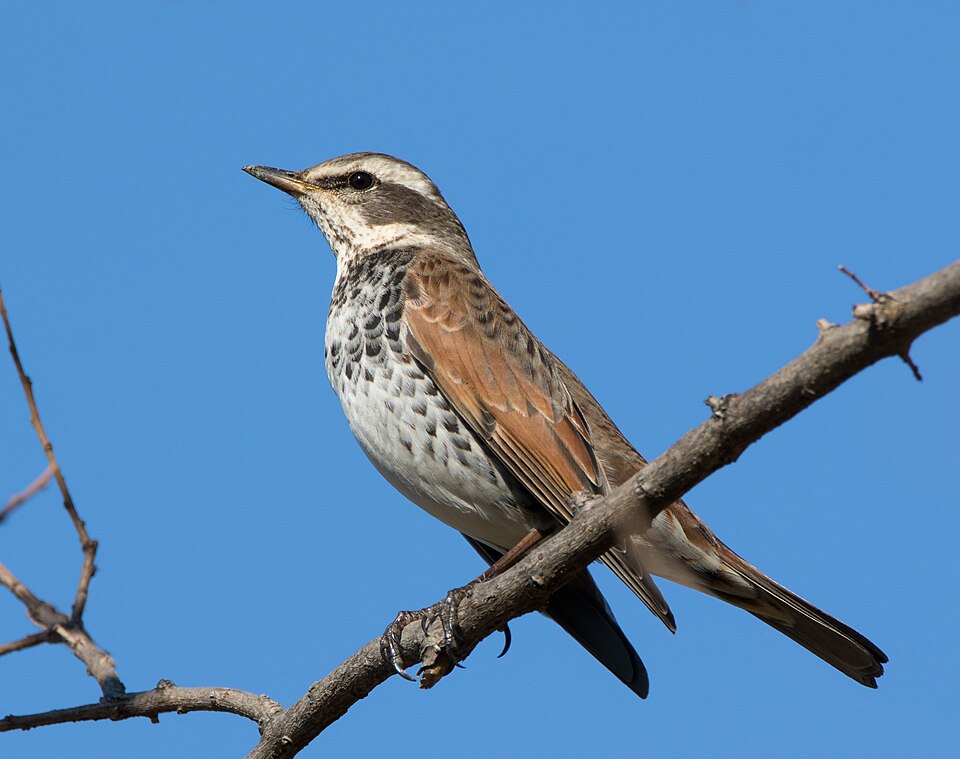 Bruine lijster
 Naumanns lijster
Kort gezegd
Het meest betrouwbare veldkenmerk tussen Bruine lijster en Naumanns lijster is de kleur van de rug, staart en de markeringen op het gezicht en de borst: Bruine lijster heeft een donkerbruine rug en staart met zwartachtige gezicht, borst en flankvlekken, terwijl Naumanns lijster een lichtere bruine rug en kop heeft met een roodachtig gezicht, borst, flankvlekken en staart. Beide soorten hebben een lichte supercilium en een witte buik/onderstaart, maar de toon en de mate van donkere versus roodachtige kleur zijn de sleutel. Onvolwassen vogels van beide soorten zijn minder duidelijk gemarkeerd, maar het algemene kleurthema (donker/zwartachtig versus roestkleurig/roodachtig) scheidt ze nog steeds. Structuur en grootte zijn zeer vergelijkbaar, dus focus op de contrasten in het verenkleed, vooral in de bovenste delen en het gezicht.
Herkenningstips
- Kleur van rug en staart: Bruine lijster toont altijd een donkerbruine rug en staart; Naumanns lijster heeft een lichtere bruine rug en een duidelijk roodachtige staart. Dit is het meest consistente veldkenmerk in alle leeftijden.
- Gezicht en borstmarkeringen: Bruine lijster heeft zwartachtige gezicht, borst en flankvlekken; Naumanns lijster heeft roodachtige of roestkleurige tonen in deze gebieden. Let op het algemene kleurthema: donker/zwartachtig versus roestkleurig/roodachtig.
- Onvolwassen vogels: Beide soorten hebben een zwakker patroon wanneer ze onvolwassen zijn, maar het kleurthema blijft bestaan: Bruine is donkerder en meer zwartachtig, Naumanns is lichter en meer roestkleurig. Zelfs bij eerste-winter vogels, controleer op roodachtig versus zwartachtig gezicht en staart.
- Witte buik en onderstaart: Beide soorten hebben deze eigenschap; het is geen scheiding.
- Supercilium: Beide tonen een lichte supercilium; gebruik dit niet voor scheiding.
- Onderwingkleur: Beide hebben roodachtig bruine ondervleugels, dus dit is niet diagnostisch.
- Geslachtsverschillen: Mannen en vrouwen zijn vergelijkbaar in beide soorten; vertrouw niet op geslacht voor identificatie.
- Vluchtzicht: Er zijn geen unieke bovenvleugel- of vluchtpatroonverschillen beschreven. Focus op de kleur van de rug, staart en gezicht, zelfs in de vlucht.
- Structuur en grootte: Beide zijn middelgrote, stevige lijsters met vergelijkbare verhoudingen. Structuur is niet nuttig voor scheiding.
- Habitat: Lichte neiging voor Bruine lijster in meer bergachtige/tundra-randgebieden en Naumanns in open bos, maar beide overlappen breed, vooral in de winter. Vertrouw niet alleen op habitat.
- Zang: Bruine lijster heeft een eenvoudige, gefluit, koperwiek-achtige zang; Naumanns lijster kan verschillen, maar veldscheiding op basis van zang is niet praktisch tenzij je beide soorten goed kent.
- Vlucht samenstelling: Beide kunnen gemengde groepen vormen tijdens migratie of winter, dus neem niet aan dat het een enkele soort is op basis van het samenkomen.
- Seizoen: Beide soorten migreren en overwinteren in overlappende gebieden; seizoen scheidt ze niet betrouwbaar.
- Valstrik: Onvolwassen vogels zijn minder onderscheidend, maar zelfs dan is de aanwezigheid of afwezigheid van roodachtige tonen op het gezicht en de staart de beste aanwijzing.
- Snelle controle: Als de vogel er over het algemeen donker en zwartachtig uitziet met een donkere staart en gezicht, is het waarschijnlijk een Bruine lijster; als het er lichter bruin uitziet met duidelijke roodachtige tinten op het gezicht, de borst en de staart, is het een Naumanns lijster.
Grootte
Zowel Bruine lijster als Naumanns lijster zijn middelgrote, stevige lijsters, die doen denken aan een kleine kramsvogel. Er zijn geen betrouwbare grootte- of structurele verschillen opgemerkt tussen de twee: snavel, staart en lichaamsverhoudingen zijn in wezen hetzelfde. Gebruik het verenkleed in plaats van de grootte voor identificatie.
Verenkleed
- Onvolwassen/jong vogels: Beide soorten hebben zwakker en minder duidelijk patroon dan volwassenen, maar de onderliggende kleurverschillen blijven bestaan: Onvolwassen Bruine lijsters zijn over het algemeen donkerder bruin met zwartachtige markeringen, terwijl onvolwassen Naumanns lijsters lichter bruin zijn met meer roestkleurige of roodachtige tonen, vooral op het gezicht, de borst en de staart.
- Volwassenen (alle seizoenen): Bruine lijster heeft een donkerbruine rug en staart, met zwartachtige gezicht, borst en flankvlekken. Naumanns lijster heeft een lichtere bruine rug en kop, met roodachtig gezicht, borst, flankvlekken en staart. Beide hebben een witte buik en onderstaart, en een lichte supercilium. De ondervleugel is roodachtig bruin bij beide, dus dit is geen scheidend kenmerk.
- Geslachten: Vrouwen zijn vergelijkbaar met mannen in beide soorten, maar met iets minder intense patronen. Dit beïnvloedt de belangrijkste kleurcontrasten niet.
- Vluchtzicht: Er zijn geen unieke bovenvleugel- of vluchtpatroonverschillen beschreven; focus op de kleur van de rug, staart en gezicht, zelfs in de vlucht.
Gedrag
Beide soorten gedragen zich vergelijkbaar: ze zijn middelgrote lijsters, vaak gezien terwijl ze op de grond foerageren of in bomen zitten. Beide kunnen kleine groepen vormen, vooral tijdens migratie of in de winter. Er zijn geen beschreven gedragsverschillen die helpen bij identificatie.
Habitat
De habitatoverlap is uitgebreid, maar er is een lichte neiging voor Bruine lijster om toleranter te zijn voor bergachtige en tundra-randhabitats, terwijl Naumanns lijster de voorkeur geeft aan open bos. Beide overwinteren echter in vergelijkbare gebieden (Korea, China, Japan en buurlanden) en kunnen samen worden aangetroffen, dus habitat is in de meeste veldsituaties geen betrouwbare scheiding.
Geluid
Beide soorten hebben zang die in grote lijnen vergelijkbaar is, maar de zang van de Bruine lijster wordt beschreven als een eenvoudige gefluit of fluitachtige zang, die doet denken aan een koperwiek. Er zijn suggesties dat de zang van Naumanns lijster anders is, maar details worden niet gegeven. Zang is geen betrouwbaar veldkenmerk voor scheiding, tenzij je beide goed kent.