
Watersnip vs Amerikaanse watersnip
Gallinago gallinago versus Gallinago delicata
Speel een quiz met Watersnip en Amerikaanse watersnip
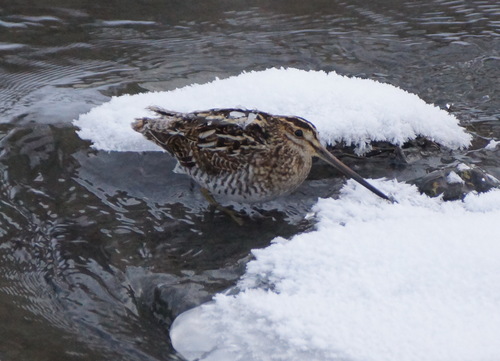 Watersnip
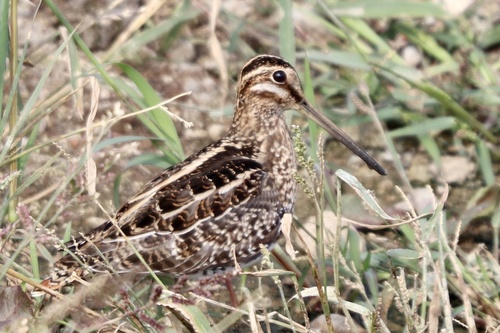 Amerikaanse watersnip
Kort gezegd
Het meest betrouwbare veldkenmerk tussen Watersnip en Amerikaanse watersnip is het aantal paren staartveren: Watersnip heeft zeven, terwijl Amerikaanse watersnip er acht heeft. In het veld is dit zelden zichtbaar, maar de breedte van de witte achterrand van de vleugel in de vlucht is een praktische aanwijzing—Watersnip toont een bredere witte achterrand, terwijl die van Amerikaanse watersnip duidelijk smaller is. Beide soorten zijn extreem vergelijkbaar in grootte, structuur en algemene verenkleed, met subtiele verschillen in de kleur en het patroon van de bovenzijde. Scheiding is uitdagend, vooral buiten hun kerngebieden, en de meeste veldkenmerken worden het beste beoordeeld op vogels in de vlucht of met uitstekende uitzichten.
Herkenningstips
- Witte achterrand van de vleugel (alle leeftijden, in vlucht): Let op de breedte van de witte achterrand op de secundairveren. Watersnip toont een bredere witte band, terwijl die van Amerikaanse watersnip smaller en meer beperkt is tot de uiteinden. Dit is het beste te zien in goed licht terwijl de vogel wegvliegt of draait.
- Aantal staartveren (alle leeftijden): Als je een duidelijke foto hebt of de vogel zijn staart opent, tel de paren staartveren—zeven bij Watersnip, acht bij Amerikaanse watersnip. Dit is zelden praktisch in het veld.
- Kleur van de bovenzijde (volwassenen, zittend): Watersnip kan iets rijker of warmer van kleur lijken boven, vooral in de faeroeensis ondersoort, maar dit is subtiel en overlapt met Amerikaanse watersnip.
- Snavellengte en -vorm: Beide soorten hebben zeer lange, rechte, donkere snavels; gebruik dit niet voor scheiding.
- Hoofdpatroon: Beide hebben een donkere oogstreep met lichte lijnen erboven en eronder; niet nuttig voor identificatie.
- Kleur van de poten: Beide hebben korte groenachtig-grijze poten; niet een scheidingskenmerk.
- Onderzijde: Beide zijn licht van onder; geen consistente verschillen.
- Gedrag (opvliegen, voeden): Beide zijn schuw, vliegen op bij dichtbij komen, en zigzaggen in de vlucht; gedrag scheidt hen niet.
- Paringsgedrag: Beide voeren luchtige 'winnowing'-displays uit met vergelijkbare geluiden; het vertoonde gedrag is niet diagnostisch.
- Vocalisaties: Beide geven een scherpe schreeuw wanneer ze opvliegen en een vergelijkbaar 'trommelend' geluid tijdens het vertoon; niet betrouwbaar verschillend.
- Habitat: Beide gebruiken moerassen, venen en natte weilanden; context is alleen nuttig als je je in een regio bevindt waar één soort de standaard is.
- Geografische context: In Eurazië wordt Watersnip verwacht; in Noord-Amerika is Amerikaanse watersnip de standaard. Gebruik dit als startpunt, maar bevestig met verenkleed indien mogelijk, vooral in overlappingszones of voor dwaalgasten.
- Leeftijd/seizoen: Er zijn geen leeftijdspecifieke verenkleedverschillen die betrouwbaar diagnostisch zijn tussen deze twee; de achterrand van de vleugel is consistent over leeftijden.
- Valkuilen: Vertrouw niet op algemene kleur, snavellengte of gedrag. Focus op de achterrand van de vleugel in de vlucht en, indien mogelijk, het aantal staartveren.
- Bij twijfel: Als de witte achterrand niet duidelijk zichtbaar is en het aantal staartveren niet beschikbaar is, kan identificatie in het veld mogelijk niet mogelijk zijn. Documenteer met foto's voor deskundige beoordeling.
Grootte
Beide soorten zijn compacte, gedrongen steltlopers met vergelijkbare verhoudingen. Watersnip weegt gemiddeld 119,5 g [wikidata], terwijl Amerikaanse watersnip binnen een bijna identiek bereik valt (79–147 g). Lengte en spanwijdte overlappen: Watersnip is 25–27 cm lang met een spanwijdte van 44–47 cm; Amerikaanse watersnip is 23–28 cm lang met een spanwijdte van 39–45 cm [wikipedia]. In het veld is grootte geen betrouwbare scheiding.
Verenkleed
- Jong/immatuur en volwassen vluchtzicht: Het meest diagnostische kenmerk is de witte achterrand van de vleugel. Watersnip (alle leeftijden) toont een bredere witte achterrand, vooral op de secundairveren, terwijl die van Amerikaanse watersnip smaller en meer beperkt is tot de uiteinden van de secundairveren. Dit verschil is subtiel maar zichtbaar in goed licht en bij dichtbij vluchtzicht.
- Staartveren: Als goed gezien (bijv. in foto's of van dichtbij), heeft Watersnip zeven paren staartveren, Amerikaanse watersnip heeft er acht. Dit is zelden zichtbaar in het veld.
- Bovenzijde: Watersnip heeft de neiging om rijker van kleur te zijn boven, vooral in de faeroeensis ondersoort, maar dit is variabel en onbetrouwbaar voor de meeste waarnemers. Beide soorten hebben vergelijkbare stro-geelachtige strepen op een bruine achtergrond.
- Hoofdpatroon: Beide soorten hebben een donkere oogstreep met een lichte supercilium en suboculaire lijnen; dit is geen nuttig scheidingskenmerk.
- Onderzijde: Beide zijn licht van onder, zonder consistente verschillen.
- Kleur van de poten: Beide hebben korte groenachtig-grijze poten.
- Snavel: Beide hebben een zeer lange, rechte, donkere snavel; snavellengte en -vorm zijn niet diagnostisch.
Gedrag
Beide soorten zijn schuw, goed gecamoufleerd, en vliegen alleen op wanneer ze van dichtbij benaderd worden, zigzaggen weg in de vlucht. Beide doorzoeken zachte modder naar voedsel en voeren luchtige 'winnowing'-displays uit tijdens de paring, waarbij ze een kenmerkend geluid met hun staartveren produceren. Hun algemene gedrag en 'jizz' zijn vrijwel identiek in het veld.
Habitat
De habitatvoorkeuren zijn extreem vergelijkbaar: beide broeden en foerageren in moerassen, venen, natte weilanden en toendra. In de Oude Wereld is Watersnip de standaard; in Noord-Amerika overheerst Amerikaanse watersnip. Overlap komt voor in het westen van Alaska (Aleoeten) en als dwaalgasten elders, maar habitat alleen is geen scheidingskenmerk.
Geluid
Beide soorten geven een scherpe schreeuw wanneer ze opvliegen en voeren een 'winnowing' of 'trommelend' vertoon uit in de vlucht door hun staartveren te laten trillen. Het geluid is vergelijkbaar bij beide, beschreven als een blaat- of ademgeluid, en is niet betrouwbaar verschillend in het veld.