
Breedbekstrandloper vs Siberische strandloper
Calidris falcinellus versus Calidris acuminata
Speel een quiz met Breedbekstrandloper en Siberische strandloper
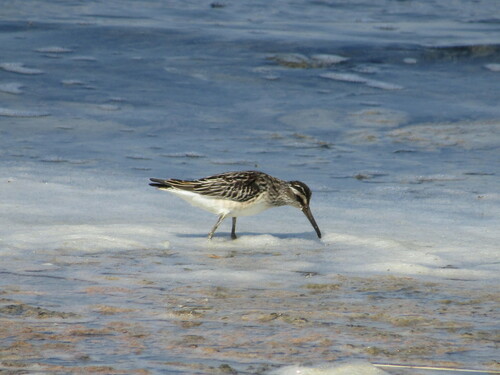 Breedbekstrandloper
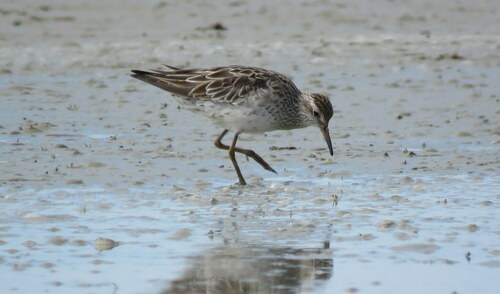 Siberische strandloper
Kort gezegd
Het meest betrouwbare veldkenmerk tussen Breedbekstrandloper en Siberische strandloper is het koppatroon: Breedbekstrandloper toont een opvallende dubbele (gespleten) supercilium en een lichte kroonstreep, terwijl Siberische strandloper een enkele sterke supercilium en een rijke kastanjebruine pet heeft. Juveniele en herfstvogels worden vaak verward, maar juveniele Breedbekstrandlopers hebben een witte buik en een bruingestreepte borst, terwijl juveniele Siberische strandlopers een buffy borst en een heldere kastanjebruine kroon vertonen. Structureel is de Breedbekstrandloper kleiner, met een duidelijk gekromde snavelpunt en kortere poten, terwijl de Siberische strandloper robuuster is met een rechte snavel en een potbelly uiterlijk. In de vlucht of in rust, focus op het koppatroon en de onderlichaammarkeringen voor de meest consistente scheiding.
Herkenningstips
- Koppatroon is de sleutel: Breedbekstrandloper toont altijd een dubbele (gespleten) supercilium en een lichte kroonstreep, zichtbaar in alle leeftijden en seizoenen. Siberische strandloper heeft een enkele, sterke supercilium en een rijke kastanjebruine pet, vooral levendig bij juvenielen en broedvogels.
- Juveniele onderdelen: Juveniele Breedbekstrandloper heeft een witte buik en flanken met een bruingestreepte borst; juveniele Siberische strandloper toont een buffy borst en zijkanten met scherpere, helderdere markeringen en een uitgebreidere kastanjebruine kroon.
- Snavelvorm: De snavel van de Breedbekstrandloper is lang, recht met een duidelijk gekromde punt, en lijkt iets breder aan de basis (hoewel dit subtiel is in het veld). De snavel van de Siberische strandloper is recht, donker en niet gekromd.
- Poten kleur en lengte: Breedbekstrandloper heeft kortere poten dan Siberische strandloper. De poten van de Siberische strandloper zijn olijf tot geelachtig en lijken langer, wat bijdraagt aan zijn robuuste uiterlijk.
- Algemene structuur: Breedbekstrandloper is kleiner, delicater en compacter. Siberische strandloper is robuuster, met een potbelly uiterlijk, een platte rug en een uitgerekt achterste.
- Mantelstrepen: Beide soorten kunnen lichte mantelstrepen vertonen als juvenielen, maar bij de Breedbekstrandloper zijn deze minder contrasterend dan de heldere witte strepen van juveniele Siberische strandlopers.
- Borstenpatroon: Breedbekstrandloper (alle leeftijden) toont een bruingestreepte borst met een witte buik; Siberische strandloper heeft een uniformere, buffy borst met '>'-vormige markeringen op de flanken en minder contrast tussen borst en buik.
- Kroon kleur: De kroon van de Breedbekstrandloper is licht met een centrale streep; die van de Siberische strandloper is rijk kastanjebruin, vooral bij juvenielen en broedvogels.
- Winterkleed: Beide soorten worden doffer, maar de Breedbekstrandloper behoudt zijn dubbele supercilium en kroonstreep, terwijl het koppatroon van de Siberische strandloper minder levendig wordt maar enkel en kastanjebruin blijft.
- Vluchtzicht: Er zijn geen onderscheidende bovenvleugel- of vluchtpatroonmarkeringen beschreven voor beide soorten, dus vertrouw op het kop- en onderlichaampatroon, zelfs in de vlucht.
- Grootte in gemengde groepen: Als beide soorten aanwezig zijn, zal de Siberische strandloper merkbaar groter en zwaarder lijken dan de Breedbekstrandloper.
- Voedingsgedrag: Breedbekstrandloper pikt vaak aan het oppervlak met een meer delicate actie; Siberische strandloper lijkt robuuster en doelgerichter.
- Stem: Als gehoord, geeft de Breedbekstrandloper een droge, fluitende 'dree-it' en klik 'dik dik'; de roep van de Siberische strandloper is hier niet beschreven.
- Geografische context: Breedbekstrandloper is zeldzaam in West-Europa en waarschijnlijker in Zuidoost-Azië en Australazië in de winter; Siberische strandloper is regelmatig in Australazië en zeldzaam maar mogelijk in Noord-Amerika.
- Valkuilen: Juveniele Siberische strandloper kan er zeer helder en contrasterend uitzien, maar controleer altijd op de enkele versus dubbele supercilium en de kleur van de kroon ter bevestiging.
Grootte
Breedbekstrandloper is merkbaar kleiner en lichter, met een gemiddelde lichaamsmassa van 37,0 g, vergeleken met de 66,9 g van de Siberische strandloper [wikidata]. Breedbekstrandloper heeft ook kortere poten en een delicater bouw, terwijl de Siberische strandloper volslanker lijkt met een platte rug en een uitgerekt achterste. Dit grootteverschil kan subtiel zijn in gemengde groepen, maar is meestal duidelijk wanneer beide soorten naast elkaar worden gezien.
Verenkleed
Juveniele en eerste-herfstvogels zijn het belangrijkste verwarringspunt. Juveniele Breedbekstrandlopers hebben lichte 'tramrails' over de mantel, een witte buik en flanken, en een bruingestreepte borst. Hun koppatroon is diagnostisch: een lichte kroonstreep en een dubbele supercilium. Juveniele Siberische strandlopers zijn over het algemeen helderder, met een rijke kastanjebruine kroon, een enkele sterke supercilium, en een buffy borst met scherpe markeringen. Hun mantelstrepen zijn wit en contrasteren met de kroon. In het volwassen broedkleed toont de Breedbekstrandloper donkere bruinachtige bovenkanten met smalle lichte randen, witte onderkanten met zwartachtige borstmarkeringen, en behoudt de dubbele supercilium en kroonstreep. Volwassen Siberische strandlopers hebben een gemêleerd kastanjebruin bovenlichaam, kastanjebruine pet, en een uniformere, minder gestreepte borst met '>'-vormige markeringen op de flanken. In de winter worden beide soorten doffer, maar de Breedbekstrandloper behoudt zijn duidelijke koppatroon, terwijl de kroon en supercilium van de Siberische strandloper minder levendig worden maar nog steeds enkel en kastanjebruin zijn.
Gedrag
Beide soorten zijn sociaal en sluiten zich vaak aan bij gemengde groepen van steltlopers, vooral tijdens migratie en op overwinteringsgebieden. Breedbekstrandloper heeft de neiging om te foerageren door aan het oppervlak te pikken, met zijn iets gebogen snavel, en wordt vaak gezien in kleinere groepen binnen grotere groepen. Siberische strandloper is ook sociaal maar lijkt robuuster en doelgerichter in beweging, soms met een potbelly indruk terwijl hij zich voedt. Beide soorten zijn sterk migrerend, maar hun migratieroutes en timing verschillen.
Habitat
Breedbekstrandloper broedt in natte taiga moerassen van Noord-Scandinavië en Siberië, en overwintert van Oost-Afrika tot Zuid- en Zuidoost-Azië tot Australazië, waarbij hij de voorkeur geeft aan zacht modder op moerassen en kustgebieden. Siberische strandloper broedt in de oostelijke Siberische toendra en migreert voornamelijk naar Australazië, waar hij in de winter soortgelijke moerassige en kusthabitats frequenteert. Beide kunnen samen voorkomen tijdens de doortrek, maar de Breedbekstrandloper is veel zeldzamer in West-Europa, terwijl de Siberische strandloper een zeldzame maar regelmatige migrant naar Australazië is en af en toe naar Noord-Amerika.
Geluid
Breedbekstrandloper geeft een droge, fluitende 'dree-it, dree-it' en een klik 'dik dik', vergelijkbaar met Kleine strandloper. De roepen van de Siberische strandloper zijn niet beschreven in de gegeven aantekeningen, dus de stem is op basis van de huidige informatie geen betrouwbare scheiding.
Breedbekstrandloper · Siberische strandloper · Mijn lastige vogels