

Rotgans vs Kuifeend
Branta bernicla versus Aythya fuligula
Speel een quiz met Rotgans en Kuifeend
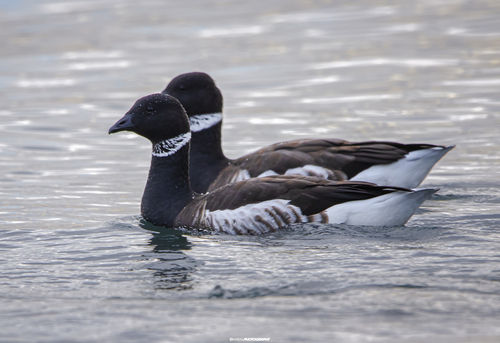 Rotgans
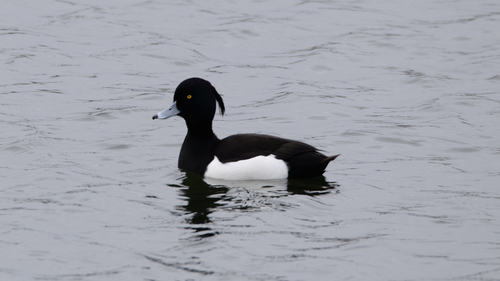 Kuifeend
Kort gezegd
Het meest betrouwbare veldkenmerk om Rotgans van Kuifeend te scheiden is de algehele structuur en het contrast in verenkleed: Rotgans is een compacte, kortsnavelige gans met een zwarte nek en een kleine witte nekvlek, terwijl Kuifeend een kleine, rondkopduiker is met een duidelijke kopkuif (bij mannetjes) en een blauwgrijze snavel. In de vlucht of in rust toont Rotgans altijd een puur witte onderstaart en een zeer korte zwarte staart, terwijl mannelijke Kuifeenden witte flanken en een zwarte rug hebben, en vrouwtjes bruin zijn met lichtere flanken. Juveniele en onvolwassen bovenvleugelpatronen worden in de bronnen niet als diagnostisch voor een van beide soorten beschreven, dus concentreer je op de lichaamsvorm, snavel en koppatroon. Beide soorten kunnen samen voorkomen op kustwateren in de winter, maar hun jizz en verenkleed zijn met zorgvuldige observatie behoorlijk verschillend.
Herkenningstips
- Grootte en vorm: Rotgans is veel groter, met een lange nek en gansachtige verhoudingen. Kuifeend is duidelijk kleiner, met een korte nek en een compacte, ronde lichaamsvorm. Dit is duidelijk wanneer beide aanwezig zijn, maar zelfs alleen is de jizz anders.
- Snavel: Rotgans heeft een korte, stomp zwarte snavel die typisch is voor ganzen. Kuifeend heeft een blauwgrijze snavel (niet zwart), breder aan de punt, en nooit gansachtig.
- Kop en nek: Rotgans toont altijd een zwarte kop en nek met een kleine, nette witte vlek aan elke kant van de nek (alle leeftijden en ondersoorten). Mannelijke Kuifeenden hebben een zwarte kop met een lange, hangende kuif aan de achterkant, terwijl vrouwtjes bruin zijn zonder kuif of slechts een lichte bobbel. Nooit is er een witte nekvlek aanwezig op Kuifeend.
- Staart en onderstaart: Rotgans heeft een zeer korte, zwarte staart en een puur witte onderstaart, wat diagnostisch is wanneer gezien van achteren of in de vlucht. Kuifeend heeft een standaard eendenstaart, niet bijzonder kort, en de onderstaart is niet puur wit.
- Lichaamsverenkleed: Rotgans is donker grijsbruin (donkerbuikig) of heeft lichtere flanken (lichtbuikig), maar toont nooit het scherpe zwart-witcontrast van een mannelijke Kuifeend. Zwarte Brant is zeer donker met een prominente witte flankvlek, maar heeft nog steeds de gansvorm en nekvlek.
- Mannelijke Kuifeend: Opvallend zwart-witpatroon met puur witte flanken en een glanzend zwarte rug en kop, plus een lange kopkuif. Geen gans toont dit patroon of kuif.
- Vrouwelijke Kuifeend: Over het algemeen bruin met lichtere flanken, soms met een kleine witte vlek aan de basis van de snavel, maar nooit een witte nekvlek of het uniforme donkere lichaam van Rotgans. Kan verward worden met andere eenden, maar niet met ganzen.
- Vlucht silhouet: Rotgans in de vlucht toont een compacte, kortstaartige, lange nekvorm, met constante vleugelslagen. Kuifeend is compact, kortnekig en rond, met snelle vleugelslagen.
- Groepsgedrag: Rotgansgroepen zijn los en vaak in lijnen of V-formaties. Kuifeendgroepen zijn strak, compact en nemen vaak samen snel afscheid.
- Voedingsgedrag: Rotgans graast op land of modder, duikt zelden. Kuifeend wordt bijna altijd gezien duikend naar voedsel, zelden op land.
- Habitatcontext: Rotgans is bijna altijd kustgebonden, op zoutmoerassen of in de estuaria. Kuifeend is vaker op zoetwater, maar kan in de winter kustgebonden zijn.
- Stem: Niet meestal nuttig, maar vrouwelijke Kuifeenden kunnen een harde 'karr' geven in de vlucht; Rotgans is meestal stil.
- Juveniele/onvolwassen verwarring: Geen onderscheidende juveniele bovenvleugelmerken voor een van beide soorten, dus vertrouw op structuur en hoofd/nekpatroon voor alle leeftijden.
- Valkuilen: Vrouwelijke Kuifeend is het meest waarschijnlijke verwarringsrisico vanwege de gedempte kleuren, maar mist de witte nekvlek en gansstructuur. Zwarte Brant (donkerste Rotgansvorm) is zeer donker met een witte flankvlek, maar heeft nog steeds een gansachtige nek en witte nekvlek.
- Seizoensvariatie: Alle belangrijke kenmerken (grootte, structuur, nekvlek, kuif, snavelkleur) zijn het hele jaar door aanwezig, dus scheiding is betrouwbaar in alle seizoenen.
Grootte
Rotgans is aanzienlijk groter en zwaarder dan Kuifeend. Rotgans meet 55–66 cm in lengte met een spanwijdte van 106–121 cm en weegt 0,88–2,2 kg. In tegenstelling tot dat is Kuifeend een kleine duikeend (exacte metingen hier niet gegeven, maar veel kleiner en lichter dan enige gans). Rotgans heeft een robuuster lichaam, een langere nek en een duidelijk gansachtige silhouet, terwijl Kuifeend compact is, met een korte nek en ronde kop. Zelfs op afstand is het grootteverschil meestal duidelijk wanneer beide soorten samen worden gezien.
Verenkleed
- Juveniele/onvolwassen vleugelpatroon: Geen onderscheidende leeftijdspecifieke bovenvleugelmerken zijn beschreven voor een van beide soorten in de bronnen, dus concentreer je op lichaam en kopverenkleed.
- Rotgans: Alle vormen hebben een zwarte kop en nek met een kleine witte vlek aan de zijkant van de nek. De onderstaart is altijd puur wit, en de staart is zeer kort en zwart. De lichaamskleur varieert per ondersoort: donkerbuikige vogels zijn uniform donker grijsbruin, lichtbuikige vogels hebben lichtere flanken en buik, en zwarte brant zijn sterk zwart-wit met een prominente witte flankvlek en grotere witte nekvlek (bijna als een kraag). De algehele indruk is van een donkere gans met een nette, kleine witte nekvlek en een zeer korte staart.
- Kuifeend: Volwassen mannetjes zijn glanzend zwart met opvallende witte flanken, een blauwgrijze snavel, gouden gele ogen, en een lange, hangende zwarte kopkuif. Vrouwtjes zijn bruin met lichtere flanken en kunnen wat wit aan de basis van de snavel tonen, maar nooit zoveel als scholeksters. Beide seksen missen enige wit op de nek. Het zwart-witcontrast van het mannetje is scherp, maar het patroon is heel anders dan dat van enige Rotgans. Vrouwtjes zijn meer gedempt maar missen nog steeds het nekpatroon van de gans en het staart/onderstaartcontrast.
Gedrag
Rotgans is een grazende gans, vaak gezien in groepen op kustzoutmoerassen, modderbanken of grasvelden, voeden met vegetatie. Het loopt met een horizontale houding, en in de vlucht bewegen groepen in losse lijnen of V-formaties, met constante, diepe vleugelslagen. Kuifeend is een duikeend, meestal gezien zwemmend laag in het water, vaak duikend naar voedsel. Het zit hoger op het water dan een gans, vaak in strakke groepen, en neemt snel afscheid met snelle vleugelslagen. In de vlucht zijn Kuifeendgroepen compact en snel, met snelle, ondiepe vleugelslagen, en individuen tonen een meer afgerond, eendachtig profiel. Rotgans duikt zelden en wordt bijna nooit gezien terwijl het onder water voedt.
Habitat
Beide soorten kunnen in kusthabitats in de winter worden gevonden, maar Rotgans is sterk geassocieerd met zoutmoerassen, getijdenmodderbanken en estuaria, zelden ver van de kust. Kuifeend geeft de voorkeur aan zoetwatermeren, reservoirs en langzame rivieren, maar kan in de winter worden gevonden op beschutte kustwateren, vooral waar zoetwater de zee ontmoet. Als ze samen worden gezien, zal Rotgans grazen of rusten op modder of gras, terwijl Kuifeend zal zwemmen en duiken. Kuifeend is veel waarschijnlijker in het binnenland, terwijl Rotgans bijna uitsluitend kustgebonden is.
Geluid
Rotgans is over het algemeen stil, met alleen zachte grunt- of murmelgeluiden in groepen, zelden op afstand gehoord. Vrouwelijke Kuifeenden geven een harde, grommende 'karr' meestal in de vlucht, en mannetjes fluiten 'wit-oo' tijdens het hofmaken, maar zijn verder meestal stil. In het veld zijn vocalisaties meestal geen primaire scheidingstool tussen deze soorten.