

Motmot

キノドアメリカムシクイ 対 グレースアメリカムシクイ

Setophaga dominica 対 Setophaga graciae

キノドアメリカムシクイとグレースアメリカムシクイのクイズ
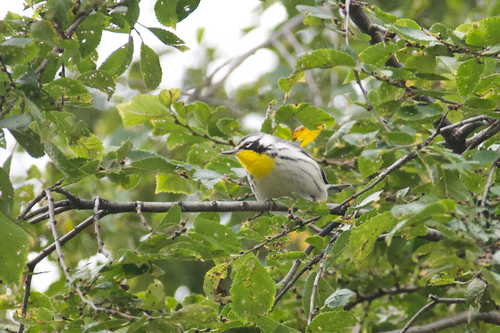
キノドアメリカムシクイ (Setophaga dominica) キノドアメリカムシクイ
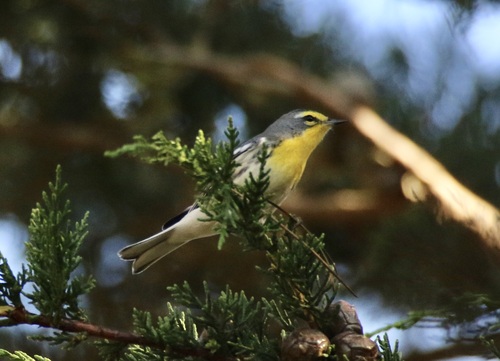
グレースアメリカムシクイ (Setophaga graciae) グレースアメリカムシクイ

メディア

読み込み中…

要点

キノドアメリカムシクイとグレースアメリカムシクイを区別する最も信頼できるフィールドマークは、キノドの大胆で対照的な黒と白の頭の模様であり、特に強い眉斑と頬の斑点が際立っています。一方、グレースの顔は柔らかく、あまりはっきりとした模様ではありません。両種とも灰色の上面、2本の白い翼帯、黄色の喉を持っていますが、キノドは純白の腹部と側面により広範な黒い縞模様を持ち、グレースは胸に黄色が広がり、黄色の半目環があります。構造的な違いは微妙ですが、文脈と顔の模様が重要です。未熟な個体や雌のキノドアメリカムシクイは鈍い色合いですが、グレースよりも明確な顔の模様を示します。

識別のコツ

  1. 頭の模様が最も決定的なマークです: すべての年齢と性別のキノドアメリカムシクイは、長い眉斑と黒い頬の斑点を持つ大胆な黒と白の頭を示します。グレースアメリカムシクイは、黄色の眉と半目環を持つ柔らかい顔をしており、強い黒い頬が欠けています。
  2. 眉斑の色: キノドは通常白い眉斑を持ち、時には前方に黄色があることがあります(S. d. albiloraを除く、これは全て白です)。グレースは、目の後ろで白にフェードする黄色の眉斑を持っています。
  3. 喉と胸: キノドの黄色は喉に鋭く制限されており、白い腹部との境界がはっきりしています。グレースの黄色は上胸に広がり、白い腹部により徐々に溶け込んでいます。
  4. 側面の縞模様: 両種とも側面に黒い縞模様がありますが、キノドの方が通常はっきりとしていて広範です。グレースの縞模様は途切れ途切れで目立ちません。
  5. 腹部の色: キノドは喉の下に純白の腹部を持っています。グレースは胸にわずかな黄色の洗いがかかることがあります。
  6. 翼帯: 両種とも2本の白い翼帯を持っていますが、これは区別要因ではありません。
  7. 背中と上面: 両種とも上面は灰色ですが、グレースは背中により途切れた黒い縞模様を示すことがあります。
  8. 目環: グレースは目の下に黄色の半目環を持っていますが、キノドはこの特徴が欠けています。
  9. くちばしの形: フィールド構造において強い違いは見られませんが、S. d. stoddardi(キノド)はわずかに細いくちばしを持つことがありますが、通常はフィールドで診断的ではありません。
  10. 性別/年齢の変異: 雌や未熟なキノドアメリカムシクイは鈍い色合いで、はっきりとした模様が少ないですが、いずれにせよグレースよりも強い顔の模様を示します。グレースは強い性的二形性を示しません。
  11. 生息地の文脈: 南西部やメキシコの松林、特に高地ではグレースが期待されます。南東部の湿地や混合林、特にスペインモスがある場所ではキノドが期待されます。
  12. 採餌行動: 松の高いところで松ぼっくりや針の束の上をホバリングしているムシクイを見たら、グレースの可能性が高いです。キノドはより多様な木々で採餌することがあり、松に厳密に結びついているわけではありません。
  13. 地理的範囲: キノドは主にアメリカ南東部に生息しています。グレースはアメリカ南西部からニカラグアにかけて分布しています。範囲外の記録は稀ですが可能です。
  14. 声: 明確で下降する笛の音を聞いたら、キノドを疑ってくださいが、さらなる詳細なしにこれだけに頼らないでください。
  15. 季節的文脈: 両種とも渡り鳥ですが、キノドはほとんどのセトファガムシクイよりも南方で繁殖し、北方で越冬します。グレースは主に繁殖範囲内で越冬します。

大きさ

両種とも小型のムシクイでサイズは非常に近いですが、キノドアメリカムシクイはグレースアメリカムシクイに比べてわずかに大きいです(キノドは13–14 cm、8.5–11.3 g、グレースは11–13 cm、8.0 g)。フィールドでは、この違いは隣同士で見ない限り明らかではありません。両者は似たような比率と全体的な「ムシクイ」の印象を持っているため、サイズは主要な区別要因ではありません。

羽色

すべての年齢において、キノドアメリカムシクイは長い眉斑(アイブロウ)、黒い頬の斑点、純白の腹部から鋭く区切られた明るい黄色の喉を持つ印象的な黒と白の頭の模様を示します。側面は黒で縞模様が入っています。未熟な個体や雌は鈍い色合いですが、強い顔の模様を保持していますが、あまりはっきりとはしていません。一部の亜種は眉斑の前方に黄色がありますが、S. d. albiloraは全て白の眉斑を持っています。グレースアメリカムシクイも灰色の上面と2本の白い翼帯を持っていますが、顔は対照的ではありません。目の後ろで白にフェードする黄色の眉、目の下に黄色の半目環を持ち、強い黒い頬の斑点が欠けています。喉の黄色は上胸に広がり、キノドの鋭く制限された黄色とは異なります。グレースは背中と側面に途切れた黒い縞模様を持っていますが、頭の模様は常に柔らかく、あまりはっきりとはしていません。どちらの種にも特有の幼鳥や未熟な上翼の模様は記載されていないため、すべての年齢において頭と腹部の模様に焦点を当てます。

行動

両種とも樹木の中で活発に採餌しますが、グレースアメリカムシクイは松林に特化しており、しばしば樹冠の高いところで採餌し、松ぼっくりや針の束を点検するためにホバリングすることがよくあります。キノドアメリカムシクイも樹木の中で採餌し、しばしば針葉樹や湿地の木々で、昆虫を捕まえるために飛び出すことがありますが、松に厳密に結びついているわけではありません。両者は枝から食べ物を拾うのが見られることがありますが、グレースは松ぼっくりの上でホバリングしているのが見られる可能性が高いです。

生息環境

生息地は強い文脈的手がかりです。グレースアメリカムシクイは、移動中でもその範囲内の松林でほぼ常に見られ、開けた公園のような松の森を好み、南西部のアメリカやメキシコの高地でよく見られます。キノドアメリカムシクイはアメリカ南東部で繁殖し、針葉樹や湿地の森を好み、松に厳密に結びついているわけではなく、時にはスペインモスのある他の成熟した木を利用します。南西部の松が支配する風景にいる場合、グレースがはるかに可能性が高いです。南東部、特に湿地や混合林ではキノドが期待されます。

声

キノドアメリカムシクイの歌は、一連の明確で下降する笛の音であり、高い「シー」や鋭いチップの呼び声があります。グレースアメリカムシクイの声の詳細な説明はここでは提供されていないため、これらのメモに基づいて声は主要な区別要因ではありません。

より良い説明を送る

比較と同じ項目を使ってください。文章はすぐに公開されます。

The most reliable field mark to separate Yellow-throated Warbler from Grace's Warbler is the bold, contrasting black-and-white head pattern of Yellow-throated, especially the strong supercilium and cheek patch, versus the softer, less crisply marked face of Grace's. Both species show gray upperparts, two white wingbars, and yellow throats, but Yellow-throated has a pure white belly and more extensive black streaking on the flanks, while Grace's has yellow extending onto the breast and a yellow half-eye ring. Structural differences are subtle, but context and face pattern are key. Immature and female Yellow-throated Warblers can be duller, but still show a more defined facial pattern than Grace's.

  1. Head pattern is the most decisive mark: Yellow-throated Warbler of all ages and sexes shows a bold black-and-white head with a long supercilium and black cheek patch; Grace's Warbler has a softer face with a yellow eyebrow and half-eye ring, lacking the strong black cheek.
  2. Supercilium color: Yellow-throated typically has a white supercilium, sometimes with yellow at the front (except S. d. albilora, which is all white); Grace's has a yellow supercilium that fades to white behind the eye.
  3. Throat and breast: Yellow-throated's yellow is sharply limited to the throat, with a crisp border to the white belly; Grace's yellow extends onto the upper breast, blending more gradually into the white belly.
  4. Flank streaking: Both have black streaks on the flanks, but Yellow-throated's are usually bolder and more extensive; Grace's streaks are broken and less prominent.
  5. Underpart color: Yellow-throated has pure white underparts below the throat; Grace's may show a slight yellow wash on the breast.
  6. Wingbars: Both species have two white wingbars; this is not a separator.
  7. Back and upperparts: Both are gray above, but Grace's may show more broken black streaks across the back.
  8. Eye ring: Grace's has a yellow half-eye ring under the eye; Yellow-throated lacks this feature.
  9. Bill shape: No strong difference is noted in field structure, though S. d. stoddardi (Yellow-throated) may have a slightly slenderer bill, not usually diagnostic in the field.
  10. Sex/age variation: Female and immature Yellow-throated Warblers are duller and less crisply marked, but still show a stronger facial pattern than any Grace's. Grace's does not show strong sexual dimorphism.
  11. Habitat context: In pine forests of the Southwest or Mexico, especially at higher elevations, expect Grace's; in swampy or mixed forests of the Southeast, especially with Spanish moss, expect Yellow-throated.
  12. Foraging behavior: If you see a warbler hovering at pine cones or needle clusters high in a pine, Grace's is more likely; Yellow-throated may forage in a wider variety of trees and is less strictly tied to pines.
  13. Geographic range: Yellow-throated is primarily southeastern US; Grace's is southwestern US to Nicaragua. Out-of-range records are rare but possible.
  14. Voice: If you hear a clear, descending whistle, suspect Yellow-throated, but do not rely on this alone without further details.
  15. Seasonal context: Both species are migratory, but Yellow-throated has a more southerly breeding and more northerly wintering range than most Setophaga warblers; Grace's winters mostly within its breeding range.

Both species are small warblers and very close in size, but Yellow-throated Warbler is slightly larger (13–14 cm length, 8.5–11.3 g) compared to Grace's Warbler (11–13 cm, 8.0 g). In the field, this difference is rarely obvious unless seen side by side. Both have similar proportions and overall 'warbler' jizz, so size is not a primary separator.

For all ages, Yellow-throated Warbler shows a striking black-and-white head pattern with a long supercilium (eyebrow), black cheek patch, and a bright yellow throat sharply demarcated from the pure white underparts. The flanks are streaked with black. Immatures and females are duller but retain the strong facial pattern, though less crisply. Some subspecies have a yellow front to the supercilium, but S. d. albilora has an all-white supercilium. Grace's Warbler also has gray upperparts and two white wingbars, but the face is less contrasting: it features a yellow eyebrow that fades to white behind the eye, a yellow half-eye ring below the eye, and lacks the strong black cheek patch. The yellow of the throat extends onto the upper breast, unlike the sharply limited yellow of Yellow-throated. Grace's has broken black streaks on the back and flanks, but the head pattern is always softer and less defined. No distinctive juvenile or immature upperwing pattern is described for either species, so focus is on head and underpart pattern for all ages.

Both species forage actively in trees, but Grace's Warbler is highly specialized for pine forests and often forages high in the canopy, frequently hovering to inspect pine cones and needle clusters. Yellow-throated Warbler also forages in trees, often in conifers or swamp trees, and may sally for insects, but is less strictly tied to pines. Both may be seen gleaning from branches, but Grace's is more likely to be seen hovering at pine cones.

Habitat is a strong contextual clue. Grace's Warbler is almost always found in pine forests throughout its range, even in migration, and prefers open, parklike pine woods, often at higher elevations in the southwestern US and Mexico. Yellow-throated Warbler breeds in the southeastern US, favoring coniferous or swamp forests, and is less strictly tied to pines, sometimes using other mature trees with Spanish moss. If you are in a pine-dominated landscape in the Southwest, Grace's is far more likely; in the Southeast, especially in swampy or mixed woods, Yellow-throated is expected.

Yellow-throated Warbler's song is a series of clear, descending whistles, with calls that are high 'sees' or sharp chips. No detailed description of Grace's Warbler's vocalizations is provided here, so voice is not a primary separator based on these notes.

変更を破棄しますか?

保存していない編集があります。今離れると失われます。

キノドアメリカムシクイ · グレースアメリカムシクイ · 苦手な鳥