

コイワスズメ 対 キバシヒワ
Gymnoris xanthocollis 対 Linaria flavirostris
コイワスズメとキバシヒワのクイズ
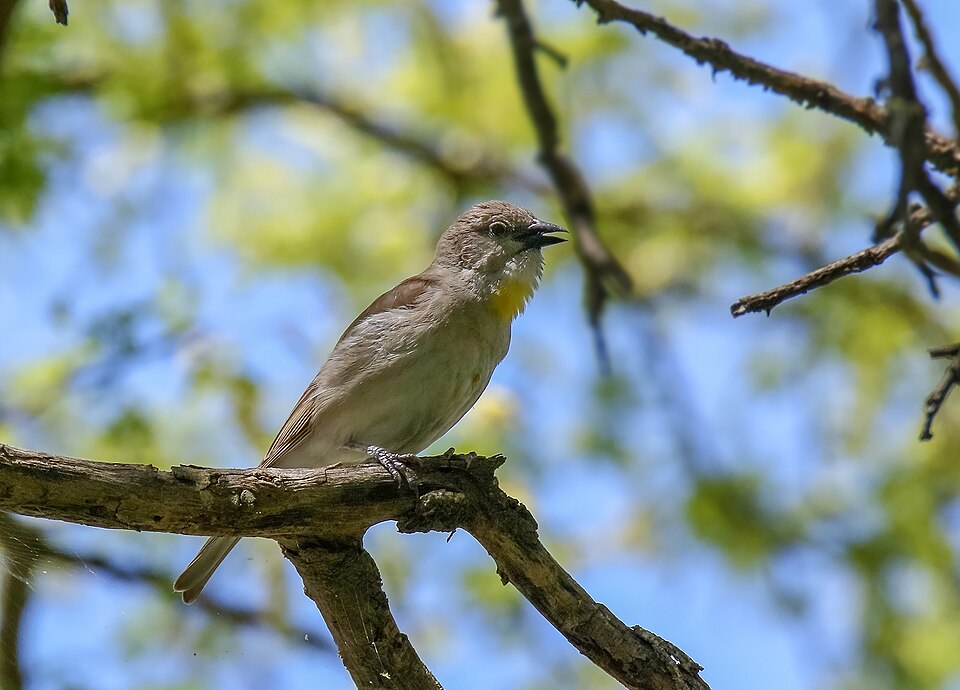 コイワスズメ
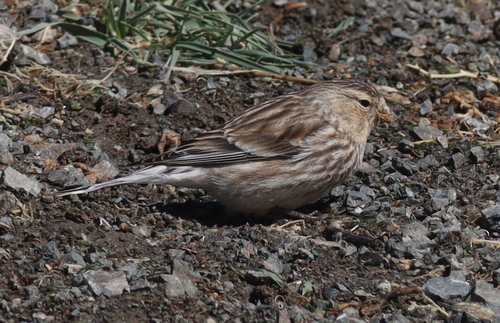 キバシヒワ
要点
The most reliable field mark to separate Yellow-throated Sparrow from Twite is the presence of a bold white double wing bar on the sparrow, often accompanied by a chestnut shoulder patch in adult males and a small yellow throat spot, versus the Twite’s brown, heavily streaked upperparts and, in adult males, a pink rump. Juvenile and female Twites lack both the wing bars and any yellow or chestnut, and their underparts are streaked, unlike the plainer Yellow-throated Sparrow. Bill color and structure also help: the sparrow has a finer, more sparrow-like bill, while the Twite’s bill is conical and yellow in winter. Habitat context is useful: Yellow-throated Sparrow favors dry savannahs and open woodlands in southern Asia, while Twite is found in northern and high-altitude grasslands or coastal areas. Vocalizations are distinct, with Twite giving a nasal 'twaa-it' call.
識別のコツ
- Look for the double white wing bar: Yellow-throated Sparrow of all ages shows a bold white double wing bar on otherwise plain brownish wings. Twite never shows wing bars—this is the single most reliable mark.
- Check for streaking: Twite of all ages is heavily streaked above and below, with brown streaks on buff or whitish underparts. Yellow-throated Sparrow is plain, with no streaking anywhere.
- Spot the chestnut shoulder patch: Adult male Yellow-throated Sparrow has a chestnut shoulder patch, sometimes hidden. Females and immatures lack this, but the wing bar remains.
- Yellow throat spot: Male Yellow-throated Sparrow in fresh plumage has a small yellow spot on the throat. Females and immatures have little or no yellow, but Twite never shows any yellow on the throat.
- Rump color: Adult male Twite has a pink rump, visible in flight or when preening. Females and immatures have a brown rump. Yellow-throated Sparrow always has a plain rump.
- Bill shape and color: Yellow-throated Sparrow has a finer, more pointed sparrow-like bill. Twite’s bill is conical and yellow in winter, turning grey in summer. Bill color is useful in winter; shape is a subtle but supporting feature.
- Wing pattern in flight: In flight, Yellow-throated Sparrow’s white wing bars can flash conspicuously. Twite’s wings are plain brown with no bars or panels.
- Underpart pattern: Twite always shows streaked underparts; Yellow-throated Sparrow is plain below.
- Habitat context: If seen in dry savannah or open woodland in southern Asia, Yellow-throated Sparrow is likely. Twite is expected in northern or high-altitude grasslands, or on coasts in winter.
- Flocking behavior: Twite often forms large, tight flocks outside breeding season, especially on coasts. Yellow-throated Sparrow is more often solitary or in small groups.
- Voice: Twite’s nasal 'twaa-it' is distinctive. If heard, it confirms Twite. Lack of this call does not confirm sparrow.
- Sex and age pitfalls: Female and immature Yellow-throated Sparrows are dull and lack chestnut and yellow, but still show the wing bar. Female and immature Twites lack the pink rump and are streaked.
- Seasonal changes: Twite’s bill is yellow in winter, grey in summer. Yellow-throated Sparrow’s throat spot is brightest in fresh plumage (breeding season).
- Potential confusion: In poor light or at a distance, a dull female sparrow could be mistaken for a Twite if the wing bar is missed. Always check for streaking and wing pattern.
- When in doubt: Focus on the presence or absence of wing bars and underpart streaking—these are consistent across all ages and sexes for both species.
大きさ
Both species are small passerines, but Twite is slightly larger, measuring about 13–13.5 cm in length ([wikipedia]), while Yellow-throated Sparrow is similar in size to other sparrows, but no precise measurement is given in the sources. In the field, size difference is subtle and not a reliable separator unless seen side by side. Both are compact, but Twite may appear a bit longer and slimmer due to its finch-like proportions.
羽色
-
Juvenile/immature birds: Twite immatures and females have a brown rump (not pink), brown streaked upperparts, and streaked buff to whitish underparts. They lack any wing bars or yellow throat spot. Yellow-throated Sparrow immatures and females are duller than males, lack the chestnut shoulder patch, and have little or no yellow on the throat, but still show the diagnostic white double wing bar on the otherwise plain brownish wing.
-
Adult males: Yellow-throated Sparrow males have a chestnut shoulder patch (sometimes hard to see), a pale yellow spot on the throat (fresh plumage), and a bold white double wing bar. Twite adult males have a pink rump (not always visible when perched), brown streaked upperparts, and streaked underparts. No wing bars, yellow throat, or chestnut patch.
-
General: Twite is always streaked above and below, never shows wing bars or yellow on the throat. Yellow-throated Sparrow is plainer, with no streaking, and the double white wing bar is unique among the two.
行動
Yellow-throated Sparrows forage mainly on the ground for grain and berries, often in dry savannah or open woodland. They are typically seen singly or in small groups. Twite, in contrast, often forms large flocks outside the breeding season, especially on coasts and salt marshes, and feeds mainly on seeds. Twite’s flocking behavior and association with open, grassy or coastal habitats can be a clue, especially in winter.
生息環境
Yellow-throated Sparrow is found in dry savannahs and open woodlands across southern Asia. Twite breeds in northern Europe and across Asian mountains, favoring alpine grasslands, low shrubland, and, in the west, coastal machair grasslands. In winter, Twite moves to coasts and salt marshes. Overlap is minimal; Twite is not expected in the typical range or habitat of Yellow-throated Sparrow, and vice versa, but confusion could occur in migration or at the fringes of their ranges.
声
Twite’s call is a distinctive nasal 'twaa-it', often given in flight or from perches, and its song is a series of fast trills and twitters. No vocalization is described for Yellow-throated Sparrow in the sources, so voice is mainly useful for confirming Twite, not for ruling out the sparrow.