

Motmot

ヒメタイランチョウ 対 キゴシツリスドリ

Tyrannulus elatus 対 Cacicus cela

ヒメタイランチョウとキゴシツリスドリのクイズ
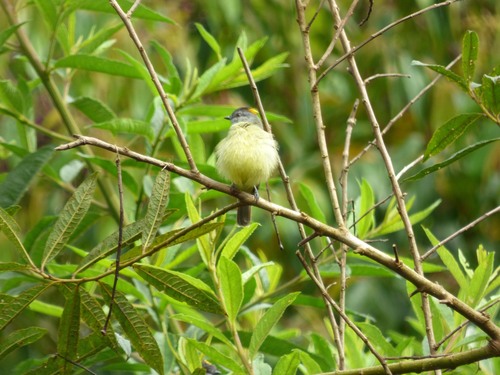
ヒメタイランチョウ (Tyrannulus elatus) ヒメタイランチョウ
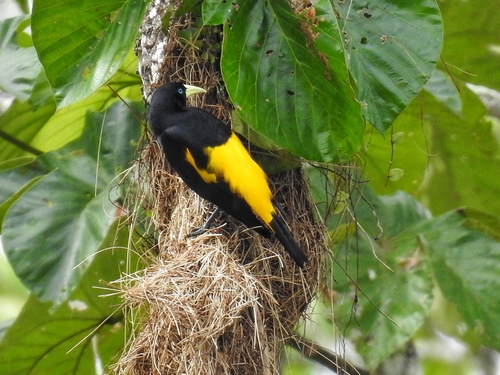
キゴシツリスドリ (Cacicus cela) キゴシツリスドリ

メディア

読み込み中…

要点

ヒメタイランチョウとキゴシツリスドリを区別する最も信頼できるフィールドマークは、全体のサイズと構造です:ヒメタイランチョウは微妙な黄色とオリーブ色のトーンを持つ小さくて短いくちばしの虫捕りであり、キゴシツリスドリは尾が長く、体が大きく、尻、下腹部、翼のエポレットに目を引く黄色の斑点があります。すべての羽色において、キゴシツリスドリの光沢のある黒い体は、鋭く対照的な黄色、青い目、そして淡い尖ったくちばしを持ち、特に飛行中には間違いなく識別できます。ヒメタイランチョウの黄色は頭のストライプと腹部に限られ、大きな斑点を形成することはありません。距離があっても、キゴシツリスドリのサイズ、形、色のブロックは診断的であり、ヒメタイランチョウの繊細なプロポーションと muted colors はそれを際立たせます。

識別のコツ

  1. Size is the quickest check: 鳥が大きく、ほぼカラスサイズであればキゴシツリスドリです。小さく、スズメサイズであればヒメタイランチョウです。これはすべての年齢と性別に当てはまります。
  2. Bill shape and color: キゴシツリスドリは長く尖った淡い黄色のくちばしを持ち、ヒメタイランチョウは短く丸い黒いくちばしを持っています。くちばしの色は特に近距離で役立ちます。
  3. Eye color: キゴシツリスドリの成鳥は目を引く青い目を持ち、ヒメタイランチョウは茶色の目を持っています。幼鳥のキゴシツリスドリは暗い目を持っているため、これは未熟な個体にはあまり信頼できません。
  4. Plumage blocks: キゴシツリスドリは尻、下腹部、翼のエポレットに大胆な黄色を示し、黒い体と対照的です。ヒメタイランチョウは黄色がかった頭のストライプと淡い黄色の腹部のみを持ち、大きな黄色の斑点はありません。
  5. Wing pattern in flight: キゴシツリスドリの黄色のエポレットと尻は飛行中に光ります。ヒメタイランチョウはわずかな翼帯と小さな頭のストライプしか示さず、大きな黄色の部分は見えません。
  6. Tail length and shape: キゴシツリスドリは長くまっすぐな尾を持ち、ヒメタイランチョウの尾は短く丸いです。
  7. General jizz: キゴシツリスドリは細身で長く、活発で、しばしば群れで見られます。ヒメタイランチョウは小さく、コンパクトで、より孤独またはペアで見られます。
  8. Sex and age differences: メスと幼鳥のキゴシツリスドリは鈍い色合いですが、黄色の尻とエポレットを保持します。ヒメタイランチョウのメスはやや淡いですが、大胆な黄色の斑点は決して示しません。
  9. Habitat context: 高い木やコロニーに大きくて騒がしい群れがいる場合はキゴシツリスドリを示唆します。森林の端や二次成長にいる単独の鳥やペアはヒメタイランチョウの可能性が高いです。
  10. Vocalizations: 大きく、多様で音楽的な音はキゴシツリスドリを指し示します。ヒメタイランチョウは静かで目立たない声です。
  11. Supercilium and facial pattern: ヒメタイランチョウは灰色がかったスーペリキウムと細い暗いアイラインを持ち、キゴシツリスドリの顔は主に黒で青い目と淡いくちばしを持っています。
  12. Nesting behavior: コロニーにぶら下がっている巣を見た場合、それはキゴシツリスドリです。ヒメタイランチョウの巣は高い位置に置かれた小さなカップですが、コロニーにはありません。
  13. Iris color in juveniles: 幼鳥のキゴシツリスドリは暗い目を持っているため、未熟な個体には他のマークを使用してください。
  14. Mistaken at a distance: 大きな黒い鳥に黄色の閃光が見えた場合、それはキゴシツリスドリです。小さな鳥の頭のストライプや腹部に黄色が限られている場合、それはヒメタイランチョウです。
  15. Regional abundance: 両種はその範囲で一般的である可能性がありますが、キゴシツリスドリはその社会的行動と声のためにしばしば目立ちます。

大きさ

ヒメタイランチョウは小さな鳥で、体重は約7グラム、長さは10〜11 cmです。それに対して、キゴシツリスドリははるかに大きく、オスは28 cm、104グラムに達し、メスでさえヒメタイランチョウの2倍以上の長さとほぼ10倍の質量を持っています。このサイズの差はフィールドで明らかです—キゴシツリスドリは長く、細く、ほぼカラスのように見え、ヒメタイランチョウは小さく、短いくちばしを持ち、スズメサイズです。両種が存在する場合、キゴシツリスドリはヒメタイランチョウを圧倒します。

羽色

年齢特有の翼や飛行パターンには重複がありません:キゴシツリスドリはすべての年齢で、黒い体に対して尻、下腹部、翼のエポレットに大きく明るい黄色の斑点を示し、ヒメタイランチョウは上面がオリーブグリーンで、黄色がかった頭のストライプと淡い黄色の腹部を持ち、大胆な色のブロックはありません。幼鳥のキゴシツリスドリは鈍いメスに似ていますが、黄色の尻とエポレットを保持し、暗い目と茶色がかったくちばしの基部を持っています。ヒメタイランチョウは年齢や性別に関係なく、翼や尻に広範な黄色を示すことはなく、わずかな翼帯と頭のストライプのみを持っています。飛行中、キゴシツリスドリの黄色の尻と翼のエポレットは目立って光り、ヒメタイランチョウは目立たず、わずかな翼帯と小さな頭のストライプしか示しません。キゴシツリスドリの青い目と淡い黄色の尖ったくちばしもユニークであり、ヒメタイランチョウは茶色の虹彩と短く丸い黒いくちばしを持っています。

行動

ヒメタイランチョウは通常、単独またはペアで見られ、しばしば中層から上層の樹冠に静かに止まって、昆虫を捕まえるために短いサリーを行います。その動きは迅速で繊細です。それに対して、キゴシツリスドリは非常に社交的で、特に巣作りの近くでは騒がしいコロニーや群れで見られます。キゴシツリスドリは活発で目立ち、しばしば樹木の間を飛び回り、その明るい黄色の斑点が光ります。彼らの行動は、虫捕りよりもオリオールやグラックルに似ています。

生息環境

両種は中南米および南米北部の重複する地域に生息することがありますが、好む生息地は異なります。ヒメタイランチョウは森林の端、開けた森林、二次成長を好み、しばしば樹冠にいますが、時には低い位置にもいます。キゴシツリスドリは高い森林、川の岸、特にコロニーの巣作りに適した大きな木がある地域に密接に結びついています。高い木に大きくて騒がしい群れが見えた場合、それはほぼ確実にキゴシツリスドリです。

声

キゴシツリスドリの声は大きく、多様で複雑です—オスはフルート音、カッカッという音、ヒューヒューという音、模倣の混合を生み出し、コロニーは遠くからでも聞こえます。ヒメタイランチョウの声は提供されたメモには記載されていませんが、小さな虫捕りとして、キゴシツリスドリの音量や複雑さに匹敵することはないでしょう。騒がしく音楽的な合唱が聞こえた場合、キゴシツリスドリを疑ってください。

より良い説明を送る

比較と同じ項目を使ってください。文章はすぐに公開されます。

The most reliable field mark to separate Yellow-crowned Tyrannulet from Yellow-rumped Cacique is overall size and structure: the tyrannulet is a tiny, short-billed flycatcher with subtle yellow and olive tones, while the cacique is a much larger, long-tailed blackbird with striking yellow patches on the rump, lower belly, and wing epaulets. In all plumages, the cacique’s glossy black body with sharply contrasting yellow, blue eyes, and pale pointed bill are unmistakable, especially in flight. The tyrannulet’s yellow is limited to a crown stripe and underparts, never forming large patches. Even at a distance, the cacique’s size, shape, and color blocks are diagnostic, while the tyrannulet’s delicate proportions and muted colors set it apart.

  1. Size is the quickest check: If the bird is large, nearly jay-sized, it is a cacique; if tiny and sparrow-sized, it is a tyrannulet. This holds for all ages and sexes.
  2. Bill shape and color: Cacique has a long, pointed, pale yellow bill; tyrannulet has a short, rounded, black bill. Bill color is especially useful at close range.
  3. Eye color: Cacique adults have striking blue eyes; tyrannulet has brown eyes. Juvenile caciques have dark eyes, so this is less reliable for immatures.
  4. Plumage blocks: Cacique shows bold yellow on rump, lower belly, and wing epaulets, contrasting with black body. Tyrannulet has only a yellowish crown stripe and pale yellow underparts, never large yellow patches.
  5. Wing pattern in flight: Cacique’s yellow epaulets and rump flash in flight; tyrannulet shows only faint wingbars and a small crown stripe, with no large yellow areas visible.
  6. Tail length and shape: Cacique has a long, straight tail; tyrannulet’s tail is short and rounded.
  7. General jizz: Cacique is slim, long, and active, often in groups; tyrannulet is small, compact, and more solitary or in pairs.
  8. Sex and age differences: Female and juvenile caciques are duller but retain the yellow rump and epaulets; tyrannulet females are slightly paler but never show bold yellow patches.
  9. Habitat context: Large, noisy groups in tall trees or colonies suggest cacique; single birds or pairs in forest edge or second growth are more likely tyrannulet.
  10. Vocalizations: Loud, varied, and musical sounds point to cacique; tyrannulet is quieter and less conspicuous vocally.
  11. Supercilium and facial pattern: Tyrannulet has a grayish supercilium and thin dark eye line; cacique’s face is mostly black with blue eyes and pale bill.
  12. Nesting behavior: If you see hanging nests in a colony, these are caciques; tyrannulet nests are small cups placed high but not in colonies.
  13. Iris color in juveniles: Juvenile caciques have dark eyes, so use other marks for immatures.
  14. Mistaken at a distance: If you see a flash of yellow in a large black bird, it is cacique; if yellow is limited to a crown stripe or underparts on a small bird, it is tyrannulet.
  15. Regional abundance: Both species can be common in their range, but caciques are often more conspicuous due to their social behavior and vocalizations.

Yellow-crowned Tyrannulet is a tiny bird, weighing about 7 grams and measuring 10–11 cm in length. In contrast, the Yellow-rumped Cacique is much larger: males reach 28 cm and 104 grams, and even females are over twice the length and nearly ten times the mass of the tyrannulet. This size gap is obvious in the field—caciques look long, slim, and almost crow-like, while tyrannulets are petite, short-billed, and sparrow-sized. If both species are present, the cacique will dwarf the tyrannulet.

There is no overlap in age-specific wing or flight patterns: the cacique, in all ages, shows large, bright yellow patches on the rump, lower belly, and wing epaulets against a black body, while the tyrannulet is olive-green above with a yellowish crown stripe and pale yellow underparts, lacking any bold color blocks. Juvenile caciques resemble duller females but retain the yellow rump and epaulets, and have dark eyes and a brownish bill base. Tyrannulets, regardless of age or sex, never show extensive yellow on the wings or rump—only subtle wingbars and a crown stripe. In flight, the cacique’s yellow rump and wing epaulets flash conspicuously, while the tyrannulet remains inconspicuous, with only faint wingbars and a small crown stripe. The cacique’s blue eyes and pale yellow pointed bill are also unique, while the tyrannulet has a brown iris and a short, rounded black bill.

Yellow-crowned Tyrannulet is usually seen singly or in pairs, often perched quietly in the mid to upper canopy, making short sallies for insects. Its movements are quick and delicate. In contrast, Yellow-rumped Cacique is highly social, often found in noisy colonies or flocks, especially near nesting sites. Caciques are active, conspicuous, and frequently fly between treetops, their bright yellow patches flashing. Their behavior is more reminiscent of orioles or grackles than flycatchers.

Both species can occur in overlapping regions of Central and northern South America, but their preferred habitats differ. Yellow-crowned Tyrannulet favors forest edges, open woodlands, and second growth, often in the canopy but sometimes lower. Yellow-rumped Cacique is more closely tied to tall forests, river edges, and especially areas with large trees suitable for colonial nesting. If you see a large, noisy group in a tall tree, it is almost certainly caciques.

The cacique’s vocalizations are loud, varied, and complex—males produce a mix of fluting notes, cackles, wheezes, and mimicry, and a colony is audible from far away. The tyrannulet’s voice is not described in the provided notes, but as a small flycatcher, it is unlikely to match the cacique’s volume or complexity. If you hear a raucous, musical chorus, suspect cacique.

変更を破棄しますか?

保存していない編集があります。今離れると失われます。

ヒメタイランチョウ · キゴシツリスドリ · 苦手な鳥