

Motmot

ヒメタイランチョウ 対 オリーブタイランチョウ

Tyrannulus elatus 対 Tyrannus melancholicus

ヒメタイランチョウとオリーブタイランチョウのクイズ
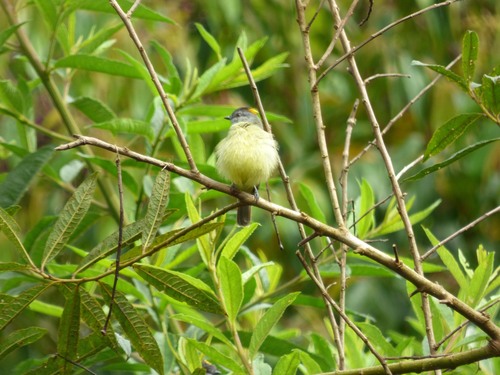
ヒメタイランチョウ (Tyrannulus elatus) ヒメタイランチョウ
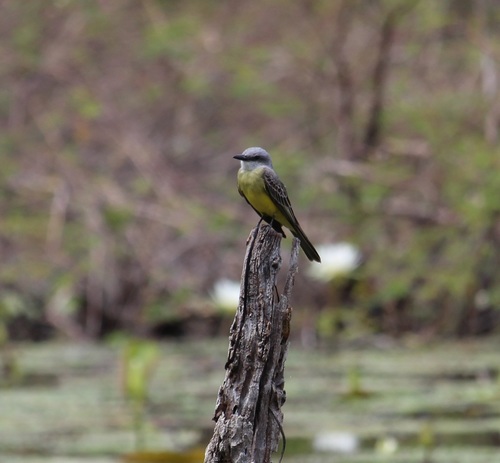
オリーブタイランチョウ (Tyrannus melancholicus) オリーブタイランチョウ

メディア

読み込み中…

要点

イエロークラウンタイランチョウとオリーブタイランチョウを区別する最も信頼できるフィールドマークはサイズと構造です:タイランチョウは小さく、コンパクトなフライキャッチャーで、短く丸いくちばしと特徴的な黄色の冠ストライプがあります。一方、オリーブタイランチョウははるかに大きく、重く長いくちばしと淡い灰色の頭、微妙なオレンジの冠ストライプを持っています。すべての年齢において、オリーブタイランチョウは長く深く分かれた尾と頑丈で直立した姿勢を示し、タイランチョウの短い尾とより繊細な外観と対照的です。両者ともに黄色の腹部を持っていますが、オリーブタイランチョウの頭ははるかに淡く、マスクはより大胆です。未熟なオリーブタイランチョウは淡いバフの翼の縁を示すことがありますが、若い鳥でさえもタイランチョウよりはるかに大きくてがっしりしています。

識別のコツ

  1. サイズは最初のチェックです: 鳥がスズメのサイズかそれより小さい場合、オリーブタイランチョウではありません。オリーブタイランチョウは大きくてがっしりしたフライキャッチャーであり、タイランチョウは小さくて繊細です。
  2. くちばしの形とサイズ: タイランチョウのくちばしは短く、丸く、黒いです;オリーブタイランチョウのくちばしは長く、重く、灰色です。距離があっても、オリーブタイランチョウのくちばしは厚く目立ちます。
  3. 尾の形: オリーブタイランチョウの尾は長く深く分かれており、特に広がったり飛んでいるときに明らかです。タイランチョウの尾は短く、切れ込みがあり、決して分かれていません。
  4. 冠ストライプ: タイランチョウの明るい黄色またはオレンジ黄色の冠ストライプを探してください(特にオスで);オリーブタイランチョウのオレンジの冠ストライプはめったに見えず、頭は全体的に淡い灰色に見えます。
  5. 頭の模様: タイランチョウは灰色がかったスーペリキウムと細い暗いアイラインを持っています;オリーブタイランチョウは大胆な暗いマスクを持ち、強いスーペリキウムはありません。
  6. 腹部の色: 両者ともに黄色の腹部を持っていますが、タイランチョウの黄色は淡く、胸はオリーブ色がかっています。一方、オリーブタイランチョウの腹部は明るい黄色で、淡い灰色の喉と胸からはっきりと区別されています。
  7. 翼のバー: タイランチョウは常に2本の鮮明な白から黄色がかった翼のバーを示します;オリーブタイランチョウの翼のバーはあまり明確ではありませんが、幼鳥はカバーの淡いバフの縁を示すことがあります。
  8. 幼鳥/未熟なマーク: 幼いオリーブタイランチョウだけが翼のカバーに淡いバフの縁を持っています;タイランチョウはどの年齢でもこれを示しません。
  9. 止まり方: オリーブタイランチョウは高くて露出した場所に止まり、しばしばワイヤーや樹冠の上にいます;タイランチョウは中層の樹冠や葉の間にいる可能性が高いです。
  10. 飛行スタイル: オリーブタイランチョウは長くアクロバティックな飛び出しを行い、ホバリングすることもあります;タイランチョウは短く直接的な飛行をします。
  11. 生息地の文脈: 非常に開けた都市部や道路沿いの生息地では、オリーブタイランチョウがより可能性が高いです;タイランチョウは森林の端やより密な植生を好みます。
  12. 鳴き声: 高音の「ツリーイイイイイイ」というトリルが聞こえたら、それはオリーブタイランチョウです;タイランチョウの声はここでは説明されていません。
  13. 性差: メスのタイランチョウはオスよりもやや小さく淡いですが、オリーブタイランチョウよりはるかに小さいです。
  14. 虹彩と脚: 両者ともに暗い虹彩と灰色から黒の脚を持っており、役に立つ区別にはなりません。
  15. 分布の重なり: 両者は中央および南アメリカ北部で一緒に見られることがありますが、オリーブタイランチョウは開けたおよび乱された生息地でより広範囲に分布しています。

大きさ

イエロークラウンタイランチョウは劇的に小さく、約7gで、長さはわずか10〜11cmです。一方、オリーブタイランチョウは37gで22cmの長さです。フィールドでは、オリーブタイランチョウはタイランチョウの質量のほぼ3倍に見え、体長もはるかに長く、頭とくちばしも明らかに大きいです。このサイズの差は、距離があっても混合した群れの中でも明らかです。

羽色

行動

オリーブタイランチョウは目立ち、しばしば高い場所に止まり、長くアクロバティックな飛行で昆虫を捕まえ、時にはホバリングしたり獲物を攻撃的に追いかけたりします。 territorialであり、はるかに大きな鳥を追いかけます。イエロークラウンタイランチョウはより控えめで、中層から上層の樹冠で静かに餌を探し、短い飛び出しを行い、目立って止まることはほとんどありません。タイランチョウはテリトリーを守ったり、空中で追いかけたりするのが見られることは少ないです。

生息環境

両種は木のある半開放的な地域に生息することがありますが、オリーブタイランチョウは開けた国、都市公園、道路沿い、庭でより可能性が高く、非常に目立つ止まり木にいることが多いです。イエロークラウンタイランチョウは森林の端、森林、より密な植生の生息地を好み、通常はオリーブタイランチョウほど露出していません。中央および南アメリカ北部では、オリーブタイランチョウは乱されたまたは開けた生息地でより広範囲に分布し、一般的です。

声

オリーブタイランチョウは特徴的な高音のツイッター音を持ち、しばしば「ツリーイイイイイイ」と表現され、より複雑な夜明けの歌があります。イエロークラウンタイランチョウの声はメモに記載されていないため、オリーブタイランチョウの鳴き声が聞こえた場合のみ、鳴き声は信頼できる区別になります。

より良い説明を送る

比較と同じ項目を使ってください。文章はすぐに公開されます。

The most reliable field mark to separate Yellow-crowned Tyrannulet from Tropical Kingbird is size and structure: the tyrannulet is a tiny, compact flycatcher with a short, rounded bill and a distinctive yellow crown stripe, while the kingbird is much larger, with a heavy, long bill and a pale gray head with a subtle orange crown stripe. In all ages, the kingbird shows a long, deeply forked tail and a robust, upright posture, contrasting with the tyrannulet’s short tail and more delicate jizz. Both have yellow underparts, but the kingbird’s head is much paler and its mask bolder. Immature kingbirds may show pale buff wing edges, but even young birds are far larger and bulkier than any tyrannulet.

  1. Size is the first check: If the bird is anywhere near the size of a sparrow or smaller, it cannot be a Tropical Kingbird. Kingbirds are large, bulky flycatchers; tyrannulets are tiny and delicate.
  2. Bill shape and size: Tyrannulet’s bill is short, rounded, and black; kingbird’s is long, heavy, and gray. Even at a distance, the kingbird’s bill looks thick and prominent.
  3. Tail shape: Kingbird’s tail is long and deeply forked, especially obvious when splayed or in flight. Tyrannulet’s tail is short, notched, and never forked.
  4. Crown stripe: Look for the bright yellow or orange-yellow crown stripe on the tyrannulet (especially in males); the kingbird’s orange crown stripe is rarely visible and the head looks pale gray overall.
  5. Head pattern: Tyrannulet has a grayish supercilium and a thin dark eye-line; kingbird has a bold dark mask and no strong supercilium.
  6. Underparts color: Both have yellow bellies, but tyrannulet’s is paler and more olive-washed on the breast, while kingbird’s is bright yellow sharply set off from a pale gray throat and breast.
  7. Wing bars: Tyrannulet always shows two crisp white to yellowish wing bars; kingbird’s wing bars are less distinct, but juveniles may show pale buff edges on the coverts.
  8. Juvenile/immature marks: Only young kingbirds have pale buff edges to the wing coverts; tyrannulets do not show this at any age.
  9. Perching behavior: Kingbirds perch high and exposed, often on wires or treetops; tyrannulets are more likely to be in mid-canopy or among foliage.
  10. Flight style: Kingbirds make long, acrobatic sallies and may hover; tyrannulets make short, direct flights.
  11. Habitat context: In very open, urban, or roadside habitats, kingbird is more likely; tyrannulet prefers woodland edge or denser vegetation.
  12. Vocalization: If you hear a high-pitched 'tree-e-e-e-e-e' trill, it is kingbird; tyrannulet’s voice is not described here.
  13. Sex differences: Female tyrannulets are slightly smaller and paler than males, but still much smaller than any kingbird.
  14. Iris and legs: Both have dark irises and gray to black legs, not a useful separator.
  15. Range overlap: Both can occur together in Central and northern South America, but kingbird is much more widespread in open and disturbed habitats.

Yellow-crowned Tyrannulet is dramatically smaller, weighing about 7 g and measuring just 10–11 cm in length, compared to the Tropical Kingbird’s 37 g and 22 cm length. In the field, the kingbird appears nearly three times the mass of the tyrannulet and is much longer-bodied, with a noticeably larger head and bill. This size gap is obvious even at a distance or in mixed flocks.

  • Juvenile/immature wing pattern: Young Tropical Kingbirds show pale buff edges to the wing coverts, which can create a slightly 'scaly' look on the upperwing. Yellow-crowned Tyrannulet, in contrast, never shows this; its wing bars are always white to yellowish and crisp in all ages.
  • Crown stripe: Tyrannulet has a bright yellow to orange-yellow crown stripe set in a darker (slate-gray to blackish) crown, especially in males. The kingbird’s crown stripe is orange but usually hidden, and the head is pale gray overall.
  • Supercilium and mask: Tyrannulet has a grayish supercilium and a thin dark eye-line, while the kingbird has a bold, dark eye mask and no strong supercilium.
  • Underparts: Both are yellow below, but the tyrannulet’s yellow is paler and more washed with olive on the breast, while the kingbird’s is brighter and more sharply demarcated from the pale gray throat and breast.
  • Tail: Kingbird’s tail is long, brown, and deeply forked; tyrannulet’s is short, dusky olive, and notched but not forked.
  • Bill: Tyrannulet has a short, rounded black bill; kingbird’s is heavy, long, and gray.

Tropical Kingbird is conspicuous, often perching high and sallying out on long, acrobatic flights to catch insects, sometimes hovering or chasing prey aggressively. It is territorial and will chase much larger birds. Yellow-crowned Tyrannulet is more retiring, foraging quietly in the mid- to upper canopy, making short sallies and rarely perching as prominently. Tyrannulets are less likely to be seen defending territory or engaging in aerial chases.

Both species can occur in semi-open areas with trees, but Tropical Kingbird is more likely in open country, urban parks, roadsides, and gardens, often in very visible perches. Yellow-crowned Tyrannulet prefers forest edges, woodland, and more densely vegetated habitats, usually not as exposed as kingbirds. In Central and northern South America, kingbird is much more widespread and common in disturbed or open habitats.

Tropical Kingbird has a distinctive, high-pitched twittering trill, often rendered as 'tree-e-e-e-e-e,' and a more complex dawn song. Yellow-crowned Tyrannulet’s voice is not described in the notes, so vocalization is only a reliable separator if the kingbird’s call is heard.

変更を破棄しますか?

保存していない編集があります。今離れると失われます。

ヒメタイランチョウ · オリーブタイランチョウ · 苦手な鳥