

Yellow-crowned Tyrannulet vs Tropical Kingbird
Tyrannulus elatus contro Tyrannus melancholicus
Fai un quiz con Yellow-crowned Tyrannulet e Tropical Kingbird
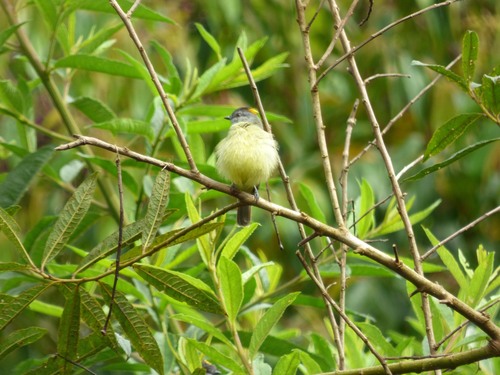 Yellow-crowned Tyrannulet
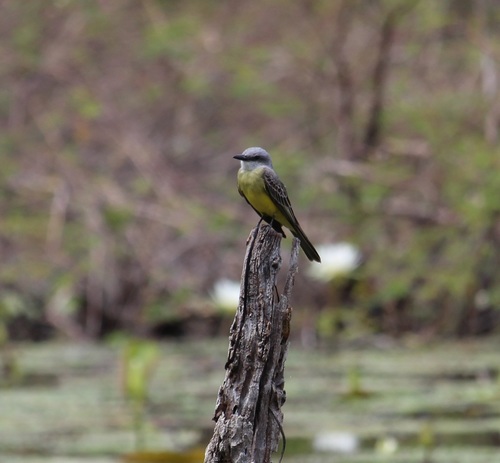 Tropical Kingbird
In breve
Il segno di campo più affidabile per separare il Yellow-crowned Tyrannulet dal Tropical Kingbird è la dimensione e la struttura: il tyrannulet è un piccolo e compatto catturapasseri con un becco corto e arrotondato e una distintiva striscia gialla sulla corona, mentre il kingbird è molto più grande, con un becco pesante e lungo e una testa grigia chiara con una sottile striscia arancione sulla corona. In tutte le età, il kingbird mostra una lunga coda profondamente biforcuta e una postura robusta e verticale, in contrasto con la coda corta e la struttura più delicata del tyrannulet. Entrambi hanno parti inferiori gialle, ma la testa del kingbird è molto più chiara e la sua maschera è più audace. I kingbird immaturi possono mostrare bordi delle ali di un buff chiaro, ma anche i giovani uccelli sono di gran lunga più grandi e robusti di qualsiasi tyrannulet.
Consigli di identificazione
- La dimensione è il primo controllo: Se l'uccello è di dimensioni simili a un passero o più piccolo, non può essere un Tropical Kingbird. I kingbird sono grandi e robusti catturapasseri; i tyrannulet sono piccoli e delicati.
- Forma e dimensione del becco: Il becco del tyrannulet è corto, arrotondato e nero; quello del kingbird è lungo, pesante e grigio. Anche a distanza, il becco del kingbird appare spesso e prominente.
- Forma della coda: La coda del kingbird è lunga e profondamente biforcuta, particolarmente evidente quando è aperta o in volo. La coda del tyrannulet è corta, incisa e mai biforcuta.
- Striscia sulla corona: Cerca la brillante striscia gialla o arancio-gialla sulla corona del tyrannulet (soprattutto nei maschi); la striscia arancione del kingbird è raramente visibile e la testa appare grigia chiara nel complesso.
- Schema della testa: Il tyrannulet ha un supercilio grigiastro e una sottile linea oculare scura; il kingbird ha una maschera scura audace e nessun supercilium forte.
- Colore delle parti inferiori: Entrambi hanno pance gialle, ma quella del tyrannulet è più chiara e più lavata di oliva sul petto, mentre quella del kingbird è gialla brillante nettamente distinta da una gola e un petto grigi chiari.
- Bande alari: Il tyrannulet mostra sempre due bande alari bianche a giallastre ben definite; le bande alari del kingbird sono meno distinte, ma i giovani possono mostrare bordi di buff chiaro sulle copritrici.
- Segni giovanili/immaturi: Solo i giovani kingbird hanno bordi di buff chiaro sulle copritrici delle ali; i tyrannulet non mostrano questo a nessuna età.
- Comportamento di posarsi: I kingbird si posano in alto e in modo esposto, spesso su fili o cime degli alberi; i tyrannulet sono più propensi a trovarsi a metà chioma o tra il fogliame.
- Stile di volo: I kingbird effettuano lunghe e acrobatiche sortite e possono planare; i tyrannulet effettuano voli brevi e diretti.
- Contesto dell'habitat: In habitat molto aperti, urbani o lungo le strade, è più probabile trovare il kingbird; il tyrannulet preferisce il bordo del bosco o una vegetazione più densa.
- Vocalizzazione: Se senti un trill acuto 'tree-e-e-e-e-e', è un kingbird; la voce del tyrannulet non è descritta qui.
- Differenze sessuali: Le femmine di tyrannulet sono leggermente più piccole e più chiare dei maschi, ma comunque molto più piccole di qualsiasi kingbird.
- Iride e zampe: Entrambi hanno iridi scure e zampe grigie o nere, non un separatore utile.
- Sovrapposizione dell'areale: Entrambi possono verificarsi insieme in America Centrale e nel nord del Sud America, ma il kingbird è molto più diffuso in habitat aperti e disturbati.
Taglia
Il Yellow-crowned Tyrannulet è drammaticamente più piccolo, pesando circa 7 g e misurando solo 10–11 cm di lunghezza, rispetto ai 37 g e 22 cm di lunghezza del Tropical Kingbird. Sul campo, il kingbird appare quasi tre volte la massa del tyrannulet ed è molto più lungo nel corpo, con una testa e un becco visibilmente più grandi. Questa differenza di dimensioni è ovvia anche a distanza o in stormi misti.
Piumaggio
- Schema delle ali giovanili/immaturi: I giovani Tropical Kingbirds mostrano bordi di buff chiaro sulle copritrici delle ali, il che può creare un aspetto leggermente 'squamoso' sulla parte superiore dell'ala. Il Yellow-crowned Tyrannulet, al contrario, non mostra mai questo; le sue bande alari sono sempre bianche a giallastre e nitide in tutte le età.
- Striscia sulla corona: Il tyrannulet ha una brillante striscia gialla a arancio-gialla sulla corona impostata in una corona più scura (grigio ardesia a nerastra), soprattutto nei maschi. La striscia sulla corona del kingbird è arancione ma di solito nascosta, e la testa è grigia chiara nel complesso.
- Supercilium e maschera: Il tyrannulet ha un supercilio grigiastro e una sottile linea oculare scura, mentre il kingbird ha una maschera oculare scura audace e nessun supercilium forte.
- Parti inferiori: Entrambi sono gialli sotto, ma il giallo del tyrannulet è più chiaro e più lavato di oliva sul petto, mentre quello del kingbird è più brillante e più nettamente delimitato dalla gola e dal petto grigi chiari.
- Coda: La coda del kingbird è lunga, marrone e profondamente biforcuta; quella del tyrannulet è corta, oliva scura e incisa ma non biforcuta.
- Becco: Il tyrannulet ha un becco corto e arrotondato di colore nero; quello del kingbird è pesante, lungo e grigio.
Comportamento
Il Tropical Kingbird è evidente, spesso posandosi in alto e lanciandosi in voli lunghi e acrobatici per catturare insetti, a volte planando o inseguendo aggressivamente le prede. È territoriale e inseguirà uccelli molto più grandi. Il Yellow-crowned Tyrannulet è più ritirato, cercando cibo silenziosamente nella chioma media o alta, effettuando brevi sortite e raramente posandosi in modo così prominente. I tyrannulet sono meno propensi a essere visti difendere il territorio o impegnarsi in inseguimenti aerei.
Habitat
Entrambe le specie possono verificarsi in aree semiaperte con alberi, ma il Tropical Kingbird è più probabile in campagna aperta, parchi urbani, lungo le strade e nei giardini, spesso in posatoi molto visibili. Il Yellow-crowned Tyrannulet preferisce i bordi delle foreste, i boschi e habitat più densamente vegetati, di solito non così esposti come i kingbird. In America Centrale e nel nord del Sud America, il kingbird è molto più diffuso e comune in habitat disturbati o aperti.
Voce
Il Tropical Kingbird ha un trill distintivo e acuto, spesso reso come 'tree-e-e-e-e-e', e un canto dell'alba più complesso. La voce del Yellow-crowned Tyrannulet non è descritta nelle note, quindi la vocalizzazione è solo un separatore affidabile se si sente il richiamo del kingbird.
Yellow-crowned Tyrannulet · Tropical Kingbird · I miei uccelli difficili