

Motmot

ヒメタイランチョウ 対 ミドリキクイタダキモドキ

Tyrannulus elatus 対 Myiopagis viridicata

ヒメタイランチョウとミドリキクイタダキモドキのクイズ
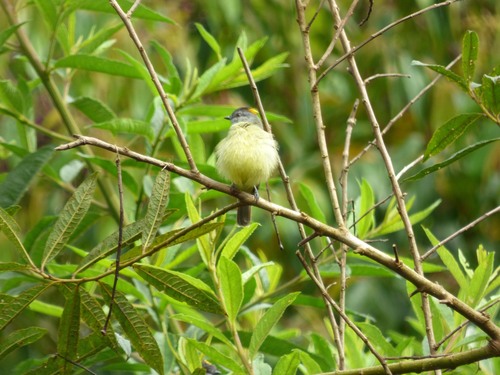
ヒメタイランチョウ (Tyrannulus elatus) ヒメタイランチョウ
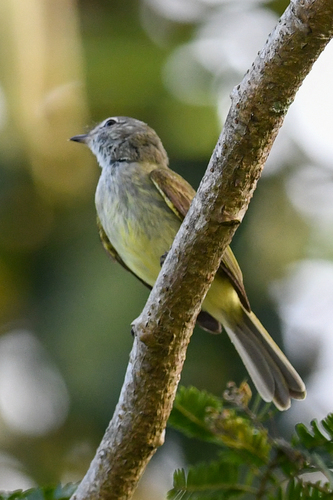
ミドリキクイタダキモドキ (Myiopagis viridicata) ミドリキクイタダキモドキ

メディア

読み込み中…

要点

イエロークラウンタイランチョウとミドリキクイタダキモドキを区別する最も信頼できるフィールドマークはサイズです:タイランチョウは明らかに小さく、軽量で、より繊細な体型をしています。羽毛では、タイランチョウは暗い冠に鮮明に定義された明るい黄色またはオレンジ黄色の冠ストライプを示し、一方でキクイタダキモドキは緑がかったオリーブ色の冠に部分的に隠れたより拡散した黄色の冠ストライプを持っています。両者はオリーブ色の上面と淡い黄色の下面を持っていますが、タイランチョウは下面がより明るく、頭部の模様がより対照的です。構造的な違い、特にくちばしのサイズと全体的な比率も重要です。未熟な特定の翼の模様はどちらの種にも記載されていないため、成鳥の羽毛と構造に焦点を当ててください。

識別のコツ

  1. サイズが最も明確な区別点です: 鳥が明らかに小さくて繊細であれば、イエロークラウンタイランチョウを考えてください;中型でがっしりしていれば、ミドリキクイタダキモドキを考えてください。これは他のフライキャッチャーと一緒に見たときに特に信頼できます。
  2. 冠ストライプ: タイランチョウの暗い(スレートグレーから黒っぽい)冠に鮮明に定義された明るい黄色またはオレンジ黄色のストライプを探してください。キクイタダキモドキの冠ストライプは薄く、しばしば隠れており、冠は暗いのではなく緑がかったオリーブ色です。このマークは良い光の中で、または鳥が冠の羽を持ち上げたときに最もよく見えます。
  3. 頭部の模様: タイランチョウは明確な灰色のスーペリキリウムと薄い暗いアイラインを持ち、シャープな顔の印象を与えます。キクイタダキモドキのスーペリキリウムは淡い色で、部分的な白いアイリングと混じった耳の覆い羽があり、顔があまりシャープに見えません。
  4. くちばしの形: タイランチョウは短く丸い黒いくちばしを持ち、キクイタダキモドキのくちばしは大きく、がっしりしており、下顎の基部が明るい場合があります。くちばしのサイズはしばしば横から見たり、鳥が鳴いているときに見えます。
  5. 翼帯: 両種とも淡い翼帯を持っていますが、タイランチョウの翼帯は白から黄色がかった白で、しばしばより明るく、キクイタダキモドキの翼帯は黄色がかっていて、翼とより混ざることがあります。
  6. 下面: タイランチョウは一般的により明るい黄色で、胸にオリーブ色の洗いがかかっています;キクイタダキモドキはより淡く、淡い灰色がかった白の胸(時々軽く縞模様がある)と淡い黄色の腹部を持っています。暗い光の中では、この違いは微妙です。
  7. 上面: タイランチョウのうなじと背中は明るいオリーブグリーンですが、キクイタダキモドキの上面は亜種によって鈍いものから明るいオリーブグリーンまで変化しますが、常にオリーブグリーンです。
  8. 尾: 両者とも暗いオリーブ色の尾を持っており、尾の色で区別するのは難しいです。
  9. 性別/年齢の違い: 雌のタイランチョウはわずかに淡く、小さくなりますが、シャープな冠ストライプは常に存在します。キクイタダキモドキの雄はわずかに大きな黄色の冠の斑点を持っていますが、それでも薄いです。どちらの種にも特定の幼鳥/未熟な翼の模様は記載されていません。
  10. 行動: タイランチョウはより活発で繊細に見えることがあり、翼や尾をひらひらさせることがありますが、キクイタダキモドキはより安定しており、落ち着きがありません。
  11. 生息地: 両者は似たような森林やエッジの生息地に生息しています;生息地だけで区別するのは避けてください。
  12. 分布: 両者は中央アメリカと南アメリカで広く重なっていますが、地元の状況を確認してください;キクイタダキモドキはチリとフランス領ギアナには存在せず、タイランチョウは南アメリカの最南部には存在しません。
  13. 混合群れ: 両者とも混合種の群れに参加することができるため、群れの構成に基づいて同定することは避けてください。
  14. 声: ここでは記載されていません;両種の鳴き声に慣れていない限り、注意して使用してください。
  15. 疑わしい場合: 最も信頼できるフィールドの区別のために、サイズ、冠ストライプのシャープさ、全体的な頭部の模様を優先してください。

大きさ

イエロークラウンタイランチョウはミドリキクイタダキモドキ(14 g、13–14 cm)よりもはるかに小さく軽量です(7 g、10–11 cm)[wikidata]。タイランチョウは華奢でコンパクトに見え、短く丸いくちばしを持っていますが、キクイタダキモドキは全体的にがっしりしていて長く、わずかに大きく、がっしりしたくちばしを持っています。フィールドでは、両者が一緒に見られたり、馴染みのあるフライキャッチャーと比較された場合、違いは明らかです:タイランチョウは最小のタイランニッドの一つであり、キクイタダキモドキは中型です。

羽色

行動

両者は活発で樹上性のフライキャッチャーであり、しばしば中層から上層の樹冠で採餌します。タイランチョウは小さいため、動きがより繊細で迅速に見えることがあり、しばしば翼や尾をひらひらさせます。キクイタダキモドキは大きなサイズのため、より慎重で落ち着きがないように見えることがあります。両者とも混合種の群れに参加することがありますが、タイランチョウはそのサイズと微妙さのために見落とされる可能性が高いです。

生息環境

分布は中央アメリカと南アメリカで広く重なっていますが、タイランチョウは南アメリカの最南部には存在せず、キクイタダキモドキはチリとフランス領ギアナにのみ存在しません [wikipedia]。両者はさまざまな森林やエッジの生息地を利用しますが、地元の豊富さは異なる場合があります:ミドリキクイタダキモドキはしばしば珍しいから一般的と記載されますが、見落とされやすい一方で、タイランチョウは広範囲に分布していますが、報告されることは少ないです。両者は森林のエッジ、二次成長、開けた森林に見られることができるため、生息地は強い区別点ではありません。

より良い説明を送る

比較と同じ項目を使ってください。文章はすぐに公開されます。

The most reliable field mark to separate Yellow-crowned Tyrannulet from Greenish Elaenia is size: the tyrannulet is noticeably smaller and lighter, with a more delicate build. In plumage, the tyrannulet shows a sharply defined, bright yellow or orange-yellow crown stripe on a darker crown, while the elaenia has a more diffuse, partially hidden yellow crown stripe on a greenish-olive crown. Both have olive upperparts and pale yellow underparts, but the tyrannulet is brighter below and has a more contrasting head pattern. Structural differences, especially bill size and overall proportions, are also key. Immature-specific wing patterns are not described for either species, so focus on adult plumage and structure.

  1. Size is the clearest separator: If the bird is noticeably tiny and delicate, think Yellow-crowned Tyrannulet; if it is mid-sized and bulkier, think Greenish Elaenia. This is especially reliable when seen alongside other flycatchers.
  2. Crown stripe: Look for a sharply defined, bright yellow or orange-yellow stripe on a dark (slate-gray to blackish) crown for tyrannulet. Elaenia's crown stripe is faint, often hidden, and the crown is greenish-olive rather than dark. This mark is best seen in good light or when the bird raises its crown feathers.
  3. Head pattern: Tyrannulet has a clear grayish supercilium and a thin, dark eye-line, giving a crisp facial look. Elaenia's supercilium is paler, with a partial white eyering and grizzled ear coverts, making the face look less sharply marked.
  4. Bill shape: Tyrannulet has a short, rounded black bill; elaenia's bill is larger, stouter, and may have a lighter base to the mandible. Bill size is often visible in profile or when the bird is calling.
  5. Wingbars: Both species have pale wingbars, but tyrannulet's are white to yellowish white and often brighter, while elaenia's are yellowish and may blend more with the wing.
  6. Underparts: Tyrannulet is generally brighter yellow below, with an olive wash on the breast; elaenia is paler, with a grayish white breast (sometimes lightly streaked) and a pale yellow belly. In poor light, this difference can be subtle.
  7. Upperparts: Tyrannulet's nape and back are bright olive-green, while elaenia's upperparts can be duller or brighter depending on subspecies, but are always olive-green.
  8. Tail: Both have dusky olive tails, so do not rely on tail color for separation.
  9. Sex/age variation: Female tyrannulets are slightly paler and smaller, but the sharp crown stripe is always present. Elaenia males have a slightly larger yellow crown patch, but it is still faint. No distinctive juvenile/immature wing patterns are described for either species.
  10. Behavior: Tyrannulet may appear more active and delicate, flicking wings and tail, while elaenia is steadier and less restless.
  11. Habitat: Both occur in similar wooded and edge habitats; do not rely on habitat alone for separation.
  12. Range: Both overlap widely in Central and South America, but check local status; elaenia is absent from Chile and French Guiana, tyrannulet from southernmost South America.
  13. Mixed flocks: Both can join mixed-species flocks, so do not assume identity based on flock composition.
  14. Voice: Not described here; use with caution unless familiar with both species' calls.
  15. When in doubt: Prioritize size, crown stripe sharpness, and overall head pattern for the most reliable field separation.

Yellow-crowned Tyrannulet is much smaller and lighter (7 g, 10–11 cm) than Greenish Elaenia (14 g, 13–14 cm) [wikidata]. The tyrannulet appears dainty and compact, with a short, rounded bill, while the elaenia is bulkier and longer overall, with a slightly larger, stouter bill. In the field, the difference is obvious if both are seen together or compared to familiar flycatchers: the tyrannulet is among the smallest tyrannids, while the elaenia is mid-sized.

  • Crown stripe: Adult Yellow-crowned Tyrannulet has a sharply defined, bright yellow to orange-yellow stripe running along the middle of a slate-gray to blackish crown, very striking and contrasting. In contrast, Greenish Elaenia's crown is greenish-olive with only a faint, partially hidden yellow stripe (more extensive in males), blending into the crown and rarely obvious unless the feathers are raised.
  • Head pattern: Tyrannulet shows a grayish supercilium and a thin dark eye-line, with a pale gray lower face. Elaenia has a whitish gray supercilium, a partial white eyering, and grizzled whitish ear coverts, giving a more muted, less sharply marked face.
  • Upperparts: Both are olive-green above, but the tyrannulet's nape and back are brighter, while the elaenia's upperparts can vary from dull to bright olive-green depending on subspecies.
  • Wings: Both have dusky wings with pale wingbars, but the tyrannulet's bars are white to yellowish white and often stand out more. Elaenia's wingbars are yellowish, and the inner flight feathers have yellowish edges.
  • Underparts: Tyrannulet is pale to medium yellow below with an olive wash on the breast; elaenia is paler, with a pale grayish white breast (sometimes lightly streaked olive) and pale yellow belly and undertail. Subtle, but the tyrannulet is generally brighter and more uniform below.
  • Tail: Both have dusky olive tails, not a strong separator.
  • Sex/age differences: Female tyrannulets are slightly paler and smaller, but the crown stripe is always sharper than in elaenia. No juvenile/immature-specific wing patterns are described for either species.

Both species are active, arboreal flycatchers, often foraging in the mid to upper canopy. The tyrannulet, being smaller, may appear more delicate and quick in its movements, often flicking its wings and tail. The elaenia, with its larger size, can seem more deliberate and less restless. Both may join mixed-species flocks, but the tyrannulet is more likely to be overlooked due to its size and subtlety.

Ranges overlap widely in Central and South America, but the tyrannulet is absent from southernmost South America, while the elaenia is absent only from Chile and French Guiana [wikipedia]. Both use a variety of wooded and edge habitats, but local abundance may differ: Greenish Elaenia is often described as uncommon to common but easily overlooked, while the tyrannulet is widespread but less frequently reported. Both can be found in forest edges, second growth, and open woodland, so habitat is not a strong separator.

変更を破棄しますか?

保存していない編集があります。今離れると失われます。

ヒメタイランチョウ · ミドリキクイタダキモドキ · 苦手な鳥