

Motmot

キバシカッコウ 対 マングローブカッコウ

Coccyzus americanus 対 Coccyzus minor

キバシカッコウとマングローブカッコウのクイズ
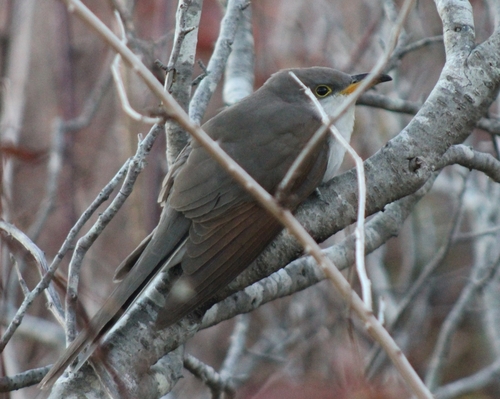
キバシカッコウ (Coccyzus americanus) キバシカッコウ
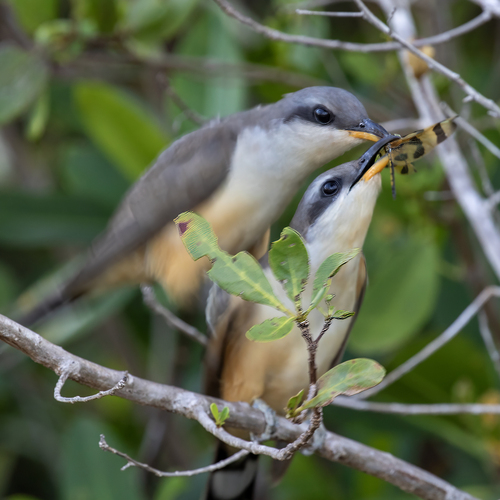
マングローブカッコウ (Coccyzus minor) マングローブカッコウ

メディア

読み込み中…

要点

イエロービルカッコウとマングローブカッコウを区別する最も信頼性の高いフィールドマークは、マングローブカッコウに見られる太い黒い顔のマスクと淡い下腹部の存在であり、イエロービルカッコウにはこれがありません。両種は、黒と白の長い尾、茶色の上面、下顎に黄色のある黒い曲がったくちばしを共有しているため、特に素早いまたは遠くからの視界では混乱しやすいです。幼鳥のイエロービルカッコウは灰色(黒ではない)の尾の下の斑点を持っていますが、これは微妙で、遠くからは診断的ではありません。飛行中、イエロービルカッコウは翼に明らかなシナモン色を示し、これはマングローブカッコウには言及されていません。構造的には、マングローブカッコウは平均してやや大きくて重いですが、これは強いフィールドマークではありません。生息地はしばしば最良の手がかりです:マングローブカッコウはマングローブや沿岸の茂みに限定されているのに対し、イエロービルカッコウは森林や河川地域に広く分布しています。

識別のコツ

  1. 黒い顔のマスク(成鳥のマングローブのみ): マングローブカッコウの目と頬を通る太い黒い線を探してください。イエロービルカッコウはこの特徴を示しません。これはどの距離でも最も良いマークです。
  2. 下腹部の色: マングローブカッコウは明確に淡い下腹部を持っていますが、イエロービルカッコウの下腹部は清潔な白です。照明がこれに影響を与えることがあるので、温かい色合いとクリスプな白を確認してください。
  3. 翼のシナモン(イエロービルのみ): 飛行中、イエロービルカッコウは翼に豊かなシナモン色を見せ、特に下からまたは強い光の中で目立ちます。マングローブカッコウはこれを示しません。
  4. 幼鳥の尾の下の斑点: 幼鳥のイエロービルカッコウは黒の代わりに灰色の尾の下の斑点を持っています。これは微妙で、通常は近距離または写真でのみ見られます。
  5. くちばしの模様: 両者は下顎に黄色のある黒い曲がったくちばしを持っています。これは区別には役立ちません。
  6. 尾の模様: 両種は黒と白の長い尾を持っています。尾の模様はこれら二つの間では診断的ではありません。
  7. 目のリング: 両者は黄色の目のリングを示します;これは区別の特徴ではありません。
  8. サイズと構造: マングローブカッコウは平均してやや大きくて重いですが、これは一緒に見ない限りフィールドでは信頼できません。
  9. 生息地: マングローブや密な沿岸の茂みの中にいる場合、マングローブカッコウの可能性が高いです。マングローブから離れている場合、特に内陸の森林や河川の森では、イエロービルカッコウの方がはるかに可能性が高いです。
  10. 声: マングローブカッコウの喉の奥から出る「ガーク ガーク」という呼び声を聞いてください。これを聞いた場合、イエロービルカッコウではなくマングローブを聞いている可能性が高いです。
  11. 性別と季節: 両種は性別による形態的差異がなく、強い季節的な羽毛の変化を示さないため、これらは区別には役立ちません。
  12. 行動: 両者は秘密主義的で、密な葉の中で動かずに止まっていることがよくあります。行動は信頼できる区別にはなりません。
  13. 分布: マングローブカッコウはネオトロピカルおよび南フロリダの特産であり、イエロービルカッコウは北アメリカに広く分布しています。分布を補助的な手がかりとして使用しますが、唯一のフィールドマークとしては使用しません。
  14. クイズの落とし穴: ほとんどの混乱は、顔のマスクと下腹部の色を判断しにくい遠くまたは逆光の視界から生じます。顔と腹部をはっきりと見るようにし、飛行中に翼のシナモン色に注意してください。
  15. 未成熟の鳥: 幼鳥を疑う場合、灰色の尾の下の斑点(イエロービル)を確認しますが、よく見ない限りこれにのみ依存しないでください。

大きさ

両種は長さ(イエロービル:26–30 cm;マングローブ:28–34 cm)と翼幅(38–43 cm)で似ていますが、マングローブカッコウは平均して重いです(体重66–102 g対イエロービルの55–65 g)[wikidata]。実際には、このサイズの違いは微妙で、横に並べて見ない限りフィールドでは簡単に判断できません。マングローブの方がやや大きい印象を与えるかもしれませんが、両者はスリムで長い尾を持っています。

羽色

行動

両種は通常、鈍くて秘密主義的で、密な葉の中で動かずにいることがよくあります。彼らは毛虫や他の昆虫のために飛び出すことがあります。イエロービルカッコウは嵐の前に鳴くことで知られています(「雨のカラス」)が、これは視覚的な手がかりではありません。フィールドでの区別に役立つ主要な行動の違いはありません。

生息環境

生息地は強力な手がかりです:マングローブカッコウは主にネオトロピカルおよび南フロリダのマングローブの森や密な沿岸の茂みに制限されています。イエロービルカッコウははるかに広く分布しており、落葉樹の森林、河川の回廊、および北アメリカの多くのオープンフォレストに見られます。マングローブの中または隣接していない場合、マングローブカッコウの可能性は低いです。

声

マングローブカッコウは特徴的な喉の奥から出る「ガーク ガーク ガーク ガーク ガウク ガウク」と単一の「ホイット」という呼び声を出します。イエロービルカッコウの呼び声はメモには記載されていませんが、同じ喉の奥から出る系列では知られていません。マングローブの独特な呼び声が聞こえた場合、声は役立つかもしれません。

より良い説明を送る

比較と同じ項目を使ってください。文章はすぐに公開されます。

The most reliable field mark to separate Yellow-billed Cuckoo from Mangrove Cuckoo is the presence of a bold black facial mask and buffy underparts on the Mangrove Cuckoo, which are absent on Yellow-billed. Both species share a long tail with black-and-white below, brown upperparts, and a black curved bill with yellow on the lower mandible, so confusion is easy, especially in quick or distant views. Juvenile Yellow-billed Cuckoos have gray (not black) undertail spots, but this is subtle and rarely diagnostic at a distance. In flight, Yellow-billed shows obvious cinnamon in the wings, a feature not mentioned for Mangrove. Structurally, Mangrove Cuckoo is slightly larger and heavier on average, but this is not a strong field mark. Habitat is often the best clue: Mangrove Cuckoo is restricted to mangroves and coastal thickets, while Yellow-billed is more widespread in woodlands and riparian areas.

  1. Black facial mask (adult Mangrove only): Look for a bold black line through the eye and cheek on Mangrove Cuckoo; Yellow-billed never shows this feature. This is the single best mark at any range.
  2. Underparts color: Mangrove Cuckoo has distinctly buffy underparts, while Yellow-billed Cuckoo's are clean white. Lighting can affect this, so check for a warm wash versus crisp white.
  3. Cinnamon in wings (Yellow-billed only): In flight, Yellow-billed Cuckoo flashes rich cinnamon in the wings, especially visible from below or in strong light. Mangrove Cuckoo does not show this.
  4. Juvenile undertail spots: Juvenile Yellow-billed Cuckoos have gray undertail spots instead of black. This is subtle and usually only seen at close range or in photos.
  5. Bill pattern: Both have a black curved bill with yellow on the lower mandible. This is not useful for separation.
  6. Tail pattern: Both species have a long tail with black-and-white below. Tail pattern is not diagnostic between these two.
  7. Eye-ring: Both show a yellow eye-ring; not a separating feature.
  8. Size and structure: Mangrove Cuckoo averages slightly larger and heavier, but this is not reliable in the field unless seen together.
  9. Habitat: If you are in mangroves or dense coastal thickets, Mangrove Cuckoo is likely. Away from mangroves, especially in inland woodlands or riparian forests, Yellow-billed is much more probable.
  10. Voice: Listen for the Mangrove Cuckoo's guttural 'gawk gawk' call. If you hear this, you are likely hearing Mangrove, not Yellow-billed.
  11. Sex and season: Both species are sexually monomorphic and do not show strong seasonal plumage changes, so these are not useful for separation.
  12. Behavior: Both are secretive and often perch motionless in dense foliage. Behavior is not a reliable separator.
  13. Range: Mangrove Cuckoo is a Neotropical and southern Florida specialty; Yellow-billed is widespread in North America. Use range as a supporting clue, but not as a sole field mark.
  14. Quiz pitfalls: Most confusion arises from distant or backlit views, where the facial mask and underparts color are hard to judge. Try to get a clear look at the face and belly, and note any cinnamon in the wings during flight.
  15. Immature birds: If you suspect a juvenile, check for gray undertail spots (Yellow-billed) but do not rely solely on this unless seen well.

Both species are similar in length (Yellow-billed: 26–30 cm; Mangrove: 28–34 cm) and wingspan (38–43 cm), but Mangrove Cuckoo is on average heavier (body mass 66–102 g vs. 55–65 g for Yellow-billed) [wikidata]. In practice, this size difference is subtle and not easily judged in the field unless seen side-by-side. The impression of bulk may be slightly greater in Mangrove, but both appear slim and long-tailed.

  • Juveniles: Yellow-billed Cuckoo juveniles have gray undertail spots instead of black, but otherwise resemble adults. No distinctive juvenile marks are described for Mangrove Cuckoo, so age-related separation is limited.
  • Adults: Mangrove Cuckoo is best identified by its bold black facial mask and buffy (not white) underparts. Yellow-billed Cuckoo lacks the facial mask and has clean white underparts. Both have brown upperparts, a long tail with black-and-white below, and a black curved bill with yellow on the lower mandible. Both show a yellow eye-ring. In flight, Yellow-billed Cuckoo shows obvious cinnamon coloration in the wings, which is not mentioned for Mangrove and is a useful mark if seen well.
  • Sexes: Both species are sexually monomorphic—males and females look alike.

Both species are typically sluggish and secretive, often remaining motionless in dense foliage. They may sally out for caterpillars or other insects. Yellow-billed Cuckoo is known for calling before storms ('rain crow'), but this is not a visual cue. No major behavioral differences are noted that aid in field separation.

Habitat is a strong clue: Mangrove Cuckoo is largely restricted to mangrove forests and dense coastal thickets in the Neotropics and southern Florida. Yellow-billed Cuckoo is much more widespread, found in deciduous woodlands, riparian corridors, and open forests across much of North America. If you are not in or adjacent to mangroves, Mangrove Cuckoo is unlikely.

Mangrove Cuckoo gives a distinctive guttural 'gawk gawk gawk gawk gauk gauk' and a single 'whit' call. Yellow-billed Cuckoo's call is not described in the notes, but it is not known for the same guttural series. Voice can be helpful if the Mangrove's unique call is heard.

変更を破棄しますか?

保存していない編集があります。今離れると失われます。

キバシカッコウ · マングローブカッコウ · 苦手な鳥