

Motmot

キバラヒメムシクイ 対 ミドリコムシクイ

Eremomela icteropygialis 対 Camaroptera brachyura

キバラヒメムシクイとミドリコムシクイのクイズ

キバラヒメムシクイ (Eremomela icteropygialis) キバラヒメムシクイ
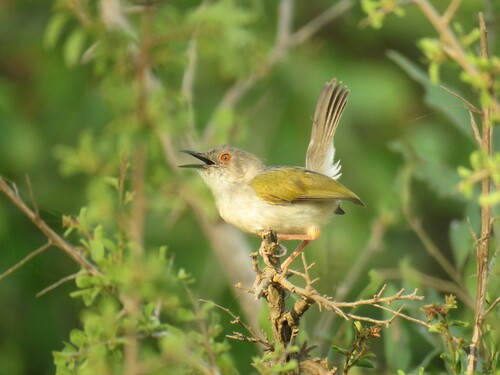
ミドリコムシクイ (Camaroptera brachyura) ミドリコムシクイ

メディア

読み込み中…

要点

イエローベリーエレモメラとミドリコムシクイを区別する最も信頼できるフィールドマークは、腹部の色です:エレモメラは明確に黄色の腹部を示します(トーンは亜種や年齢によって異なります)が、コムシクイは白灰色の腹部を持っています。両者は小さく、活発なウグイス科の鳥ですが、エレモメラは上面が灰色で、淡い眉斑を持ち、コムシクイは緑色の背中を持ち、強い顔の模様がありません。両者の幼鳥は下部が鈍い色ですが、エレモメラは一部の黄色を保持しています。両種はサイズが似ていますが、コムシクイはわずかに重く、尾が長いです。フィールドでは、エレモメラの明るいレモン色の腹部と対照的な灰色の頭を探し、コムシクイの全体的な緑と白の外観および密な低いカバーを好むことに注目してください。

識別のコツ

  1. Underparts color: 最も良いフィールドマークは腹部の色です—イエローベリーエレモメラは成鳥で明確に黄色(レモン色)の腹部を示しますが、ミドリコムシクイは下部が白灰色です。これはほとんどの亜種や年齢に当てはまりますが、幼鳥のエレモメラは鈍い黄色です。
  2. Upperparts: エレモメラは上面が灰色で、翼と尾でオリーブ色が強くなります;コムシクイは全体が緑色の背中とオリーブ色の翼を持っています。コムシクイの全体的な緑色のトーンと、エレモメラのより灰色で対照的な外観を探してください。
  3. Facial pattern: エレモメラは薄い灰色の眉斑と目を通る黒っぽいストライプを持ち、より際立った顔をしています。コムシクイは強い眉斑や目のストライプがなく、顔が平凡に見えます。
  4. Throat and breast: 一部のエレモメラの亜種(特に南アフリカの西部)には白灰色の喉と胸があり、黄色の印象を減少させることがありますが、黄色の腹部は通常まだ見えます。コムシクイは一貫して白灰色の下部を持ち、時々幼鳥には淡い黄色の洗いが見られます。
  5. Bill color: エレモメラは黒っぽいくちばしを持っています;コムシクイのくちばしの色は記載されていないため、これは信頼できる区別にはなりません。
  6. Tail: コムシクイは短い尾を持つと記載されていますが、これは微妙でフィールドでは常に明らかではありません。
  7. Size: 両者は小さいですが、コムシクイはわずかに重く、長い(11.5 cm対10 cm)ですが、これは直接比較なしではあまり役に立ちません。
  8. Behavior: コムシクイは非常に隠れがちで、密なカバーの中で低く留まり、めったに開けた場所に出てきません。エレモメラはよりオープンな状況や高い茂みで活発に餌を探しているのが見られる可能性が高いです。
  9. Habitat: 鳥が絡み合った下草の中に深くいる場合、コムシクイの可能性が高いです;オープンな森林や低木にいる場合はエレモメラの可能性が高いですが、重複があります。
  10. Juvenile confusion: 両種は幼鳥の時に鈍い色ですが、エレモメラの幼鳥は下部に一部の黄色を保持し、コムシクイの幼鳥は胸で淡い黄色ですが、下部はほとんど白灰色です。
  11. Flight/wing pattern: どちらの種にも特有の翼や飛行のマークは記載されていないため、飛行中の上翼のパターンに頼らないでください。
  12. Voice: エレモメラは高音で繰り返される「チー・チー・チュート」を出します;コムシクイの呼び声はここでは記載されていないため、コムシクイの鳴き声を知っている場合を除き、声には注意してください。
  13. Sexes: 両種は性別で形態的に同じであり、オスとメスは似ています。
  14. Pitfalls: 喉と胸が淡いエレモメラの亜種に注意してください。これは下部が黄色に見えにくく、コムシクイの幼鳥は胸に淡い黄色の色合いがあることがあります。常に下部の全体的な黄色と白灰色の印象を確認してください。
  15. Context: 最も信頼できる識別のために、下部の色、顔のパターン、行動の組み合わせを使用してください。特に羽毛が鈍い場合や視界が短い場合に有効です。

大きさ

両種は非常に小さなウグイスですが、ミドリコムシクイはわずかに重い(10 g対約9 gのエレモメラ)で、わずかに長い(コムシクイは11.5 cm、エレモメラは10 cm)です。コムシクイは短い尾を持つと記載されていますが、フィールドではその違いは微妙です。サイズだけでは信頼できる区別にはなりませんが、コムシクイは特に並べて見ると、ややコンパクトで重い体に見えることがあります。

羽色

行動

ミドリコムシクイは通常非常に隠れがちで、密なカバーの中で低く留まり、めったに開けた場所に出てきません。しばしば葉を束ねて低い茂みの中に巣を作ります。イエローベリーエレモメラは、活発でウグイスのようですが、特に隠れがちとは記載されておらず、オープンな状況や高い茂みでより容易に見られる可能性があります。両者は昆虫食で活発ですが、コムシクイの隠れる傾向は行動の手がかりです。

生息環境

両種はサハラ以南のアフリカのさまざまな茂みや森林の生息地に生息していますが、ミドリコムシクイは特に密な低いカバーに関連しており、しばしば茂みや絡み合った植生の中にいます。イエローベリーエレモメラは密な下草に厳密に結びついているわけではなく、よりオープンな森林や低木地でも見られることがあります。生息地だけでは診断的ではありませんが、補足的な文脈を提供することができます。

声

イエローベリーエレモメラは高音で繰り返される「チー・チー・チュート」の鳴き声を出します。メモにはミドリコムシクイの特定の鳴き声の記述はありませんが、「鳴くコムシクイ」として知られており、異なる、より鼻にかかったり鳴くような呼び声を示唆しています。高く繰り返されるチー・チー・チュートが聞こえた場合、エレモメラの可能性が高いです;コムシクイの呼び声はここでは記載されていないため、注意してください。

より良い説明を送る

比較と同じ項目を使ってください。文章はすぐに公開されます。

The most reliable field mark to separate Yellow-bellied Eremomela from Green-backed Camaroptera is the color of the underparts: eremomela shows a distinctly yellow belly (though the tone varies by subspecies and age), while camaroptera has whitish-grey underparts. Both are small, active warblers in the Cisticolidae family, but eremomela is greyer above with a pale supercilium, whereas camaroptera is green-backed and lacks a strong facial pattern. Juveniles of both are duller below, but the eremomela retains some yellow. Both species are similar in size, but camaroptera is slightly heavier and longer-tailed. In the field, look for eremomela’s brighter lemon belly and contrasting grey head, versus camaroptera’s overall green and white appearance and preference for dense, low cover.

  1. Underparts color: The single best field mark is the belly color—Yellow-bellied Eremomela shows a distinctly yellow (lemon) belly in adults, while Green-backed Camaroptera is whitish-grey below. This holds for most subspecies and ages, though juvenile eremomelas are duller yellow.
  2. Upperparts: Eremomela is grey above, becoming more olive on the wings and tail; camaroptera is green-backed and olive-winged throughout. Look for the overall green tone in camaroptera versus the greyer, more contrasting look of eremomela.
  3. Facial pattern: Eremomela has a thin pale grey supercilium and a blackish stripe through the eye, giving it a more marked face. Camaroptera lacks a strong supercilium or eye-stripe and looks plainer in the face.
  4. Throat and breast: Some eremomela subspecies (especially in western southern Africa) have a whitish throat and breast, which can reduce the yellow impression, but the yellow belly is usually still visible. Camaroptera is consistently whitish-grey below, sometimes with a faint yellowish wash in juveniles.
  5. Bill color: Eremomela has a blackish bill; camaroptera’s bill color is not described, so this is not a reliable separator.
  6. Tail: Camaroptera is described as short-tailed, but this is subtle and not always obvious in the field.
  7. Size: Both are tiny, but camaroptera is slightly heavier and longer (11.5 cm vs. 10 cm), though this is rarely useful without direct comparison.
  8. Behavior: Camaroptera is much more skulking, staying low in dense cover and rarely coming into the open. Eremomela is more likely to be seen actively foraging in more open situations or higher in bushes.
  9. Habitat: If the bird is deep in tangled undergrowth, camaroptera is more likely; if it is in open woodland or shrub, eremomela is more likely, but there is overlap.
  10. Juvenile confusion: Both species are duller as juveniles, but eremomela juveniles retain some yellow on the underparts, while camaroptera juveniles are paler yellow on the breast but mostly whitish-grey below.
  11. Flight/wing pattern: No distinctive wing or flight marks are described for either species, so do not rely on upperwing pattern in flight.
  12. Voice: Eremomela gives a high-pitched, repeated "tchee-tchee-tchuut"; camaroptera’s call is not described here, so use voice with caution unless you know camaroptera’s bleating call.
  13. Sexes: Both species are sexually monomorphic—males and females look alike.
  14. Pitfalls: Beware of eremomela subspecies with paler throats and breasts, which can look less yellow below, and of camaroptera juveniles with a faint yellowish tinge on the breast. Always check for the overall yellow vs. whitish-grey impression on the underparts.
  15. Context: Use a combination of underparts color, face pattern, and behavior for the most reliable identification, especially when plumage is dull or the view is brief.

Both species are very small warblers, but Green-backed Camaroptera is marginally heavier (10 g vs. about 9 g for eremomela) and slightly longer (11.5 cm for camaroptera, 10 cm for eremomela). The camaroptera is also described as short-tailed, but the difference is subtle in the field. Size alone is not a reliable separator, but camaroptera may look a bit more compact and heavier-bodied, especially when seen side-by-side.

  • Juvenile/immature plumage: Both species have duller underparts as juveniles, but Yellow-bellied Eremomela juveniles still show some yellow below, while camaroptera juveniles are paler yellow on the breast but generally much less saturated, tending toward whitish-grey.
  • Adults: Eremomela adults have grey upperparts (darker and more olive on wings and tail), a thin pale grey supercilium, a blackish eye-stripe, and a lemon yellow belly. The throat and breast can be whitish in some subspecies, especially in western southern Africa. Camaroptera adults have green upperparts, olive wings, and whitish-grey underparts, with no strong facial markings. The sexes are similar in both species.
  • Flight/wing pattern: No distinctive age-specific upperwing or flight marks are described for either species; separation relies on overall coloration and face pattern.

Green-backed Camaroptera is typically very skulking, staying low in dense cover and rarely venturing into the open. It often binds leaves together to build its nest low in bushes. Yellow-bellied Eremomela, while also active and warbler-like, is not described as particularly skulking and may be seen more readily in open situations or higher in bushes. Both are insectivorous and active, but camaroptera’s tendency to stay hidden is a behavioral clue.

Both species inhabit a range of bushy and wooded habitats in sub-Saharan Africa, but Green-backed Camaroptera is especially associated with dense, low cover, often in thickets or tangled vegetation. Yellow-bellied Eremomela is less strictly tied to dense undergrowth and may be found in more open woodland or shrubland. Habitat alone is not diagnostic but can provide supporting context.

Yellow-bellied Eremomela gives a high-pitched, repeated "tchee-tchee-tchuut" call. No specific vocal description is provided for Green-backed Camaroptera in the notes, but it is known as the "bleating camaroptera," suggesting a different, possibly more nasal or bleating call. If you hear a high, repeated tchee-tchee-tchuut, eremomela is more likely; camaroptera’s call is not described here, so use caution.

変更を破棄しますか?

保存していない編集があります。今離れると失われます。

キバラヒメムシクイ · ミドリコムシクイ · 苦手な鳥