

Motmot

アメリカオシ 対 コオリガモ

Aix sponsa 対 Clangula hyemalis

アメリカオシとコオリガモのクイズ
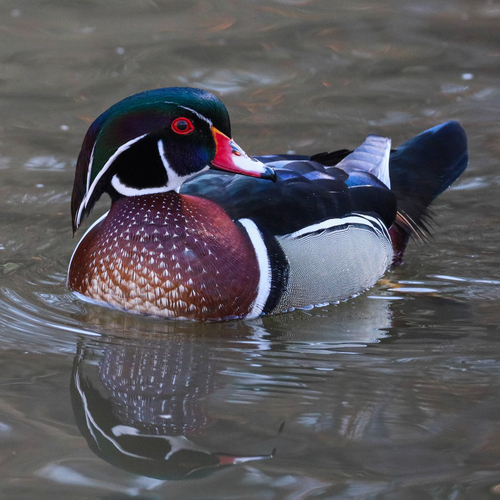
アメリカオシ (Aix sponsa) アメリカオシ
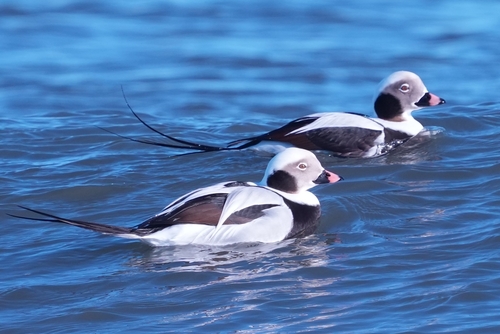
コオリガモ (Clangula hyemalis) コオリガモ

メディア

読み込み中…

要点

アメリカオシとコオリガモの最も信頼できるフィールドマークは、成鳥のオスのコオリガモに見られる長く尖った尾の存在であり、特に飛行中や水面で明らかです。一方、アメリカオシは短く四角い尾と冠のある頭を持っています。すべての羽色において、アメリカオシは冠のある頭のプロファイルを示し、両性ともに飛行中にスペキュラムの大胆な白い後縁を持っています。対照的に、コオリガモは冠がなく、よりコンパクトで丸みを帯びた頭を持っています。雌や未熟なコオリガモは、遠くから見ると雌のアメリカオシと混同されることがありますが、アメリカオシの白いアイリングと独特の顔の模様、さらに森林の淡水生息地を好むことがそれらを区別するのに役立ちます。生息地はしばしば強い手がかりとなります:アメリカオシは森林の池や湿地に見られ、コオリガモは開けた水域、特に沿岸の水に生息しています。

識別のコツ

  1. 長い尾のストリーマー(成鳥のオスのコオリガモ): 尾羽が非常に長く尖った羽毛(最大15 cm)を持つカモを見た場合、特に飛行中や水面で、それはオスのコオリガモです。アメリカオシはこの特徴を示しません。
  2. 冠のある頭(アメリカオシ): オスとメスの両方のアメリカオシは冠のある頭を持ち、尖ったまたは角ばったプロファイルを与え、止まっている時と飛行中の両方で見ることができます。コオリガモは滑らかに丸い頭を持ち、冠はありません。
  3. 白いアイリング(雌/未熟なアメリカオシ): 雌と幼鳥のアメリカオシは大胆な白いアイリングと白い喉の斑点を持ち、コオリガモのどの年齢や性別にも欠けています。
  4. スペキュラムの模様(アメリカオシ): すべての年齢と性別において、アメリカオシは飛行中に白い後縁を持つ虹色の青緑のスペキュラムを示します。コオリガモは色が少なく、境界がはっきりしない翼の模様を持っています。
  5. 顔の模様(雌/未熟なコオリガモ): 雌と未熟なコオリガモは冬に暗い冠を持つ白い顔を示し、幼鳥にはあまりはっきりしない頬の斑点があります。アメリカオシの雌は白いアイリングを持つより均一な茶色の顔を持ち、暗い冠はありません。
  6. くちばしの形と色: アメリカオシは比較的短く広いくちばしを持ち(オスは赤と白の色合いを示します)、コオリガモは成鳥のオスにピンクの帯がある小さく暗いくちばしを持っています。
  7. 体の形: アメリカオシはがっしりしており、頭が大きく、首が短いです。コオリガモはよりコンパクトで、特に雌はよりコンパクトに見え、オスは尾のために長く見えます。
  8. 生息地: アメリカオシはほぼ常に森林の淡水生息地に見られ、しばしば枝が張り出した近くにいます。コオリガモは開けた水域、特に沿岸や大きな湖に見られ、木の近くにはめったに見られません。
  9. 飛行プロファイル: アメリカオシは飛行中に冠のある頭と短い尾を示します。コオリガモのオスは尾のストリーマーを示し、雌は尖ったが短い尾を持っています。
  10. 鳴き声: 森林の湿地でアメリカオシの上昇する笛や鳴き声を聞いてください。コオリガモのオスは特徴的なヨーデルの鳴き声を出し、しばしば開けた水で大きな群れを形成します。
  11. 季節的文脈: アメリカオシは北アメリカの森林部に常駐または渡り鳥として見られます。コオリガモは厳密に渡り鳥で、冬に北の沿岸や大きな湖に現れます。
  12. 羽色の落とし穴: 雌と未熟なコオリガモは遠くから見ると雌のアメリカオシに見えることがありますが、常に冠と白いアイリングが欠けています。
  13. 群れの行動: コオリガモは群れで行動し、大きな群れを形成することが多いです。アメリカオシはより頻繁にペアや小さなグループで見られます。
  14. 止まり木: アメリカオシは木に止まっているのが見られることがありますが、コオリガモは決して木に止まっているのが見られません。
  15. 潜水と水面での採餌: コオリガモは食べ物のために頻繁に深く潜りますが、アメリカオシは水面での採餌を行い、めったに潜りません。

大きさ

アメリカオシは中型のカモで、通常は47–54 cmの長さで、66–73 cmの翼幅を持ち、454–862グラムの重さです [wikipedia]。コオリガモも中型ですが、成鳥のオスの尾のストリーマーはその長さに最大15 cmを加え、特に飛行中や水面でより長く、より細く見えます [wikipedia]。尾がなければ、全体の体のサイズは似ていますが、アメリカオシはがっしりしており、相対的に大きな頭と短い首を持っています。雌のコオリガモは長い尾がなく、アメリカオシよりもコンパクトに見えます。

羽色

行動

アメリカオシは木に止まっており、森林の湿地で敏捷性があり、水の近くの枝に止まっているのがよく見られます。コオリガモは非常に水生で、頻繁に(時には深く)潜り、開けた水で大きな群れを形成し、木に止まることはめったにありません。飛行中、アメリカオシは迅速で直接的な飛行をし、急速な翼の拍動と冠のある頭のプロファイルを持っています。コオリガモはよりコンパクトで丸い頭を持ち、オスでは尾のストリーマーが明らかです。

生息環境

アメリカオシは森林の池、湿地、そして緩やかに流れる川に強く関連しており、しばしば張り出した木や豊富な植生のある地域にいます。彼らは開けた海や大きな湖ではめったに見られません。コオリガモは北極のツンドラの水たまりで繁殖し、大きな湖や沿岸の水で冬を過ごし、しばしば岸から遠く離れ、森林や保護された淡水生息地ではめったに見られません。森林の池でカモを見た場合、それはほぼ確実にアメリカオシです。開けた水域、特に塩水の近くでは、コオリガモである可能性が高いです。

声

アメリカオシのオスは上昇する笛(ジーーー)を出し、雌は引き伸ばされた鳴き声(ドウウィープドウウィープ)や鋭い警告音(クルーク、クルーク)を出します。コオリガモのオスは特に声が大きく、音楽的なヨーデルの鳴き声(オウ、オウ、オウワルオウ)を出します。鳴き声は非常に異なり、コオリガモのヨーデルは大きな群れで特徴的であり、アメリカオシの鳴き声は森林の湿地でよりよく聞かれます。

より良い説明を送る

比較と同じ項目を使ってください。文章はすぐに公開されます。

The most reliable field mark between Wood Duck and Long-tailed Duck is the presence of a long, pointed tail in adult male Long-tailed Ducks, especially obvious in flight or on water, while Wood Ducks have a short, squared tail and a crested head. In all plumages, Wood Ducks show a crested head profile and, in both sexes, a bold white trailing edge to the speculum in flight. Long-tailed Ducks, by contrast, lack a crest and have a more compact, rounded head. Female and immature Long-tailed Ducks can be confused with female Wood Ducks at a distance, but the Wood Duck’s white eye-ring and unique face pattern, plus its preference for wooded freshwater habitats, help separate them. Habitat is often a strong clue: Wood Ducks are found in wooded ponds and swamps, Long-tailed Ducks on open, often coastal, water.

  1. Long tail streamers (adult male Long-tailed Duck): If you see a duck with very long, pointed tail feathers (up to 15 cm), especially in flight or on water, it is a male Long-tailed Duck. Wood Ducks never show this feature.
  2. Crested head (Wood Duck): Both male and female Wood Ducks have a crested head, giving a peaked or angular profile, visible both perched and in flight. Long-tailed Ducks have a smoothly rounded head with no crest.
  3. White eye-ring (female/immature Wood Duck): Female and juvenile Wood Ducks have a bold white eye-ring and a white throat patch, lacking in Long-tailed Ducks of any age or sex.
  4. Speculum pattern (Wood Duck): In all ages and sexes, Wood Ducks show an iridescent blue-green speculum with a white trailing edge in flight. Long-tailed Ducks have a less colorful, less sharply bordered wing pattern.
  5. Face pattern (female/immature Long-tailed Duck): Female and immature Long-tailed Ducks show a white face with a dark crown in winter, and a less distinct cheek patch in juveniles. Wood Duck females have a more uniform brown face with a white eye-ring, not a dark crown.
  6. Bill shape and color: Wood Ducks have a relatively short, broad bill (males show red and white coloration), while Long-tailed Ducks have a smaller, dark bill with a pink band in adult males.
  7. Body shape: Wood Ducks are bulkier with a larger head and shorter neck; Long-tailed Ducks are more compact, especially females, and males appear longer due to the tail.
  8. Habitat: Wood Ducks are almost always found in wooded freshwater habitats, often near overhanging branches. Long-tailed Ducks are found on open water, especially coastal or large lakes, rarely near trees.
  9. Flight profile: Wood Ducks show a crested head and short tail in flight; Long-tailed Duck males show trailing tail streamers, females a pointed but shorter tail.
  10. Vocalizations: Listen for the Wood Duck’s rising whistle or squeal in wooded wetlands; Long-tailed Duck males give a distinctive yodeling call, often in large flocks on open water.
  11. Seasonal context: Wood Ducks are resident or migratory in wooded parts of North America; Long-tailed Ducks are strictly migratory, appearing in winter on northern coasts and large lakes.
  12. Plumage pitfalls: Female and immature Long-tailed Ducks can look superficially like female Wood Ducks at a distance, but always lack the crest and white eye-ring.
  13. Group behavior: Long-tailed Ducks are gregarious, often in large flocks; Wood Ducks are more often seen in pairs or small groups.
  14. Perching: Wood Ducks may be seen perched in trees or on branches; Long-tailed Ducks are never seen perching in trees.
  15. Diving vs dabbling: Long-tailed Ducks dive frequently and deeply for food; Wood Ducks are dabblers, rarely diving.

Wood Duck is a medium-sized duck, typically 47–54 cm in length with a 66–73 cm wingspan and weighing 454–862 grams [wikipedia]. Long-tailed Duck is also medium-sized, but the adult male’s tail streamers add up to 15 cm to its length, making it appear longer and more slender, especially in flight or on the water [wikipedia]. Without the tail, overall body size is similar, but Wood Duck is bulkier and has a proportionally larger head and shorter neck. Female Long-tailed Ducks lack the long tail and appear more compact than Wood Ducks.

  • Juvenile and immature birds: Juvenile Long-tailed Ducks resemble adult females in autumn, with a brown back and white head/neck, but with a lighter, less distinct cheek patch. Wood Duck juveniles are similar to adult females but always show a white eye-ring and throat, and lack the sharp contrast of Long-tailed Duck’s head pattern.
  • Adult males (breeding): Male Wood Duck is unmistakable with iridescent multicolored plumage, red eyes, and a bold white neck flare. Male Long-tailed Duck in breeding plumage is mostly dark with a white cheek patch and very long tail streamers.
  • Adult males (winter): Long-tailed Duck males are mostly white with a dark cheek patch and breast, and retain the long tail. Wood Duck males remain colorful but less so than in breeding, with a crested head and white neck lines.
  • Adult females: Wood Duck females are brownish with a white eye-ring and throat, crested head, and blue-green speculum with a white trailing edge. Female Long-tailed Ducks are brown-backed with white head/neck and a dark crown in winter, lacking the crest and eye-ring. In flight, the Wood Duck’s speculum is more colorful and bordered with white, while Long-tailed Duck’s wing pattern is less distinctive.
  • In flight: Wood Ducks show a crested head and white trailing edge to the speculum in all ages/sexes. Long-tailed Ducks (especially males) show long tail streamers; females have a shorter, pointed tail and less contrast in the wing.

Wood Ducks perch in trees and are agile in wooded wetlands, often seen dabbling or perching on branches near water. Long-tailed Ducks are highly aquatic, diving frequently (sometimes to great depths) and forming large flocks on open water, rarely perching in trees. In flight, Wood Ducks have a swift, direct flight with rapid wingbeats and a crested head profile; Long-tailed Ducks have a more compact, rounded head and, in males, trailing tail streamers are obvious.

Wood Ducks are strongly associated with wooded ponds, swamps, and slow-moving rivers, often in areas with overhanging trees or abundant vegetation. They are rarely found on open sea or large lakes. Long-tailed Ducks breed in Arctic tundra pools and winter on large lakes and coastal waters, often far from shore, and are rarely found in wooded or sheltered freshwater habitats. If you see a duck in a forested pond, it is almost certainly a Wood Duck; on open, often saltwater, it is likely a Long-tailed Duck.

Wood Duck males give a rising whistle (jeeeeee), and females a drawn-out squeal (do weep do weep) or sharp alarm call (cr-r-ek, cr-e-ek). Long-tailed Duck males are notably vocal, with a musical yodelling call (ow, ow, owal-ow). The calls are quite different, with Long-tailed Duck’s yodeling being distinctive in large flocks, while Wood Duck’s calls are more likely heard in wooded wetlands.

変更を破棄しますか?

保存していない編集があります。今離れると失われます。

アメリカオシ · コオリガモ · 苦手な鳥