

Motmot

アシナガウミツバメ 対 ヒメウミツバメ

Oceanites oceanicus 対 Hydrobates pelagicus

アシナガウミツバメとヒメウミツバメのクイズ
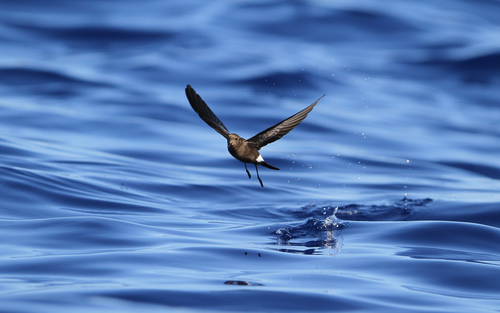
アシナガウミツバメ (Oceanites oceanicus) アシナガウミツバメ
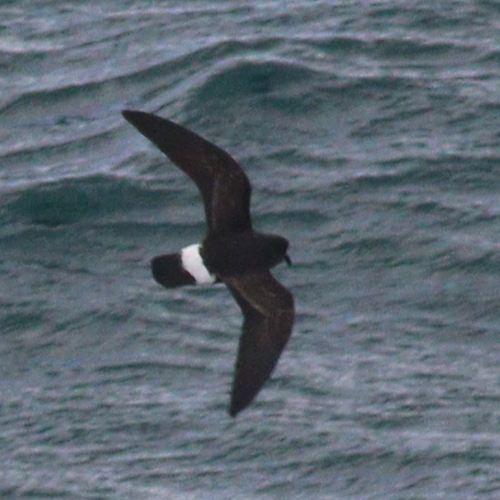
ヒメウミツバメ (Hydrobates pelagicus) ヒメウミツバメ

メディア

読み込み中…

要点

ウィルソンウミツバメとヒメウミツバメの最も信頼できるフィールドマークは、下翼に白いバーがあるかどうかです:ヒメウミツバメは常に広い白い下翼バーを示します(すべての年齢)、一方ウィルソンウミツバメはこれがなく、代わりにより均一な暗い下翼を示します。両種は白い尾羽を持っていますが、ウィルソンウミツバメは飛行中に尾を超えて足が突き出る少し長い脚を持ち、拡散した淡い上翼覆いのバンドがありますが、ヒメウミツバメはよりコンパクトで、尾羽と時々若鳥の狭い白い上翼バーを除いて、上面は完全に暗いです。飛行スタイルと脚の突き出しも役立ちます:ウィルソンウミツバメはしばしば水の上を「歩いている」ように見え、足が見えますが、ヒメウミツバメの足は隠れており、その飛行はよりひらひらしてコウモリのようです。サイズは似ていますが、ウィルソンウミツバメはわずかに重く、翼が長いです。

識別のコツ

  1. 下翼バー:ヒメウミツバメは常に下翼に広い白いバーを示します(すべての年齢、すべての羽色);ウィルソンウミツバメは決して示しません。これは飛行中の最も信頼できるフィールドマークです。
  2. 上翼パターン:ウィルソンウミツバメは上翼覆いに沿って拡散した淡いバンドを持っています(すべての年齢)、一方ヒメウミツバメはほぼすべてが暗いですが、新鮮な若鳥は狭い白い上翼バーを示すことがあります。淡い上翼バンドが見えて下翼バーがない場合は、ウィルソンを考えてください。
  3. 足の突き出し:飛行中、ウィルソンウミツバメの脚は十分に長く、足が四角い尾を超えて突き出ます;ヒメウミツバメでは、足は尾を超えて見えません。これは良い光と近い視点で最もよく見えます。
  4. 飛行スタイル:ウィルソンウミツバメはより直接的で滑空する飛行を持ち、しばしば翼を高く持ち上げて水の上を「歩く」ように見えます。ヒメウミツバメはより弱く、ひらひらしたコウモリのような飛行を持ち、短い滑空をし、水の上を歩くことはありません。
  5. 尾羽の斑点:両種は白い尾羽を持っていますが、ヒメウミツバメではそれが広く、尾の基部の側面にまで広がります。ウィルソンはより白い尾羽と側面を持っていますが、これは微妙で変動します。
  6. 羽色のトーン:ウィルソンウミツバメはすべての羽色で暗褐色ですが、ヒメウミツバメは新鮮なときはより黒く、摩耗するにつれて褐色になります。これは小さなポイントで、海上では常に信頼できるわけではありません。
  7. 側面の色:ウィルソンウミツバメは特に飛行中に側面に白い部分を示します;ヒメウミツバメは示しません。
  8. 尾の形:両種は四角い尾を持っていますが、ウィルソンは脚の突き出しのためにわずかに長い尾に見えることがあります。
  9. 脚の色:ウィルソンの繁殖前の鳥は足に黒い斑点のある黄色い水かきがありますが、これは海上では見えず、フィールドIDには役立ちません。
  10. サイズと構造:ウィルソンはわずかに大きく、がっしりしており、翼幅が長く、体重が重いですが、これは直接比較や経験がないと明らかではありません。
  11. 海での行動:水の上を足が見える状態でパタパタしたり「歩いたり」しているウミツバメを見た場合、それはほぼ確実にウィルソンです。ヒメウミツバメはこの行動を示しません。
  12. 生息地と文脈:北大西洋では、両種は一緒に見られることがありますが、ヒメウミツバメは北東大西洋により密接に関連しており、ウィルソンはより広範囲に分布し、豊富です。
  13. 声:コールは海上での識別には役立ちません;両種はコロニーから離れるとほとんど静かです。
  14. 性別と年齢:どちらの種も海上での信頼できる性差は見られません。若いヒメウミツバメは狭い白い上翼バーを示すことがありますが、これはウィルソンのより拡散した淡い上翼バンドとは重なりません。
  15. 落とし穴:摩耗や換羽の影響に注意してください—ヒメウミツバメは羽毛が摩耗するにつれてより褐色で対照的でなく見えることがありますが、下翼バーは診断的です。ウィルソンは悪い光の中でより暗く見えることがありますが、決して白い下翼バーを示しません。

大きさ

ウィルソンウミツバメはわずかに大きく、体重は約34g [wikidata]、長さは16–18.5cm、翼幅は38–42cm [wikipedia]です。ヒメウミツバメは平均約28g、長さは14–18cm、翼幅は36–39cm [wikipedia]です。フィールドでは、このサイズの違いは微妙で、通常は直接比較でのみ明らかですが、ウィルソンはわずかに翼が長く、がっしりして見えることがあります。両種は小さく、暗い海鳥ですが、ウィルソンは二つの中でより頑丈です。

羽色

最も診断的な羽毛の違いは下翼にあります:ヒメウミツバメ(すべての年齢)は下翼に広く明らかな白いバーを示しますが、これはウィルソンウミツバメには決して存在しません。上翼では、ウィルソンは上翼覆いに沿って拡散した淡いバンドを持っていますが、ヒメウミツバメはほぼすべてが暗いです。ただし、新鮮な若鳥は上翼に狭い白いバーを示すことがあります。両種は白い尾羽を持っていますが、ヒメウミツバメではそれが広く、尾の基部の側面にまで広がります。ウィルソンは四角い尾を持ち、全体的に暗褐色の羽毛で白い尾羽と側面を持っていますが、ヒメウミツバメはより黒く(摩耗するにつれて褐色になる)側面に淡い部分はありません。ウィルソンの繁殖前の鳥は足に黒い斑点のある黄色い水かきがありますが、これは海上では見えません。どちらの種もフィールドで明らかな性差は見られません。

行動

ウィルソンウミツバメはしばしば水面をパタパタしたり「歩いたり」して餌を食べ、長い脚と見える足を使って自分を安定させ、高く翼を持ち上げてホバリングしているように見えることがあります。その飛行はヒメウミツバメに比べてより直接的で滑空的です。ヒメウミツバメはより弱く、ひらひらしたコウモリのような飛行を持ち、短い滑空をし、水の上を歩くことはありません;その足は飛行中には見えません。両種は表面でプランクトンの餌をついばむことで餌を食べますが、ウィルソンは船を追いかける可能性が高く、特徴的な水歩行行動を示します。

生息環境

両種は外洋性で海上で見られますが、繁殖と豊富さのコアゾーンは異なります:ウィルソンウミツバメは世界的に非常に豊富で、南極周辺に分布し、北の海に定期的に移動します。ヒメウミツバメは主に北ヨーロッパの島々で繁殖し、全体的に数が少ないです。北大西洋では、両種は特に春の終わりと夏に一緒に見られることがありますが、ヒメウミツバメは北東大西洋および隣接する海により密接に関連しています。

声

ウィルソンウミツバメは餌を食べているときに柔らかいピーピー音を出しますが、どちらの種も海上では特に声が大きくなく、ほとんどの状況でフィールドでの識別には役立ちません。ヒメウミツバメはコロニーで独特の夜間ディスプレイコールを持っていますが、これらは海上ではほとんど聞かれません。

より良い説明を送る

比較と同じ項目を使ってください。文章はすぐに公開されます。

The most reliable field mark between Wilson's Storm-Petrel and European Storm-Petrel is the presence or absence of a white bar on the underwing: European Storm-Petrel always shows a broad white underwing bar (all ages), while Wilson's Storm-Petrel lacks this, instead showing a more uniform dark underwing. Both species have a white rump, but Wilson's has slightly longer legs with feet projecting beyond the tail in flight, and a diffuse pale upperwing covert band, while European Storm-Petrel is more compact and entirely dark above except for the rump and sometimes a narrow white upperwing bar in juveniles. Flight style and leg projection are also helpful: Wilson's often appears to 'walk' on water with feet visible, while European Storm-Petrel's feet are hidden and its flight is more fluttery and bat-like. Size is similar but Wilson's is slightly heavier and longer-winged.

  1. Underwing bar: European Storm-Petrel always shows a broad white bar on the underwing (all ages, all plumages); Wilson's Storm-Petrel never does. This is the single most reliable field mark in flight.
  2. Upperwing pattern: Wilson's Storm-Petrel has a diffuse pale band along the upperwing coverts (all ages), while European Storm-Petrel is nearly all dark above except that fresh juveniles may show a narrow white upperwing bar. If you see a pale upperwing band but no underwing bar, think Wilson's.
  3. Feet projection: In flight, Wilson's Storm-Petrel's legs are long enough that the feet project just beyond the square tail; in European Storm-Petrel, the feet are not visible beyond the tail. This is best seen in good light and close views.
  4. Flight style: Wilson's Storm-Petrel has a more direct, gliding flight and often 'walks' on water with wings held high. European Storm-Petrel has a weaker, fluttering, bat-like flight with short glides and does not walk on water.
  5. Rump patch: Both have a white rump, but in European Storm-Petrel it is broader and wraps around the sides of the tail base. Wilson's has a whiter rump and flanks, but this is subtle and variable.
  6. Plumage tone: Wilson's Storm-Petrel is dark brown in all plumages, while European Storm-Petrel is blacker when fresh, becoming browner with wear. This is a minor point and not always reliable at sea.
  7. Flank color: Wilson's Storm-Petrel shows some white on the flanks, especially in flight; European Storm-Petrel does not.
  8. Tail shape: Both have square-ended tails, but Wilson's may appear slightly longer-tailed due to leg projection.
  9. Leg color: Wilson's pre-breeding birds have yellow webbing with black spots, but this is not visible at sea and not useful for field ID.
  10. Size and structure: Wilson's is slightly larger and bulkier, with a longer wingspan and heavier body mass, but this is only apparent in direct comparison or with experience.
  11. Behavior at sea: If you see a storm-petrel pattering or 'walking' on the water, with feet visible, it is almost certainly Wilson's. European Storm-Petrel does not show this behavior.
  12. Habitat and context: In the North Atlantic, both species can occur together, but European Storm-Petrel is more closely tied to the northeast Atlantic, while Wilson's is more widespread and abundant.
  13. Voice: Calls are not useful for separation at sea; both are mostly silent away from colonies.
  14. Sex and age: No reliable sex differences are visible at sea for either species. Juvenile European Storm-Petrel may show a narrow white upperwing bar, but this does not overlap with Wilson's more diffuse pale upperwing band.
  15. Pitfalls: Beware of wear and molt effects—European Storm-Petrel can look browner and less contrasting as plumage wears, but the underwing bar remains diagnostic. Wilson's can look darker in poor light, but never shows a white underwing bar.

Wilson's Storm-Petrel is marginally larger, with a body mass around 34 g [wikidata], length 16–18.5 cm, and wingspan 38–42 cm [wikipedia]. European Storm-Petrel averages about 28 g, with a length of 14–18 cm and wingspan of 36–39 cm [wikipedia]. In the field, this size difference is subtle and usually only apparent in direct comparison, but Wilson's can look slightly longer-winged and bulkier. Both are small, dark seabirds, but Wilson's is the more robust of the two.

The most diagnostic plumage difference is on the underwing: European Storm-Petrel (all ages) shows a broad, obvious white bar on the underwing, which is never present on Wilson's Storm-Petrel. On the upperwing, Wilson's has a diffuse pale band along the upperwing coverts, while European Storm-Petrel is nearly all dark above, though fresh juveniles may show a narrow white bar on the upperwing. Both have a white rump, but in European Storm-Petrel it is broader and extends to the sides of the tail base. Wilson's has a square-ended tail and dark brown overall plumage with a white rump and flanks, while European Storm-Petrel is blacker (becoming browner with wear) and lacks any pale on the flanks. Wilson's pre-breeding birds have yellow webbing with black spots on the feet, but this is not visible at sea. No obvious sex differences are apparent in the field for either species.

Wilson's Storm-Petrel often feeds by pattering or 'walking' on the water surface, using its longer legs and visible feet to stabilize itself, sometimes appearing to hover with wings held high. Its flight is more direct and gliding compared to the European Storm-Petrel. European Storm-Petrel has a weaker, fluttering, bat-like flight with short glides and does not appear to walk on water; its feet are not visible in flight. Both species feed by picking at planktonic food on the surface, but Wilson's is more likely to follow ships and show the characteristic water-walking behavior.

Both species are pelagic and seen at sea, but their core breeding and abundance zones differ: Wilson's Storm-Petrel is much more abundant globally, with a circumpolar southern distribution but regular movement into northern oceans in boreal summer. European Storm-Petrel breeds mainly on islands off northern Europe and is less numerous overall. In the North Atlantic, both may occur together, especially in late spring and summer, but European Storm-Petrel is more closely tied to the northeast Atlantic and adjacent seas.

Wilson's Storm-Petrel gives a soft peeping noise while feeding, but neither species is especially vocal at sea and their calls are not reliable for field separation in most circumstances. European Storm-Petrel has distinctive nocturnal display calls at colonies, but these are rarely heard at sea.

変更を破棄しますか?

保存していない編集があります。今離れると失われます。

アシナガウミツバメ · ヒメウミツバメ · 苦手な鳥