

Motmot

アシナガウミツバメ 対 クロコシジロウミツバメ

Oceanites oceanicus 対 Hydrobates castro

アシナガウミツバメとクロコシジロウミツバメのクイズ
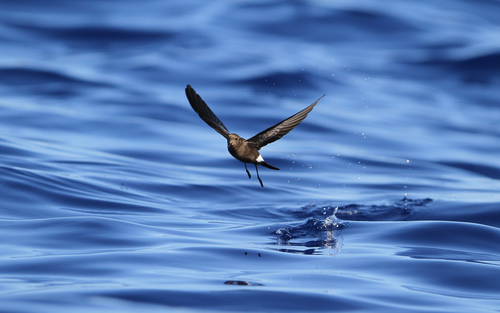
アシナガウミツバメ (Oceanites oceanicus) アシナガウミツバメ
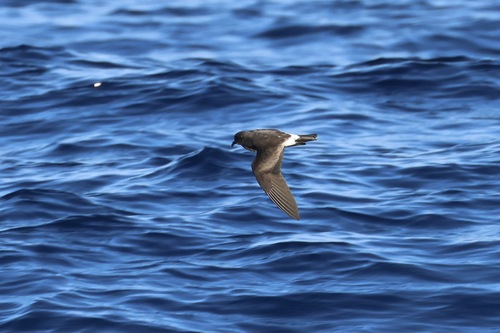
クロコシジロウミツバメ (Hydrobates castro) クロコシジロウミツバメ

メディア

読み込み中…

要点

ウィルソンアシナガウミツバメとクロコシジロウミツバメを区別する最も信頼性の高いフィールドマークは、上翼のパターンです:ウィルソンは上翼のカバーに沿って淡いバンドを示します(すべての年齢)、一方、クロコシジロウミツバメの上翼は均一に暗いです。ウィルソンはまた、飛行中に尾を超えて足が突き出ており、四角い尾と、ひらひらとした、パタパタとした飛行スタイルを持っていますが、クロコシジロウミツバメはより大きく、翼幅が長く、わずかに分かれた尾と、より安定した、シアーウォーターのような飛行をしています。両種は白い尾羽を持っていますが、クロコシジロウミツバメの方が広範囲です。構造的および飛行の違いは、特に海上では羽毛と同じくらい重要です。

識別のコツ

  1. 上翼のパターン: ウィルソンアシナガウミツバメ(すべての年齢)の上翼カバーに沿って淡いバンドを探してください;クロコシジロウミツバメの上翼は均一に暗いです。これは飛行中の最も信頼性の高いフィールドマークです。
  2. 尾の形: ウィルソンは四角い尾を持っています;クロコシジロウミツバメの尾はわずかに分かれていますが、コシジロウウミツバメほど深くはありません。分かれは微妙で、尾が広がっているときに最もよく見えます。
  3. 足の突き出し: ウィルソンでは、足が飛行中に尾を超えて突き出ており、しばしば小さな突起として見えます;クロコシジロウミツバメでは、足は尾を超えて突き出しません。これは良い視界での微妙ですが有用なマークです。
  4. 飛行スタイル: ウィルソンは水面で頻繁にパタパタとしながらひらひらとしたホバリング飛行を示します;クロコシジロウミツバメはより安定して飛び、滑空するシアーウォーターのような動作で、パタパタすることは稀です。
  5. 白い尾羽: 両方とも白い尾羽を持っていますが、クロコシジロウミツバメの方が広範囲です。ただし、尾羽の広がりは変動があり、重なりがあるため、注意して使用してください。
  6. 側面の色: ウィルソンは尾羽だけでなく側面にも白を示します;クロコシジロウミツバメの白は尾羽に限定されています。
  7. サイズ: クロコシジロウミツバメはより大きく、ずんぐりしており、翼幅が長く、体重が重いです。これは両種が一緒に見られるときに最も有用です。
  8. 下翼: どちらの種も強い白い下翼パネルを持っていません;ウィルソンはヒメウミツバメの白い下翼の裏地が欠けており、クロコシジロウミツバメの下翼は均一に暗いです。
  9. 足の水かき: ウィルソンの繁殖前の鳥は黄色と黒の斑点のある足の水かきを持っていますが、これは極めて近距離でない限りフィールドマークではありません。
  10. 繁殖の文脈: 北大西洋または太平洋の島の近くで見られた場合、クロコシジロウミツバメは繁殖者である可能性が高いです;ウィルソンは南半球で繁殖しますが、広く分散します。
  11. 夜行性の習性: クロコシジロウミツバメはコロニーで厳密に夜行性です;ウィルソンはそれほど厳密ではありませんが、これは海上ではほとんど関連しません。
  12. 声: ウィルソンは餌を食べているときに柔らかいピーピーという声を出しますが、どちらの種も海上で声で識別されることは稀です。
  13. 船の追従: ウィルソンは船を追いかけて大きな群れを作る可能性が高いです;クロコシジロウミツバメはこの文脈であまり記述されません。
  14. 他のウミツバメとの混同: クロコシジロウミツバメをコシジロウウミツバメと混同しないように注意してください。コシジロウウミツバメはより深く分かれた尾と異なる尾羽の形を持っています;ウィルソンは上翼のバンドとパタパタとした飛行によってより簡単に区別されます。
  15. 落とし穴: 照明が悪い場合や遠くからの視界では、サイズや尾の形が誤解を招くことがあります;上翼のパターンと飛行スタイルを主要なマークとして頼ってください。

大きさ

クロコシジロウミツバメはウィルソンアシナガウミツバメよりも長さと翼幅の両方で明らかに大きいです。ウィルソンは長さ16〜18.5 cm、翼幅38〜42 cmで、体重は約34 g [wikidata]ですが、クロコシジロウミツバメは長さ19〜21 cm、翼幅43〜46 cm、体重44〜49 g [wikipedia]です。このサイズの違いは、両種が一緒に見られるときにしばしば明らかですが、距離がある場合や孤立している場合には微妙です。クロコシジロウミツバメはずんぐりしており、翼が長く見え、ウィルソンはよりコンパクトです。

羽色

すべての年齢において、ウィルソンアシナガウミツバメは上翼のカバーに沿って淡いバンドを示しますが、これはクロコシジロウミツバメにはなく、上翼は均一に暗いです [wikipedia]。両種は白い尾羽を持っていますが、クロコシジロウミツバメの方が広範囲です。ウィルソンは四角い尾を持っており、クロコシジロウミツバメの尾はわずかに分かれています。ウィルソンはまた、尾羽だけでなく側面にも白を示します。ウィルソンの下翼はヒメウミツバメに見られる特有の白い裏地が欠けていますが、クロコシジロウミツバメの下翼には淡い裏地やパネルがあるとは記述されていません。繁殖前のウィルソンでは、足の間の水かきが黄色で黒い斑点がありますが、これは極めて近距離でない限りフィールドでは見えません。クロコシジロウミツバメには年齢特有の上翼や下翼のパターンが記述されていないため、ウィルソンの上翼のバンドがすべての年齢にわたって最も一貫したマークです。

行動

ウィルソンアシナガウミツバメは、翼を高く持ち、餌を食べるときに水面で足でパタパタとする習性を持つひらひらとしたホバリング飛行で有名です。これは、より安定した、より直接的で滑空するクロコシジロウミツバメの飛行と比較すると、独特の、ほぼコウモリのような印象を生み出します。ウィルソンはしばしば船を追いかけ、非常に群れを成しますが、クロコシジロウミツバメはこの文脈であまり記述されません。陸上では、両種とも不器用ですが、クロコシジロウミツバメは繁殖地では厳密に夜行性で、昼間は陸上で見ることは稀です。

生息環境

両種は外洋性で、陸から遠く離れた場所で見ることができますが、繁殖分布は異なります:ウィルソンは主に南半球で繁殖しますが、広く分散し、クロコシジロウミツバメは温暖な地域の大西洋および太平洋の島々で繁殖します。海上では、特に北大西洋で生息地が重なります。クロコシジロウミツバメはコロニーで厳密に夜行性ですが、ウィルソンは活動においてより柔軟です。

声

ウィルソンアシナガウミツバメは餌を食べているときに柔らかいピーピーという音を出しますが、どちらの種も海上で声で識別されることは稀です。クロコシジロウミツバメはコロニーで特有の声を持っていますが、これらは通常海上や移動中には聞かれません。

より良い説明を送る

比較と同じ項目を使ってください。文章はすぐに公開されます。

The most reliable field mark to separate Wilson's Storm-Petrel from Band-rumped Storm-Petrel is the upperwing pattern: Wilson's shows a diffuse pale band along the upperwing coverts (all ages), while Band-rumped's upperwing is uniformly dark. Wilson's also has feet that project just past the tail in flight, a square tail, and a fluttering, pattering flight style, whereas Band-rumped is larger, with a longer wingspan, a slightly forked tail, and steadier, more shearwater-like flight. Both species have a white rump, but Band-rumped's is more extensive. Structural and flight differences are often as important as plumage, especially at sea.

  1. Upperwing pattern: Look for a diffuse pale band along the upperwing coverts in Wilson's Storm-Petrel (all ages); Band-rumped's upperwing is uniformly dark. This is the single most reliable field mark in flight.
  2. Tail shape: Wilson's has a square-ended tail; Band-rumped's tail is slightly forked, though not as deeply as Leach's Storm-Petrel. The fork can be subtle and is best seen when the tail is spread.
  3. Feet projection: In Wilson's, the feet extend just beyond the tail in flight, often visible as tiny projections; in Band-rumped, the feet do not project beyond the tail. This is a subtle but useful mark in good views.
  4. Flight style: Wilson's shows a fluttering, hovering flight with frequent pattering on the water; Band-rumped flies more steadily, with a gliding, shearwater-like action, rarely pattering.
  5. White rump: Both have a white rump, but Band-rumped's is more extensive. However, rump extent is variable and overlaps, so use with caution.
  6. Flank color: Wilson's shows white on the flanks as well as the rump; Band-rumped's white is confined to the rump.
  7. Size: Band-rumped is larger and bulkier, with a longer wingspan and heavier build. This is most useful when both species are seen together.
  8. Underwing: Neither species has a strong white underwing panel; Wilson's lacks the white underwing lining of European Storm-Petrel, and Band-rumped's underwing is uniformly dark.
  9. Toe webbing: Wilson's pre-breeding birds have yellow and black-spotted toe webbing, but this is not a field mark except at extreme close range.
  10. Breeding context: If seen near islands in the North Atlantic or Pacific, Band-rumped is more likely to be a breeder; Wilson's breeds in the Southern Hemisphere but disperses widely.
  11. Nocturnal habits: Band-rumped is strictly nocturnal at colonies; Wilson's is not as strictly nocturnal, but this is rarely relevant at sea.
  12. Voice: Wilson's gives soft peeping calls while feeding, but voice is rarely diagnostic at sea for either species.
  13. Ship-following: Wilson's is more likely to follow ships and gather in large flocks; Band-rumped is less frequently described in this context.
  14. Confusion with other storm-petrels: Be cautious not to confuse Band-rumped with Leach's Storm-Petrel, which has a more deeply forked tail and different rump shape; Wilson's is more easily separated by its upperwing band and pattering flight.
  15. Pitfalls: In poor light or distant views, size and tail shape can be misleading; rely on upperwing pattern and flight style as primary marks.

Band-rumped Storm-Petrel is noticeably larger than Wilson's Storm-Petrel in both length and wingspan. Wilson's measures 16–18.5 cm in length with a 38–42 cm wingspan and weighs about 34 g [wikidata], while Band-rumped is 19–21 cm long, with a 43–46 cm wingspan and a mass of 44–49 g [wikipedia]. This size difference is often apparent when seen together, but can be subtle at a distance or in isolation. Band-rumped appears bulkier and longer-winged, while Wilson's is more compact.

For all ages, Wilson's Storm-Petrel shows a diffuse pale band along the upperwing coverts, which is absent in Band-rumped Storm-Petrel, whose upperwing is uniformly dark [wikipedia]. Both species have a white rump, but Band-rumped's is more extensive. Wilson's has a square-ended tail, while Band-rumped's tail is slightly forked. Wilson's also shows white on the flanks, not just the rump. The underwing of Wilson's lacks the distinct white lining found in European Storm-Petrel, but Band-rumped's underwing is not described as having any pale lining or panels. In pre-breeding Wilson's, the webbing between the toes is yellow with black spots, but this is not visible in the field except at extremely close range. There are no age-specific upperwing or underwing patterns described for Band-rumped, so the upperwing band of Wilson's is the most consistent mark across all ages.

Wilson's Storm-Petrel is famous for its fluttering, hovering flight with wings held high and its habit of pattering on the water surface with its feet as it feeds. This creates a distinctive, almost bat-like jizz, especially when compared to the steadier, more direct, and gliding flight of Band-rumped Storm-Petrel, which is described as more 'shearwater-like.' Wilson's often follows ships and is highly gregarious, while Band-rumped is less described in this context. On land, both are awkward, but Band-rumped is strictly nocturnal at breeding sites, rarely seen on land by day.

Both species are pelagic and can be seen far from land, but their breeding distributions differ: Wilson's is mainly a Southern Hemisphere breeder but disperses widely, while Band-rumped breeds on Atlantic and Pacific islands in warmer regions. At sea, their habitats overlap, especially in the North Atlantic. Band-rumped is strictly nocturnal at colonies, while Wilson's is more flexible in its activity.

Wilson's Storm-Petrel gives a soft peeping noise while feeding, but neither species is likely to be identified by voice at sea. Band-rumped has distinct vocalizations at colonies, but these are not typically heard at sea or during migration.

変更を破棄しますか?

保存していない編集があります。今離れると失われます。

アシナガウミツバメ · クロコシジロウミツバメ · 苦手な鳥