

Motmot

オジロヤブヒバリ 対 オオカナリア

Mirafra albicauda 対 Crithagra sulphurata

オジロヤブヒバリとオオカナリアのクイズ

オジロヤブヒバリ (Mirafra albicauda) オジロヤブヒバリ
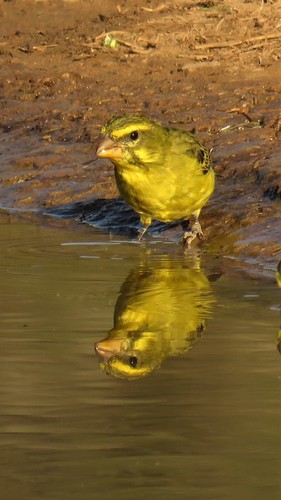
オオカナリア (Crithagra sulphurata) オオカナリア

メディア

読み込み中…

要点

オジロヤブヒバリとオオカナリアを区別する最も信頼できる方法は、全体的な構造とくちばしの形です:オジロヤブヒバリは典型的な地上性の鳥で、細長いくちばしを持ち、オオカナリアはずんぐりしたフィンチで、重く円錐形のくちばしを持っています。オオカナリアは明るい黄色と緑の色合いを示し、2本の黄色い翼帯と頑丈で淡いくちばしを持っていますが、オジロヤブヒバリはより均一な茶色の草原の鳥で、黄色や翼帯はありません。生息地も強い手がかりです:オジロヤブヒバリは開けた季節的に湿った草原に見られ、オオカナリアは軽く木立のある地域、森林の端、または庭を好みます。未熟なオオカナリアは鈍い色合いですが、依然として黄色の色合いとフィンチのようなくちばしを示し、決して暗い地味なオジロヤブヒバリに似ることはありません。

識別のコツ

  1. くちばしの形が重要です: オオカナリアは常に厚く円錐形の種を割るくちばしを持ち、淡い茶色でピンクまたは黄色の基部があります;オジロヤブヒバリは昆虫食に適した細長い尖ったくちばしを持っています。これはすべての年齢で診断的です。
  2. 羽色: オオカナリアは黄色と緑の上面、黄色の下面、2本の黄色い翼帯を示します(成鳥と未熟な個体、未熟な個体は鈍く灰色がかっています)。オジロヤブヒバリは均一に茶色で、黄色や翼帯はありません。
  3. 翼帯: オオカナリアだけが2本の黄色い翼帯を持っています;オジロヤブヒバリはどの年齢でも翼帯を示しません。
  4. 顔の模様: オオカナリアは黄色と緑のマラーストライプと耳羽を持ち、オスでは顔の模様がより明確です。オジロヤブヒバリは強い模様のない平坦な顔を持っています。
  5. 尾と臀部: オオカナリアのオスは緑がかった臀部を示すことがありますが、決して白い尾は持ちません。オジロヤブヒバリの尾はフィールドマークでは白いとは記載されていませんが、その名前は尾に何らかの淡い色を示唆しており、飛行中に見えると役立つかもしれません。
  6. 体の構造: オオカナリアはコンパクトで短い尾を持ち、重いくちばしを持っています;オジロヤブヒバリは長い尾を持ち、より直立し、細いくちばしを持っています。
  7. 行動: オジロヤブヒバリは地面に住み、開けた草の上を走ったり歩いたりし、めったに高いところに止まりません。オオカナリアは茂みや木、ワイヤーに止まり、より樹上性です。
  8. 生息地: 開けた季節的に湿った草原(オジロヤブヒバリ)対軽く木立のある地域、森林の端、または庭(オオカナリア)。茂みの中に黄色がかった鳥を見たら、それはほぼ確実にオオカナリアです。
  9. 幼鳥の混乱: 若いオオカナリアは鈍い色合いですが、依然として黄色の色合いとフィンチのくちばしを示します;彼らは決して暗い茶色のオジロヤブヒバリのようには見えません。幼鳥のオジロヤブヒバリは地味な色合いを保ち、構造的に異なります。
  10. 歌と鳴き声: オオカナリアだけが記載された歌と鳴き声を持っています;深いトリルやさえずりの歌を聞いたら、それはオオカナリアです。
  11. 性差: オオカナリアのオスはより明るく、より大きなくちばしとより明確な顔の模様を持っていますが、両性とも黄色と緑の色合いを共有します。オジロヤブヒバリの性別はフィールドマークで異なるとは記載されていません。
  12. 地域的変異: オオカナリアは南部ではより緑がかり、北部ではより黄色がかった緑に変わりますが、常にフィンチの構造と黄色の色合いを保持します。
  13. 食事: オオカナリアは種を割ったり果物や花を食べたりするのが見られます;オジロヤブヒバリは地面で餌を取り、しばしば昆虫を食べます。
  14. 群れのサイズ: 両種は孤立しているかペアでいることができますが、オオカナリアは特に食物源で小さな群れを形成することがあります。
  15. 疑問がある場合: 鳥が暗い茶色で地上性で、黄色や翼帯がない場合、それはオジロヤブヒバリです。もしそれが黄色がかり、重いくちばしを持ち、止まっているなら、それはオオカナリアです。

大きさ

オオカナリアは約18.2gの小さくずんぐりしたフィンチで、体に対してコンパクトな体型と大きな頭を持っています。オジロヤブヒバリの質量は記載されていませんが、Mirafraのオジロヤブヒバリとして、長さは似ているかやや大きい可能性がありますが、プロファイルはスリムでより細長く、尾と脚が長いです。フィールドでは、オオカナリアはよりずんぐりして短い尾に見え、オジロヤブヒバリは地面にいるときにより流線型で直立して見えます。

羽色

すべての年齢のオオカナリアは、暗い緑の縞模様のある黄色と緑の上面、2本の黄色い翼帯、黄色の下面を示します(幼鳥では鈍く灰色がかっています)。くちばしは常に厚く円錐形で、淡い茶色でピンクまたは黄色の基部があります。成鳥は特にオスがより明るく、より鮮やかな黄色と緑がかった臀部を持ち、未熟な個体は黄色が少ないですが、全体的なフィンチの模様を保持します。対照的に、オジロヤブヒバリは黄色、緑、または翼帯を欠き、草原のカモフラージュに適した暗い茶色の鳥です。オジロヤブヒバリの羽毛はより均一で地味な色合いで、強い顔や翼の模様はなく、細長いくちばしを持っています。どちらの種にも年齢特有の翼の模様は記載されていないため、分離はすべての年齢で全体的な色と構造に依存します。

行動

オジロヤブヒバリは通常、開けた草原で地面を歩いたり走ったりしているのが見られ、しばしば一人または緩いペアで、めったに木や茂みに止まりません。その動きはより水平で、低い飛行でフラッシュすることがあります。オオカナリアは他のオオカナリアよりも社交的ではありませんが、通常は単独、ペア、または小さな群れで見られ、しばしば茂みや木、ワイヤーに目立って止まります。庭を頻繁に訪れ、強いくちばしで種を割り、時には果物や花を食べます。オオカナリアの行動はオジロヤブヒバリよりも樹上性で、地上性ではありません。

生息環境

オジロヤブヒバリは熱帯および亜熱帯の季節的に湿ったまたは洪水の低地草原に制限されており、特にチャド、スーダン、南スーダン、エチオピア、ウガンダ、ケニア、タンザニアの一部の湖(チャド湖、ビクトリア湖)近くに見られます。オオカナリアは中央および南アフリカに分布し、開けた軽い木立のある生息地、木や低木のある丘、森林の端、庭を好みます。したがって、開けた湿った草原にいる鳥はオジロヤブヒバリの可能性が高く、茂みのある木立や庭の環境にいる鳥はオオカナリアの可能性が高いです。

声

オオカナリアは特徴的で深い音のトリルの呼び声(「スウィリウィリット」または「チルプ」)と、さえずり、口笛、さえずり、トリルの混ざった歌を持ち、南部の鳥はより深く、北部の鳥はより速くメロディックに聞こえます。オジロヤブヒバリに関する音声の記載は提供されていないため、声はオオカナリアを確認するためにのみ役立ち、オジロヤブヒバリを正確に特定するためには役立ちません。

より良い説明を送る

比較と同じ項目を使ってください。文章はすぐに公開されます。

The most reliable way to separate White-tailed Lark from Brimstone Canary is by overall structure and bill shape: the lark is a typical ground-dwelling bird with a slender bill, while the canary is a chunky finch with a heavy, conical bill. Brimstone Canary shows bright yellow and green tones with two yellow wing bars and a stout, pale bill, whereas White-tailed Lark is a more uniformly brownish grassland bird with no yellow or wing bars. Habitat is also a strong clue: larks are found in open, seasonally wet grasslands, while canaries prefer lightly wooded areas, forest edge, or gardens. Immature Brimstone Canaries are duller but still show yellow tones and a finch-like bill, never resembling the cryptic, earth-toned lark.

  1. Bill shape is key: Brimstone Canary always has a thick, conical, seed-cracking bill, pale brownish with a pinkish or yellowish base; White-tailed Lark has a slender, pointed bill suited for insectivory. This is diagnostic at all ages.
  2. Plumage color: Brimstone Canary shows yellow-green upperparts, yellow underparts, and two yellow wing bars (adults and immatures, though immatures are duller and greyer). White-tailed Lark is uniformly brownish with no yellow or wing bars.
  3. Wing bars: Only Brimstone Canary has two yellow wing bars; White-tailed Lark never shows wing bars at any age.
  4. Facial pattern: Brimstone Canary has a yellow-green malar stripe and ear coverts, with a better defined face pattern in males. White-tailed Lark has a plain face with no strong markings.
  5. Tail and rump: Brimstone Canary males may show a greenish rump, but never a white tail. White-tailed Lark's tail is not described as white in field marks, but its name suggests some pale in the tail, which could help in flight if visible.
  6. Body structure: Brimstone Canary is compact, short-tailed, and heavy-billed; White-tailed Lark is longer-tailed, more upright, and slender-billed.
  7. Behavior: Larks are ground-dwelling, running or walking on open grass, rarely perching high. Canaries perch on bushes, trees, or wires and are more arboreal.
  8. Habitat: Open, seasonally wet grassland (lark) vs. lightly wooded areas, forest edge, or gardens (canary). If you see a yellowish bird in a bush, it's almost certainly a canary.
  9. Juvenile confusion: Young Brimstone Canaries are duller but still show yellow tones and a finch bill; they never look like a cryptic brown lark. Juvenile larks remain earth-toned and structurally different.
  10. Song and calls: Only Brimstone Canary has a described song and call; if you hear a deep, trilled, or warbling song, it's the canary.
  11. Sex differences: Male Brimstone Canaries are brighter with a larger bill and more defined face pattern, but both sexes share the yellow and green tones. Lark sexes are not described as differing in field marks.
  12. Regional variation: Brimstone Canary varies from greener in the south to more yellowish-green in the north, but always keeps the finch structure and yellow tones.
  13. Feeding: Canaries may be seen cracking seeds or eating fruit/flowers; larks feed on the ground, often on insects.
  14. Group size: Both species can be solitary or in pairs, but canaries may form small groups, especially at food sources.
  15. When in doubt: If the bird is cryptic brown, ground-dwelling, and lacks yellow or wing bars, it's a lark. If it is yellowish, heavy-billed, and perching, it's a canary.

Brimstone Canary is a small, chunky finch weighing about 18.2 g [wikidata], with a compact build and large head relative to body. White-tailed Lark's mass is not given, but as a Mirafra lark, it is likely similar or slightly larger in length but slimmer and more elongated in profile, with a longer tail and legs. In the field, the canary appears stockier and shorter-tailed, while the lark looks more streamlined and upright when on the ground.

Brimstone Canary of all ages shows yellow-green upperparts with dark green streaking, two yellow wing bars, and yellow underparts (duller and greyer in juveniles). The bill is always thick and conical, pale brownish with a pinkish or yellowish base. Adults are brighter, especially males, with more vivid yellow and a greenish rump; immatures are less yellow but retain the overall finch pattern. White-tailed Lark, by contrast, lacks any yellow, green, or wing bars, and is instead a cryptic brownish bird suited to grassland camouflage. The lark's plumage is more uniform and earth-toned, with no strong facial or wing markings, and a slender bill. No age-specific wing pattern is noted for either species, so separation relies on overall color and structure at all ages.

White-tailed Lark is typically seen walking or running on the ground in open grasslands, often alone or in loose pairs, and rarely perches in trees or bushes. Its movements are more horizontal and it may flush with a fluttering, low flight. Brimstone Canary is less gregarious than other canaries but is usually seen singly, in pairs, or small groups, often perching conspicuously on bushes, trees, or wires. It frequently visits gardens and cracks seeds with its strong bill, sometimes feeding on fruit or flowers. The canary's behavior is more arboreal and less terrestrial than the lark.

White-tailed Lark is restricted to tropical and subtropical seasonally wet or flooded lowland grasslands, especially near lakes (Lake Chad, Lake Victoria) in parts of Chad, Sudan, South Sudan, Ethiopia, Uganda, Kenya, and Tanzania [wikipedia]. Brimstone Canary is found in central and southern Africa, favoring open, lightly wooded habitats, hillsides with trees or scrub, forest edges, and gardens. Thus, a bird in open, wet grassland is likely a lark, while one in a bushy, wooded, or garden setting is likely a canary.

Brimstone Canary has a distinctive, deep-pitched trilled call ('swirriwirrit' or 'chirrup') and a song that is a jumble of chirps, whistles, warbles, and trills, with southern birds sounding deeper and northern birds faster and more tuneful. No vocal description is provided for White-tailed Lark, so voice is only useful for confirming Brimstone Canary, not for positively identifying the lark.

変更を破棄しますか?

保存していない編集があります。今離れると失われます。

オジロヤブヒバリ · オオカナリア · 苦手な鳥