

Motmot

コシジロウズラシギ 対 アメリカウズラシギ

Calidris fuscicollis 対 Calidris melanotos

コシジロウズラシギとアメリカウズラシギのクイズ
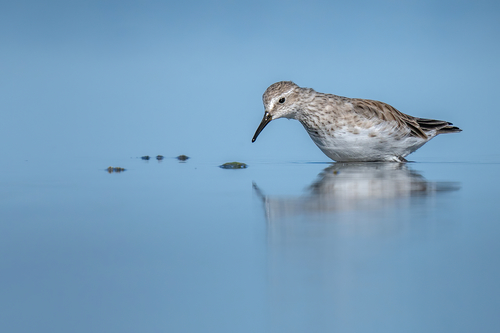
コシジロウズラシギ (Calidris fuscicollis) コシジロウズラシギ
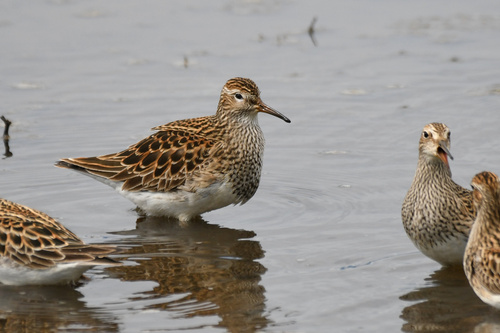
アメリカウズラシギ (Calidris melanotos) アメリカウズラシギ

メディア

読み込み中…

要点

ホワイトルンパードサンドパイパーとアメリカウズラシギを区別する最も信頼できる方法は飛行中です:ホワイトルンパードのみが目立つ白い尻の斑点を示し、アメリカウズラシギの尻は平坦で背中と一致します。地上では、アメリカウズラシギははっきりと区切られた暗い胸の帯で目立ちますが、ホワイトルンパードの胸の縞模様はより拡散しています。アメリカウズラシギは明らかにがっしりしていて脚が長く、くちばしと脚の基部は黄色がかっていますが、スリムで脚が暗いホワイトルンパードと比較されます。幼鳥の羽毛は微妙に異なりますが、飛行中の白い尻はどの年齢でも最も確実な特徴です。

識別のコツ

  1. 飛行中の白い尻(すべての年齢/季節): ホワイトルンパードサンドパイパーのみが明るい白い尻の斑点と上尾羽を示し、暗い中央の尾と対照的です。アメリカウズラシギの尻は平坦で背中と一致します。鳥が飛び立ったり羽繕いをしたときにこれを確認してください。
  2. 胸の模様(成鳥と幼鳥): アメリカウズラシギは、白い腹に対して明確な下端を持つはっきりと区切られた暗い胸の帯を持っています。この「切り離し」は前方と側面から見えます。ホワイトルンパードの胸の縞模様はより細かく、拡散しており、側腹と腹部に溶け込んでいます。
  3. 脚の色: アメリカウズラシギは黄色がかった脚を持っていますが、時には鈍い色合いです。ホワイトルンパードの脚は常に非常に暗く、ほぼ黒です。これは良好な光の下で近距離で最も役立ちます。
  4. くちばしの色と形: アメリカウズラシギのくちばしはわずかに長く、黄色がかったまたはオリーブ色の基部と暗い先端を持っています。ホワイトルンパードのくちばしは中程度の長さで、均一に暗く、全体的に細いです。
  5. サイズと構造: アメリカウズラシギはがっしりしていて、首が長く、脚が長く、群れの中でしばしば高く立っています。ホワイトルンパードは小さく、よりコンパクトで、体のサイズに対して相対的に長い翼を持っています(主翼の先端は止まっているときに尾を大きく超えます)。
  6. 幼鳥の上面: ホワイトルンパードの幼鳥は、黒い中心の羽毛に茶色と白の縁があり、背中に白い「V」を形成し、淡いスーパーシリウムを持っています。アメリカウズラシギの幼鳥は明るく、赤褐色のトーンと白いマントルの縞模様を持っていますが、白い尻はありません。
  7. スーパーシリウム: ホワイトルンパードのスーパーシリウムは通常、より目立ち、特に幼鳥や冬の成鳥で白いです。アメリカウズラシギのスーパーシリウムは弱く、対照が少ないです。
  8. 頭頂と顔: ホワイトルンパードは茶色がかった頭頂と淡い顔を持っており、特に幼鳥で顕著です。アメリカウズラシギの頭頂は夏に茶色がかっていますが、いくつかの類似種よりも赤褐色ではありません。
  9. 腹部の縞模様: アメリカウズラシギの縞模様は上胸部に集中しており、ホワイトルンパードの縞模様はより細かく、側腹にまで広がっています。
  10. 翼の突出: ホワイトルンパードの初列風切羽は、休んでいるときに尾を大きく超えて突出し、長い翼の印象を与えます。アメリカウズラシギの翼の先端は尾に対して相対的に短いです。
  11. 採餌行動: アメリカウズラシギはしばしばより深く探り、時には湿った場所で、より直立して立っています。ホワイトルンパードはより繊細で、姿勢があまり強くないように見えることがあります。
  12. 生息地の好み: 両種は重複しますが、アメリカウズラシギは淡水の湿地にいる可能性が高く、ホワイトルンパードはより沿岸にいますが、これは診断的ではありません。
  13. 性別/季節: 両性は両種で似ています。オスのアメリカウズラシギは繁殖期にわずかに大きく見え、胸が黒っぽくなることがありますが、重複は広範です。
  14. 落とし穴: 現場でサイズだけに頼らないでください。重複と姿勢が誤解を招くことがあります。常に飛行中の尻を見て、確定的な同定を試みてください。
  15. 群れの文脈: 他の「ピープ」と混ざっている場合、ホワイトルンパードは長い翼と白い尻で目立ち、アメリカウズラシギはより大きく、がっしりとした印象を与え、明確な胸の帯を持っています。

大きさ

アメリカウズラシギはホワイトルンパードサンドパイパーよりも明らかに大きく、重いです。アメリカウズラシギは体重が約81.4gで、長さは19〜23 cmですが、ホワイトルンパードは平均42.8gで、長さはわずか15〜18 cmです。現場では、アメリカウズラシギはがっしりしていて、首が長く、脚が長く、混合群れの中でしばしば高く立っています。ホワイトルンパードはよりコンパクトで繊細で、体のサイズに対して相対的に長い翼を持っています。

羽色

行動

両種は泥干潟や草地で活発に餌を探し、無脊椎動物をついばんでいます。アメリカウズラシギはしばしばより直立して警戒しているように見え、時には長いくちばしと脚でより深く探ります。ホワイトルンパードはより繊細で、姿勢があまり強くないように見えることがあります。移動中、ホワイトルンパードは非常に長いノンストップの飛行で知られていますが、これはフィールドマークではありません。

生息環境

両種は北極ツンドラで繁殖し、似たような湿地の生息地を移動しますが、アメリカウズラシギは移動と冬の間に淡水の生息地で見られる可能性が高く、ホワイトルンパードは沿岸や内陸で見られることがあります。両種は移動中に一緒に発生することができ、特に北アメリカでは、生息地だけでは信頼できる区別にはなりません。

より良い説明を送る

比較と同じ項目を使ってください。文章はすぐに公開されます。

The most reliable way to separate White-rumped Sandpiper from Pectoral Sandpiper is in flight: only White-rumped shows a conspicuous white rump patch, while Pectoral’s rump is plain and matches the back. On the ground, Pectoral Sandpiper stands out by its sharply demarcated, dark breast band, whereas White-rumped’s breast streaking is more diffuse. Pectoral is noticeably bulkier and longer-legged, with a yellowish base to the bill and legs, compared to the slimmer, darker-legged White-rumped. Juvenile plumages are subtly different, but the white rump in flight remains the most foolproof mark at any age.

  1. White rump in flight (all ages/seasons): Only White-rumped Sandpiper shows a bright white rump patch and uppertail coverts in flight, contrasting with a dark central tail. Pectoral’s rump is plain and matches the back. Always check for this when birds flush or preen.
  2. Breast pattern (adults and juveniles): Pectoral Sandpiper has a sharply demarcated, dark breast band with a clear lower edge against white belly; this 'cut-off' is visible from the front and sides. White-rumped’s breast streaking is finer and more diffuse, blending into the flanks and belly.
  3. Leg color: Pectoral has yellowish legs, though sometimes dull; White-rumped’s legs are always very dark, nearly black. This is most useful at close range in good light.
  4. Bill color and shape: Pectoral’s bill is slightly longer and has a yellowish or olive base with a dark tip. White-rumped’s bill is medium-length, uniformly dark, and thinner overall.
  5. Size and structure: Pectoral is bulkier, longer-necked, and longer-legged, often standing taller in flocks. White-rumped is smaller, more compact, with proportionally longer wings (primary tips extend well beyond tail when perched).
  6. Juvenile upperparts: White-rumped juveniles have black-centered feathers with brown and white edges, forming a white 'V' on the back and a pale supercilium. Pectoral juveniles are brighter, with rufous tones and white mantle stripes, but lack the white rump.
  7. Supercilium: White-rumped’s supercilium is usually more prominent and whiter, especially in juveniles and winter adults. Pectoral’s is weaker and less contrasting.
  8. Crown and face: White-rumped has a brownish crown and pale face, especially in juveniles. Pectoral’s crown is browner in summer, but less rufous than some similar species.
  9. Underpart streaking: Pectoral’s streaking is concentrated on the upper breast; White-rumped’s is finer and extends onto the flanks.
  10. Wing projection: White-rumped’s primaries project well beyond the tail when at rest, giving a long-winged look. Pectoral’s wing tips are shorter relative to the tail.
  11. Feeding behavior: Pectoral often probes deeper, sometimes in wetter areas, and stands more upright. White-rumped is more delicate and less robust in posture.
  12. Habitat preference: Both overlap, but Pectoral is more likely in freshwater marshes; White-rumped is more coastal, but this is not diagnostic.
  13. Sex/season: Both sexes are similar in both species; male Pectorals may appear slightly larger and have a blacker breast in breeding season, but overlap is extensive.
  14. Pitfalls: Do not rely on size alone in the field, as overlap and posture can mislead. Always try to see the rump in flight for a definitive ID.
  15. Flock context: If mixed with other 'peeps', White-rumped will stand out by its long wings and white rump; Pectoral will look larger and more robust, with a clear breast band.

Pectoral Sandpiper is significantly larger and heavier than White-rumped Sandpiper. Pectoral averages about 81.4g in body mass and measures 19–23 cm in length, while White-rumped averages 42.8g and is only 15–18 cm long. In the field, Pectoral appears bulkier, longer-necked, and longer-legged, often standing taller in mixed flocks. White-rumped is more compact and delicate, with proportionally longer wings relative to its body size.

  • Juvenile/immature: Both species show patterned upperparts, but White-rumped juveniles have black-based feathers with brown and white edges, creating a white 'V' on the back, and a pale supercilium. Pectoral juveniles are brighter above, with rufous tones and white mantle stripes, but lack the white rump. In flight, only White-rumped shows a white rump patch at all ages.
  • Adult breeding: White-rumped is dull grey-brown above with a pale supercilium, streaked breast and flanks, and white underparts. Pectoral is brownest in summer, with a strong, sharply defined dark breast band and clear lower edge, and yellowish legs.
  • Adult winter: Both become greyer above, but Pectoral retains the sharp breast demarcation, while White-rumped’s breast streaking is more diffuse. The rump mark remains diagnostic in flight for White-rumped in all plumages.

Both species forage actively on mudflats and grasslands, picking at invertebrates. Pectoral Sandpiper often appears more upright and alert, sometimes probing deeper with its longer bill and legs. White-rumped Sandpiper may seem more delicate and less robust in posture. During migration, White-rumped is known for extremely long nonstop flights, but this is not a field mark.

Both species breed in Arctic tundra and migrate through similar wetland habitats, but Pectoral Sandpiper is more likely to be found in freshwater habitats during migration and winter, while White-rumped can be found along coasts and inland. Both can occur together on migration, especially in North America, so habitat alone is not a reliable separator.

変更を破棄しますか?

保存していない編集があります。今離れると失われます。

コシジロウズラシギ · アメリカウズラシギ · 苦手な鳥