

Motmot

シロビタイハチクイ 対 アフリカサンコウチョウ

Merops bullockoides 対 Terpsiphone viridis

シロビタイハチクイとアフリカサンコウチョウのクイズ
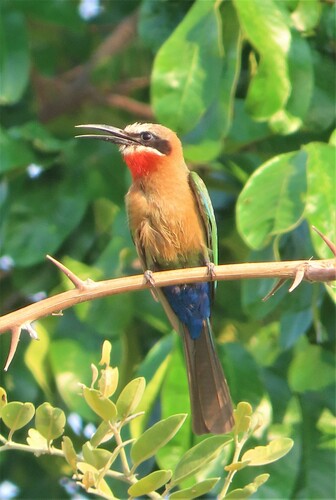
シロビタイハチクイ (Merops bullockoides) シロビタイハチクイ
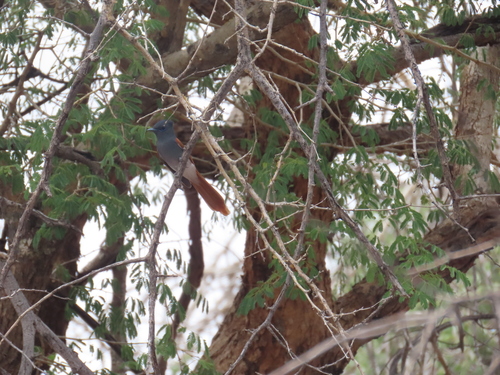
アフリカサンコウチョウ (Terpsiphone viridis) アフリカサンコウチョウ

メディア

読み込み中…

要点

シロビタイハチクイとアフリカサンコウチョウを区別する最も信頼できるフィールドマークは、ハチクイの大胆な白い額と四角い尾であり、対してサンコウチョウの成鳥オスは非常に長く、流れるような中央尾羽を持っています。未熟な個体と雌のサンコウチョウは流れるような尾羽を欠いていますが、異なる姿勢を示します:直立した姿勢と目立つ栗色の翼と尾、暗い頭を持っています。ハチクイはよりコンパクトで、上面は緑色、下面はシナモン色、明るい赤い喉の斑点があります。両種は色鮮やかでしばしばオープンに止まりますが、構造、尾の形、頭の模様はフィールドで著しく異なります。

識別のコツ

  1. 白い額(ハチクイ): シロビタイハチクイだけが黒いマスクの上にクリーンな白い額を示します;アフリカサンコウチョウは年齢や性別に関わらず白い額を持ちません。
  2. 尾の形: ハチクイは流れるような尾羽のない四角い尾を持っています。成鳥オスのサンコウチョウは非常に長く、細い中央尾羽(流れるような尾羽)を持ち、鳥の長さを倍にします;雌と未熟な個体は長いが四角くない尾を持ち、ハチクイの形状にはなりません。
  3. 赤い喉の斑点(ハチクイ): ハチクイの明るい赤い喉を探してください。白い額と黒いマスクと対照的です。サンコウチョウは赤い喉を持ちません。
  4. 頭の色: ハチクイは白い額と黒いマスクを持つ緑色の冠を持っています;サンコウチョウのオスは光沢のある黒または青黒い頭を持ち、雌と未熟な個体はより茶色く鈍い頭を持ちますが、ハチクイのマスクや白は持ちません。
  5. 上面: ハチクイは上面が緑色です;サンコウチョウは上面が栗色または錆色(翼と尾)で、緑色はありません。
  6. 下面: ハチクイは下面がシナモン色です;サンコウチョウのオスは暗い(黒または青灰色)で、雌と未熟な個体はより淡い茶色または灰色で、決してシナモン色ではありません。
  7. 翼帯: 成鳥のサンコウチョウのオスだけが白い翼帯を示すことがありますが、それはハチクイの顔のコントラストほど大胆ではありません;雌と未熟な個体は完全に欠いています。
  8. 姿勢: ハチクイは水平またはやや直立して止まります。しばしば群れで見られます。サンコウチョウは非常に直立して止まり、ほぼ垂直で、しばしば一羽またはペアで見られます。
  9. 飛行中の姿勢: ハチクイは迅速で直接的な飛行で飛び出し、時には滑空したりホバリングしたりします。サンコウチョウはよりふわふわした不規則な飛行をし、オスの長い尾羽が後ろに引きずられます。
  10. 社会的行動: ハチクイはコロニーを作り、群れで行動します;サンコウチョウは孤独またはペアで行動します。
  11. 生息地の文脈: ハチクイはしばしば河岸、崖、またはオープンカントリーの近くにいます;サンコウチョウは森林や森林の縁にいることが多いです。
  12. 鳴き声: ハチクイの鳴き声は深いきしみ音です;サンコウチョウの鳴き声は厳しい叱責のようです。見づらい場合はこれらの違いに注意してください。
  13. 性別/年齢の落とし穴: 雌と未熟なサンコウチョウは尾羽の流れを欠いていますが、栗色の翼/尾と直立した姿勢を持ち、決して白い額や赤い喉を示しません。ハチクイの幼鳥は白い額と赤い喉を保持しているため、混乱は少ないです。
  14. ハイブリッドサンコウチョウ: 一部のサンコウチョウは白い形態や中間色を示すことがありますが、ハチクイの顔の模様や四角い尾は決して持ちません。
  15. くちばしの形: ハチクイはハチクイに典型的な長くやや下向きのくちばしを持っています;サンコウチョウのくちばしは短く、真っ直ぐで、昆虫食の小鳥により典型的です。

大きさ

シロビタイハチクイは約23 cm(9 in)の長さで、四角い尾とコンパクトで細身の体型を持っています。アフリカサンコウチョウのオスは約17 cm(6.7 in)の体長ですが、成鳥のオスは尾羽の流れがあり、全体の長さを倍にすることができ、シルエットでより長く、より細長く見えます。雌と未熟な個体はハチクイに近い長さですが、尾の形状のためにより細長く見えます。ハチクイはより頑丈で、サンコウチョウはより細身で繊細です、特に長い尾羽のために。

羽色

年齢特有の上翼や飛行パターンのマークはどちらの種にも見られませんが、羽毛の違いはすべての年齢で強いです。すべての年齢のシロビタイハチクイは、特徴的な白い額、黒いマスク、明るい赤い喉、緑色の上面、シナモン色の下面を示します。尾は四角く、流れるような尾羽はありません。アフリカサンコウチョウの成鳥オスは光沢のある黒い頭と下面、栗色の翼と尾、非常に長い中央尾羽(流れるような尾羽)を持っています;一部の形態は栗色の代わりに白です。雌と未熟な個体は流れるような尾羽を欠き、より茶色の頭と下面を持ち、白い翼帯はありませんが、栗色の翼と尾は示します。両性は目立つ暗い頭を持っていますが、ハチクイだけが白い額と赤い喉を持っています。サンコウチョウの翼帯は成鳥のオスにのみ存在し、ハチクイの顔のコントラストほど大胆ではありません。幼鳥のサンコウチョウは鈍いですが、ハチクイの白い額と赤い喉は依然として欠いています。

行動

シロビタイハチクイは低い木に止まり、小さなコロニーでしばしば見られ、止まり木から飛び出して昆虫を捕まえるために滑空またはホバリングします。彼らは社交的で、しばしば群れで見られ、崖や河岸の穴に巣を作ります。アフリカサンコウチョウはより孤独またはペアで行動し、露出した止まり木に非常に直立して座り、しばしば長い尾を振ります。彼らは活発なサンコウチョウで、飛行中に昆虫を捕まえるために飛び出し、時にはクモやベリーを取ります。彼らの直立した姿勢と長い尾羽(オス)は特徴的な行動の手がかりです。両種は目立ち、しばしばオープンに止まりますが、ハチクイはより社交的で、姿勢がより直立していません。

生息環境

シロビタイハチクイは通常、亜赤道アフリカに見られ、低木のあるオープンカントリー、河岸、巣作りのための崖を好みます。彼らは水の近くやオープンな森林の縁でしばしば見られます。アフリカサンコウチョウはオープンな森林、サバンナ、森林に生息し、サハラ以南で一般的な常駐繁殖者です。両者はオープンな森林で重なることがありますが、ハチクイは河岸やコロニーにより密接に関連しており、サンコウチョウはより密な森林や森林の縁にいることが多いです。

声

シロビタイハチクイは深いきしみ音を出します。アフリカサンコウチョウは騒がしく、厳しい叱責のような鳴き声を持っています。両者は鳴き声を出しますが、サンコウチョウの鳴き声はより厳しく叱責的で、ハチクイの鳴き声は低音できしみ音が強いです。フィールドで他の種の鳴き声と混同されることはありません。

より良い説明を送る

比較と同じ項目を使ってください。文章はすぐに公開されます。

The most reliable field mark to separate White-fronted Bee-eater from African Paradise-Flycatcher is the bee-eater’s bold white forehead and square tail, versus the flycatcher’s extremely long, streamer-like central tail feathers in adult males. Immature and female flycatchers lack the streamers but still show a different jizz: upright posture and a prominent chestnut wing and tail, with a dark head. Bee-eaters are more compact, with green upperparts, cinnamon underparts, and a bright red throat patch. Both species are colorful and often perch openly, but their structure, tail shape, and head pattern are strikingly different in the field.

  1. White forehead (Bee-eater): Only White-fronted Bee-eater shows a clean white forehead above a black mask; African Paradise-Flycatcher never has a white forehead at any age or sex.
  2. Tail shape: Bee-eater has a square tail with no streamers. Adult male flycatchers have extremely long, thin central tail feathers (streamers) that double the bird’s length; females and immatures have a long but not squared tail, never with the bee-eater’s shape.
  3. Red throat patch (Bee-eater): Look for the bright red throat on bee-eaters, contrasting with white forehead and black mask. Flycatchers never have a red throat.
  4. Head color: Bee-eater has a green crown with white forehead and black mask; flycatcher males have a glossy black or blue-black head, females and immatures have a browner, duller head, but never the bee-eater’s mask or white.
  5. Upperparts: Bee-eater is green above; flycatcher is chestnut or rusty above (wings and tail), with no green.
  6. Underparts: Bee-eater is cinnamon below; flycatcher males are dark (black or blue-gray), females and immatures are paler brownish or grayish, never cinnamon.
  7. Wingbar: Only male flycatchers may show a white wingbar, but it is not as bold as the bee-eater’s facial contrast; females and immatures lack it entirely.
  8. Posture: Bee-eaters perch horizontally or slightly upright, often in groups. Flycatchers perch very upright, almost vertical, often alone or in pairs.
  9. Jizz in flight: Bee-eaters sally out with quick, direct flights, sometimes gliding or hovering. Flycatchers have a more fluttery, erratic flight, with males’ long tail streamers trailing.
  10. Social behavior: Bee-eaters are colonial and gregarious; flycatchers are solitary or in pairs.
  11. Habitat context: Bee-eaters are often near banks, cliffs, or open country; flycatchers are more likely in woodland or forest edge.
  12. Vocalizations: Bee-eater’s call is a deep squeak; flycatcher’s is a harsh scold. Listen for these differences if seen poorly.
  13. Sex/age pitfalls: Female and immature flycatchers lack tail streamers but still have chestnut wings/tail and upright stance; never show white forehead or red throat. Bee-eater juveniles retain the white forehead and red throat, so confusion is less likely.
  14. Hybrid flycatchers: Some flycatchers may show white morphs or intermediate colors, but never the bee-eater’s facial pattern or square tail.
  15. Bill shape: Bee-eater has a long, slightly decurved bill typical of bee-eaters; flycatcher’s bill is shorter, straight, and more typical of insectivorous passerines.

White-fronted Bee-eater is about 23 cm (9 in) long, with a square tail and compact, slender build. African Paradise-Flycatcher males are about 17 cm (6.7 in) in body length, but adult males have tail streamers that can double the total length, making them appear much longer and more elongated in silhouette. Females and immatures are closer in length to the bee-eater but still look more elongated due to their tail shape. The bee-eater is stockier, while the flycatcher is more slender and delicate, especially with the long tail streamers.

No age-specific upperwing or flight pattern marks are noted for either species, but plumage differences are strong at all ages. White-fronted Bee-eater of all ages shows a distinctive white forehead, black mask, bright red throat, green upperparts, and cinnamon underparts. The tail is square and lacks streamers. African Paradise-Flycatcher adult males have a glossy black head and underparts, chestnut wings and tail, and extremely long central tail feathers (streamers); some morphs are white instead of chestnut. Females and immatures lack streamers, have a browner head and underparts, and no white wingbar, but still show chestnut wings and tail. Both sexes have a prominent dark head, but only the bee-eater has the white forehead and red throat. The flycatcher’s wingbar is only present in adult males and is not as bold as the bee-eater’s facial contrast. Juvenile flycatchers are duller but still lack the bee-eater’s white forehead and red throat.

White-fronted Bee-eaters perch in low trees, often in small colonies, and hunt insects by sallying out from a perch, gliding or hovering briefly to catch prey. They are social, often seen in groups, and nest in holes in cliffs or banks. African Paradise-Flycatchers are more solitary or in pairs, sitting very upright on exposed perches, often flicking their long tails. They are active flycatchers, sallying out to catch insects in flight, and sometimes take spiders or berries. Their upright posture and long tail streamers (in males) are distinctive behavioral cues. Both species are conspicuous and often perch openly, but the bee-eater is more gregarious and less upright in stance.

White-fronted Bee-eater is typically found in sub-equatorial Africa, favoring open country with low trees, riverbanks, and cliffs for nesting. They are often seen near water or open woodland edges. African Paradise-Flycatcher inhabits open forest, savanna, and woodland, and is a common resident breeder south of the Sahara. Both can overlap in open woodland, but bee-eaters are more closely tied to banks and colonies, while flycatchers are more often in denser woodland or forest edge.

White-fronted Bee-eater gives a deep squeak. African Paradise-Flycatcher is noisy, with a harsh, scolding call. Both are vocal, but the flycatcher’s call is harsher and more scolding, while the bee-eater’s is lower-pitched and squeakier. Neither species’ call is likely to be confused with the other in the field.

変更を破棄しますか?

保存していない編集があります。今離れると失われます。

シロビタイハチクイ · アフリカサンコウチョウ · 苦手な鳥