

Motmot

カオジロウミツバメ 対 ハジロシロハラミズナギドリ

Pelagodroma marina 対 Pterodroma cookii

カオジロウミツバメとハジロシロハラミズナギドリのクイズ
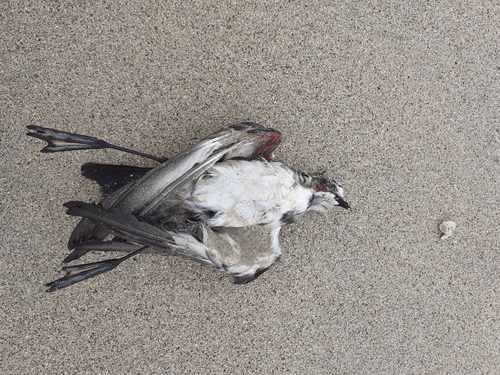
カオジロウミツバメ (Pelagodroma marina) カオジロウミツバメ
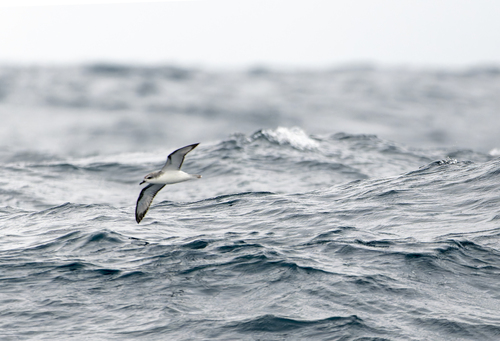
ハジロシロハラミズナギドリ (Pterodroma cookii) ハジロシロハラミズナギドリ

メディア

読み込み中…

要点

ホワイトフェイスストームペトレルとクックのペトレルを区別する最も信頼性の高いフィールドマークは、サイズと飛行スタイルです:ホワイトフェイスストームペトレルははるかに小さく、独特の浮遊感のあるパタリング飛行を示し、しばしば水面をスキップしながら足をぶら下げています。一方、クックのペトレルは大きく、より典型的なペトレルの滑空とシアリングの飛行をします。羽毛において、ホワイトフェイスストームペトレルは暗い目のマスクと淡い腹部を持つ際立った白い顔を持ち、対してクックのペトレルは淡い灰色の上翼に暗い「M」と白い腹部を持つより典型的なガドフライペトレルのパターンを示します。幼鳥のホワイトフェイスストームペトレルは、上部により明らかな淡い縁取りを示すことがありますが、両年齢層ともクックのペトレルよりもはるかに顔が淡いです。くちばしの構造と全体的な印象も異なります。直接比較する場合、サイズと飛行の印象が最も早いフィールドの手がかりです。

識別のコツ

  1. サイズは主要な手がかり:ホワイトフェイスストームペトレルはクックのペトレルよりもはるかに小さく、質量は約5分の1、翼幅もはるかに短いです。両方を一緒に見ると、その違いは際立っています。これはすべての年齢と性別に当てはまります。
  2. 飛行スタイルは診断的:ホワイトフェイスストームペトレルは水面をバウンドし、翼を広げ、足をぶら下げたりスキップしたりします;クックのペトレルは滑空し、シアリングし、パタリングすることはほとんどありません。特に風の強い条件では、ストームペトレルの振り子のような動きが明らかになります。
  3. 顔のパターン:ホワイトフェイスストームペトレルは明るい白い顔と暗い目のマスクを持ち、遠くからでも非常に特徴的です。クックのペトレルは地味な淡い灰色の顔を持ち、マスクや白いブレイズはありません。
  4. 上翼のパターン:クックのペトレルは淡い灰色の上翼に暗い「M」を示し、典型的なガドフライペトレルのマークです。ホワイトフェイスストームペトレルは淡い茶色から灰色の上翼を持ち、黒い飛行羽がありますが、「M」パターンはありません。これはすべての年齢で見ることができます。
  5. 腹部:両方とも下は白ですが、ストームペトレルの白は顔まで伸びているのに対し、クックのペトレルの白は下半身に限られています。
  6. くちばしの構造:クックのペトレルは長い黒いくちばしを持ち、目立つ管状の鼻孔があります(すべてのプロセラリフォルミスと同様)、一方ホワイトフェイスストームペトレルのくちばしは短く、頑丈さに欠けます。これは近距離で見るのが最適です。
  7. 足と足:ホワイトフェイスストームペトレルは長い足を持ち、飛行中やパタリング中に後ろに見えることがよくあります;クックのペトレルの足ははるかに短く、飛行中に見ることはほとんどありません。
  8. 尾の形:一部のホワイトフェイスストームペトレルの亜種(特に P. m. maoriana)は分岐した尾を持っていますが、これは微妙です。幼鳥は浅い分岐を示すことがあります。クックのペトレルはより典型的なペトレルの尾を持ち、深く分岐していません。
  9. 幼鳥の羽毛:幼鳥のホワイトフェイスストームペトレルは上部により広い淡い縁取りを持ち、灰色や茶色に見えることがありますが、白い顔とマスクは依然として示します。クックのペトレルの幼鳥はこのパターンを模倣しません。
  10. 文脈:ニュージーランドでは、両方とも沖合で見ることができますが、クックのペトレルは厳密に固有種であり、ホワイトフェイスストームペトレルはより広範囲に分布しています。ニュージーランドの外で見られた場合、ほぼ確実にクックのペトレルではありません。
  11. 性別と季節的変異:どちらの種も強い性別や季節的な羽毛の違いを示さないため、これらのマークは年間を通じて信頼できます。
  12. 羽毛の落とし穴:両種の淡い腹部を混同しないでください—顔のパターンと飛行スタイルに焦点を当ててください。ストームペトレルの白い顔は決してクックのペトレルと一致しません。
  13. 海での行動:もし鳥が頻繁に水面に触れたりスキップしたりしているなら、それはストームペトレルです。もし滑空していて、表面にほとんど接触しないなら、それはクックのペトレルです。
  14. くちばしの色:両方とも暗いくちばしを持っているため、これは有用なマークではありません。
  15. 鳴き声:海では診断的ではありません;両方とも繁殖コロニーから離れると一般的に静かです。

大きさ

ホワイトフェイスストームペトレルはクックのペトレルよりもかなり小さく、軽いです(体重約40g、長さ19〜21cm、翼幅41〜44cm)対してクックのペトレル(長さ25〜30cm、翼幅65〜66cm、体重約200g)[wikidata][wikipedia]。この違いはフィールドで明らかです:クックのペトレルはほぼ2倍の質量を持ち、はるかに長い翼幅を持っています。距離があっても、ストームペトレルの華奢さと短い体は、より頑丈で長い翼を持つクックのペトレルの隣で明らかです。

羽色

幼鳥と成鳥のホワイトフェイスストームペトレルは似ていますが、幼鳥はより新鮮な羽毛を示し、上部羽毛の淡い縁取りと先端が広く、換羽に応じて灰色や茶色に見えることがあります [wikipedia]。尾の分岐は幼鳥では浅く、特にニュージーランドの亜種で顕著です。両年齢とも、暗い目のマスクを持つ際立った白い顔、淡い茶色から灰色の背中と翼、白い腹部を持っています。対照的に、クックのペトレル(すべての年齢)は典型的なガドフライペトレルの外観を示します:淡い灰色の上部に上翼を横切る大胆な暗い「M」、白い腹部、管状の鼻孔を持つ長い黒いくちばし [wikipedia]。顔は白くなく、暗いマスクもありません。クックのペトレルには、ストームペトレルの外観と重なる年齢特有の上翼パターンはありません。

行動

ホワイトフェイスストームペトレルは、ほぼ常にパタリング飛行をする点でペトレルの中で独特です:水面をスキップまたはバウンドし、翼を広げて長い足を使って表面に触れたり押し上げたりします [wikipedia]。これにより、浮遊感のある不規則な、ほぼフラロープのような印象が生まれます。対照的に、クックのペトレルは典型的なガドフライペトレルの優雅さで飛びます—長く弧を描く滑空、波の上を低くシアリングし、パタリングすることはほとんどありません。ストームペトレルの飛行ははるかにフラッター感があり、アクティブですが、クックのペトレルはより直接的で力強いです。

生息環境

両種は外洋性ですが、クックのペトレルはニュージーランドの水域に固有であり、ホワイトフェイスストームペトレルは南オーストラリア、ニュージーランド、いくつかの大西洋の島々を含むはるかに広い分布を持っています [wikipedia]。ニュージーランドでは、両方とも沖合で発生する可能性がありますが、クックのペトレルは陸からさらに遠くで見られる可能性が高いです。生息地は通常、海での診断には使われませんが、ストームペトレルの水面近くでの餌を取る習性とその独特の採餌スタイルが役立つことがあります。

より良い説明を送る

比較と同じ項目を使ってください。文章はすぐに公開されます。

The most reliable field mark to separate White-faced Storm-Petrel from Cook's Petrel is size and flight style: White-faced Storm-Petrel is much smaller and shows a unique, buoyant pattering flight, often skipping over the water with dangling legs, while Cook's Petrel is larger, with a more typical petrel gliding and shearing flight. In plumage, White-faced Storm-Petrel has a striking white face with a dark eye mask and pale underparts, versus the more typical gadfly petrel pattern of Cook's Petrel, which has a pale grey upperwing with a dark 'M' and white underparts. Juvenile White-faced Storm-Petrels may show more obvious pale fringes above, but both age classes are much paler-faced than Cook's. Bill structure and overall jizz are also distinct. In any direct comparison, size and flight jizz are the fastest field clues.

  1. Size is a primary clue: White-faced Storm-Petrel is much smaller than Cook's Petrel—about a fifth of the mass and with a much shorter wingspan. If you see both together, the difference is striking. This applies to all ages and sexes.
  2. Flight style is diagnostic: White-faced Storm-Petrel bounces and patters over the water, wings out, legs dangling or skipping; Cook's Petrel glides and shears, rarely if ever pattering. Watch for this especially in windy conditions, when the storm-petrel's pendulum-like movement is obvious.
  3. Face pattern: White-faced Storm-Petrel has a bright white face with a dark eye mask, very distinctive even at a distance. Cook's Petrel has a plain pale grey face, lacking any mask or white blaze.
  4. Upperwing pattern: Cook's Petrel shows a dark 'M' across pale grey upperwings, a classic gadfly petrel mark. White-faced Storm-Petrel has pale brown to grey upperwings with black flight feathers but no 'M' pattern. This is visible in all ages.
  5. Underparts: Both are white below, but the storm-petrel's white extends up to the face, while Cook's Petrel's white is limited to the underbody.
  6. Bill structure: Cook's Petrel has a long, black bill with prominent tubular nostrils (as in all Procellariiformes), while White-faced Storm-Petrel's bill is shorter and less robust. This is best seen at close range.
  7. Legs and feet: White-faced Storm-Petrel has long legs, often visible trailing behind in flight or when pattering; Cook's Petrel's legs are much shorter and rarely seen in flight.
  8. Tail shape: Some White-faced Storm-Petrel subspecies (notably P. m. maoriana) have a forked tail, but this is subtle. Juveniles may show a shallower fork. Cook's Petrel has a more typical petrel tail, not deeply forked.
  9. Juvenile plumage: Juvenile White-faced Storm-Petrels have broader pale fringes above and may look greyer or browner, but still show the white face and mask. Cook's Petrel juveniles do not mimic this pattern.
  10. Context: In New Zealand, both can be seen offshore, but Cook's Petrel is strictly endemic, while White-faced Storm-Petrel is more widespread. If seen outside New Zealand, it's almost certainly not Cook's Petrel.
  11. Sex and seasonal variation: Neither species shows strong sexual or seasonal plumage differences, so these marks are reliable year-round.
  12. Plumage pitfalls: Do not confuse the pale underparts of both species—focus on face pattern and flight style. The storm-petrel's white face is never matched by Cook's Petrel.
  13. Behavior at sea: If the bird is frequently touching or skipping off the water, it's a storm-petrel. If it's gliding and rarely contacts the surface, it's a Cook's Petrel.
  14. Bill color: Both have dark bills, so this is not a useful mark.
  15. Vocalizations: Not diagnostic at sea; both are generally silent away from breeding colonies.

White-faced Storm-Petrel is considerably smaller and lighter (body mass around 40 g, length 19–21 cm, wingspan 41–44 cm) than Cook's Petrel (length 25–30 cm, wingspan 65–66 cm, weight about 200 g) [wikidata][wikipedia]. This difference is obvious in the field: Cook's Petrel is nearly twice the mass and has a much longer wingspan. Even at a distance, the storm-petrel's daintiness and short body are apparent next to the more robust, long-winged Cook's Petrel.

Juvenile and adult White-faced Storm-Petrels are similar, but juveniles show fresher plumage with broader pale fringes and tips to upperparts feathers, and may appear greyer or browner depending on moult [wikipedia]. The tail fork is shallower in juveniles, especially in the New Zealand subspecies. Both ages have a distinctive white face with a dark eye mask, pale brown to grey back and wings, and white underparts. In contrast, Cook's Petrel (all ages) shows the classic gadfly petrel look: pale grey upperparts with a bold dark 'M' across the upperwings, white underparts, and a long, black bill with tubular nostrils [wikipedia]. The face is not white, and there is no dark mask. There are no age-specific upperwing patterns in Cook's Petrel that overlap with the storm-petrel's appearance.

White-faced Storm-Petrel is unique among petrels for its almost constant pattering flight: it skips or bounces over the water, wings outstretched, using its long legs to touch or push off the surface [wikipedia]. This creates a buoyant, erratic, almost phalarope-like jizz. Cook's Petrel, by contrast, flies with typical gadfly petrel grace—long, arcing glides, shearing low over the waves, rarely if ever pattering. The storm-petrel's flight is much more fluttery and active, while Cook's Petrel is more direct and powerful.

Both species are pelagic, but Cook's Petrel is endemic to New Zealand waters, while White-faced Storm-Petrel has a much wider distribution, including southern Australia, New Zealand, and several Atlantic islands [wikipedia]. In New Zealand, both can occur offshore, but Cook's Petrel is more likely to be seen further from land. Habitat is not usually diagnostic at sea, but the storm-petrel's habit of feeding close to the water surface and its unique foraging style can help.

変更を破棄しますか?

保存していない編集があります。今離れると失われます。

カオジロウミツバメ · ハジロシロハラミズナギドリ · 苦手な鳥