

Motmot

シロボウシバト 対 アカハシバト

Patagioenas leucocephala 対 Patagioenas flavirostris

シロボウシバトとアカハシバトのクイズ
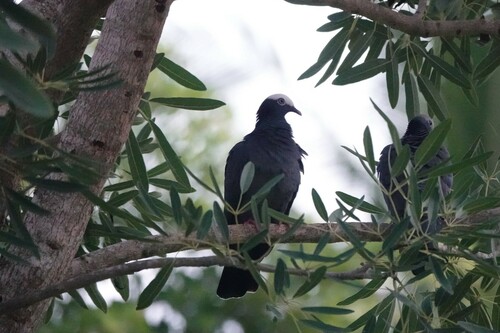
シロボウシバト (Patagioenas leucocephala) シロボウシバト
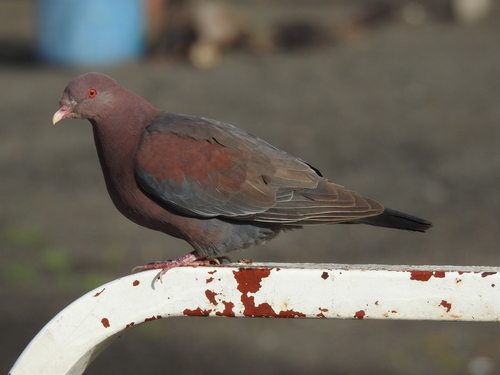
アカハシバト (Patagioenas flavirostris) アカハシバト

メディア

読み込み中…

要点

シロボウシバトとアカハシバトの最も信頼できるフィールドマークは、成鳥のシロボウシバトに見られる白または灰色がかった白の冠斑点の存在であり、これはアカハシバトには常に欠けています。飛んでいる時や止まっている時には、シロボウシバトの虹色の襟を探してください(成鳥のみ、良い光の下でのみ)、対してアカハシバトは均一なマルーンから紫の頭と首を持っています。両種の幼鳥はより鈍い色合いですが、シロボウシの幼鳥は少数の淡い冠羽を示すことがありますが、アカハシの幼鳥は決して示しません。くちばしの色も特徴的です:アカハシバトは黄色い先端を持つ赤いくちばしを持ち、シロボウシバトは淡い先端を持つ赤いくちばしを示します。両者は大きくて頑丈な鳩ですが、シロボウシバトはよりずんぐりしておらず、より長くて四角い尾を持っています。生息地も手助けになります:シロボウシバトはマングローブやカリブ海の島々を好み、アカハシバトは主にメキシコと中央アメリカの乾燥した低地の森林や河川の近くに見られます。

識別のコツ

  1. Crown Patch (Adults): シロボウシバトのみが白または灰白色の冠斑点を示し、アカハシバトは決して示しません。これは成鳥にとって最も信頼できるマークであり、特に止まっている鳥において顕著です。
  2. Crown Patch (Juveniles): 幼鳥のシロボウシは少数の淡い冠羽を示すことがありますが、完全な斑点は決して示しません。幼鳥のアカハシは淡い冠羽を示すことはなく、冠は常に鈍く均一です。
  3. Iridescent Collar (Adults): シロボウシバトは良い光の下で緑の縞模様の虹色の襟を示すことがありますが、アカハシバトは虹色の襟を欠いています。これは微妙で、常に見えるわけではありません。
  4. Head and Neck Color: アカハシバトはマルーンから紫の頭、首、翼の覆いを持ち、シロボウシバトはスレートグレーからほぼ黒で、マルーンや紫の色調はありません。
  5. Bill Color: アカハシバトは黄色い先端を持つ赤いくちばしを持ち、シロボウシバトは淡い(黄色ではない)先端を持つ赤いくちばしを持っています。これは遠くから見るのが難しいことがあります。
  6. Eye Color: シロボウシバトは白い虹彩を持ち、アカハシバトは淡い赤い虹彩とオレンジ色の眼窩環を持っています。近距離で役立ちます。
  7. Tail Shape: シロボウシバトはより長くて四角い尾を持ち、アカハシバトはより頑丈で尾があまり伸びていません。
  8. Body Structure: シロボウシバトはずんぐりしておらず、より細身に見え、アカハシバトは重くて頑丈です。
  9. Juvenile Upperparts: 幼鳥のアカハシは肩が暗い/鈍い色で、茶色のマントルを持ち、幼鳥のシロボウシは灰色がかった茶色ですが、アカハシの強い茶色の色調は欠けています。
  10. Flight Pattern: どちらの種にも独特の上翼や後縁のマークは記載されていません;飛行中は全体の色合いと冠斑点(見える場合)に依存します。
  11. Vocalizations: シロボウシは深い三重のクー音を出し、アカハシは高くてより複雑なクー音を出します。声がはっきり聞こえた場合は声を使用してください。
  12. Habitat: シロボウシはカリブ海や南フロリダのマングローブや近くの森林にほぼ常にいます;アカハシはメキシコと中央アメリカの乾燥した森林や河川の近くにいます。フロリダキーズやカリブ海の島々で見られた場合、ほぼ確実にシロボウシです。
  13. Behavior: シロボウシは非常に警戒心が強く、すぐに飛び立ちます;アカハシはあまり神経質ではないかもしれませんが、離陸時に翼を叩く音を出すことがあります。
  14. Sex Differences: 雌のシロボウシは鈍い灰白色の冠を持ち、雌のアカハシは鈍いマルーンの頭/首を持ちますが、冠斑点はありません。
  15. Seasonal Context: アカハシはその範囲全体で冬に珍しいですが、シロボウシはカリブ海で年間を通じて存在することがあります。季節を補助的な手がかりとして使用してください。

大きさ

両種は長さが似ています(シロボウシ:29–35 cm;アカハシ:30–37 cm)[wikipedia]が、アカハシは一般的に重いです(シロボウシ:150–301 g;アカハシ:230–425 g)[wikipedia]。シロボウシはわずかにずんぐりしておらず、より長くて四角い尾を持ち、アカハシは全体的により頑丈です。フィールドでは、サイズだけでは信頼できる区別にはならず、シロボウシはわずかに細身で尾が長く見えることがあります。

羽色

行動

シロボウシバトは特に神経質で、すぐに飛び立ち、しばしば巣を放棄します。両種は強力な飛行者ですが、シロボウシは尾が長いため、飛行中にあまりずんぐりしていないように見えることがあります。アカハシバトは離陸時に翼を叩く音を出すことがあります。両種は通常、単独または小さな群れで見られますが、シロボウシは果実をつけた木でより大きな群れを形成することがあります。

生息環境

シロボウシバトはほぼ常に沿岸のマングローブや近くの広葉樹林に関連しており、特にカリブ海の島々やフロリダの南端に見られます。彼らは巣作りのために孤立した、しばしば潮に浸水するマングローブの小島を必要としますが、内陸で餌を探すこともあります。アカハシバトは乾燥した森林や河川の近くに見られ、主にメキシコと中央アメリカに生息し、南テキサスでは稀です。生息地の重複は最小限で、中央アメリカの一部を除いては、文脈が強い手がかりとなります。

声

シロボウシバトの鳴き声は大きく深いクー・クー・クーまたはクー・クルーで、三重のクーのリズムを持っています。アカハシバトは長く高音のクー音を出し、その後に三つのクック・ク'-ク'-クーの音を続け、上昇するパターンを持っています。アカハシの鳴き声は高くてより複雑で、シロボウシの鳴き声は深くてシンプルです。フィールドでは、声がはっきり聞こえた場合は役立ちます。

より良い説明を送る

比較と同じ項目を使ってください。文章はすぐに公開されます。

The most reliable field mark between White-crowned and Red-billed Pigeon is the presence of a white or grayish-white crown patch on adult White-crowned Pigeons, which is always absent on Red-billed. In flight or perched, look for the iridescent collar on White-crowned (adults only, and only in good light), versus the uniform maroon-to-purple head and neck of Red-billed. Juveniles of both are duller, but White-crowned juveniles may show a few pale crown feathers while Red-billed juveniles never do. Bill color is also distinctive: Red-billed has a red bill with a yellow tip, while White-crowned shows a red bill with a pale tip. Both are large, robust pigeons, but White-crowned is less chunky and has a longer, squarer tail. Habitat can help: White-crowned favors mangroves and Caribbean islands, while Red-billed is mostly found in dry lowland forests and riversides of Mexico and Central America.

  1. Crown Patch (Adults): Only White-crowned Pigeon shows a white or gray-white crown patch; Red-billed Pigeon never does. This is the single most reliable mark for adults, especially in perched birds.
  2. Crown Patch (Juveniles): Juvenile White-crowned may show a few pale crown feathers, but never a full patch. Juvenile Red-billed never shows any pale crown feathers; crown is always dull and uniform.
  3. Iridescent Collar (Adults): White-crowned Pigeon can show a green-barred iridescent collar in good light; Red-billed Pigeon lacks any iridescent collar. This is subtle and not always visible.
  4. Head and Neck Color: Red-billed Pigeon has a maroon to purple head, neck, and wing coverts; White-crowned Pigeon is slate gray to nearly black, with no maroon or purple tones.
  5. Bill Color: Red-billed Pigeon has a red bill with a yellow tip; White-crowned Pigeon has a red bill with a pale (not yellow) tip. This can be hard to see at distance.
  6. Eye Color: White-crowned Pigeon has a white iris; Red-billed Pigeon has a pale red iris with an orange orbital ring. Useful at close range.
  7. Tail Shape: White-crowned Pigeon has a longer, more square tail; Red-billed Pigeon is more robust and less elongated in the tail.
  8. Body Structure: White-crowned appears less chunky and more slender; Red-billed is heavier and more robust.
  9. Juvenile Upperparts: Juvenile Red-billed is browner with dusky shoulders and a brown mantle; juvenile White-crowned is grayish-brown but lacks the strong brown tones of Red-billed.
  10. Flight Pattern: No unique upperwing or trailing edge marks are described for either; rely on overall coloration and crown patch (if visible) in flight.
  11. Vocalizations: White-crowned gives a deep, triple-coo; Red-billed gives a higher, more complex coooo-cuk-c'-c'-coo. Use voice if heard clearly.
  12. Habitat: White-crowned is almost always in mangroves or nearby forests in the Caribbean or southern Florida; Red-billed is in dry forests and riversides of Mexico and Central America. If seen in the Florida Keys or Caribbean islands, it's almost certainly White-crowned.
  13. Behavior: White-crowned is very wary and quick to flush; Red-billed may be less skittish but can produce a wing-clap on takeoff.
  14. Sex Differences: Female White-crowned has a duller gray-white crown; female Red-billed has a duller maroon head/neck, but no crown patch.
  15. Seasonal Context: Red-billed is rare in winter throughout its range; White-crowned may be present year-round in the Caribbean. Use season as a supporting clue.

Both species are similar in length (White-crowned: 29–35 cm; Red-billed: 30–37 cm) [wikipedia], but Red-billed is generally heavier (White-crowned: 150–301 g; Red-billed: 230–425 g) [wikipedia]. White-crowned is slightly less chunky, with a longer, more square tail, while Red-billed is more robust overall. In the field, size alone is not a reliable separator, but White-crowned may appear a bit more slender and longer-tailed.

  • Juveniles: Both are duller than adults, but juvenile White-crowned Pigeons are grayish-brown, lack the adult's white crown and iridescent collar, and may show a few pale feathers on the crown. Juvenile Red-billed Pigeons are even duller, with dark/dusky shoulders and a browner mantle and wings, but never show a pale crown patch.
  • Adults: White-crowned Pigeon adults are slate gray to nearly black, with a white (males) or gray-white (females) crown patch. Their iridescent collar-patch is only visible in good light. The iris is white, and the bill is red with a pale tip. Red-billed Pigeon adults are dark slate-gray with a maroon to purple head, neck, and wing coverts, blue-gray belly and tail coverts, and a red bill with yellow tip. They lack any crown patch or iridescent collar. The eye is pale red with an orange orbital ring.
  • Flight views: No unique upperwing or trailing edge marks are described for either species; separation relies on overall coloration and crown patch (if visible).

White-crowned Pigeon is notably skittish and quick to flush, often abandoning nests if disturbed. Both species are strong fliers, but White-crowned may appear less bulky and more elongated in flight due to its longer tail. Red-billed Pigeon can produce a wing-clapping sound when taking off. Both species are typically seen singly or in small groups, though White-crowned may form larger flocks at fruiting trees.

White-crowned Pigeon is almost always associated with coastal mangroves and nearby hardwood forests, especially on Caribbean islands and the southern tip of Florida. It requires isolated, often tidally inundated mangrove islets for nesting, but may forage inland. Red-billed Pigeon is found in dry forests and along riversides, primarily in Mexico and Central America, and only rarely in southern Texas. Habitat overlap is minimal except possibly in parts of Central America; context is a strong clue.

White-crowned Pigeon's call is a loud, deep coo-cura-coo or coo-croo, with a triple-coo rhythm. Red-billed Pigeon gives a long, high-pitched coooo followed by three cuk-c'-c'-coo notes, with an ascending pattern. Red-billed's call is higher and more complex; White-crowned's is deeper and simpler. In the field, voice is helpful if heard well.

変更を破棄しますか?

保存していない編集があります。今離れると失われます。

シロボウシバト · アカハシバト · 苦手な鳥