

Motmot

ホオジロオナガガモ 対 アカハシオナガガモ

Anas bahamensis 対 Anas erythrorhyncha

ホオジロオナガガモとアカハシオナガガモのクイズ
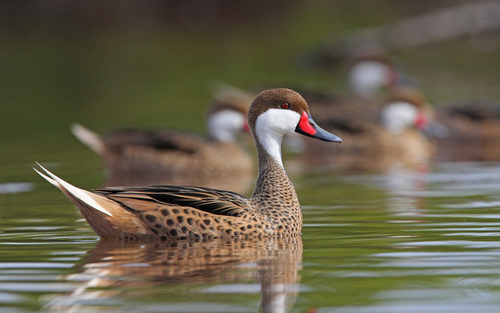
ホオジロオナガガモ (Anas bahamensis) ホオジロオナガガモ
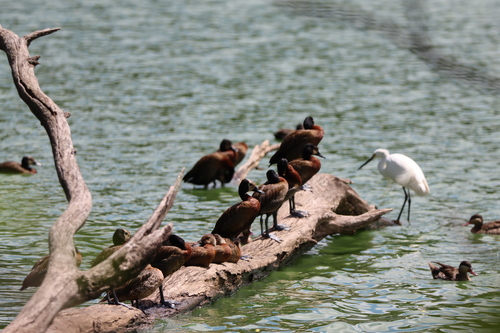
アカハシオナガガモ (Anas erythrorhyncha) アカハシオナガガモ

メディア

読み込み中…

要点

ホオジロオナガガモとアカハシオナガガモを区別するためには、まず頭部とくちばしに注目してください:ホオジロオナガガモは常に鮮明な白い頬と赤みを帯びた灰色のくちばしを示しますが、アカハシオナガガモは淡い顔に鮮やかな赤いくちばしと暗い帽子を持っています。飛行中、ホオジロオナガガモは虹色の緑色のスペキュラムを示しますが、アカハシオナガガモは黒いストライプのあるバフ色の二次羽を見せます。両種は構造が似た茶色のカモですが、頭部とくちばしのパターンがすべての年齢で最も信頼できるフィールドマークです。両者の幼鳥はより鈍い色合いですが、これらの重要なコントラストを保持しています。尾の形状と翼のパターンは二次的ですが、良い視界では役立ちます。

識別のコツ

  1. 白い頬 vs. 淡い顔: ホオジロオナガガモは常に鮮明な白い頬を持っていますが、アカハシオナガガモは淡い顔を持ち、対照的な暗い帽子があります。これはすべての年齢で確認でき、最も迅速なフィールドチェックです。
  2. くちばしの色とパターン: ホオジロオナガガモは赤みを帯びた灰色のくちばし(基部が赤く、他は灰色)を持っていますが、アカハシオナガガモのくちばしは全体が鮮やかな赤です。両者の幼鳥は鈍いくちばしを持っていますが、パターンは保持されています。
  3. 帽子と後頭部: アカハシオナガガモは黒っぽい帽子と後頭部を持ち、淡い顔と対照的です;ホオジロオナガガモはこの暗い帽子がなく、頭がよりクリーンに見えます。
  4. 飛行中のスペキュラムと翼のパターン: ホオジロオナガガモは翼に虹色の緑色のスペキュラムを示します(すべての年齢)。アカハシオナガガモは緑色がなく、代わりに黒いストライプのあるバフ色の二次羽を持っています—飛行中または羽繕い中にこれを探してください。
  5. 尾の形: ホオジロオナガガモは細長く尖った尾を持っていますが、オナガガモほどではありません。アカハシオナガガモの尾は特に尖っているとは見なされず、典型的なダブリングダックに見えます。
  6. 体のパターン: 両者は細かい淡いマーキングのある茶色ですが、ホオジロオナガガモは白い頬のためにややクリーンに見えるかもしれません。アカハシオナガガモは体に白いスカロップ模様があり、微妙に異なる質感を与えます。
  7. 性別と年齢: 両種の両性は似ています;雌と幼鳥は鈍い色合いですが、重要な頭部とくちばしのコントラストを保持しています。性別に頼って区別しないでください。
  8. 声: アカハシオナガガモだけが声を出すとされており、雄は「whzzt」という鳴き声を、雌は柔らかいマガモのようなクワックを出します。ホオジロオナガガモは特異な鳴き声が記載されていません。
  9. 生息地と範囲: 野生で見られた場合、ホオジロオナガガモはカリブ海と南アメリカで期待され、アカハシオナガガモは南部/東部アフリカで見られます。逃げた個体が発生することがあるため、コレクションや公園での位置にのみ頼らないでください。
  10. 群れのサイズ: アカハシオナガガモは繁殖期以外に大きな群れを形成することが多いですが、ホオジロオナガガモは通常、小さなグループやペアで見られます。
  11. 行動: 両者は水面での採餌を行いますが、アカハシオナガガモは夕方や夜に陸上で採餌する可能性が高いです。
  12. 落とし穴: 照明が悪いと、アカハシオナガガモの淡い顔が白っぽく見えることがありますが、暗い帽子と全赤のくちばしは依然として特徴的です。幼鳥のホオジロオナガガモはコントラストが少ないかもしれませんが、白い頬のパッチは依然として見えます。
  13. マークが失敗した場合: 頭が隠れている場合は、飛行中のスペキュラムや尾の形を見てください。体だけが見える場合、区別は難しくなります—より良い視界を待ってください。
  14. 季節変動: 両種に強い季節的な羽毛の変化はないため、マークは年間を通じて信頼できます。
  15. 要約チェック: 頭のパターン(白い頬 vs. 暗い帽子のある淡い顔)とくちばしの色(赤みを帯びた灰色 vs. 全赤)は、すべての年齢と季節で最も迅速かつ信頼できる区別要素です。

大きさ

両種はサイズが似ており、アカハシオナガガモは43–48 cmの長さで、ホオジロオナガガモは亜種によって異なりますが、一般的に比較可能です。両者の雌は雄よりもやや小さく鈍いですが、サイズだけではフィールドでの信頼できる区別要素にはなりません。

羽色

行動

両者はダブリングダックで、主に植物材料や小さな水生生物を採餌するために水面で採餌します。ホオジロオナガガモは小さく断片的な個体群で見られることがありますが、アカハシオナガガモは繁殖期以外に非常に社交的で、大きな群れを形成します。両者は水の近くの地面に巣を作り、浅い湿地で餌を取ります。

生息環境

ホオジロオナガガモは南アメリカとカリブ海に断片的に分布しており、しばしば塩水または淡水の湿地に生息しています。アカハシオナガガモは南部および東部アフリカに豊富で、通常は南緯10°の南側に生息し、開けた国の淡水生息地を好みます。彼らの範囲は重ならないため、位置は強い手がかりとなりますが、逃げた個体に対処する場合は注意が必要です。

声

アカハシオナガガモは一般的に静かですが、求愛する雄は「whzzt」という鳴き声を出し、雌は柔らかいマガモのようなクワックを出します。ホオジロオナガガモには特異な鳴き声が記載されていないため、声は信頼できる区別要素ではありません。

より良い説明を送る

比較と同じ項目を使ってください。文章はすぐに公開されます。

To separate White-cheeked Pintail from Red-billed Duck, focus first on the head and bill: White-cheeked Pintail always shows crisp white cheeks and a red-based grey bill, while Red-billed Duck has a pale face with a solidly bright red bill and a dark cap. In flight, White-cheeked Pintail shows an iridescent green speculum, whereas Red-billed Duck reveals buff secondaries with a black stripe. Both species are brown ducks with similar structure, but the head and bill pattern are the most reliable field marks at all ages. Juveniles of both are duller but retain these key contrasts. Tail shape and wing pattern are secondary but useful in good views.

  1. White cheeks vs. pale face: White-cheeked Pintail always has crisp white cheeks, while Red-billed Duck shows a pale face but with a contrasting dark cap. This is visible at all ages and is the quickest field check.
  2. Bill color and pattern: White-cheeked Pintail has a red-based grey bill (red at the base, grey elsewhere), while Red-billed Duck's bill is bright red throughout. Juveniles of both have duller bills, but the pattern holds.
  3. Cap and nape: Red-billed Duck has a blackish cap and nape, contrasting with its pale face; White-cheeked Pintail lacks this dark cap, making the head appear cleaner.
  4. Speculum and wing pattern in flight: White-cheeked Pintail shows an iridescent green speculum on the wing (all ages). Red-billed Duck lacks green; instead, it has buff secondaries with a black stripe—look for this in flight or when preening.
  5. Tail shape: White-cheeked Pintail has a slender, pointed tail, though less so than Northern Pintail. Red-billed Duck's tail is not especially pointed and appears more typical for a dabbling duck.
  6. Body pattern: Both are brown with fine pale markings, but White-cheeked Pintail may appear slightly cleaner due to the white cheeks. Red-billed Duck is scalloped with white on the body, giving a subtly different texture.
  7. Sex and age: Both sexes are similar in each species; females and juveniles are duller but retain the key head and bill contrasts. Do not rely on sex to separate them.
  8. Voice: Only Red-billed Duck is described as vocal, with a 'whzzt' call from males and a soft quack from females. White-cheeked Pintail is not noted for distinctive calls.
  9. Habitat and range: If seen in the wild, White-cheeked Pintail is expected in the Caribbean and South America, Red-billed Duck in southern/eastern Africa. Escapees can occur, so do not rely solely on location in collections or parks.
  10. Flock size: Red-billed Duck often forms large flocks outside breeding season, while White-cheeked Pintail is usually in smaller groups or pairs.
  11. Behavior: Both dabble, but Red-billed Duck may be more likely to forage on land in the evening or at night.
  12. Pitfalls: In poor light, the pale face of Red-billed Duck can look whitish, but the dark cap and all-red bill remain distinctive. Juvenile White-cheeked Pintails may have less contrast, but the white cheek patch is still visible.
  13. When marks fail: If the head is obscured, try to see the speculum in flight or tail shape. If only the body is visible, separation is difficult—wait for a better view.
  14. Seasonal variation: No strong seasonal plumage change in either species, so marks are reliable year-round.
  15. Summary check: Head pattern (white cheek vs. pale face with dark cap) and bill color (red-based grey vs. all red) are the fastest and most reliable separators at all ages and seasons.

Both species are similar in size, with Red-billed Duck at 43–48 cm length and White-cheeked Pintail varying by subspecies but generally comparable. Females of both are slightly smaller and duller than males, but size alone is not a reliable separator in the field.

  • Juvenile and Immature: Both species have duller versions of adult plumage, but the head and bill pattern remain diagnostic. Juvenile White-cheeked Pintail has white cheeks and a duller red-based bill; juvenile Red-billed Duck has a pale face, dark cap, and a duller but still red bill.
  • Adult (all seasons): White-cheeked Pintail is mainly brown with crisp white cheeks and a red-based grey bill. Its wing shows an iridescent green speculum in flight. Red-billed Duck is also brown, but with a blackish cap, pale face, and a bright red bill. In flight, the Red-billed Duck's secondaries are buff with a black stripe, lacking the green iridescence. Both sexes are similar in each species, with females slightly duller.
  • Tail: White-cheeked Pintail has a slender, pointed tail (less extreme than Northern Pintail), while Red-billed Duck's tail is not noted as especially pointed.

Both are dabbling ducks, feeding mainly by dabbling for plant material and small aquatic creatures. White-cheeked Pintail may be seen in smaller, patchy populations, while Red-billed Duck is highly gregarious outside the breeding season and forms large flocks. Both nest on the ground near water and feed in shallow wetlands.

White-cheeked Pintail is found in patchy distributions across South America and the Caribbean, often in brackish or freshwater wetlands. Red-billed Duck is abundant in southern and eastern Africa, typically south of 10° S, and prefers freshwater habitats in open country. Their ranges do not overlap, so location is a strong clue unless dealing with escapees.

Red-billed Duck is generally quiet but the displaying male gives a 'whzzt' call and the female a soft mallard-like quack. No distinctive vocalizations are noted for White-cheeked Pintail in the sources, so voice is not a reliable separator.

変更を破棄しますか?

保存していない編集があります。今離れると失われます。

ホオジロオナガガモ · アカハシオナガガモ · 苦手な鳥