

Motmot

カタジロフウキンチョウ 対 ズキンフウキンチョウ

Neothraupis fasciata 対 Nemosia pileata

カタジロフウキンチョウとズキンフウキンチョウのクイズ
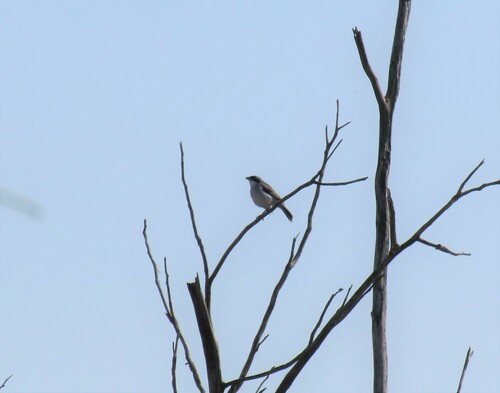
カタジロフウキンチョウ (Neothraupis fasciata) カタジロフウキンチョウ
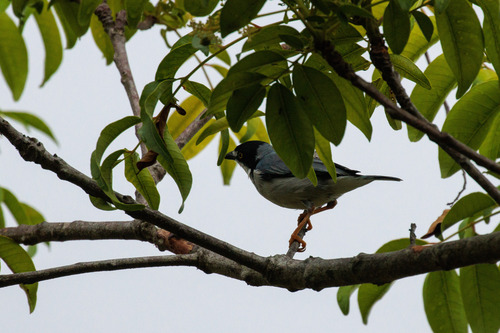
ズキンフウキンチョウ (Nemosia pileata) ズキンフウキンチョウ

メディア

読み込み中…

要点

ホワイトバンドフウキンチョウとズキンフウキンチョウの最も信頼できるフィールドマークは、頭部パターンの顕著な違いです:成鳥のズキンフウキンチョウのオスは、白いロアと喉を持つ真っ黒なフードを持っていますが、ホワイトバンドフウキンチョウはそのようなフードなしで、シュライクのようなより均一なパターンを示します。ズキンフウキンチョウの雌と幼鳥は黒いフードが欠けていますが、頭部と下部の色調は依然として異なります。ホワイトバンドフウキンチョウは特に大きく、体重も重く、しばしば結束した群れで見られますが、ズキンフウキンチョウは小さく、より繊細です。幼鳥や助けるホワイトバンドフウキンチョウは茶色がかった色調を示すことがあり、これが幼鳥のズキンフウキンチョウと混同されることがありますが、頭部パターンとサイズに注意を払うことで、ほとんどのフィールドでの遭遇を解決できます。

識別のコツ

  1. 頭部パターンが鍵: 成鳥のオスのズキンフウキンチョウは、白いロアと喉を持つ固体の黒いフードを持っています—この比較において他のフウキンチョウはこのパターンを示しません。白い顔の斑点を持つ黒い頭の鳥を見たら、それはズキンフウキンチョウ(オス)です。
  2. 雌と幼鳥の頭の色: ズキンフウキンチョウの雌は黒いフードが欠けていますが、上面に合った灰色がかった青い頭を持っています;ホワイトバンドフウキンチョウはどの年齢でもこの均一な青灰色の頭を示しません。
  3. 幼鳥の混乱: 幼鳥のホワイトバンドフウキンチョウ(助ける者)は灰色の部分に茶色がかった色調を示し、時には雌と誤認されることがあります。ズキンフウキンチョウの幼鳥は上面が淡い青で、下面が青灰色で、バラオレンジの足を持っています—これらの足と下部の色を探して区別してください。
  4. 下部の色調: ホワイトバンドフウキンチョウは、より均一でシュライクのような灰色と白のパターンを持っています。ズキンフウキンチョウの雌と幼鳥は、特に喉と胸に白い下部にバフの色合いがあります。
  5. くちばしの色: ズキンフウキンチョウのオスは黒いくちばしを持ち、雌は黒い上顎と淡い下顎を持っています。ホワイトバンドフウキンチョウのくちばしは特徴的とは記述されていないので、このマークは注意して使用してください。
  6. 足の色: ズキンフウキンチョウ(特に幼鳥)は黄色または黄色がかった茶色(成鳥)またはバラオレンジ(幼鳥)の足と足を持っています。ホワイトバンドフウキンチョウの足の色は診断的とは記述されていません。
  7. サイズと構造: ホワイトバンドフウキンチョウはズキンフウキンチョウよりもはるかに大きく、体重も重いです。鳥が著しくがっしりとして長く見える場合は、ホワイトバンドを疑ってください。
  8. 群れのサイズと行動: ホワイトバンドフウキンチョウはしばしば7羽以上の密集した群れで見られ、時には茶色がかった助ける者と一緒にいます。ズキンフウキンチョウはそのような大きく結束した群れにいる可能性は低いです。
  9. 性的二形性: ホワイトバンドフウキンチョウは性的二形性を示さず—オスと雌は似ています。ズキンフウキンチョウは性的二形性があり、オスは黒いフードを示します。
  10. 羽毛の一貫性: ホワイトバンドフウキンチョウの羽毛は性別や年齢に関係なく一貫しています(茶色がかった幼鳥/助ける者を除く)、一方でズキンフウキンチョウは性別や年齢によって変わります。
  11. 上翼のパターン: これらのメモでは、どちらの種にも特徴的な上翼または飛行パターンのマークは記述されていません—翼のパネルや後縁に頼らないでください。
  12. 生息地の重複: 両種は類似の生息地に出現する可能性があるため、強い地域知識がない限り、生息地だけに頼って区別しないでください。
  13. 鳴き声: これらのメモでは記述されていません—ここで声を区別として使用しないでください。
  14. 季節的文脈: ホワイトバンドフウキンチョウは10月から11月に繁殖します;ズキンフウキンチョウの繁殖シーズンは地域によって異なります。ホワイトバンドフウキンチョウの群れに助ける者がいることは繁殖シーズンを示すかもしれません。
  15. 落とし穴: 茶色がかった幼鳥のホワイトバンドフウキンチョウと雌のズキンフウキンチョウに注意してください—結論を出す前に常に頭部パターン、下部の色調、サイズを確認してください。

大きさ

ホワイトバンドフウキンチョウはズキンフウキンチョウ(12–13.5 cm、12–21 g)よりもかなり大きく、重い(16 cm、29–32 g)です[wikipedia][wikidata]。フィールドでは、ホワイトバンドフウキンチョウはよりがっしりとして長い体に見え、より頑丈な印象を与えますが、ズキンフウキンチョウは明らかに小さく、軽いです。このサイズの違いは、特に両種が同じ生息地で見られるときには、距離があってもしばしば明らかです。

羽色

行動

ホワイトバンドフウキンチョウは通常、ペアまたは小さな密接な群れ(最大12羽、平均7羽)で見られ、しばしば前の巣立ちからの協力的な助ける者と一緒にいます[wikipedia]。この社会構造はフィールドでの手がかりとなることがあります。ズキンフウキンチョウの社会的行動はここではあまり記述されていませんが、そのような大きく結束した群れには注目されていません。両種は昆虫を探しますが、ホワイトバンドフウキンチョウの群れとして移動する傾向は有用な行動の手がかりです。

生息環境

ズキンフウキンチョウはチリ、エクアドル、ウルグアイを除く南アメリカ本土全体に広がっており、さまざまな生息地で見られます[wikipedia]。ホワイトバンドフウキンチョウの範囲と生息地はこれらのメモでは詳細に記述されていないため、地域の知識が適用されない限り、生息地は強い区別要因ではありません。

より良い説明を送る

比較と同じ項目を使ってください。文章はすぐに公開されます。

The most reliable field mark between White-banded Tanager and Hooded Tanager is the striking difference in head pattern: adult Hooded Tanager males have a jet-black hood with white lores and throat, while White-banded Tanager shows a shrike-like, more uniform pattern without such a hood. Females and immatures of Hooded Tanager lack the black hood but still differ in head and underpart tones. White-banded Tanager is notably larger and heavier-bodied, often seen in cohesive groups, while Hooded Tanager is smaller and more delicate. Juvenile and helper White-banded Tanagers can show brownish tones, which may cause confusion with immature Hooded Tanagers, but careful attention to head pattern and size will resolve most field encounters.

  1. Head pattern is key: Adult male Hooded Tanagers have a solid black hood with white lores and throat—no other tanager in this comparison shows this pattern. If you see a black-headed bird with white face patches, it's Hooded Tanager (male).
  2. Female and immature head color: Female Hooded Tanagers lack the black hood but have a grayish blue head matching the upperparts; White-banded Tanager of any age never shows this uniform blue-gray head.
  3. Juvenile confusion: Juvenile White-banded Tanagers (helpers) show brownish tones in the gray areas, sometimes misidentified as females. Hooded Tanager juveniles are pale blue above and bluish gray below, with rose-orange legs—look for these leg and underpart colors to separate.
  4. Underpart tones: White-banded Tanager has a more uniform, shrike-like gray and white pattern. Hooded Tanager females and immatures have a buff tinge to the white underparts, especially on the throat and breast.
  5. Bill color: Hooded Tanager males have a black bill; females have a black upper mandible and pale lower mandible. White-banded Tanager's bill is not described as distinctive, so use this mark with caution.
  6. Leg color: Hooded Tanager (especially juveniles) has yellow or yellow-brown (adults) or rose-orange (juveniles) legs and feet. White-banded Tanager's leg color is not described as diagnostic.
  7. Size and structure: White-banded Tanager is much larger and heavier-bodied than Hooded Tanager. If the bird looks notably stocky and long, suspect White-banded.
  8. Group size and behavior: White-banded Tanager is often in tight groups of 7 or more, sometimes with brownish helpers. Hooded Tanager is less likely to be in such large, cohesive groups.
  9. Sexual dimorphism: White-banded Tanager shows no sexual dimorphism—males and females look alike. Hooded Tanager is sexually dimorphic, with males showing the black hood.
  10. Plumage consistency: White-banded Tanager's plumage is consistent across sexes and ages (except for brownish juveniles/helpers), while Hooded Tanager varies by sex and age.
  11. Upperwing pattern: No distinctive upperwing or flight pattern marks are described for either species in these notes—do not rely on wing panels or trailing edges.
  12. Habitat overlap: Both species may occur in similar habitats, so do not rely on habitat alone for separation unless you have strong local knowledge.
  13. Vocalizations: Not described in these notes—do not use voice as a separator here.
  14. Seasonal context: White-banded Tanager breeds in October–November; Hooded Tanager's breeding season varies by region. Presence of helpers in White-banded Tanager groups may indicate breeding season.
  15. Pitfalls: Beware of brownish juvenile White-banded Tanagers and female Hooded Tanagers—always check head pattern, underpart tone, and size before concluding.

White-banded Tanager is substantially larger and heavier (16 cm, 29–32 g) than Hooded Tanager (12–13.5 cm, 12–21 g) [wikipedia][wikidata]. In the field, White-banded Tanager will appear bulkier and longer-bodied, with a more robust jizz, while Hooded Tanager is noticeably smaller and lighter. This size difference is often apparent even at a distance, especially when both species are seen in the same habitat.

  • Juveniles and immatures: White-banded Tanager helpers (recent fledglings) have brownish areas replacing the adult's gray, which can be mistaken for a duller tanager. Hooded Tanager juveniles are pale blue above and bluish gray below, with rose-orange legs and feet—look for these leg colors and overall blue-gray wash to separate from brownish White-banded.
  • Adult males: Hooded Tanager males are instantly separated by their solid black hood, contrasting sharply with white lores, throat, and sides of neck, and grayish blue upperparts. White-banded Tanager lacks any black hood or mask; its plumage is shrike-like, with gray and white but no sharply defined black head.
  • Adult females: Female Hooded Tanager lacks the black hood but has a uniform grayish blue head and upperparts, with a buff tinge on the white underparts (especially throat and breast). White-banded Tanager females are identical to males, so no sexual dimorphism is present—look for the consistent shrike-like pattern.
  • Bill and bare parts: Hooded Tanager males have a black bill, females a two-toned bill (black above, pale below); both sexes have yellow or yellow-brown legs and feet, while White-banded Tanager's bill and legs are not described as distinctive in these notes.

White-banded Tanager is typically seen in pairs or small, tight-knit groups (up to 12, average 7), often with cooperative helpers from previous broods [wikipedia]. This social structure can be a clue in the field. Hooded Tanager's social behavior is less described here, but it is not noted for such large, cohesive groups. Both species forage for insects, but White-banded Tanager's tendency to move as a group is a useful behavioral cue.

Hooded Tanager is widespread across mainland South America except Chile, Ecuador, and Uruguay, and is found in a variety of habitats [wikipedia]. White-banded Tanager's range and habitat are not detailed in these notes, so habitat is not a strong separator unless local knowledge is applied.

変更を破棄しますか?

保存していない編集があります。今離れると失われます。

カタジロフウキンチョウ · ズキンフウキンチョウ · 苦手な鳥