

Motmot

チュウシャクシギ 対 コシャクシギ

Numenius phaeopus 対 Numenius minutus

チュウシャクシギとコシャクシギのクイズ

チュウシャクシギ (Numenius phaeopus) チュウシャクシギ
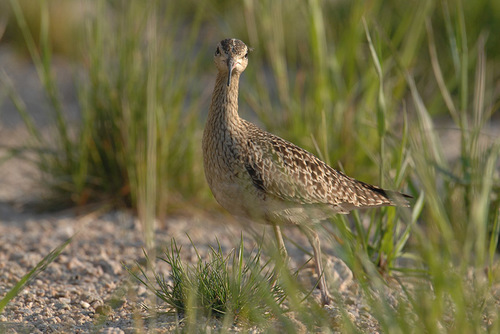
コシャクシギ (Numenius minutus) コシャクシギ

メディア

読み込み中…

要点

チュウシャクシギとコシャクシギを区別する最も信頼できるフィールドマークはサイズです:コシャクシギははるかに小さく、より繊細で、顕著に短いくちばしを持っています。飛行中、チュウシャクシギ(ユーラシア)は特徴的な白い尾と下背を示しますが、コシャクシギはこれを欠き、上面は均一に灰褐色に見えます。両種は、冠と眉斑のストライプを持つ似たような頭の模様を共有しており、遠くから見ると誤解を招くことがあります。構造、特にくちばしの長さと体の比率は、特に鳥が直接比較されていないときに区別するために重要です。

識別のコツ

  1. 飛行中の白い尾(チュウシャクシギのみ): ユーラシアチュウシャクシギは、飛行中に明るい白い尾と下背を示し、すべての年齢での重要なマークです。コシャクシギはこれを欠き、上面は単調な灰褐色に見えます。
  2. サイズと構造: コシャクシギははるかに小さく、より繊細で、コンパクトで丸い体と短い脚を持っています。チュウシャクシギは大きく、細長い体で、長い首と脚を持っています。これは、他の水鳥がスケールとして存在する場合、特に遠くからでも使用できます。
  3. くちばしの長さと形: チュウシャクシギは、目立つ「くびれ」を持つ長く強く湾曲したくちばしを持っていますが、コシャクシギのくちばしははるかに短く(カモメにしては)、わずかに下向きに湾曲しており、属に対して比率的に小さく見えます。これはすべての年齢と季節で信頼できます。
  4. 頭の模様: 両種は、暗い冠と淡い中央ストライプ、強い眉斑を持っているため、これは安全な区別要因ではありません。しかし、チュウシャクシギの頭は大きいため、より広く見え、模様がより対照的に見えることがあります。
  5. 翼の下と腹: コシャクシギは灰褐色の翼の下ときれいな白い腹を持っていますが、チュウシャクシギは下側が暗く、胸と側面により多くの縞模様があります。これは微妙ですが、近距離で役立つことがあります。
  6. 飛行スタイル: チュウシャクシギは遅く深い翼の打撃で飛び、重そうに見えます。コシャクシギはより速く、より機敏で、時には飛行中に大きなシギやオオハシのように見えます。
  7. 採餌行動: コシャクシギはより活発で、食べ物をついばむために素早く走りますが、チュウシャクシギはより遅く、深く探ります。
  8. 生息地の文脈: コシャクシギは通過中に短い草、氾濫原、草地を好みますが、チュウシャクシギはよりオープンな湿原、ツンドラ、または沿岸の干潟にいることが多いです。草の生えた内陸の生息地で見られた場合は、コシャクシギを考慮しますが、迷子の可能性を確認してください。
  9. 声: チュウシャクシギの鳴き声は、波打つようなトリルのある口笛です。コシャクシギの鳴き声は、繰り返しのあるより単純な口笛です。両方の鳴き声は高音ですが、チュウシャクシギの方がより複雑で音楽的であり、コシャクシギの方が短く、変化が少ないです。声は、鳥が鳴いている場合に役立ちますが、距離がある場合や経験のないリスナーには必ずしも診断的ではありません。
  10. 直接比較: 両種が存在する場合、サイズ、くちばしの長さ、尾の模様の違いは明白です。単独の場合は、構造と飛行マークに頼ります。
  11. 幼鳥/未成熟の羽毛: 両種に特有の上翼や年齢特有のマークは記載されていないため、すべての年齢で尾と構造に焦点を当てます。
  12. 落とし穴: 頭の模様だけに頼らないでください。両種はここで似ています。悪い光や遠くから見たチュウシャクシギが小さく見えたり、色が薄く見えたりすることに注意してください。
  13. 季節/性別: ソースには、両種において重要な季節的または性差は記載されていないため、すべてのヒントは年間を通じて適用されます。
  14. 地理的文脈: チュウシャクシギは広範囲に分布しており、コシャクシギはその移動回廊の外でははるかに稀です。範囲を補助的な手がかりとして使用し、主要な区別要因としては使用しないでください。
  15. 疑わしい場合: 最も信頼できる区別のために、飛行中の尾の模様、全体のサイズ、くちばしの長さを優先してください。

大きさ

チュウシャクシギははるかに大きく、長さ37〜47 cm、翼幅75〜90 cmで測定されますが、コシャクシギは長さ28〜31 cm、翼幅68〜71 cmしかありません。チュウシャクシギはコシャクシギ(約172〜175 g)に比べて重い(270〜493 g)です。フィールドでは、コシャクシギは明らかに華奢に見え、小さく丸い体と短い脚とくちばしを持っています。一緒に見られた場合、サイズの違いは際立っていますが、単独でもコシャクシギの比率は典型的なカモメよりも大きなシギにより似ています。

羽色

すべての年齢において、最も診断的な羽毛の特徴は、飛行中の尾と下背です:チュウシャクシギ(ユーラシア)は、上面の残りと対照的な強い白い尾と下背を示しますが、コシャクシギはこれを欠き、上面は単調な灰褐色に見えます。両種は、暗い冠のストライプと淡い眉斑を持つ似たような頭の模様を持っており、正面から見たり休んでいるときに混乱を引き起こすことがあります。コシャクシギは一般的に下側がより淡く、白い腹を持ち、翼の下も灰褐色で、強い対比がありません。チュウシャクシギは全体的に暗く、より大きく、胸と側面により広範囲の縞模様があります。両種に特有の年齢別の上翼パターンに関するメモはないため、すべての年齢で尾と構造に焦点を当てます。

行動

両種は水鳥であり、無脊椎動物のために泥を探ることで餌を取りますが、コシャクシギはしばしばより活発で「神経質」に見え、大きなシギのように走り回ってついばみます。チュウシャクシギはより遅く、より計画的で、重い歩き方をしています。飛行中、チュウシャクシギの大きなサイズと長い翼は、より重々しいカモメのような飛行を与えますが、コシャクシギはより速く、より機敏で、時にはオオハシや大きなトリンガのシギを思い起こさせます。

生息環境

チュウシャクシギは亜北極のユーラシア全域で繁殖し、ヨーロッパとアジアで広く分布しており、オープンな湿原、ツンドラ、沿岸の干潟で見られることが多いです。コシャクシギはシベリアの極北で繁殖し、範囲がはるかに制限されており、通常は草の生えた氾濫原、湿った草地、または短い芝生で移動中に見られます。これらの生息地は、大きなカモメよりも小さな水鳥が使用するものに似ています。文脈が知られている場合、コシャクシギはその移動回廊の外でははるかに可能性が低いです。

声

チュウシャクシギは、波打つような長い口笛を出し、しばしばトリルがあり、特徴的で遠くまで響きます。コシャクシギの鳴き声は、繰り返しのあるより単純な口笛です。両方の鳴き声は高音ですが、チュウシャクシギの方がより複雑で音楽的であり、コシャクシギの方が短く、変化が少ないです。声は、鳥が鳴いている場合に役立ちますが、距離がある場合や経験のないリスナーには必ずしも診断的ではありません。

より良い説明を送る

比較と同じ項目を使ってください。文章はすぐに公開されます。

The most reliable field mark to separate Whimbrel from Little Whimbrel is size: Little Whimbrel is much smaller and more delicate, with a notably shorter bill. In flight, Whimbrel (Eurasian) shows a distinctive white rump and lower back, while Little Whimbrel lacks this, appearing uniformly greyish-brown above. Both species share a similar head pattern with crown and superciliary stripes, which can mislead at a distance. Structure, especially bill length and body proportions, is crucial for separation, especially when birds are not in direct comparison.

  1. White rump in flight (Whimbrel only): Eurasian Whimbrel shows a bright white rump and lower back in flight, a key mark at all ages. Little Whimbrel lacks this, appearing plain greyish-brown above.
  2. Size and structure: Little Whimbrel is much smaller and more delicate, with a compact, round body and short legs. Whimbrel is large and rangy, with a longer neck and legs. Use this even at a distance, especially if other waders are present for scale.
  3. Bill length and shape: Whimbrel has a long, strongly decurved bill with a noticeable 'kink,' while Little Whimbrel's bill is much shorter (for a curlew), only gently downcurved, and looks proportionally small for the genus. This is reliable at all ages and seasons.
  4. Head pattern: Both species have a dark crown with a pale central stripe and strong supercilium, so this is not a safe separator. However, Whimbrel's head may look broader and the pattern more contrasting due to its size.
  5. Underwing and belly: Little Whimbrel has greyish-brown underwings and a clean white belly, while Whimbrel is darker below with more streaking on the breast and flanks. This is subtle but can help at close range.
  6. Flight style: Whimbrel flies with slow, deep wingbeats and appears heavy. Little Whimbrel is quicker and more agile, sometimes resembling a large sandpiper or godwit in flight.
  7. Feeding behavior: Little Whimbrel is more active and runs quickly, picking at food, while Whimbrel moves more slowly and probes deeply.
  8. Habitat context: Little Whimbrel prefers short grass, floodplains, and meadows on passage, while Whimbrel is more often on open moorland, tundra, or coastal mudflats. If seen in grassy inland habitat, consider Little Whimbrel, but check for vagrancy.
  9. Voice: Whimbrel's call is a rippling, trilled whistle; Little Whimbrel's is a repetitive, simpler whistle. Use with caution unless familiar with both.
  10. Direct comparison: If both species are present, the size, bill length, and rump pattern differences are unmistakable. If alone, rely on structure and flight marks.
  11. Juvenile/immature plumage: No distinctive upperwing or age-specific marks are noted for either species, so focus on rump and structure for all ages.
  12. Pitfalls: Do not rely on head pattern alone; both species are similar here. Beware of Whimbrel in poor light or distant views appearing smaller or paler than they are.
  13. Season/sex: No significant seasonal or sexual dimorphism is noted for either species in the sources, so all tips apply year-round.
  14. Geographic context: Whimbrel is widespread; Little Whimbrel is much rarer outside its migration corridor. Use range as a supporting clue, not a primary separator.
  15. When in doubt: Prioritize rump pattern in flight, overall size, and bill length for the most reliable separation.

Whimbrel is substantially larger, measuring 37–47 cm in length and 75–90 cm in wingspan, while Little Whimbrel is only 28–31 cm long with a 68–71 cm wingspan. Whimbrel is also heavier (270–493 g) compared to Little Whimbrel (about 172–175 g). In the field, Little Whimbrel looks noticeably daintier, with a smaller, rounder body and shorter legs and bill. If seen together, the size difference is striking, but even singly, Little Whimbrel's proportions are more reminiscent of a large sandpiper than a typical curlew.

For all ages, the most diagnostic plumage feature is the rump and lower back in flight: Whimbrel (Eurasian) shows a strong white rump and lower back, contrasting with the rest of the upperparts, while Little Whimbrel lacks this and appears plain greyish-brown above. Both species have a similar head pattern with dark crown stripes and a pale supercilium, which can cause confusion when seen head-on or at rest. Little Whimbrel is generally paler below, with a white belly, and its underwings are also greyish-brown, lacking any strong contrast. Whimbrel is overall darker and bulkier, with more extensive streaking on the breast and flanks. There are no notes on age-specific upperwing patterns for either species, so focus on rump and structure for all ages.

Both species are waders and feed by probing mud for invertebrates, but Little Whimbrel often appears more active and 'nervous,' running and picking more like a large sandpiper. Whimbrel is slower and more methodical, with a heavier gait. In flight, Whimbrel's larger size and longer wings give it a more ponderous, curlew-like flight, while Little Whimbrel is quicker and more agile, sometimes recalling godwits or large Tringa sandpipers.

Whimbrel breeds across the subarctic Palearctic and is widespread in Europe and Asia, often found on open moorland, tundra, and coastal mudflats. Little Whimbrel breeds in the far north of Siberia and is much more restricted in range, typically seen on migration in grassy floodplains, wet meadows, or short turf—habitats more like those used by smaller waders than by large curlews. If context is known, Little Whimbrel is much less likely outside its migration corridor.

Whimbrel gives a rippling, prolonged whistle, often trilled, which is distinctive and carries far. Little Whimbrel's call is a repetitive, simpler whistle. Both calls are high-pitched but Whimbrel's is more complex and musical, while Little Whimbrel's is shorter and less varied. Voice is helpful if the birds are calling, but not always diagnostic at distance or for inexperienced listeners.

変更を破棄しますか?

保存していない編集があります。今離れると失われます。

チュウシャクシギ · コシャクシギ · 苦手な鳥