

Motmot

オナガミズナギドリ 対 ハイイロミズナギドリ

Ardenna pacifica 対 Ardenna grisea

オナガミズナギドリとハイイロミズナギドリのクイズ
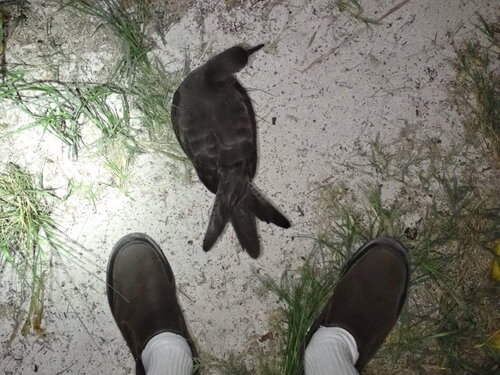
オナガミズナギドリ (Ardenna pacifica) オナガミズナギドリ
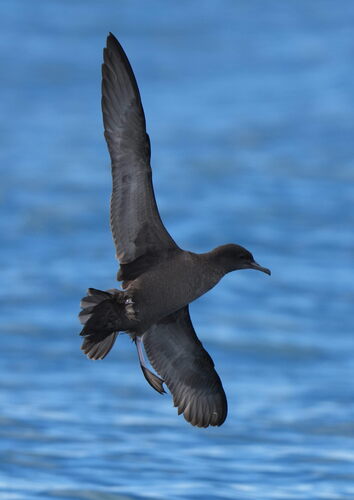
ハイイロミズナギドリ (Ardenna grisea) ハイイロミズナギドリ

メディア

読み込み中…

要点

オナガミズナギドリとハイイロミズナギドリの最も信頼できる区別は、良好な光の下での尾の形状と翼の下の模様です。ハイイロミズナギドリは常に翼の下に銀色の中央パネルを示しますが、オナガミズナギドリはすべての形態でこの特徴が欠けています。オナガミズナギドリはまた、飛行中に最も明らかな明確なくさび形の尾を持っており、ハイイロミズナギドリの尾はより四角いです。両種は遠くから見ると全体が暗く見えることがありますが、特に暗い形態のオナガミズナギドリは注意が必要です。翼の下と尾に注意を払うことが重要です。構造的な違いや微妙な羽毛の手がかりは、近くまたは長時間の観察に役立ちます。

識別のコツ

  1. 翼の下の模様が鍵: ハイイロミズナギドリは良好な光の下で常に翼の下に銀色の中央パネルを示しますが、オナガミズナギドリ(両形態)はこれが欠けています。これは飛行中の最も信頼できるフィールドマークです。
  2. 尾の形: オナガミズナギドリは長く、くさび形の尾を持っており、特に扇いだり滑空したりする際に飛行中に明らかです。ハイイロミズナギドリの尾はより四角く、尖っていません。
  3. 全体の色合い: ハイイロミズナギドリは均一に暗いチョコレートブラウンで、悪い光の下ではほぼ黒に見えます。オナガミズナギドリの暗い形態も全体が暗いですが、淡い形態の鳥は灰色がかった茶色の上面と白い下面を持ち、特徴的です。
  4. 羽毛の落とし穴: 暗い形態のオナガミズナギドリは、遠くから見るとハイイロミズナギドリに非常に似て見えることがあります。確認のために翼の下と尾の形を使用してください。
  5. くちばしと脚の色: 両方とも暗いくちばしを持っていますが、オナガミズナギドリはサーモンピンクの脚を持っています(海上ではしばしば隠れて見えにくいです)。主要なフィールドマークではありません。
  6. 飛行スタイル: ハイイロミズナギドリの飛行は力強く直接的で、翼を硬くまっすぐに保ち、小さなアルバトロスを思わせることがあります。オナガミズナギドリも滑空しますが、やや力強さが欠けて見えることがあります。
  7. 生息地と範囲: 熱帯の水域、特に繁殖コロニーの周りで見られた場合、オナガミズナギドリの可能性が高いです。涼しい水域や移動中、特に大きな群れで、ハイイロミズナギドリの可能性が高いです。
  8. コロニー行動: オナガミズナギドリは昼間にコロニーで水面にいることが多いですが、ハイイロミズナギドリはより夜行性です。
  9. 鳴き声: コロニーでは、オナガミズナギドリのうめき声はハイイロミズナギドリのクーとクロークと異なりますが、これは海上ではあまり役に立ちません。
  10. 季節的文脈: ハイイロミズナギドリは長距離移動する渡り鳥で、繁殖地から遠く離れた場所で見られることがあります。オナガミズナギドリは熱帯で年間を通じてより定住しています。
  11. 群れのサイズ: ハイイロミズナギドリは大規模な渡りの群れ(数十万羽)を形成することがありますが、オナガミズナギドリは通常小さな群れで見られます。
  12. 他の種との混同: 両方ともハシボソミズナギドリと混同されることがありますが、その種はここでは扱われていません。
  13. 性別と年齢: フィールドでの区別に信頼できる性別や年齢の違いはありません。両種とも強い性的二形性や年齢特有の上翼のマークが欠けています。
  14. 照明条件: 悪い光の下では、両種とも全体が暗く見えることがあります。条件が改善されたときには翼の下と尾の形を優先してください。
  15. 要約のヒント: 最も安全な識別のために、良好な光の下で翼の下を見て、飛行中に尾の形を確認してください。

大きさ

オナガミズナギドリは体重約465gの中型から大型のミズナギドリで、ハイイロミズナギドリと体格が似ていますが、並べて比較しないと直接的なサイズ比較は難しいです。両方とも頑丈で長い翼を持つ海鳥であり、サイズだけでは彼らの間で信頼できるフィールドマークにはなりません。

羽色

行動

両種は大型ミズナギドリの典型的な硬い翼での滑空飛行を示しますが、ハイイロミズナギドリは特に力強く直接的な飛行で知られており、翼を硬くまっすぐに保ち、小さなアルバトロスに似ることがあります。オナガミズナギドリも滑空しますが、やや直接的でないように見えることがあります。両種は波の上を低く滑空し、しばしば翼先端が水面にほぼ触れることがあります。コロニーでは、オナガミズナギドリは昼間に水面にいることが多いですが、ハイイロミズナギドリは繁殖地ではより夜行性です。

生息環境

オナガミズナギドリは熱帯の種で、熱帯太平洋とインド洋全体に分布し、一般的に北緯35度から南緯35度の間に生息しています。ハイイロミズナギドリは南半球(ニュージーランド、オーストラリア、南大西洋の島々)で繁殖し、両半球に広く移動し、非繁殖期には亜北極の水域に達します。両方が太平洋で一緒に見られることがありますが、ハイイロミズナギドリは涼しい水域や移動中により可能性が高く、オナガミズナギドリは暖かい熱帯の海に定住しています。

声

オナガミズナギドリはコロニーでの長いうめき声で知られており、特徴的な吸気と呼気のパターン("OOO-err")があります。ハイイロミズナギドリも繁殖地で声を出し、大きなクーとクロークを発しますが、通常は海上では静かで、食べ物を競うとき以外は声を出しません。鳴き声は海上での区別にはあまり役に立ちませんが、コロニーでは役立つことがあります。

より良い説明を送る

比較と同じ項目を使ってください。文章はすぐに公開されます。

The most reliable separation between Wedge-tailed Shearwater and Sooty Shearwater is the tail shape and underwing pattern in good light. Sooty Shearwater always shows a silvery central panel on the underwing, while Wedge-tailed Shearwater lacks this feature in all morphs. Wedge-tailed Shearwater also has a distinctly wedge-shaped tail, most obvious in flight, whereas Sooty Shearwater’s tail is more squared-off. Both species can appear all-dark at a distance, especially the dark morph Wedge-tailed, so careful attention to underwing and tail is crucial. Structural differences and subtle plumage cues help in close or prolonged views.

  1. Underwing pattern is key: Sooty Shearwater always shows a silvery central panel on the underwing in good light, which Wedge-tailed Shearwater (both morphs) lacks. This is the most reliable field mark in flight.
  2. Tail shape: Wedge-tailed Shearwater has a long, wedge-shaped tail that is often obvious in flight, especially when fanned or gliding. Sooty Shearwater’s tail is more squared-off and less pointed.
  3. Overall coloration: Sooty Shearwater is uniformly dark chocolate-brown, appearing almost black in poor light. Wedge-tailed Shearwater dark morph is also all-dark, but pale morph birds have grey-brown upperparts and white underparts, which can be distinctive.
  4. Plumage pitfalls: Dark morph Wedge-tailed Shearwater can look very similar to Sooty Shearwater at a distance or in poor light. Use underwing and tail shape for confirmation.
  5. Bill and leg color: Both have dark bills, but Wedge-tailed Shearwater has salmon-pink legs (often tucked and hard to see at sea). Not a primary field mark.
  6. Flight style: Sooty Shearwater’s flight is powerful and direct, with stiff, straight wings, sometimes recalling a small albatross. Wedge-tailed Shearwater also glides but may appear less forceful.
  7. Habitat and range: If seen in tropical waters, especially around breeding colonies, Wedge-tailed Shearwater is more likely. In cooler waters or during migration, especially in large flocks, Sooty Shearwater is more probable.
  8. Colony behavior: Wedge-tailed Shearwaters are often seen on the surface during the day at colonies; Sooty Shearwaters are more nocturnal.
  9. Vocalizations: At colonies, Wedge-tailed’s moaning calls differ from Sooty’s coos and croaks, but this is rarely useful at sea.
  10. Seasonal context: Sooty Shearwaters are long-distance migrants and may be seen far from breeding grounds, including in the northern hemisphere summer. Wedge-tailed Shearwaters are more resident in the tropics year-round.
  11. Group size: Sooty Shearwaters can form massive migratory flocks (hundreds of thousands), while Wedge-taileds are usually in smaller groups.
  12. Confusion with other species: Both can be confused with Short-tailed Shearwater, but that species is not covered here.
  13. Sex and age: No reliable sex or age differences for field separation; both species lack strong sexual dimorphism and age-specific upperwing marks.
  14. Lighting conditions: In poor light, both species can appear all-dark; prioritize underwing and tail shape when conditions improve.
  15. Summary tip: Always try to see the underwing in good light and the tail shape in flight for the safest identification.

Wedge-tailed Shearwater is a medium-large shearwater with a body mass around 465 g [wikidata], making it similar in bulk to Sooty Shearwater, though direct size comparison is difficult without side-by-side views. Both are robust, long-winged seabirds, and size alone is not a reliable field mark between them.

  • Juvenile/Immature/First-winter: No age-specific upperwing patterns are noted for either species that would allow a quick separation of young birds in flight. Both can appear uniformly dark above and below when seen poorly.
  • Adult (all seasons): Sooty Shearwater is always dark chocolate-brown overall, with a distinctive silvery strip running along the center of the underwing, visible in good light. Wedge-tailed Shearwater comes in two morphs: pale morph (grey-brown above, white below) and dark morph (dark grey-brown all over). Both morphs lack the silvery underwing panel. The wedge-shaped tail of Wedge-tailed is a structural plumage feature visible in flight, while Sooty’s tail is more squared. Bill color is dark in both, but Wedge-tailed has salmon-pink legs (often hard to see at sea).

Both species exhibit the typical stiff-winged, gliding flight of large shearwaters, but Sooty Shearwater is especially noted for its powerful, direct flight with wings held stiff and straight, sometimes resembling a small albatross. Wedge-tailed Shearwater also glides but may appear slightly less direct. Both species shear low over the waves, often with wingtips nearly touching the water. At colonies, Wedge-tailed Shearwaters are more likely to be seen on the surface during the day, while Sooty Shearwaters are more nocturnal at breeding sites.

Wedge-tailed Shearwater is a tropical species, found throughout the tropical Pacific and Indian Oceans, generally between 35°N and 35°S. Sooty Shearwater breeds in the southern hemisphere (New Zealand, Australia, South Atlantic islands) and migrates widely into both hemispheres, reaching subarctic waters in the non-breeding season. While both can occur together in the Pacific, Sooty Shearwater is more likely in cooler waters and during migration, whereas Wedge-tailed is resident in warmer, tropical seas.

Wedge-tailed Shearwater is known for its long, moaning calls at colonies, with a distinctive inhaling and exhaling pattern ("OOO-err"). Sooty Shearwater is also vocal at breeding sites, producing loud coos and croaks, but is usually silent at sea except when competing for food. Vocalizations are rarely useful for separation at sea, but can help at colonies.

変更を破棄しますか?

保存していない編集があります。今離れると失われます。

オナガミズナギドリ · ハイイロミズナギドリ · 苦手な鳥