

Motmot

クサビオノジコ 対 ヒメクサビオノジコ

Emberizoides herbicola 対 Emberizoides ypiranganus

クサビオノジコとヒメクサビオノジコのクイズ
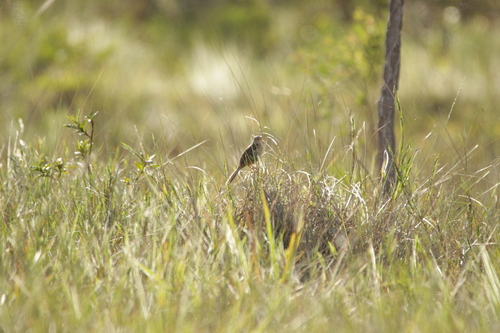
クサビオノジコ (Emberizoides herbicola) クサビオノジコ
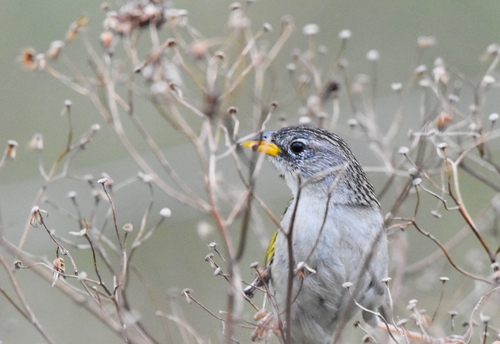
ヒメクサビオノジコ (Emberizoides ypiranganus) ヒメクサビオノジコ

メディア

読み込み中…

要点

ウェッジテールクサビオノジコとヒメクサビオノジコを区別する最も信頼できるフィールドマークは顔と後頭部の色です:ウェッジテールは淡い茶色がかった顔と後頭部を示し、ヒメクサビオノジコは明確に灰色がかった顔と後頭部を持っています。両種は長い尾を持つ斑点のある草原の鳥で、構造が似ており、南ブラジル、パラグアイ、ウルグアイ、北アルゼンチンで生息域が重なっていますが、顔の色と上面の色調に注意を払うことが重要です。両種の幼鳥は似ていますが、ヒメクサビオノジコの幼鳥は顔と腹部により顕著な黄色味があります。くちばしの色と脇腹の斑点は補助的な手がかりを提供しますが、微妙です。生息地と行動は非常に似ており、区別には信頼できません。

識別のコツ

  1. 顔と後頭部の色(すべての年齢): ウェッジテールクサビオノジコは淡い茶色がかった顔と後頭部を持ち、ヒメクサビオノジコは明確に灰色がかった顔と後頭部を示します。これは成鳥にとって最も一貫したフィールドマークです。
  2. 眉班と目の輪: 両種は淡い眉班と薄い白色の目の輪を持っていますが、これらは区別には信頼できません。
  3. 冠と上面: ウェッジテールは淡い茶色がかった冠に薄い黒い斑点があり、ヒメクサビオノジコの冠は緑がかった茶色で同様の斑点があります。ウェッジテールの上面は大胆に茶色と黒で斑点があり、ヒメは緑がかった茶色と黒で斑点があります。
  4. 尾羽と上尾羽の覆い羽: ウェッジテールの尾羽は斑点がなく、上尾羽の覆い羽には薄い黒い斑点があります。ヒメの尾羽と上尾羽の覆い羽には薄い黒い斑点がありますが、ウェッジテールほどきれいではありません。
  5. 翼の縁: 両種は翼の広い明るい縁を持っていますが、ウェッジテールのものはオリーブグリーンで、ヒメのものは明るい緑です。この違いは微妙で、良い光の下で見るのが最適です。
  6. 尾の構造: 両種は長く尖った尾を持ち、パターンは似ています。尾の形は信頼できる区別にはなりません。
  7. 腹部: ウェッジテールはクリーミーな白い腹部を持ち、脇腹と肛門はバフ色ですが、ヒメは下側が淡い灰色がかった白で、脇腹はバフ色で、脇腹と肛門には暗い斑点があります。
  8. 喉: ウェッジテールの喉は灰色がかった白で、ヒメの喉は白です。これは微妙で、他のマークと組み合わせて使用するのが最適です。
  9. くちばしの色: 両種は黄色から黄色がかったオレンジのくちばしを持ち、黒っぽいクルメンがありますが、ヒメのものは黄色がかったオレンジと表現されます。これは強い区別にはなりません。
  10. 幼鳥の羽毛: 幼鳥のヒメクサビオノジコは顔と腹部により顕著なバフ色の黄色味を持ち、幼鳥のウェッジテールは上が錆びた黄色で下が黄色がかっています。両者は若い時に斑点のある胸を持っています。
  11. 脇腹の斑点: ヒメクサビオノジコは脇腹と肛門に暗い斑点があり、近くでの観察に役立ちます。ウェッジテールの脇腹はバフ色で強い斑点はありません。
  12. 足の色: 両種は茶色がかった黄色から鈍いピンクがかった足と足を持ち、区別には役立ちません。
  13. 生息地と範囲: 重なりのゾーンの外にいる場合のみ範囲を使用します:ウェッジテールはパナマとコロンビアの北に生息し、ヒメはこれらの地域には存在しません。南ブラジル、パラグアイ、ウルグアイ、北アルゼンチンでは、両者が一緒に生息しています。
  14. 行動: 両種は草原で似たように行動し、ジズや採餌スタイルで信頼できる区別はありません。
  15. サイズ: ウェッジテールはやや重いですが、これはフィールドでは役立ちません。

要約すると、顔と後頭部の色(ウェッジテールは茶色がかり、ヒメは灰色がかり)、上面の色調(オリーブブラウン対緑がかった茶色)、脇腹の斑点(ヒメでより強い)に焦点を当ててください。幼鳥は顔と腹部の黄色/バフの強度で最もよく区別されます。

大きさ

ウェッジテールクサビオノジコはやや重く(平均体重25g [wikidata])、最大20cmに達することがありますが、ヒメクサビオノジコはほぼ同じ長さ(18〜20cm)で、わずかに軽い(18.5〜22g)です。フィールドでは、サイズの違いは最小限であり、区別のための安全なマークではありません。

羽色

行動

両種は似たように行動し、草原やサバンナの高い草を好み、しばしば草の茎や低い低木に目立って止まります。通常は単独またはペアで見られ、密な草の中を移動し、時折低く飛び跳ねるように飛びます。行動は信頼できる区別にはなりません。

生息環境

生息地は診断的ではありません:両種は高い草と散在する低木のある湿った草原から乾燥した草原に生息しています。ウェッジテールクサビオノジコはより広い範囲(コロンビア、パナマ、チリを除く南アメリカの大部分を含む)を持ち、ヒメクサビオノジコはアルゼンチン、ブラジル、パラグアイ、ウルグアイに制限されています。重なりのある地域(南ブラジル、パラグアイ、ウルグアイ、北アルゼンチン)では、生息地の好みは本質的に同じです。

より良い説明を送る

比較と同じ項目を使ってください。文章はすぐに公開されます。

The most reliable field mark to separate Wedge-tailed Grass-Finch from Lesser Grass-Finch is the face and nape color: Wedge-tailed shows a pale brownish face and nape, while Lesser Grass-Finch has a distinctly grayish face and nape. Both species are long-tailed, streaky grassland birds with similar structure and overlapping ranges in southern Brazil, Paraguay, Uruguay, and northern Argentina, but careful attention to facial color and upperpart tones is key. Juvenile birds of both species are similar, but Lesser Grass-Finch juveniles have a more pronounced yellow cast to the face and underparts. Bill color and flank streaking offer supporting clues, but can be subtle. Habitat and behavior are very similar and not reliable for separation.

  1. Face and Nape Color (all ages): Wedge-tailed Grass-Finch has a pale brownish face and nape, while Lesser Grass-Finch shows a distinctly grayish face and nape. This is the most consistent field mark for adults.
  2. Supercilium and Eye-ring: Both species have a pale supercilium and thin whitish eye-ring, but these are not reliable for separation.
  3. Crown and Upperparts: Wedge-tailed has a pale brownish crown with thin blackish streaks; Lesser Grass-Finch's crown is greenish to brownish with similar streaking. The upperparts of Wedge-tailed are boldly streaked brown and blackish, while Lesser is streaked greenish brown and black.
  4. Rump and Uppertail Coverts: Wedge-tailed's rump is unstreaked, with thin black streaks on the uppertail coverts; Lesser's rump and uppertail coverts have thinner black streaks but are not as clean as Wedge-tailed.
  5. Wing Edges: Both species have wide, bright edges to the wings, but Wedge-tailed's are olive-green, while Lesser's are bright green. This difference is subtle and best seen in good light.
  6. Tail Structure: Both have long, pointed tails with similar patterning; tail shape is not a reliable separator.
  7. Underparts: Wedge-tailed has creamy white underparts with buff flanks and vent, while Lesser is pale grayish white below with buff flanks and darker streaks on the flanks and vent.
  8. Throat: Wedge-tailed's throat is grayish white; Lesser's is white. This is subtle and best used in combination with other marks.
  9. Bill Color: Both have yellow to yellow-orange bills with a blackish culmen, but Lesser's is described as yellow-orange. This is not a strong separator.
  10. Juvenile Plumage: Juvenile Lesser Grass-Finch has a more pronounced buffy yellow cast to the face and underparts, while juvenile Wedge-tailed is rusty yellow above and yellowish below. Both have streaked breasts when young.
  11. Flank Streaking: Lesser Grass-Finch has darker streaks on the flanks and vent, which can help in close views; Wedge-tailed's flanks are buff without strong streaking.
  12. Leg Color: Both species have brownish yellow to dull pinkish legs and feet; not useful for separation.
  13. Habitat and Range: Only use range if you are outside the overlap zone: Wedge-tailed occurs north to Panama and Colombia, Lesser is absent from those areas. In southern Brazil, Paraguay, Uruguay, and northern Argentina, both occur together.
  14. Behavior: Both species behave similarly in grassland and are not reliably separated by jizz or foraging style.
  15. Size: Wedge-tailed averages slightly heavier, but this is not useful in the field.

In summary, focus on the face and nape color (brownish in Wedge-tailed, grayish in Lesser), upperpart tones (olive-brown vs greenish brown), and flank streaking (stronger in Lesser). Juveniles are best separated by the intensity of yellow/buff on the face and underparts.

Wedge-tailed Grass-Finch is slightly heavier (mean body mass 25 g [wikidata]) and can reach up to 20 cm in length, but Lesser Grass-Finch is nearly the same length (18–20 cm) and only slightly lighter (18.5–22 g). In the field, size difference is minimal and not a safe mark for separation.

  • Juveniles: Both species' juveniles resemble adults but with a yellow or buffy wash to the face and underparts, and streaks on the breast. Lesser Grass-Finch juveniles are noted for a stronger buffy yellow cast, especially on the face and underparts, while Wedge-tailed juveniles are more rusty yellow above and yellowish below but less strongly so.
  • Adults: Wedge-tailed Grass-Finch has a pale brownish crown and face, with a pale brownish nape and upperparts boldly streaked brown and blackish. The rump is unstreaked, and the uppertail coverts have thin black streaks. The wings have wide olive-green edges. The underparts are creamy white with buff flanks and vent, and the throat is grayish white.
    Lesser Grass-Finch adults have a greenish to brownish crown, a grayish face and nape, and upperparts streaked greenish brown and black. The wings have wide bright green edges. The underparts are pale grayish white, flanks are buff with darker streaks, and the throat is white. The face is distinctly gray, contrasting with the crown and nape, which is a key difference from the paler, browner face of Wedge-tailed.
  • Tail: Both species have long, pointed tails with dark centers and grayish brown edges.

Both species behave similarly, favoring tall grass in grasslands and savannas, often perching conspicuously on grass stems or low shrubs. They are typically seen singly or in pairs, moving through dense grass and occasionally flying low with a bounding flight. Behavior is not a reliable separator.

Habitat is not diagnostic: both species inhabit damp to dry grasslands with tall grass and scattered shrubs. Wedge-tailed Grass-Finch has a broader range (including Colombia, Panama, and much of South America except Chile), while Lesser Grass-Finch is restricted to Argentina, Brazil, Paraguay, and Uruguay. In areas of overlap (southern Brazil, Paraguay, Uruguay, northern Argentina), habitat preferences are essentially identical.

変更を破棄しますか?

保存していない編集があります。今離れると失われます。

クサビオノジコ · ヒメクサビオノジコ · 苦手な鳥