

Motmot

クロワシミミズク 対 アフリカヒナフクロウ

Ketupa lactea 対 Strix woodfordii

クロワシミミズクとアフリカヒナフクロウのクイズ
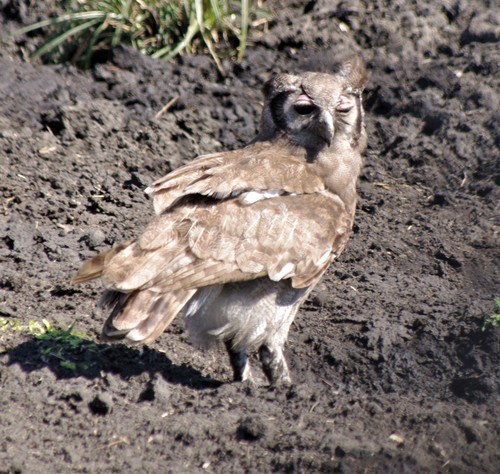
クロワシミミズク (Ketupa lactea) クロワシミミズク
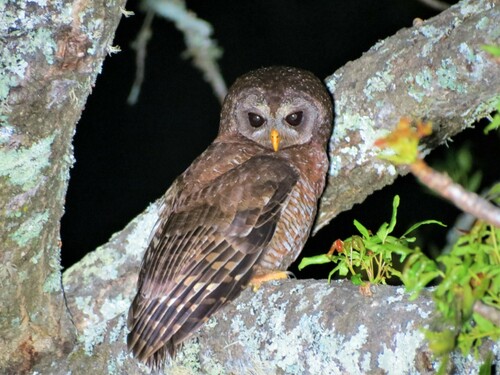
アフリカヒナフクロウ (Strix woodfordii) アフリカヒナフクロウ

メディア

読み込み中…

要点

アフリカヒナフクロウとクロワシミミズクを区別する最も信頼できる方法は、サイズと全体的な構造です:クロワシミミズクは真の巨人で、アフリカヒナフクロウのほぼ2倍の長さと数倍の質量を持っています。野外では、クロワシミミズクの淡い、堂々とした外観と巨大な体格は、はるかに小さく、丸い頭を持ち、豊かな茶色のアフリカヒナフクロウと比べて明確です。クロワシミミズクの幼鳥の羽毛は詳細に説明されていませんが、アフリカヒナフクロウの幼鳥はより淡い赤褐色です。両種は森林の生息地で見られますが、クロワシミミズクは乾燥したサバンナを好み、アフリカヒナフクロウは森林の専門家です。彼らの鳴き声も非常に異なり、木のフクロウはデュエットで特徴的なフクロウの声を出しますが、ミミズクはそうではありません。

識別のコツ

  1. Size is the most immediate clue: クロワシミミズクは巨大で、アフリカヒナフクロウのほぼ2倍の長さと数倍の質量を持っています。フクロウが巨大に見える場合、それはミミズクです。
  2. Head shape and facial features: アフリカヒナフクロウは丸い頭、大きな暗い目と白い眉毛、コンパクトな顔の円盤を持っています。クロワシミミズクははるかに大きく、より重い頭とくちばしを持ち、整った白い眉毛とコンパクトな円盤が欠けています。
  3. Plumage tone: クロワシミミズクは全体的にずっと淡い(「ミルキー」)、一方アフリカヒナフクロウは上部が豊かな茶色で、下部は淡く、縞模様があります。幼鳥の木のフクロウは淡い赤褐色ですが、依然としてはるかに小さく、丸い頭を持っています。
  4. Bill color: アフリカヒナフクロウは目立つ黄色のくちばしを持ち、暗い顔に対して際立っています。クロワシミミズクのくちばしの色はそれほど特徴的ではありませんが、くちばしははるかに大きく、重いです。
  5. Eye color: アフリカヒナフクロウは大きな暗い目を持っています;ミミズクの目の色は指定されていませんが、その顔の特徴は一般的に対照が少ないです。
  6. Flight style: クロワシミミズクは遅く、重い羽ばたきで飛び、巨大で力強く見えます。アフリカヒナフクロウの飛行はより浮遊感があり、中型のフクロウに典型的です。
  7. Roosting behavior: アフリカヒナフクロウは密な覆いの中で、しばしば高い木に止まり、昼間は開けた場所で見られることはほとんどありません。クロワシミミズクはよりオープンに止まることがあり、露出して見られる可能性が高いです。
  8. Habitat: 密な閉じた樹冠の森林では、アフリカヒナフクロウを期待してください。よりオープンで乾燥したサバンナに散在する大きな木がある場合、クロワシミミズクが可能性があります。
  9. Vocalizations: パターン化されたフクロウの声のデュエット(オスは速く、メスは高くて遅い)を聞いた場合、それはアフリカヒナフクロウです。ミミズクはこのタイプの呼び声を出しません。
  10. Juvenile confusion: 幼鳥のアフリカヒナフクロウは淡い赤褐色ですが、依然として小さく、丸い頭を持っています;クロワシミミズクのための特徴的な幼鳥のマークは説明されていませんが、そのサイズは常に診断的です。
  11. Contextual clues: 大型哺乳類や霊長類に対する捕食を観察した場合、これはクロワシミミズクに特有です。
  12. Perched silhouette: ミミズクははるかに大きく見え、より大きな頭とくちばし、コンパクトで丸い木のフクロウよりも堂々とした姿勢を持っています。
  13. Underparts: アフリカヒナフクロウは茶色の縞模様のある白い腹部を示し、ミミズクは一般的に淡いですが、ここでは詳細に説明されていません。
  14. Community context: アフリカヒナフクロウはアフリカで最も一般的な森林のフクロウであるため、森林地域ではデフォルトの種です。
  15. When in doubt, use multiple marks: サイズを判断するのが難しい場合は、生息地、頭の形、羽毛の色調、特にデュエットの呼び声の存在を組み合わせて識別を確定してください。

大きさ

クロワシミミズクはアフリカで最も大きなフクロウで、長さ66 cm(26インチ)に達し、アフリカヒナフクロウの数倍の重さがあります。アフリカヒナフクロウは中型のフクロウで、長さ30.5–35 cm(12–13.8インチ)で、重さは240–350 g([wikidata])で、平均的な成鳥の質量は299 gです。ミミズクの巨大な体格と長さは、遠くからでも診断的です。本当に巨大なフクロウを見た場合、それはほぼ確実にクロワシミミズクです;アフリカヒナフクロウは常にはるかに小さく、コンパクトに見えます。

羽色

幼鳥のアフリカヒナフクロウは成鳥よりも淡く、より赤褐色ですが、どの年齢でもクロワシミミズクよりもはるかに小さく、丸い頭を持っています。成鳥のアフリカヒナフクロウは丸い頭、大きな暗い目と白い眉毛、目立つ黄色のくちばし、豊かな茶色の上部と淡く、縞模様のある下部を持っています。対照的に、クロワシミミズクははるかに淡い「ミルキー」な全体的な外観を持ち(その別名のため)、巨大な頭とくちばしを持ち、木のフクロウの整った白い眉毛とコンパクトな顔の円盤が欠けています。ミミズクの羽毛はここでは詳細に説明されていませんが、その淡い色合いとサイズが重要です。これらの情報源では、どちらの種のためにも特徴的な年齢特有の上翼パターンは記載されていません。

行動

クロワシミミズクは強力な捕食者で、大型哺乳類や霊長類を狩ることが多く、高く露出して止まっているか、遅く重い羽ばたきで飛んでいるのが見られる可能性があります。アフリカヒナフクロウはより秘密主義で、昼間は密な覆いの中で単独またはペアで止まり、夜間に餌を探します。その飛行はミミズクのものよりも浮遊感があり、重くない可能性があります。ミミズクの行動は一般的により鷲のようで、木のフクロウは中型のストリックスフクロウに典型的です。

生息環境

クロワシミミズクは主にサハラ以南のアフリカの乾燥した森林サバンナに生息し、しばしばよりオープンまたはエッジの生息地に見られます。アフリカヒナフクロウは森林の専門家であり、アフリカで最も一般的な森林のフクロウであり、より密な閉じた樹冠の森林を好みます。深い森林にいる場合、アフリカヒナフクロウの可能性がはるかに高いです;オープンサバンナや森林、特に大きな木がある場合、クロワシミミズクが可能性があります。

声

アフリカヒナフクロウは特徴的なデュエットを出します:オスは速く、明瞭なフクロウの声を出し、メスは高音で遅いフクロウの声で応じます。各シリーズには特徴的なリズム(WHU-hu、WHU-hu-hu、hu-hu)があり、呼び声は500メートル以上に響きます。クロワシミミズクの鳴き声はここでは説明されていませんが、木のフクロウのパターン化されたデュエットには似ていません。クラシックなストリックススタイルのフクロウの声のデュエットを聞いた場合、それはアフリカヒナフクロウです。

より良い説明を送る

比較と同じ項目を使ってください。文章はすぐに公開されます。

The most reliable way to separate Verreaux's Eagle Owl from African Wood-Owl is by size and overall structure: Verreaux's Eagle Owl is a true giant, nearly twice the length and several times the mass of African Wood-Owl. In the field, the eagle-owl's pale, imposing appearance and massive build are unmistakable compared to the much smaller, round-headed, and richly brown African Wood-Owl. Juvenile plumages are not described in detail for Verreaux's Eagle Owl, but African Wood-Owl juveniles are paler rufous. Both species can be found in wooded habitats, but Verreaux's Eagle Owl prefers dry savanna, while African Wood-Owl is a forest specialist. Their calls are also very different, with the wood-owl giving a distinctive series of hoots in duets, unlike the eagle-owl.

  1. Size is the most immediate clue: Verreaux's Eagle Owl is enormous, nearly double the length and several times the mass of African Wood-Owl. If the owl looks huge, it's the eagle-owl.
  2. Head shape and facial features: African Wood-Owl has a rounded head, large dark eyes with white eyebrows, and a compact facial disk. Verreaux's Eagle Owl has a much larger, more massive head and bill, lacking the neat white eyebrows and compact disk.
  3. Plumage tone: Verreaux's Eagle Owl is much paler overall ('milky'), while African Wood-Owl is rich brown above with paler, barred underparts. Juvenile wood-owls are paler rufous but still much smaller and rounder-headed.
  4. Bill color: African Wood-Owl has a prominent yellow beak, which stands out against its dark face. Bill color is less distinctive in Verreaux's Eagle Owl, but the bill is much larger and heavier.
  5. Eye color: African Wood-Owl has large, dark eyes; the eagle-owl's eye color is not specified, but its facial features are generally less contrasting.
  6. Flight style: Verreaux's Eagle Owl flies with slow, heavy wingbeats and appears massive and powerful. African Wood-Owl's flight is more buoyant and typical of medium-sized owls.
  7. Roosting behavior: African Wood-Owl roosts in dense cover, often high in trees, and is rarely seen in the open during the day. Verreaux's Eagle Owl may perch more openly and is more likely to be seen exposed.
  8. Habitat: In dense, closed-canopy forest, expect African Wood-Owl. In more open, dry savanna with scattered large trees, Verreaux's Eagle Owl is likely.
  9. Vocalizations: If you hear a duet of patterned hoots (male rapid, female higher and slower), it's African Wood-Owl. The eagle-owl does not give this type of call.
  10. Juvenile confusion: Juvenile African Wood-Owls are paler rufous but still small and round-headed; no distinctive juvenile marks are described for Verreaux's Eagle Owl, but its size is always diagnostic.
  11. Contextual clues: If you observe predation on large mammals or primates, this is unique to Verreaux's Eagle Owl.
  12. Perched silhouette: The eagle-owl will appear much bulkier, with a larger head and bill, and a more imposing posture than the compact, rounded wood-owl.
  13. Underparts: African Wood-Owl shows a white belly with brown barring, while the eagle-owl is generally paler but not described in detail here.
  14. Community context: African Wood-Owl is the most common forest owl in Africa, so in forested areas, it is the default species.
  15. When in doubt, use multiple marks: If size is hard to judge, combine habitat, head shape, plumage tone, and especially the presence of a duet call to clinch the identification.

Verreaux's Eagle Owl is the largest owl in Africa, reaching up to 66 cm (26 in) in length and weighing several times more than African Wood-Owl. African Wood-Owl is a medium-sized owl, measuring 30.5–35 cm (12–13.8 in) in length and weighing 240–350 g ([wikidata]), with an average adult mass of 299 g. The eagle-owl's sheer bulk and length are diagnostic even at a distance. If you see a truly massive owl, it is almost certainly Verreaux's Eagle Owl; African Wood-Owl will always appear much smaller and more compact.

Juvenile African Wood-Owls are paler and more rufous than adults, but still much smaller and rounder-headed than Verreaux's Eagle Owl at any age. Adult African Wood-Owls have a rounded head, large dark eyes with white eyebrows, a prominent yellow beak, and rich brown upperparts with paler, barred underparts. Verreaux's Eagle Owl, in contrast, has a much paler, 'milky' overall appearance (hence its alternate name), with a massive head and bill, and lacks the neat white eyebrows and compact facial disk of the wood-owl. The eagle-owl's plumage is not described in detail here, but its pale coloration and size are key. No distinctive age-specific upperwing patterns are noted for either species in these sources.

Verreaux's Eagle Owl is a powerful predator, often hunting large mammals and even primates, and is likely to be seen perched high and exposed or flying with slow, heavy wingbeats. African Wood-Owl is more secretive, roosting singly or in pairs in dense cover during the day and foraging at night. Its flight is likely to be more buoyant and less ponderous than the eagle-owl's. The eagle-owl's behavior is generally more eagle-like, while the wood-owl is more typical of medium-sized Strix owls.

Verreaux's Eagle Owl is found primarily in dry, wooded savanna across sub-Saharan Africa, often in more open or edge habitats. African Wood-Owl is a forest specialist, arguably the most common forest owl in Africa, and prefers denser, more closed-canopy woodland. If you are in deep forest, African Wood-Owl is far more likely; in open savanna or woodland, especially with large trees, Verreaux's Eagle Owl is possible.

African Wood-Owl gives a distinctive duet: the male produces rapid, clear hoots, and the female responds with higher-pitched, slower hoots. Each series has a characteristic rhythm (WHU-hu, WHU-hu-hu, hu-hu), and the call carries over 500 meters. Verreaux's Eagle Owl's vocalizations are not described here, but they do not resemble the wood-owl's patterned duet. If you hear a classic Strix-style hooting duet, it is African Wood-Owl.

変更を破棄しますか?

保存していない編集があります。今離れると失われます。

クロワシミミズク · アフリカヒナフクロウ · 苦手な鳥