

Motmot

Velvety Manakin 対 キモモマイコドリ

Lepidothrix velutina 対 Ceratopipra mentalis

Velvety Manakinとキモモマイコドリのクイズ
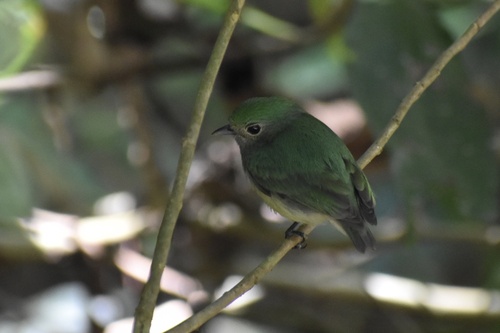
Velvety Manakin (Lepidothrix velutina) Velvety Manakin
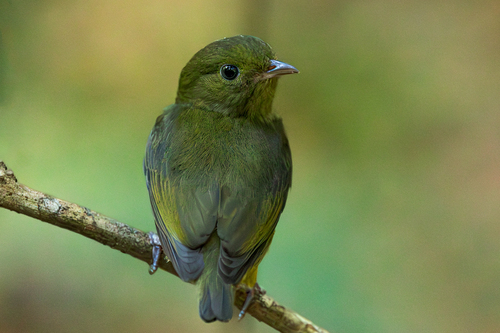
キモモマイコドリ (Ceratopipra mentalis) キモモマイコドリ

メディア

読み込み中…

要点

Velvety Manakinとキモモマイコドリの間で最も信頼できるフィールドマークは、成鳥オスの冠の色とパターンです:Velvetyは明るい青の冠を持ち、キモモマイコドリは鮮やかな赤の帽子と後頭部を示します。雌と幼鳥はより難しいですが、Velvetyの雌は上部が明るい草緑色で、キモモマイコドリの雌は鈍いオリーブ緑色です。両種は小さく、黒と緑のマナキンですが、キモモマイコドリのオスは明るい黄色の太ももと淡い黄色の顎を示し、Velvetyにはそれがありません。特に非オスや光が悪い鳥の場合、頭の色、下部のトーン、脚の色に注意を払うことが重要です。

識別のコツ

  1. 成鳥オスの頭の色が最も早い区別点です: Velvety Manakinのオスは明るい青の冠と上後頭部を持ち、キモモマイコドリのオスは鮮やかな赤の帽子と後頭部を持っています。これはすべての照明条件で診断的です。
  2. キモモマイコドリのオスの黄色い太ももと顎: キモモマイコドリのオスだけが明るい黄色の太ももと淡い黄色の顎と翼の裏地を示します。Velvetyのオスは青い冠の下で完全に黒で、黄色はありません。
  3. 雌の上部のトーン: 雌のVelvety Manakinは上部が草緑色で、特に尻尾が明るいですが、キモモマイコドリの雌は上部がオリーブ緑色で、下部はより淡い黄色緑色です。直接比較すると、Velvetyは明らかに明るく緑色です。
  4. 雌の下部の色: Velvetyの雌は灰色がかった緑の顔と喉、鈍い緑の胸/側面、黄色がかったオリーブ灰色の腹を持っています。キモモマイコドリの雌は下部がより均一に淡い黄色緑色で、灰色やオリーブのトーンがありません。
  5. 成鳥オスの虹彩の色: Velvety Manakinのオスは赤褐色または深紅の虹彩を持ち、キモモマイコドリのオスは白い虹彩を持っています。雌と幼鳥では両種とも茶色の虹彩を持っているため、これは近距離の成鳥オスにのみ役立ちます。
  6. 脚の色: Velvety Manakinは黒または暗灰色の脚を持ち、茶色がかった足の裏を持っています。キモモマイコドリは鈍い茶色の脚を持っています。これは微妙で、手に持つか、クローズアップの写真で使用するのが最適です。
  7. 特徴的な翼や飛行のマークはありません: どちらの種も年齢に関係なくユニークな上翼パターンや飛行マークを示さないため、飛行の視点は全体の色と構造に依存します。
  8. 幼鳥/未熟な混乱: 幼鳥はそれぞれの雌に似ています。もし鳥が非常に鈍いオリーブで明るい緑がなければ、キモモマイコドリを疑ってください。特に尻尾が明るい緑であれば、Velvetyを疑ってください。
  9. 記載された構造的な違いはありません: ビルの形、尾、翼のフォーミュラはこの2種の間で診断的として強調されていません。
  10. 行動は区別点ではありません: 両種は似たように採餌し、混合フロックに参加し、果物や昆虫を捕まえます。
  11. 生息地の重複: 両者はコスタリカとパナマの低地の湿った森林や二次成長に見られ、範囲はVelvetyの制限された地域の外でない限り信頼できる区別点ではありません。
  12. 性的二形性: 成鳥オスは頭の色によって遠くから信頼できる区別ができますが、雌と幼鳥は緑/オリーブのトーンと下部の色を注意深く観察する必要があります。
  13. 文脈的な手がかり: 混合種のフロックと一緒に見られた場合、Velvetyを考慮してください(雌/幼鳥はこれにより頻繁に参加します)が、これは排他的ではありません。
  14. 照明の落とし穴: 光が悪い場合、Velvetyの青い冠やキモモマイコドリの赤い帽子が暗く見えることがあります。黄色の太ももや顎(キモモマイコドリ)や全体の緑のトーン(Velvetyの雌)をバックアップとして探してください。
  15. サイズに頼らないでください: 両者は同じくらい小さく、コンパクトです。サイズはフィールドマークではありません。

大きさ

両種はサイズが非常に似ており、Velvety Manakinは8〜11 cmの長さで、キモモマイコドリは約10 cmです。キモモマイコドリは平均17.6 gの質量を持ち、これは小さなマナキンに典型的です。構造的な違いはソースで強調されていないため、サイズだけではフィールドでの信頼できる区別点ではありません。

羽色

行動

両種は主に果物を食べ、時折昆虫を食べます。Velvety Manakinの雌と幼鳥はしばしば混合種のフロックに参加し、両種は食べ物を取るために止まり木から飛び出します。キモモマイコドリは迅速な果物の処理で知られ、時には果物の入手可能性に応じて局所的に移動します。フィールドで診断的な主要な行動の違いは記載されていません。

生息環境

両種は湿った低地の森林や二次成長に生息し、コスタリカとパナマでしばしば重複しています。キモモマイコドリは北はメキシコ、南はペルーまで広い範囲を持ち、通常は400〜500 m以下で見られますが、900 mまで達することがあります。Velvety Manakinはコスタリカ、パナマ、チョコ–マグダレナ地域により制限されています。生息地だけでは両方が存在する場所で強い区別点ではありません。

より良い説明を送る

比較と同じ項目を使ってください。文章はすぐに公開されます。

The most reliable field mark between Velvety Manakin and Red-capped Manakin is the color and pattern of the adult male's crown: Velvety has a bright blue crown, while Red-capped shows a vivid red cap and nape. Females and immatures are more challenging, but Velvety females are a brighter grass-green above, whereas Red-capped females are duller olive-green. Both species are small, black-and-green manakins, but the Red-capped male also shows bright yellow thighs and a pale yellow chin, which Velvety lacks. Careful attention to head color, underpart tone, and leg color is essential, especially for non-males or birds in poor light.

  1. Adult male head color is the fastest separator: Velvety Manakin males have a bright blue crown and upper nape; Red-capped Manakin males have a vivid red cap and nape. This is diagnostic in all lighting.
  2. Yellow thighs and chin in Red-capped male: Only Red-capped Manakin males show bright yellow thighs and a pale yellow chin and wing linings. Velvety males are entirely black below the blue crown, with no yellow.
  3. Female upperpart tone: Female Velvety Manakin is grass-green above, especially bright on the rump, while Red-capped female is olive green above with paler, more yellow-green underparts. In direct comparison, Velvety is noticeably brighter and greener.
  4. Underpart color in females: Velvety females have a grayish-green face and throat, dull green breast/flanks, and olive-grayish belly with a yellowish tinge. Red-capped females are more uniformly pale yellow-green below, lacking the grayish or olive tones.
  5. Iris color in adult males: Velvety Manakin males have reddish brown or deep red irides; Red-capped Manakin males have white irides. In females and immatures, both species have brown irides, so this is only useful for adult males at close range.
  6. Leg color: Velvety Manakin has black or dark gray legs with brownish soles; Red-capped Manakin has dull brown legs. This is subtle and best used in hand or close-up photos.
  7. No distinctive wing or flight marks: Neither species shows unique upperwing patterns or flight marks at any age, so flight views rely on overall color and structure.
  8. Juvenile/immature confusion: Immatures resemble their respective females. If the bird is very dull olive with no bright green, suspect Red-capped. If brighter green above, especially on the rump, suspect Velvety.
  9. No structural differences described: Bill shape, tail, and wing formula are not highlighted as diagnostic between these two.
  10. Behavior is not a separator: Both species forage similarly, joining mixed flocks and sallying for fruit and insects.
  11. Habitat overlap: Both can be found in lowland humid forest and second growth in Costa Rica and Panama; range is not a reliable separator unless outside Velvety's restricted area.
  12. Sexual dimorphism: Only males are reliably separated at a distance by head color; females and immatures require careful study of green/olive tones and underpart color.
  13. Contextual clues: If seen with mixed-species flocks, consider Velvety (females/immatures join these more often), but this is not exclusive.
  14. Lighting pitfalls: In poor light, the blue crown of Velvety or the red cap of Red-capped may appear dark; look for yellow thighs or chin (Red-capped) or overall green tone (Velvety female) as backup.
  15. Do not rely on size: Both are equally small and compact; size is not a field mark.

Both species are very similar in size, with Velvety Manakin ranging from 8–11 cm in length and Red-capped Manakin about 10 cm. The Red-capped Manakin averages 17.6 g in mass [wikidata], which is typical for small manakins. Structural differences are not highlighted in the sources, so size alone is not a reliable separator in the field.

  • Adult males: Velvety Manakin males are deep, lustrous black with a bright blue crown and upper nape, sometimes with a purplish-blue wash on the rump. Red-capped Manakin males are also velvety black, but have a bright red head and nape, bright yellow thighs, and a pale yellow chin and wing linings. The Velvety never shows red or yellow in these areas.
  • Adult females: Velvety females are grass-green above, brightest on the rump, with a grayish-green face and throat, dull green breast/flanks, and olive-grayish belly with a yellowish tinge. Red-capped females are olive green above with paler, more yellow-green underparts. Velvety females are distinctly brighter green than the olive Red-capped females.
  • Immatures: Both species' young resemble their respective females. Red-capped immatures have brown irides, as do Velvety, but the overall tone is more olive in Red-capped. No distinctive upperwing or flight marks are described for either species at any age.
  • Iris color: Male Velvety has a reddish brown or deep red iris; male Red-capped has white irides. Females and young of both have brown irides.
  • Leg color: Velvety has black or dark gray legs with brownish soles; Red-capped has dull brown legs in both sexes.

Both species feed mainly on fruit and occasionally on insects. Velvety Manakin females and juveniles often join mixed-species flocks, and both species sally from perches to take food. Red-capped Manakin is noted for rapid fruit processing and sometimes migrates locally in response to fruit availability. No major behavioral differences are described that are diagnostic in the field.

Both species occur in humid lowland forests and second growth, often overlapping in Costa Rica and Panama. Red-capped Manakin has a broader range, extending north to Mexico and south to Peru, and is typically found below 400–500 m but can reach up to 900 m. Velvety Manakin is more restricted to Costa Rica, Panama, and the Chocó–Magdalena region. Habitat alone is not a strong separator where both occur.

変更を破棄しますか?

保存していない編集があります。今離れると失われます。

Velvety Manakin · キモモマイコドリ · 苦手な鳥