

Motmot

ヨーロッパビロードキンクロ 対 ヨーロッパクロガモ

Melanitta fusca 対 Melanitta nigra

ヨーロッパビロードキンクロとヨーロッパクロガモのクイズ
ヨーロッパビロードキンクロ (Melanitta fusca) ヨーロッパビロードキンクロ
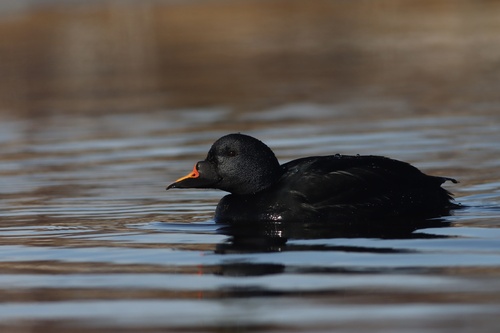
ヨーロッパクロガモ (Melanitta nigra) ヨーロッパクロガモ

メディア

読み込み中…

要点

ヨーロッパビロードキンクロとヨーロッパクロガモの最も信頼できるフィールドマークは、成鳥のオスのヨーロッパビロードキンクロに見られる大きな白い翼の斑点と目の後ろの小さな白い斑点の存在であり、これは年齢や性別に関係なくヨーロッパクロガモには完全に欠けています。飛行中、これらの白い翼のパネルはヨーロッパビロードキンクロで目立ちますが、ヨーロッパクロガモは全体が黒い翼を示します。両種の雌は茶色ですが、ヨーロッパビロードキンクロの雌はより大きく、ヨーロッパクロガモの雌の鋭く白い頬を欠いています。構造的な違い—特にヨーロッパビロードキンクロの太い首と長く広いくちばし—は遠くからでも役立ちます。サイズも手がかりで、ヨーロッパビロードキンクロは明らかに重くて長いですが、これはフィールドで判断するのが難しいことがあります。

識別のコツ

  1. 飛行中の白い翼の斑点(すべての年齢、オスが最も明白): ヨーロッパビロードキンクロは常に上翼に大胆な白い斑点を示し、飛行中や休息中に見える; ヨーロッパクロガモは翼に白を示すことはありません。
  2. 目の後ろの白い斑点(成鳥のオス): オスのヨーロッパビロードキンクロには目の後ろに小さくも明確な白い斑点があります; ヨーロッパクロガモのオスはこの部分が全て黒です。
  3. くちばしの色と形(成鳥のオス): ヨーロッパビロードキンクロはオレンジ色の部分がある長く広いくちばしを持っています; ヨーロッパクロガモのくちばしは短く、膨らんでいて、主に黒で、鼻孔の周りに黄色い部分があります。
  4. 雌の頬のパターン: 雌のヨーロッパクロガモは顔の他の部分と対照的に明確に白い頬を持っています; ヨーロッパビロードキンクロの雌は全体的に鈍い茶色で、鋭く白い頬はありません。
  5. 全体のサイズと体格: ヨーロッパビロードキンクロはより大きく、体格がしっかりしており、首が太く、体がより細長い; ヨーロッパクロガモはよりコンパクトでスリムです。
  6. 光沢(成鳥のオス): ヨーロッパビロードキンクロのオスは光沢のある黒です; ヨーロッパクロガモのオスは鈍い黒です。
  7. 尾の形: ヨーロッパビロードキンクロはより尖った尾を持ち、泳いでいる時や飛んでいる時に目立つことがあります; ヨーロッパクロガモの尾はそれほど尖っていません。
  8. 群れの構成: 混合のカモの群れでは、白い翼を持つより大きくて体格のしっかりした鳥(ヨーロッパビロードキンクロ)を、小さくて全体が黒い鳥(ヨーロッパクロガモ)の中で探してください。
  9. 休息時の姿勢: ヨーロッパビロードキンクロはその体格のために水面で高く見えることがよくあります; ヨーロッパクロガモは低く座り、よりスリムに見えます。
  10. くちばしの構造(雌): 雌のヨーロッパビロードキンクロのくちばしはヨーロッパクロガモのものより長く広いですが、これは遠くから見ると微妙です。
  11. ヨーロッパクロガモの白の欠如: もし羽毛のどこにも白が見えず、特に翼に白がなく、黄色がかったくちばしの基部があるカモを見たら、それはヨーロッパクロガモです。
  12. 文脈的手がかり(地域/季節): 冬のイギリスと西ヨーロッパでは、ヨーロッパクロガモははるかに数が多いですが、ヨーロッパビロードキンクロは少数見られることがあります。しばしばヨーロッパクロガモの群れの中にいます。
  13. 幼鳥/未成熟の分離: 幼鳥や未成熟の鳥でも、白い翼の斑点の存在はヨーロッパビロードキンクロの診断になります; その欠如はヨーロッパクロガモを確認します。
  14. 雌のくちばしの色: 雌のヨーロッパビロードキンクロは、ヨーロッパクロガモの雌よりも鈍い、対照が少ないくちばしを示すことがありますが、これは微妙で常に信頼できるわけではありません。
  15. 性差: 両種は性的二形性を示しますが、主要なマーク(白い翼の斑点、白い顔の斑点)はオスのヨーロッパビロードキンクロにのみ存在します; 雌は頬のパターンと構造で最もよく分けられます。

大きさ

ヨーロッパビロードキンクロはヨーロッパクロガモよりも明らかに大きく、重いです。ヨーロッパビロードキンクロは長さ51–56 cm、翼幅90–99 cm、体重約1762 g [wikidata]です。ヨーロッパクロガモは小さく、長さ43–54 cm(ここでは翼幅は指定されていません)で、直接比較すると明らかによりコンパクトで体格がしっかりしていません。これらのサイズの違いは、鳥が並んでいる時や混合の群れの中で最も明らかですが、遠くからや水面上では微妙なことがあります。

羽色

成鳥のオスのヨーロッパビロードキンクロは光沢のある黒で、大きな白い翼の斑点(休息中と飛行中の両方で見える)と目の後ろの小さな白い斑点を持っています; くちばしは部分的にオレンジ色です。成鳥のオスのヨーロッパクロガモは完全に黒で、羽毛のどこにも白がなく、くちばしは主に黒で、鼻孔の周りに黄色い部分があります。雌のヨーロッパビロードキンクロは鈍い茶色で、光沢がなく、体格がしっかりしており、鋭く定義された白い頬はありません; 雌のヨーロッパクロガモは茶色で、明確に白い頬を持っており、これは重要な分離点となることがあります。すべての年齢と性別において、ヨーロッパクロガモは翼に白を欠いています。幼鳥と未成熟の羽毛は詳細に説明されていませんが、白い翼のパネルの存在または欠如は、飛行中のすべての年齢クラスの診断になります。

行動

両種は食物を求めて潜水する海のカモであり、冬にはしばしば大きな群れを形成します。フィールドでの分離のために強い行動の違いは、提供された情報源には強調されていません。両方とも貝類や甲殻類を求めて潜水しているのが見られ、特に冬には混合のカモの群れの中に見られることがあります。

生息環境

ヨーロッパビロードキンクロとヨーロッパクロガモは、ヨーロッパの極北と古北界で繁殖し、温帯の沿岸水域で越冬します。両者は大きな湖、川、沿岸の海で見られ、しばしば似たような生息地にいます。フィールドでの強い生息地の分離はありませんが、地域の豊富さは異なる場合があります(特に冬にイギリスと西ヨーロッパではヨーロッパクロガモがより多く見られます [ebird])。

声

提供された情報源には、これらの2種の間に診断的な声の違いは記載されていません。声は、ヨーロッパクロガモをクロガモから分けるのにより有用であり、ヨーロッパビロードキンクロには適用されません。

より良い説明を送る

比較と同じ項目を使ってください。文章はすぐに公開されます。

The most reliable field mark between Velvet Scoter and Common Scoter is the presence of large white wing patches and a small white spot behind the eye in adult male Velvet Scoter, which are completely absent in Common Scoter of any age or sex. In flight, these white wing panels are conspicuous on Velvet Scoter, while Common Scoter shows all-dark wings. Females of both species are brown, but Velvet Scoter females are bulkier and lack the sharply pale cheeks of Common Scoter females. Structural differences—particularly the thicker neck and longer, broader bill of Velvet Scoter—are helpful at a distance. Size is also a clue, with Velvet Scoter being distinctly heavier and longer, but this can be hard to judge in the field.

  1. White wing patch in flight (all ages, males most obvious): Velvet Scoter always shows a bold white patch on the upperwing, visible in flight and often at rest; Common Scoter never shows any white in the wing.
  2. White spot behind eye (adult male): Male Velvet Scoter has a small but distinct white spot behind the eye; Common Scoter males are all black in this area.
  3. Bill color and shape (adult males): Velvet Scoter has a long, broad bill with some orange on it; Common Scoter's bill is shorter, bulbous, and mostly black with a yellow area around the nostrils.
  4. Female cheek pattern: Female Common Scoter has distinctly pale cheeks, contrasting with the rest of the face; Velvet Scoter females are dull brown overall with no sharply pale cheek.
  5. Overall size and bulk: Velvet Scoter is larger and bulkier, with a thicker neck and more elongated body; Common Scoter is more compact and slimmer.
  6. Glossiness (adult males): Velvet Scoter males are glossy black; Common Scoter males are a duller black.
  7. Tail shape: Velvet Scoter has a more pointed tail, which can be noticeable when swimming or flying; Common Scoter's tail is less pointed.
  8. Flock composition: In mixed scoter flocks, look for the larger, bulkier birds with white in the wing (Velvet) among the smaller, all-dark birds (Common).
  9. Resting posture: Velvet Scoter often appears higher in the water due to its bulk; Common Scoter sits lower and looks sleeker.
  10. Bill structure (females): Female Velvet Scoter's bill is longer and broader than that of Common Scoter, but this can be subtle at a distance.
  11. Absence of white in Common Scoter: If you see a scoter with no white anywhere on the plumage, especially in the wings, and a yellowish bill base, it's a Common Scoter.
  12. Contextual clues (region/season): In the UK and western Europe in winter, Common Scoter is much more numerous, but Velvet Scoter can be found in smaller numbers, often within Common Scoter flocks.
  13. Juvenile/immature separation: Even in juvenile and immature birds, the presence of a white wing patch is diagnostic for Velvet Scoter; its absence confirms Common Scoter.
  14. Bill color in females: Female Velvet Scoter may show a duller, less contrasting bill than Common Scoter females, but this is subtle and not always reliable.
  15. Sex differences: Both species show sexual dimorphism, but the key marks (white wing patch, white face spot) are present only in male Velvet Scoter; females are best separated by cheek pattern and structure.

Velvet Scoter is notably larger and heavier than Common Scoter. Velvet Scoter measures 51–56 cm in length with a wingspan of 90–99 cm and a body mass around 1762 g [wikidata]. Common Scoter is smaller, at 43–54 cm in length (wingspan not specified here), and is visibly more compact and less bulky in direct comparison. These size differences are most apparent when birds are side by side or in mixed flocks, but can be subtle at a distance or on water.

Adult male Velvet Scoter is glossy black with large white wing patches (visible both at rest and in flight) and a small white spot behind the eye; the bill is partly orange. Adult male Common Scoter is entirely black with no white anywhere on the plumage, and the bill is mostly black with a yellow area around the nostrils. Female Velvet Scoter is dull brown, lacks gloss, and is bulkier, with no sharply defined pale cheek; female Common Scoter is brown with distinctly pale cheeks, which can be a key separation point. In all ages and sexes, Common Scoter lacks any white in the wing. Juvenile and immature plumages are not described in detail in the sources, but the presence or absence of white wing panels remains diagnostic for all age classes in flight.

Both species are sea ducks that dive for food, often forming large flocks in winter. No strong behavioral differences are highlighted in the sources for field separation. Both can be seen diving for molluscs and crustaceans, and both may be found in mixed scoter flocks, especially in winter.

Both Velvet and Common Scoter breed in the far north of Europe and the Palearctic, wintering in temperate coastal waters. Both are found on large lakes, rivers, and coastal seas, often in similar habitats. There is no strong habitat separation in the field, though local abundance may differ (Common Scoter is more numerous in the UK and western Europe, especially in winter [ebird]).

No diagnostic vocal differences are described for these two species in the provided sources. Vocalizations are more useful for separating Common Scoter from Black Scoter, not Velvet Scoter.

変更を破棄しますか?

保存していない編集があります。今離れると失われます。

ヨーロッパビロードキンクロ · ヨーロッパクロガモ · 苦手な鳥