

Motmot

アレチウタムシクイ 対 ニシオオヨシキリ

Hippolais languida 対 Acrocephalus arundinaceus

アレチウタムシクイとニシオオヨシキリのクイズ
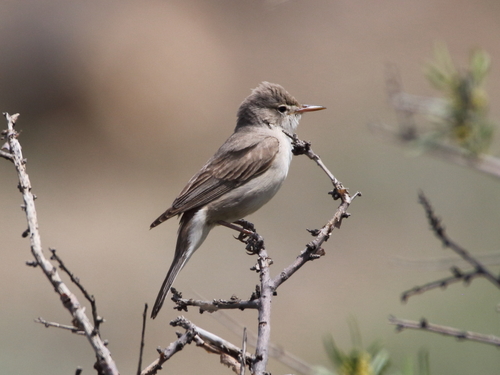
アレチウタムシクイ (Hippolais languida) アレチウタムシクイ
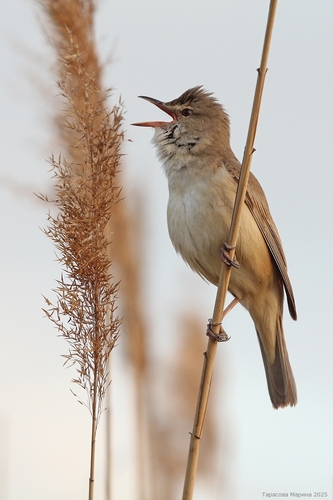
ニシオオヨシキリ (Acrocephalus arundinaceus) ニシオオヨシキリ

メディア

読み込み中…

要点

アレチウタムシクイとニシオオヨシキリを区別する最も信頼できるフィールドマークはサイズと構造です:ニシオオヨシキリははるかに大きく、重い、ツグミのような体型と強い眉斑を持ち、Upcher'sはスリムで、尾が長く、頻繁に尾を振ります。アレチウタムシクイは全体的に灰色がかっていて、より繊細で、しばしば落ち着きのない尾の動きを示しますが、ニシオオヨシキリはよりがっしりしていて、上面は茶色で、尾の動きがありません。飛んでいるときや止まっているとき、サイズの違いは際立っており、生息地も役立ちます:ニシオオヨシキリはほぼ常にヨシ原にいますが、Upcher'sは茂みの多い乾燥した生息地を好みます。声の出し方は非常に異なり、聞こえた場合には診断的です。

識別のコツ

  1. Size is the first check: ニシオオヨシキリはアレチウタムシクイよりもはるかに大きく、重いです。もし鳥がツグミサイズに見えるなら、それはニシオオヨシキリです;もしより繊細に見えるなら、Upcher'sを考えてください。
  2. Supercilium: ニシオオヨシキリは目の上に強い、淡い眉斑を示し、特に成鳥で明らかです。アレチウタムシクイはこの特徴が欠けているか、弱い示唆しか示しません。
  3. Tail length and movement: アレチウタムシクイは目立って長い尾を持ち、頻繁に振ったり扇いだりします。この落ち着きのない尾の動きは診断的で、ニシオオヨシキリには見られません。
  4. Bill and head shape: ニシオオヨシキリは強く尖ったくちばしと平らな額を持ち、重い頭の印象を与えます。Upcher'sはキイロウタムシクイよりも少し長いくちばしを持っていますが、その頭はニシオオヨシキリのように大きくも平らでもありません。
  5. Plumage color: Upcher'sは全体的に灰色がかっていて、特に上面はそうですが、ニシオオヨシキリは上面が濃い茶色で、下面は淡い白色です。幼鳥のGreat Reed Warblersは下面が暖かい淡色ですが、上面は依然として茶色です。
  6. Habitat: もしあなたが鳥をヨシ原で見つけたら、特にヨーロッパや西パレアリックで、それはほぼ確実にニシオオヨシキリです。Upcher'sはヨシ原を避け、乾燥した茂みの生息地を好みます。
  7. Song: ニシオオヨシキリの歌は大きく、厳しく、繰り返しが多く、しばしば露出したヨシの茎から聞こえます。Upcher'sの歌ははるかに柔らかく、Hippolaisの典型的なもので、混同されることはありません。
  8. Behavior: Upcher'sはより活発で、常に尾を振り、茂みの中で敏捷に動きます。ニシオオヨシキリはより遅く、より意図的で、しばしばヨシの中を這い回ります。
  9. Wing and tail proportions: Upcher'sは体に対して短い翼と長い尾を持ち、ニシオオヨシキリは長い翼と相対的に短い尾を持っています。
  10. Perched posture: ニシオオヨシキリはしばしば直立して重そうに見えますが、Upcher'sはより水平でスリムです。
  11. Juvenile confusion: 幼鳥のGreat Reed Warblersはより豊かな淡色ですが、その他は成鳥と似ています;彼らはUpcher'sの落ち着きのない尾の動きを示しません。
  12. Flight style: ニシオオヨシキリは飛ぶときに重くて遅いですが、Upcher'sは軽くてより敏捷です。
  13. Bill color and shape: 両方とも強いくちばしを持っていますが、ニシオオヨシキリのものはより頑丈で、その大きな頭に合っています。
  14. Geographic range: Upcher'sはトルコからパキスタンまで繁殖します;ニシオオヨシキリはヨーロッパと西パレアリック全体で繁殖します。重なりは限られているので、場所が役立ちます。
  15. Pitfalls: 一般的な茶色/灰色のトーンだけに頼らないでください、光が誤解を招くことがあります。最良の区別のためには、構造、尾の動き、生息地に焦点を当ててください。

大きさ

ニシオオヨシキリはヨーロッパで最も大きなウタスズメで、体長は16–21 cm、体重は22–38 g、翼開長は25–30 cmです [wikipedia]。アレチウタムシクイはHippolaisとしては中型で、キイロウタムシクイに似ていますが、尾が長く、翼が短いです;ニシオオヨシキリよりも明らかに小さく、スリムです [wikipedia]。直接比較すると違いは明らかです:ニシオオヨシキリはツグミサイズで頑丈ですが、Upcher'sははるかに繊細です。

羽色

どちらの種にも、幼鳥や未成熟の個体を飛行中に簡単に区別できる年齢特有の上翼や飛行マークは記載されていません。成鳥のニシオオヨシキリは上面が無地の茶色で、下面が鈍い淡色で、強い眉斑と平らな額を持っています。幼鳥は下面がより豊かな淡色ですが、その他は似ています。アレチウタムシクイは全体的に灰色がかっていて、キイロウタムシクイよりも少し長いくちばし、短い翼、長い尾を持っています;ニシオオヨシキリの強い眉斑が欠けていて、より均一に灰色です。Upcher'sの尾は相対的に長く、しばしば動いていますが、ニシオオヨシキリの尾は体に対して短いです。眉斑は重要なマークです:ニシオオヨシキリでは強く明らかですが、Upcher'sでは弱いか欠けています。

行動

アレチウタムシクイは非常に活発で、常に尾を振り、Sylviaのウタスズメやチャットを思わせる動きをします。この尾の動きは診断的で、ニシオオヨシキリにはほとんど見られません。ニシオオヨシキリは動きがより鈍重で、あまり活発ではなく、しばしば密なヨシの中を這い回り、露出したヨシの茎から歌います。飛んでいるとき、ニシオオヨシキリは重くて遅いように見えますが、Upcher'sは軽くてより敏捷です。

生息環境

ニシオオヨシキリは繁殖期にほぼ独占的にヨシ原に見られ、冬にはヨシ原、茂みの藪、田んぼ、森林の開けた場所にいます [wikipedia]。アレチウタムシクイはトルコからパキスタンまでの乾燥した茂みの多い地域で繁殖し、ヨシ原の専門家ではありません。もし鳥が密なヨシ原にいるなら、ニシオオヨシキリの可能性がはるかに高いです;乾燥した茂みや開けた茂みにいるなら、Upcher'sがより良い候補です。

声

歌は全く異なり、診断的です。アレチウタムシクイは独特のHippolaisの歌を持ち、ニシオオヨシキリとは全く異なります。ニシオオヨシキリの歌は非常に大きく、遠くまで響き、さえずり、鳴き声、さまざまなフレーズ(carr-carr-cree-cree-cree-jet-jet)を含み、時には模倣もあります。もしヨシ原から大きく、厳しく、繰り返しの歌が聞こえたら、それはニシオオヨシキリです。Upcher'sの歌はより柔らかく、Hippolaisの典型的なもので、耳で混同されることはありません。

より良い説明を送る

比較と同じ項目を使ってください。文章はすぐに公開されます。

The most reliable field mark to separate Upcher's Warbler from Great Reed Warbler is size and structure: Great Reed Warbler is much larger, with a heavy, thrush-like build and a strong supercilium, while Upcher's is slimmer, with a longer tail and frequent tail flicking. Upcher's Warbler is overall greyer and more delicate, often showing restless tail movement, whereas Great Reed Warbler is bulkier, brown above, and lacks the tail action. In flight or perched, the size difference is striking, and habitat can also help: Great Reed Warbler is almost always in reedbeds, while Upcher's prefers bushy, drier habitats. Vocalizations are very different and diagnostic if heard.

  1. Size is the first check: Great Reed Warbler is much larger and heavier than Upcher's Warbler. If the bird looks thrush-sized, it's Great Reed Warbler; if it's more delicate, think Upcher's.
  2. Supercilium: Great Reed Warbler shows a strong, pale supercilium above the eye, especially obvious in adults. Upcher's Warbler lacks this feature or shows only a weak suggestion.
  3. Tail length and movement: Upcher's Warbler has a noticeably long tail, which it flicks and fans frequently. This restless tail action is diagnostic and is not shown by Great Reed Warbler.
  4. Bill and head shape: Great Reed Warbler has a strong, pointed bill and a flattened forehead, giving it a heavy-headed look. Upcher's has a slightly longer bill than Icterine Warbler, but its head is not as massive or flat as Great Reed Warbler's.
  5. Plumage color: Upcher's is overall greyish, especially above, while Great Reed Warbler is rich brown above and buffish-white below. Juvenile Great Reed Warblers are warmer buff below but still brown above.
  6. Habitat: If you find the bird in a reedbed, especially in Europe or the Western Palearctic, it's almost certainly Great Reed Warbler. Upcher's avoids reedbeds and prefers dry, bushy habitats.
  7. Song: Great Reed Warbler's song is loud, harsh, and repetitive, often heard from exposed reed stems. Upcher's song is much softer and more typical of Hippolais, and not likely to be confused.
  8. Behavior: Upcher's is more active, with constant tail flicking and agile movements in bushes. Great Reed Warbler is slower, more deliberate, and often clambers through reeds.
  9. Wing and tail proportions: Upcher's has shorter wings and a longer tail relative to its body, while Great Reed Warbler has longer wings and a proportionally shorter tail.
  10. Perched posture: Great Reed Warbler often appears upright and heavy, while Upcher's is more horizontal and slender.
  11. Juvenile confusion: Juvenile Great Reed Warblers are richer buff below but otherwise similar to adults; they do not show the restless tail action of Upcher's.
  12. Flight style: Great Reed Warbler is heavy and slow in flight, while Upcher's is lighter and more agile.
  13. Bill color and shape: Both have strong bills, but Great Reed Warbler's is more robust and fits its larger head.
  14. Geographic range: Upcher's breeds from Turkey to Pakistan; Great Reed Warbler breeds across Europe and the Western Palearctic. Overlap is limited, so location can help.
  15. Pitfalls: Do not rely on general brown/grey tones alone, as light can mislead. Focus on structure, tail action, and habitat for the best separation.

Great Reed Warbler is the largest European warbler, measuring 16–21 cm in length and weighing 22–38 g, with a wingspan of 25–30 cm [wikipedia]. Upcher's Warbler is medium-sized for a Hippolais, similar to Icterine Warbler but with a longer tail and shorter wings; it is noticeably smaller and slimmer than Great Reed Warbler [wikipedia]. The difference is obvious in direct comparison: Great Reed Warbler is thrush-sized and robust, while Upcher's is much more delicate.

There are no distinctive age-specific upperwing or flight marks described for either species that would allow for easy separation of juveniles or immatures in flight. Adult Great Reed Warbler is unstreaked brown above and dull buffish-white below, with a strong supercilium and a flattened forehead. Juveniles are richer buff below but otherwise similar. Upcher's Warbler is overall greyish, with a slightly longer bill, shorter wings, and a longer tail than Icterine Warbler; it lacks the strong supercilium of Great Reed Warbler and is more uniformly grey. The tail of Upcher's is proportionally longer and often in motion, while Great Reed Warbler's tail is shorter relative to its body. Supercilium is a key mark: strong and obvious in Great Reed Warbler, weak or absent in Upcher's.

Upcher's Warbler is highly active, with constant tail flicking and movement reminiscent of Sylvia warblers or chats. This tail action is diagnostic and rarely matched by Great Reed Warbler. Great Reed Warbler is more ponderous and less active in its movements, often clambering through dense reeds and singing from exposed reed stems. In flight, Great Reed Warbler appears heavy and slow, while Upcher's is lighter and more agile.

Great Reed Warbler is almost exclusively found in reedbeds during the breeding season, and in reedbeds, bush thickets, rice fields, and forest clearings in winter [wikipedia]. Upcher's Warbler breeds in dry, bushy areas from Turkey to Pakistan and is not a reedbed specialist. If the bird is in a dense reedbed, Great Reed Warbler is far more likely; if in dry scrub or open bush, Upcher's is the better candidate.

The songs are entirely different and diagnostic. Upcher's Warbler has a distinctive Hippolais song, not at all like Great Reed Warbler. Great Reed Warbler's song is very loud, far-carrying, and includes chattering, croaking, and varied phrases (carr-carr-cree-cree-cree-jet-jet), sometimes with mimicry. If you hear a loud, harsh, repetitive song from a reedbed, it's Great Reed Warbler. Upcher's song is softer, more typical of Hippolais, and not likely to be confused by ear.

変更を破棄しますか?

保存していない編集があります。今離れると失われます。

アレチウタムシクイ · ニシオオヨシキリ · 苦手な鳥