

Motmot

ハシブトスミレフウキンチョウ 対 ホシスミレフウキンチョウ

Euphonia laniirostris 対 Euphonia imitans

ハシブトスミレフウキンチョウとホシスミレフウキンチョウのクイズ
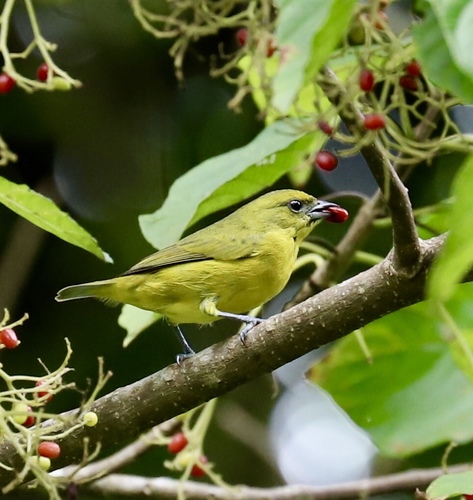
ハシブトスミレフウキンチョウ (Euphonia laniirostris) ハシブトスミレフウキンチョウ
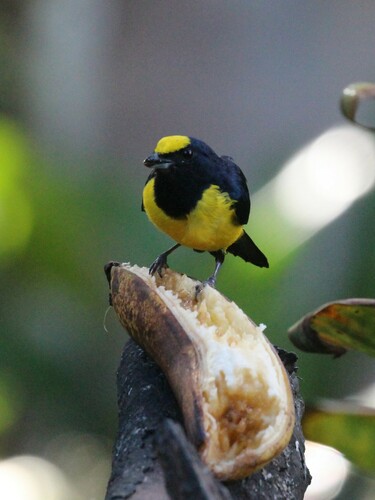
ホシスミレフウキンチョウ (Euphonia imitans) ホシスミレフウキンチョウ

メディア

読み込み中…

要点

ハシブトスミレフウキンチョウとホシスミレフウキンチョウの最も信頼できるフィールドマークはオスの額です:ホシスミレフウキンチョウは黒い斑点のある黄色のパッチを持ち、ハシブトスミレフウキンチョウの額は純粋な黄色です。メスはより難しいですが、ホシスミレフウキンチョウは赤褐色の額と黄褐色の腹を示し、ハシブトスミレフウキンチョウのメスは緑がかった黄色で、より均一です。両者は小さく、サイズが似たスミレフウキンチョウですが、ハシブトスミレフウキンチョウのくちばしは明らかに重いです。飛行中または止まっているときは、特にメスの頭部と下部の色のコントラストに注目してください。分布も役立ちます:ホシスミレフウキンチョウはコスタリカとパナマに限定されており、ハシブトスミレフウキンチョウは中部および南アメリカ北部全体に広がっています。

識別のコツ

  1. オスの額のパターン:ホシスミレフウキンチョウのオスは黒い斑点のある黄色の額のパッチを持ち、目の後ろまで伸びています;ハシブトスミレフウキンチョウのオスは目の少し先までしか伸びない純粋な黄色の額のパッチを持っています。これは成鳥のオスにとって最も信頼できるフィールドマークです。
  2. オスの喉と胸:ホシスミレフウキンチョウのオスは青黒い喉と胸を持ち、下部には黄色があるのみです;ハシブトスミレフウキンチョウのオスは黄色の喉と下部を持っています。このコントラストは正面からの視点で特に有用です。
  3. メスの額と下部:ホシスミレフウキンチョウのメスは赤褐色の額と黄褐色の腹および尾羽の覆い羽を持ち、ハシブトスミレフウキンチョウのメスは上面がより均一な黄緑色で、下面は緑がかった黄色で、赤褐色の色調はありません。
  4. くちばしの構造:ハシブトスミレフウキンチョウはホシスミレフウキンチョウよりも明らかに太く、重いくちばしを持っていますが、これは並べて見たり近距離で見ない限り微妙です。
  5. メスの上面:ホシスミレフウキンチョウのメスは暗いオリーブグリーンの冠と後頭部に灰色がかった青の色合いを示しますが、ハシブトスミレフウキンチョウのメスは上面がより単調なオリーブグリーンです。
  6. 尾と翼の色:両種は青黒い色合いのある暗い翼と尾を持っていますが、ホシスミレフウキンチョウのオスはほとんどの飛行羽の内側のウェブに白い基部を示すことがあります(ハシブトスミレフウキンチョウでは記載されていません)、ただしこれは微妙で、フィールドでは診断的ではありません。
  7. メスの下部の色:ホシスミレフウキンチョウのメスの下部は分かれており、喉はオリーブイエローですが、下胸、腹、尾羽の覆い羽の中心は黄褐色です。ハシブトスミレフウキンチョウのメスは下面が緑がかった黄色で、尾羽の下が最も淡い色で、赤褐色はありません。
  8. 分布:ホシスミレフウキンチョウはコスタリカとパナマにのみ見られます;ハシブトスミレフウキンチョウはコスタリカから南へ北部南アメリカの多くに分布しています。コスタリカまたはパナマの外にいる場合、ホシスミレフウキンチョウは非常に可能性が低いです。
  9. 生息地の重複:両者は半開放的な生息地、森林の縁、庭で発生することがあるため、生息地だけでは共有範囲内での診断にはなりません。
  10. 性的二形性:両種は性的二形性を示すため、フィールドマークを比較する際には常に性別を考慮してください。
  11. 特徴的な幼鳥/未成熟の翼のパターンはない:どちらの種にも年齢特有の翼や飛行マークは記載されていないため、すべての年齢で頭部と下部の色に依存してください。
  12. くちばしの色:両者は青灰色の基部を持つ黒っぽいくちばしを持っているため、くちばしの色は区別にはなりません—くちばしの太さに注目してください。
  13. 虹彩と脚の色:両者は暗褐色の虹彩と暗灰色の脚/足を持っており、分離には役立ちません。
  14. 羽毛の変異:ハシブトスミレフウキンチョウの一部の亜種は黄色の広がりや尾羽のパターンにわずかな変異を示しますが、ホシスミレフウキンチョウの独特のオスの額の斑点やメスの赤褐色の色調とは重複しません。
  15. 落とし穴—メスの混同:メスのスミレフウキンチョウはしばしば誤認されます。ホシスミレフウキンチョウのメスでは赤褐色の額と黄褐色の腹を常に確認してください;これらが欠けている場合はハシブトスミレフウキンチョウを指します。

大きさ

両種は長さ(約10 cm)と質量(ハシブトスミレフウキンチョウ:15 g、ホシスミレフウキンチョウ:14 g)でほぼ同じです [wikidata]。手に持ったり、素晴らしい視界で見ると、ハシブトスミレフウキンチョウはわずかにずっしりとした、太いくちばしを持っていますが、全体的な体のサイズはフィールドでの信頼できる区別にはなりません。

羽色

どちらの種にも特徴的な幼鳥や未成熟の翼のパターンは記載されていないため、成鳥の羽毛が主なフィールドの手がかりです。

成鳥のオス:ハシブトスミレフウキンチョウのオスは明るい黄色の額(純粋で、斑点はない)を持ち、額のパッチは目のすぐ先まで伸びています;冠と上面の残りは光沢のある青黒で、喉と下部は明るい黄色です。ホシスミレフウキンチョウのオスは、さらに後ろに伸び、明確に黒い斑点のある黄色の額のパッチを持っています。彼らの青黒い上面は似ていますが、喉と胸も青黒で、下部には黄色があるのみです。

成鳥のメス:ハシブトスミレフウキンチョウのメスは上面が黄緑色で、下面は緑がかった黄色で、尾羽の覆い羽には最も淡い色があります。ホシスミレフウキンチョウのメスは赤褐色の額、暗いオリーブグリーンの冠/後頭部に灰色がかった青の色合いを持ち、下胸、腹、尾羽の覆い羽の中心には黄褐色があります—この赤褐色の洗いはハシブトスミレフウキンチョウにはありません。

両性とも、くちばしは黒っぽく、青灰色の基部を持っていますが、ハシブトスミレフウキンチョウの方が太いです。季節的または年齢特有の翼のパターンの違いは記載されていません。

行動

これら2種の間に特徴的な行動の違いは記載されていません。両者は典型的なスミレフウキンチョウであり、しばしばペアまたは小グループで見られ、半開放的な生息地やエッジで果物を探しています。

生息環境

ハシブトスミレフウキンチョウは広範囲に分布し、南部中米から北部南アメリカの多くにわたる広範な開放的および半開放的な生息地で見られ、森林の縁、開けた場所、庭、耕作地を含みます。ホシスミレフウキンチョウははるかに制限されており、コスタリカとパナマにのみ見られ、通常は同様の半開放的またはエッジの生息地にいます。コスタリカまたはパナマの外にいる場合、ホシスミレフウキンチョウは非常に可能性が低いです。

より良い説明を送る

比較と同じ項目を使ってください。文章はすぐに公開されます。

The most reliable field mark between Thick-billed and Spot-crowned Euphonias is the male's forehead: Spot-crowned has a yellow patch speckled with black, while Thick-billed's is pure yellow. Females are trickier, but Spot-crowned shows a rufous-chestnut forehead and tawny-rufous belly, unlike the greenish-yellow, more uniform female Thick-billed. Both are small, similar-sized euphonias, but the bill of Thick-billed is noticeably heavier. In flight or perched, focus on the head and underpart color contrasts, especially in females. Range can help: Spot-crowned is restricted to Costa Rica and Panama, while Thick-billed is widespread through Central and northern South America.

  1. Male forehead pattern: Spot-crowned Euphonia males have a yellow forehead patch speckled with black, extending to the rear of the eye; Thick-billed males have a pure yellow forehead patch that extends only slightly past the eye. This is the single most reliable field mark for adult males.
  2. Male throat and chest: Spot-crowned males have blue-black throat and chest, with yellow only on the lower underparts; Thick-billed males have a yellow throat and underparts. This contrast is especially useful from a frontal view.
  3. Female forehead and underparts: Female Spot-crowned has a rufous-chestnut forehead and a tawny-rufous belly and undertail coverts, while Thick-billed female is more uniformly yellowish olive-green above and greenish yellow below, with no rufous tones.
  4. Bill structure: Thick-billed Euphonia has a noticeably thicker, heavier bill than Spot-crowned, though this can be subtle unless seen side-by-side or at close range.
  5. Upperparts in females: Spot-crowned female shows a grayish-blue tinge to the dark olive-green crown and nape, while Thick-billed female is more plain olive-green above.
  6. Tail and wing color: Both species have dusky wings and tails with blue-black tinges, but Spot-crowned male may show white bases on the inner webs of most flight feathers (not described for Thick-billed), though this is subtle and rarely diagnostic in the field.
  7. Underpart color in females: Spot-crowned female's underparts are divided—olive-yellow on the throat, but the center of the lower breast, belly, and undertail coverts are tawny-rufous. Thick-billed female is greenish yellow below, palest on the undertail, with no rufous.
  8. Range: Spot-crowned is only found in Costa Rica and Panama; Thick-billed ranges from Costa Rica south through much of northern South America. If you are outside Costa Rica or Panama, Spot-crowned is extremely unlikely.
  9. Habitat overlap: Both can occur in semi-open habitats, forest edges, and gardens, so habitat alone is not diagnostic within the shared range.
  10. Sexual dimorphism: Both species are sexually dimorphic, so always consider sex when comparing field marks.
  11. No distinctive juvenile/immature wing pattern: There are no described age-specific wing or flight marks for either species, so rely on head and underpart color for all ages.
  12. Bill color: Both have a blackish bill with a blue-gray base, so bill color is not a separator—focus on bill thickness.
  13. Iris and leg color: Both have dark brown irises and dark gray legs/feet, not useful for separation.
  14. Plumage variation: Some subspecies of Thick-billed show slight variation in yellow extent or undertail pattern, but none overlap with the Spot-crowned's unique male forehead speckling or female rufous tones.
  15. Pitfall—female confusion: Female euphonias are often misidentified. Always check for the rufous-chestnut forehead and tawny-rufous belly in Spot-crowned female; absence of these points to Thick-billed.

Both species are nearly identical in length (about 10 cm) and mass (Thick-billed: 15 g, Spot-crowned: 14 g) [wikidata]. In hand or with excellent views, Thick-billed Euphonia has a slightly bulkier, thicker bill, but overall body size is not a reliable separator in the field.

No distinctive juvenile or immature wing patterns are described for either species, so adult plumage is the main field cue.

Adult males: Thick-billed Euphonia males have a bright yellow forehead (pure, not speckled), with the yellow patch extending just past the eye; the rest of the crown and upperparts are glossy blue-black, and the throat and underparts are bright yellow. Spot-crowned Euphonia males have a yellow forehead patch that extends further back and is distinctly speckled with black. Their blue-black upperparts are similar, but the throat and chest are also blue-black, with yellow only on the lower underparts.

Adult females: Thick-billed females are yellowish olive-green above and greenish yellow below, with the palest color on the undertail coverts. Spot-crowned females have a rufous-chestnut forehead, dark olive-green crown/nape with a grayish-blue tinge, and a tawny-rufous center to the lower breast, belly, and undertail coverts—this rufous wash is absent in Thick-billed.

In both sexes, the bill is blackish with a blue-gray base, but Thick-billed's is stouter. No seasonal or age-specific wing pattern differences are noted.

No distinctive behavioral differences are described between these two species. Both are typical euphonias, often seen in pairs or small groups, foraging for fruit in semi-open habitats and edges.

Thick-billed Euphonia is widespread, found in a broad range of open and semi-open habitats from southern Central America through much of northern South America, including forest edges, clearings, gardens, and cultivated areas. Spot-crowned Euphonia is much more restricted, found only in Costa Rica and Panama, and typically in similar semi-open or edge habitats. If you are outside Costa Rica or Panama, Spot-crowned is highly unlikely.

変更を破棄しますか?

保存していない編集があります。今離れると失われます。

ハシブトスミレフウキンチョウ · ホシスミレフウキンチョウ · 苦手な鳥