

Motmot

ムジタヒバリ 対 グランカナリーアオアトリ

Anthus campestris 対 Fringilla polatzeki

ムジタヒバリとグランカナリーアオアトリのクイズ
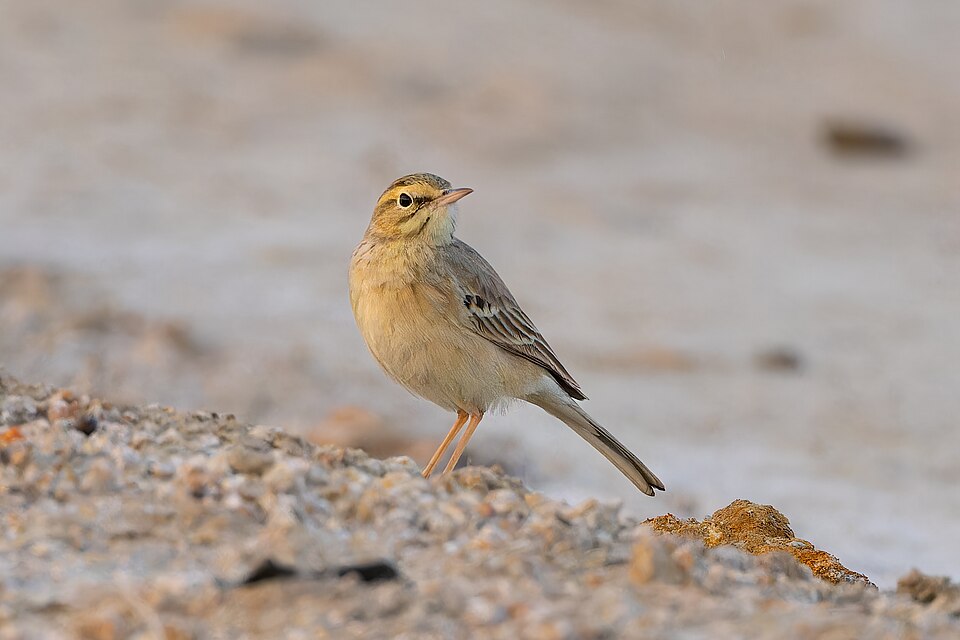
ムジタヒバリ (Anthus campestris) ムジタヒバリ
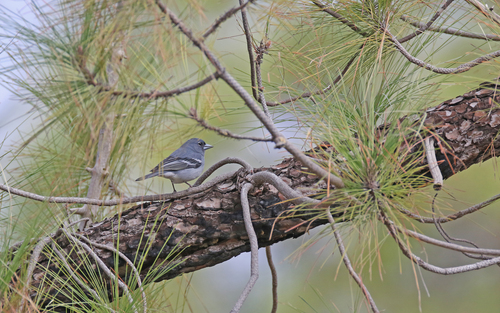
グランカナリーアオアトリ (Fringilla polatzeki) グランカナリーアオアトリ

メディア

読み込み中…

要点

The most reliable field mark to separate Tawny Pipit from Gran Canaria Blue Chaffinch is the presence of two bold white wingbars on the chaffinch (all ages), which are completely absent in the pipit. Tawny Pipit is a sandy-brown, streak-poor, long-legged bird with a plain appearance and no wingbars, while Gran Canaria Blue Chaffinch (male) shows blue-grey tones with white wingbars and a whiter belly, and the female is dull grey-brown but still shows the wingbars. Structurally, pipits are slimmer, longer-tailed, and longer-legged, with a narrower bill, while the chaffinch is stockier, with a finch-like bill. The pipit is a ground-walking migrant of open country, whereas the chaffinch is a sedentary, forest-dwelling finch restricted to Gran Canaria's pine forests. Calls and songs are also distinct, with the pipit giving a high 'schip' and the chaffinch having typical finch vocalizations.

識別のコツ

  1. Wingbars: Gran Canaria Blue Chaffinch of all ages and sexes shows two bold white wingbars; Tawny Pipit never shows wingbars. This is the single most reliable mark in all views.
  2. Bill shape: Tawny Pipit has a long, narrow, pointed bill (insectivore), while the chaffinch has a short, stout, conical bill (seed-eater). Bill shape is visible in profile or close views.
  3. Legs and posture: Pipit has long legs and often stands upright or walks on the ground; chaffinch has shorter legs and a more horizontal, perching posture.
  4. Tail: Pipit has a longer, straighter tail, often wagged; chaffinch's tail is shorter and less prominent.
  5. Plumage tone: Pipit is sandy brown above and pale below with little streaking; male chaffinch is blue-grey with a whiter belly, female is dull grey-brown but still with wingbars.
  6. Flight style: Pipit has a strong, direct flight with pointed wings; chaffinch has a bounding, undulating flight typical of finches, with rounded wings and visible wingbars in flight.
  7. Habitat: Pipit is found in open, dry habitats (steppe, grassland); chaffinch is strictly in mature Canary Island pine forests on Gran Canaria.
  8. Range: Chaffinch is endemic to Gran Canaria highlands; pipit is widespread across Eurasia and Africa, never resident in Canary pine forests.
  9. Voice: Pipit gives a sharp 'schip' call and a loud 'chir-ree' song; chaffinch's calls are softer and more musical, typical of finches.
  10. Sex differences: Male chaffinch is blue-grey, female is grey-brown; pipit shows little sexual dimorphism—both sexes are similarly sandy brown.
  11. Juvenile/immature confusion: Even young chaffinches retain the wingbars; pipit juveniles are plain and lack wingbars, so this mark is always valid.
  12. Feeding behavior: Pipit feeds on the ground, often seen running or walking; chaffinch feeds in trees and on the ground, but rarely runs.
  13. Context: If seen in a flock with other finches, likely a chaffinch; pipits are more solitary or in loose groups, rarely with finches.
  14. Abundance: Gran Canaria Blue Chaffinch is extremely rare and local; Tawny Pipit is widespread and common in suitable habitat.
  15. Pitfall: Female chaffinch can look dull and brown, but always check for wingbars and bill shape to avoid confusion with pipit.

大きさ

Tawny Pipit is slightly lighter (body mass ~22 g [wikidata]) than Gran Canaria Blue Chaffinch (males 27–29 g, females 26–28 g [wikipedia]), but this difference is subtle in the field. Tawny Pipit is longer and more slender, with a length of about 16 cm and a wingspan of 25–28 cm [wikipedia], while the chaffinch is more compact and stocky, typical of finches. The pipit's longer legs and tail contribute to a more elongated, upright stance, whereas the chaffinch appears shorter-tailed and rounder.

羽色

The most diagnostic plumage feature is the Gran Canaria Blue Chaffinch's two prominent white wingbars, visible on both sexes and all ages, which are never present on Tawny Pipit. Male chaffinches are blue-grey with a whiter belly and less blue than the related Tenerife species; females are dull grey-brown but still show the wingbars. Tawny Pipit, regardless of age, is sandy brown above and pale below, with minimal streaking and no wingbars or strong contrasts. Both species have pale underparts, but the pipit's are more uniform and less contrasting. Juvenile and immature plumages are not described in detail for either species, but the presence or absence of wingbars is reliable at all ages. In flight, the chaffinch's white wingbars and more rounded wings contrast with the pipit's plain, unmarked wings and longer, pointed shape.

行動

Tawny Pipit is a ground-dwelling bird, often seen walking or running on open ground, with a strong, direct flight. It is migratory, moving long distances between breeding and wintering grounds. Gran Canaria Blue Chaffinch is a sedentary species, usually found in the canopy or mid-levels of pine forests, feeding on seeds and occasionally insects (especially for young). Its movements are more hopping and fluttering, typical of finches, and it rarely walks on open ground. The pipit is more likely to flush from the ground and fly a distance, while the chaffinch tends to stay within forest cover.

生息環境

Tawny Pipit breeds in open, dry habitats across the central Palearctic and winters in tropical Africa and the Indian subcontinent, favoring grasslands, steppes, and open country. Gran Canaria Blue Chaffinch is strictly endemic to the high-altitude Canary Island pine forests of Gran Canaria, especially in mature, dense stands at around 1,000 m elevation. It is never found outside these forests, making habitat a strong clue: any bird seen in open steppe or outside Gran Canaria's pine forests is not a Gran Canaria Blue Chaffinch.

声

Tawny Pipit gives a sharp, high-pitched 'schip' call, higher than Richard's Pipit, and a short, loud, disyllabic 'chir-ree chir-ree' song. Gran Canaria Blue Chaffinch has typical finch vocalizations, which are not described in detail here but are expected to be softer, more musical, and less sharp than the pipit's calls. The pipit's call is diagnostic in open country, while the chaffinch's song is more likely to be heard in pine forests.

より良い説明を送る

比較と同じ項目を使ってください。文章はすぐに公開されます。

The most reliable field mark to separate Tawny Pipit from Gran Canaria Blue Chaffinch is the presence of two bold white wingbars on the chaffinch (all ages), which are completely absent in the pipit. Tawny Pipit is a sandy-brown, streak-poor, long-legged bird with a plain appearance and no wingbars, while Gran Canaria Blue Chaffinch (male) shows blue-grey tones with white wingbars and a whiter belly, and the female is dull grey-brown but still shows the wingbars. Structurally, pipits are slimmer, longer-tailed, and longer-legged, with a narrower bill, while the chaffinch is stockier, with a finch-like bill. The pipit is a ground-walking migrant of open country, whereas the chaffinch is a sedentary, forest-dwelling finch restricted to Gran Canaria's pine forests. Calls and songs are also distinct, with the pipit giving a high 'schip' and the chaffinch having typical finch vocalizations.

  1. Wingbars: Gran Canaria Blue Chaffinch of all ages and sexes shows two bold white wingbars; Tawny Pipit never shows wingbars. This is the single most reliable mark in all views.
  2. Bill shape: Tawny Pipit has a long, narrow, pointed bill (insectivore), while the chaffinch has a short, stout, conical bill (seed-eater). Bill shape is visible in profile or close views.
  3. Legs and posture: Pipit has long legs and often stands upright or walks on the ground; chaffinch has shorter legs and a more horizontal, perching posture.
  4. Tail: Pipit has a longer, straighter tail, often wagged; chaffinch's tail is shorter and less prominent.
  5. Plumage tone: Pipit is sandy brown above and pale below with little streaking; male chaffinch is blue-grey with a whiter belly, female is dull grey-brown but still with wingbars.
  6. Flight style: Pipit has a strong, direct flight with pointed wings; chaffinch has a bounding, undulating flight typical of finches, with rounded wings and visible wingbars in flight.
  7. Habitat: Pipit is found in open, dry habitats (steppe, grassland); chaffinch is strictly in mature Canary Island pine forests on Gran Canaria.
  8. Range: Chaffinch is endemic to Gran Canaria highlands; pipit is widespread across Eurasia and Africa, never resident in Canary pine forests.
  9. Voice: Pipit gives a sharp 'schip' call and a loud 'chir-ree' song; chaffinch's calls are softer and more musical, typical of finches.
  10. Sex differences: Male chaffinch is blue-grey, female is grey-brown; pipit shows little sexual dimorphism—both sexes are similarly sandy brown.
  11. Juvenile/immature confusion: Even young chaffinches retain the wingbars; pipit juveniles are plain and lack wingbars, so this mark is always valid.
  12. Feeding behavior: Pipit feeds on the ground, often seen running or walking; chaffinch feeds in trees and on the ground, but rarely runs.
  13. Context: If seen in a flock with other finches, likely a chaffinch; pipits are more solitary or in loose groups, rarely with finches.
  14. Abundance: Gran Canaria Blue Chaffinch is extremely rare and local; Tawny Pipit is widespread and common in suitable habitat.
  15. Pitfall: Female chaffinch can look dull and brown, but always check for wingbars and bill shape to avoid confusion with pipit.

Tawny Pipit is slightly lighter (body mass ~22 g [wikidata]) than Gran Canaria Blue Chaffinch (males 27–29 g, females 26–28 g [wikipedia]), but this difference is subtle in the field. Tawny Pipit is longer and more slender, with a length of about 16 cm and a wingspan of 25–28 cm [wikipedia], while the chaffinch is more compact and stocky, typical of finches. The pipit's longer legs and tail contribute to a more elongated, upright stance, whereas the chaffinch appears shorter-tailed and rounder.

The most diagnostic plumage feature is the Gran Canaria Blue Chaffinch's two prominent white wingbars, visible on both sexes and all ages, which are never present on Tawny Pipit. Male chaffinches are blue-grey with a whiter belly and less blue than the related Tenerife species; females are dull grey-brown but still show the wingbars. Tawny Pipit, regardless of age, is sandy brown above and pale below, with minimal streaking and no wingbars or strong contrasts. Both species have pale underparts, but the pipit's are more uniform and less contrasting. Juvenile and immature plumages are not described in detail for either species, but the presence or absence of wingbars is reliable at all ages. In flight, the chaffinch's white wingbars and more rounded wings contrast with the pipit's plain, unmarked wings and longer, pointed shape.

Tawny Pipit is a ground-dwelling bird, often seen walking or running on open ground, with a strong, direct flight. It is migratory, moving long distances between breeding and wintering grounds. Gran Canaria Blue Chaffinch is a sedentary species, usually found in the canopy or mid-levels of pine forests, feeding on seeds and occasionally insects (especially for young). Its movements are more hopping and fluttering, typical of finches, and it rarely walks on open ground. The pipit is more likely to flush from the ground and fly a distance, while the chaffinch tends to stay within forest cover.

Tawny Pipit breeds in open, dry habitats across the central Palearctic and winters in tropical Africa and the Indian subcontinent, favoring grasslands, steppes, and open country. Gran Canaria Blue Chaffinch is strictly endemic to the high-altitude Canary Island pine forests of Gran Canaria, especially in mature, dense stands at around 1,000 m elevation. It is never found outside these forests, making habitat a strong clue: any bird seen in open steppe or outside Gran Canaria's pine forests is not a Gran Canaria Blue Chaffinch.

Tawny Pipit gives a sharp, high-pitched 'schip' call, higher than Richard's Pipit, and a short, loud, disyllabic 'chir-ree chir-ree' song. Gran Canaria Blue Chaffinch has typical finch vocalizations, which are not described in detail here but are expected to be softer, more musical, and less sharp than the pipit's calls. The pipit's call is diagnostic in open country, while the chaffinch's song is more likely to be heard in pine forests.

変更を破棄しますか?

保存していない編集があります。今離れると失われます。

ムジタヒバリ · グランカナリーアオアトリ · 苦手な鳥