

Motmot

アラビアウタムシクイ 対 アレチウタムシクイ

Iduna rama 対 Hippolais languida

アラビアウタムシクイとアレチウタムシクイのクイズ
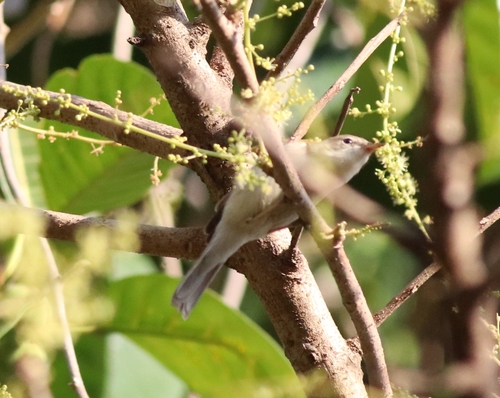
アラビアウタムシクイ (Iduna rama) アラビアウタムシクイ
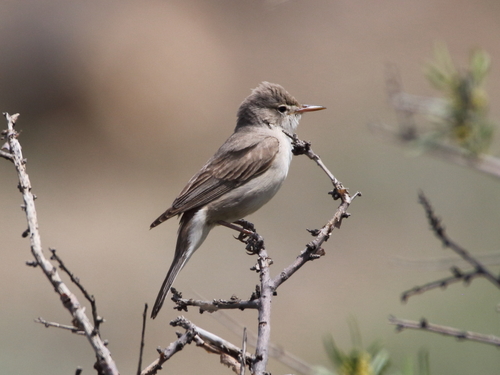
アレチウタムシクイ (Hippolais languida) アレチウタムシクイ

メディア

読み込み中…

要点

アラビアウタムシクイとアレチウタムシクイの最も信頼できるフィールドマークは行動にあります:アレチウタムシクイは長い尾を頻繁に振ったり扇いだりしますが、Sykes'sはこの行動を示しません。構造的には、Upcher'sは尾が長く、くちばしも長く、全体的に灰色のトーンを持っていますが、Sykes'sは小さく、色が薄く、よりコンパクトです。両者は羽毛が似て見えることがありますが、Sykes'sは通常、腹部がより薄く、バフ色の側面と短い薄いスーパシリウムを持っています。フィールドでは、尾の動き、全体の構造、微妙な色の違いに注目してこれら二つを区別してください。

識別のコツ

  1. 尾の動きは診断的です: アレチウタムシクイは長い尾を頻繁に振ったり扇いだりし、しばしばチャットのような動き方をします。アラビアウタムシクイはこの行動を示しません。定期的な尾の動きが見られた場合は、Upcher'sを優先してください。
  2. 尾の長さと形: Upcher'sはSykes'sよりも明らかに尾が長く、止まっているときや飛んでいるときにより細長く尖って見えます。Sykes'sの尾は短く、より四角い形をしています。
  3. くちばしの構造: Upcher'sはSykes'sの短くて強く尖ったくちばしに比べて、長くてやや重いくちばしを持っています。これは微妙ですが、良い視界で見ることができます。
  4. 全体的な印象: Upcher'sはその比率のために長く、スリムで、より角ばった印象を与えますが、Sykes'sはよりコンパクトで丸みを帯びています。
  5. 羽毛の色: Sykes'sは上面が薄茶色で、下面が白っぽく、バフ色の側面と短い薄いスーパシリウムを持っています。Upcher'sは全体的に灰色で、コントラストが少なく、バフ色の側面がありません。
  6. スーパシリウム: Sykes'sは短く薄いスーパシリウムを示し、近距離での有用なマークになります。Upcher'sはあまり明確でないか、スーパシリウムがない場合があります。
  7. 尾羽の縁: Sykes'sは外側の尾羽に薄い縁があり、良い光の下や尾を広げたときに見えることがあります;Upcher'sの尾はより均一な色合いです。
  8. 採餌時の行動: Upcher'sはより活発で、頻繁に尾を動かしながら低木の中を移動しているのが見られます。Sykes'sはより穏やかで、あまり動かず静かに止まっています。
  9. Olivaceous Warblerとの比較: 両種はハイイロウタムシクイに似ることがありますが、Upcher'sはより灰色で尾が長く、Sykes'sはより薄くてコンパクトです。
  10. 文脈におけるサイズ: 他のウタムシと一緒に見られる場合、Upcher'sはより大きく尾が長いことが目立ち、Sykes'sはより小さく繊細に見えます。
  11. 飛行時の印象: Upcher'sは尾とくちばしが長いため、飛行中により細長く見えることがありますが、Sykes'sはよりコンパクトに見えます。
  12. 生息地の重複: 両者は似たような低木の生息地に生息することがあるため、生息地だけに頼って識別しないでください。
  13. 鳴き声: Upcher'sの独特な歌を知っている場合、それは決定的ですが、両種の鳴き声に非常に精通していない限り、歌に頼らないでください。
  14. 季節的文脈: 両者は渡り鳥であり、一部の地域で一緒に見られることがあります;それらを区別するためには、タイミングよりも構造的および行動的なマークを使用してください。
  15. 落とし穴: 薄くなったUpcher'sが通常よりも薄く見えることや、Sykes'sが悪い光の中で灰色に見えることに注意してください。常に微妙な色の違いよりも尾の動きと構造を優先してください。

大きさ

アレチウタムシクイはHippolaisの中では中型で、キイロウタムシクイに似ており、アラビアウタムシクイよりも明らかに大きいです。Upcher'sはまた、尾とくちばしが長く、体に対して翼が短いです。アラビアウタムシクイは小さく、よりコンパクトで、相対的に尾が短く、強く尖ったくちばしを持っていますが、Upcher'sほど長くはありません。これらのサイズと比率の違いは、両種が並んで見られるか、スケールのために馴染みのあるウタムシと一緒に見られるときに最も明らかです。

羽色

どちらの種も、資料に記載された特徴的な幼鳥や未成熟の上翼パターンはないため、焦点は成鳥と一般的な羽毛にあります。アラビアウタムシクイは上面が薄茶色で、下面が白っぽく、バフ色の側面と短い薄いスーパシリウムを持っています。外側の尾羽は薄い縁を示し、全体的な印象は薄く、やや色あせた感じです。アレチウタムシクイは一般的に灰色で、上面と下面のコントラストが少なく、Sykes'sの温かいバフ色の側面がありません。両者はハイイロウタムシクイに似ることがありますが、Upcher'sは二つの中でより灰色で、Sykes'sはより薄く、繊細な外観を持っています。すべての羽毛において、Upcher'sの長い尾と灰色のトーンは役立ちますが、Sykes'sはより均一で薄いです。

行動

アレチウタムシクイは非常に活発で、頻繁に尾を振ったり扇いだりし、Sylviaウタムシやチャットを思わせる動き方をします。この尾の動きは重要な行動的フィールドマークであり、アラビアウタムシクイではほとんど、あるいは全く示されません。Sykes'sはより慎重で、あまり動かず静かに止まる傾向があります。飛行中、Upcher'sは尾とくちばしのためにより長く、細く見えることがあります。

生息環境

両種は中東と中央アジアの重複する地域で繁殖しますが、アレチウタムシクイの範囲はトルコの西部とパキスタンの東部にさらに広がっています。一方、Sykes'sはより東側、アラビア北東部から中国西部およびアフガニスタンにかけて分布しています。両者は低木のある開けた生息地を好みますが、生息地だけではその範囲が重なる場所での信頼できる区別にはなりません。

声

アレチウタムシクイはHippolaisウタムシの中で独特な歌を持ち、Olivaceous Warblerとは全く異なりますが、ノートにはSykes'sとの直接的な比較が記載されていません。Sykes'sの歌は資料に記載されていません。したがって、鳴き声はこれら二つを区別するための主要なフィールドマークではありませんが、観察者がUpcher'sの独特な歌にすでに精通している場合を除きます。

より良い説明を送る

比較と同じ項目を使ってください。文章はすぐに公開されます。

The most reliable field mark between Sykes's Warbler and Upcher's Warbler is behavioral: Upcher's Warbler frequently flicks and fans its long tail, a trait not shown by Sykes's. Structurally, Upcher's is longer-tailed and longer-billed, with a greyer overall tone, while Sykes's is smaller, paler, and more compact. Both can appear similar in plumage, but Sykes's is typically paler below with buff flanks and a short pale supercilium. In the field, focus on tail movement, overall structure, and subtle color differences to separate these two.

  1. Tail movement is diagnostic: Upcher's Warbler frequently flicks, fans, and moves its long tail, often in a chat-like manner. Sykes's Warbler does not show this behavior. If you see regular tail action, favor Upcher's.
  2. Tail length and shape: Upcher's has a noticeably longer tail than Sykes's, often looking more attenuated and pointed when perched or in flight. Sykes's tail is shorter and more squared-off.
  3. Bill structure: Upcher's has a longer, slightly heavier bill compared to the shorter, strong, and pointed bill of Sykes's. This is subtle but can be seen in good views.
  4. Overall jizz: Upcher's appears longer, slimmer, and more angular due to its proportions, while Sykes's is more compact and rounded.
  5. Plumage color: Sykes's is pale brown above and whitish below, with buff flanks and a short pale supercilium. Upcher's is greyer overall, with less contrast and lacking the buff flanks.
  6. Supercilium: Sykes's shows a short, pale supercilium, which can be a useful mark at close range. Upcher's may have a less distinct or absent supercilium.
  7. Tail feather edges: Sykes's has pale edges to the outer tail feathers, which may be visible in good light or on spread tail; Upcher's tail is more uniformly colored.
  8. Behavior when foraging: Upcher's is more active, often seen moving through shrubs with frequent tail movement. Sykes's is more sedate, moving less and perching quietly.
  9. Comparison to Olivaceous Warbler: Both species can resemble Eastern Olivaceous Warbler, but Upcher's is the greyer and longer-tailed, while Sykes's is paler and more compact.
  10. Size in context: If seen with other warblers, Upcher's will stand out as larger and longer-tailed, while Sykes's will look smaller and more delicate.
  11. Flight impression: Upcher's may look more elongated in flight due to its longer tail and bill, while Sykes's appears more compact.
  12. Habitat overlap: Both can occur in similar shrubby habitats, so do not rely on habitat alone for identification.
  13. Vocalization: If you know Upcher's distinctive song, it is a clincher, but do not rely on song unless you are very familiar with both species' vocalizations.
  14. Seasonal context: Both are migrants and can occur together in some regions; use structural and behavioral marks rather than timing to separate them.
  15. Pitfalls: Beware of pale, worn Upcher's appearing paler than usual, or Sykes's looking greyer in poor light. Always prioritize tail movement and structure over subtle color differences.

Upcher's Warbler is medium-sized for a Hippolais, similar to Icterine Warbler, and noticeably larger than Sykes's Warbler. Upcher's also has a longer tail and bill, and shorter wings relative to its body. Sykes's Warbler is smaller and more compact, with a proportionately shorter tail and a strong, pointed bill, but not as long as Upcher's. These size and proportion differences are most apparent when both species are seen side by side or with familiar warblers for scale.

Neither species has a distinctive juvenile or immature upperwing pattern noted in the sources, so focus is on adult and general plumage. Sykes's Warbler is pale brown above and whitish below, with buff flanks and a short, pale supercilium. Its outer tail feathers show pale edges, and the overall impression is pale and slightly washed-out. Upcher's Warbler is generally greyer, with less contrast between upperparts and underparts, and lacks the warm buff flanks of Sykes's. Both can resemble Eastern Olivaceous Warbler, but Upcher's is the greyer of the two, and Sykes's is paler and more delicate in appearance. In all plumages, Upcher's longer tail and greyer tone are helpful, while Sykes's is more uniform and pale.

Upcher's Warbler is highly active, frequently flicking, fanning, and moving its long tail in a manner reminiscent of Sylvia warblers or chats. This tail action is a key behavioral field mark and is rarely, if ever, shown by Sykes's Warbler. Sykes's tends to be more deliberate and less animated, often perching quietly and moving less conspicuously. In flight, Upcher's may also appear longer and more slender due to its tail and bill.

Both species breed in overlapping regions of the Middle East and Central Asia, but Upcher's Warbler's range extends further west into Turkey and east to Pakistan, while Sykes's is more eastern, from northeast Arabia to west China and Afghanistan. Both favor shrubby, open habitats, but habitat alone is not a reliable separator where their ranges overlap.

Upcher's Warbler has a song that is distinctive among Hippolais warblers and is entirely different from Olivaceous Warbler, but the notes do not specify how it compares directly to Sykes's. Sykes's song is not described in the sources. Thus, vocalization is not a primary field mark for separating these two unless the observer is already familiar with Upcher's unique song.

変更を破棄しますか?

保存していない編集があります。今離れると失われます。

アラビアウタムシクイ · アレチウタムシクイ · 苦手な鳥