

Motmot

ヒメモリバト 対 ヒガシヒメモリバト

Columba oenas 対 Columba eversmanni

ヒメモリバトとヒガシヒメモリバトのクイズ
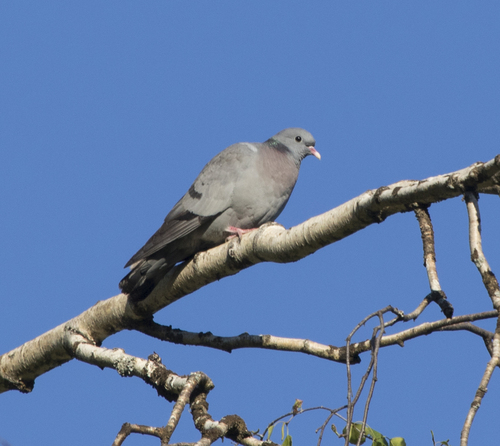
ヒメモリバト (Columba oenas) ヒメモリバト
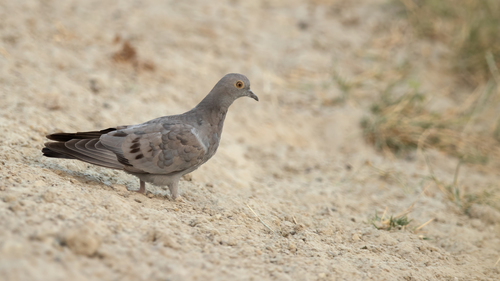
ヒガシヒメモリバト (Columba eversmanni) ヒガシヒメモリバト

メディア

読み込み中…

要点

ヒメモリバトとヒガシヒメモリバトの最も信頼できるフィールドマークは目の色です:ヒメモリバトは常に暗い目を持ち、ヒガシヒメモリバトは目の周りに鮮やかな黄色の虹彩と裸の黄味がかった皮膚を示します。飛行中、ヒメモリバト(すべての年齢)は翼の後縁が暗く、灰色の下翼を示しますが、ヒガシヒメモリバトは淡いまたは白い下翼と尾羽を持っています。両者は全体的な形が似た中型の鳩ですが、ヒメモリバトは重く、より深い青灰色のトーンを持っています。鳥が止まっているのを見たら、虹色の首のパッチ(ヒメモリバト成鳥のみ)とくちばしと目の色を確認してください。幼鳥のヒメモリバトは首の光沢がありませんが、暗い目を持ち、ヒガシヒメモリバトは常に黄色い目と淡い背中を持っています。生息地と分布はほとんど重なりませんが、冬に中央アジアやインド北西部にいる場合、ヒガシヒメモリバトが見られる可能性があります。

識別のコツ

  1. 目の色が最も信頼できるマーク:ヒメモリバトは常に暗い目を持ち、ヒガシヒメモリバトは黄色の虹彩と裸の黄味がかった皮膚を持っています。これはすべての年齢と季節で使用できます。
  2. 飛行中の下翼の色:ヒメモリバト(すべての年齢)は暗い灰色の下翼と後縁を示し、ヒガシヒメモリバトは白または淡い灰色の下翼と尾羽を示します。これは上空の鳥や飛び去る鳥で最もよく見られます。
  3. 尾羽の色:ヒメモリバトの尾羽は灰色で、背中と混ざります;ヒガシヒメモリバトは白または淡い尾羽を持ち、背中と対照的です。これは飛行中や羽繕いの際に見えます。
  4. 翼のバー:ヒメモリバトは翼の覆羽に2本の短い不完全な暗いバーを持ち、ヒガシヒメモリバトは1本のより明確な黒いバーを持っています。幼鳥のヒメモリバトはさらに目立たないバーを持つことがあります。
  5. 尾の帯:両者は暗い尾の帯を持っていますが、ヒガシヒメモリバトのものはより拡散しており、尾はその上で淡いです;ヒメモリバトのものは広く、はっきりと定義されています。
  6. 首の光沢:成鳥のヒメモリバトは首の側面に緑または紫の虹色のパッチを示します;幼鳥はこれがありません。ヒガシヒメモリバトは頭、喉、胸に淡い紫色の光沢を持っていますが、明確な首のパッチはありません。
  7. くちばしの色:ヒメモリバトのくちばしはピンクで先端が黄色です;ヒガシヒメモリバトのくちばしは全体的に黄味がかっています。これは距離によって微妙な場合があります。
  8. 胸の色:両者は淡い紫色の色合いを持っていますが、ヒメモリバトのものはより明るく、胸に制限されています;ヒガシヒメモリバトはより広い光沢を示すことがあります。
  9. 体のトーン:ヒメモリバトは全体的に青灰色で、より冷たい印象を与えます;ヒガシヒメモリバトはより淡く、上部が茶色がかっています。
  10. サイズと構造:ヒメモリバトは重く、より頑丈で、胸が深いです;ヒガシヒメモリバトはスリムで軽いです。
  11. 鳴き声:ヒメモリバトは深く、うめくような「オーウーオー」を出します;ヒガシヒメモリバトはほとんど静かで、まれにかすかな「ウーウーウー」を出します。
  12. 生息地:ヒメモリバトは森林の端、農地、木のある公園を好みます;ヒガシヒメモリバトは開けたステップ、半砂漠、乾燥した農地に見られます。
  13. 分布:ヒメモリバトは西パレアクティック;ヒガシヒメモリバトは中央アジアに分布し、インド北西部とパキスタン北東部で冬を越します。重なりはまれです。
  14. ディスプレイ行動:ヒメモリバトは翼を叩き、枝を歩くことでディスプレイします;ヒガシヒメモリバトはあまり表現的ではありません。
  15. 幼鳥の混乱:幼鳥のヒメモリバトは首の光沢がありませんが、暗い目と灰色の下翼を持っています;ヒガシヒメモリバトの幼鳥は黄色い目と淡い下翼を保持しているため、目と下翼の色が診断的です。

大きさ

ヒメモリバトはわずかに大きく、明らかに重く、オスは303–365 g、メスは286–290 gで、ヒガシヒメモリバトは183–234 gです。両種は長さが約28–34 cm(ヒメモリバト)または30 cm(ヒガシヒメモリバト)です。ヒメモリバトはより広く、頑丈な体型を持ち、ヒガシヒメモリバトはスリムです。翼幅は似ています(ヒメモリバト:60–66 cm)が、ヒメモリバトの質量が大きいため、特に止まっているときにより大きな印象を与えます。

羽色

幼鳥と成鳥のヒメモリバトは、両方とも青灰色の体を持ち、2本の短い不完全な暗い翼のバー(第三次羽と大覆羽に)を持ち、広い暗い尾の帯と灰色の尾羽を持っています。飛行中、すべての年齢は暗い後縁と均一な灰色の下翼を示します—決して白ではありません。成鳥は胸に淡い紫色の色合いを持ち、首に緑または紫の虹色のパッチを持っていますが、幼鳥にはこれがありません。目は常に暗いです。対照的に、ヒガシヒメモリバトは全体的に淡く、上部に茶色がかっており、頭、喉、胸に淡い紫色の光沢を持ち、1本の黒い翼のバーを持っています。下背、尾羽、下翼は白または淡い灰色で、飛行中に非常に淡い印象を与えます。目は黄色で、その周りに裸の黄味がかった皮膚があり、くちばしは黄味がかっています。両性は似ていますが、ヒメモリバトは常に暗く、ヒガシヒメモリバトの白い尾羽と下翼がありません。

行動

ヒメモリバトはしばしば木や枝に止まり、特にディスプレイ中は膨らんだ首、下げた翼、扇状の尾で歩きます。その飛行は速く、規則的で、鋭い翼のひらひらとディスプレイ中に時折翼を叩くことがあります。ヒガシヒメモリバトは一般的に地面に近い行動をし、開けた国や農地で見られることが多く、時には群れで見られます。一般的に静かで、ヒメモリバトよりもディスプレイでの表現は少ないです。

生息環境

ヒメモリバトは西パレアクティックに広く分布し、巣作りのために古い木のある開けた森林、公園、農地を好みます。分布の西部と南部に定住し、北東部では移動します。ヒガシヒメモリバトは中央アジアのステップと半砂漠で繁殖し、パキスタン北東部、インド北西部、隣接地域で冬を越します。開けた乾燥した生息地を好み、森林ではほとんど見られません。両種は通常分布が重ならず、まれに漂流者として見られることがあります。

声

ヒメモリバトは特徴的な深い、うめくような「オーウーオー」の鳴き声を持ち、木鳩の調整されたクーイングとはまったく異なります。ヒガシヒメモリバトは一般的に静かですが、繁殖期にはかすかな「ウーウーウー」を出すことがあります。ほとんどのフィールド状況では、ヒメモリバトははるかに声が大きく、その鳴き声は有用な手がかりです。

より良い説明を送る

比較と同じ項目を使ってください。文章はすぐに公開されます。

The most reliable field mark between Stock Dove and Yellow-eyed Pigeon is the eye color: Stock Dove always has dark eyes, while Yellow-eyed Pigeon shows a striking yellow iris and bare yellowish skin around the eye. In flight, Stock Dove (all ages) shows a dark trailing edge to the wing and a grey underwing, while Yellow-eyed Pigeon has a pale or white underwing and rump. Both are medium-sized pigeons with similar overall shape, but Stock Dove is heavier and has a deeper, more blue-grey tone. If you see the bird perched, check for the iridescent neck patch (Stock Dove adult only) and the color of the bill and eye. Juvenile Stock Doves lack the neck gloss but still have dark eyes, while Yellow-eyed Pigeon always has yellow eyes and a paler back. Habitat and range rarely overlap, but if you are in Central Asia or NW India in winter, Yellow-eyed Pigeon is possible.

  1. Eye color is the most reliable mark: Stock Dove always has dark eyes; Yellow-eyed Pigeon has a yellow iris and bare yellowish skin around the eye. Use this in all ages and seasons.
  2. Underwing color in flight: Stock Dove (all ages) shows a dark grey underwing and trailing edge; Yellow-eyed Pigeon shows a white or pale grey underwing and rump. This is best seen in birds overhead or flying away.
  3. Rump color: Stock Dove's rump is grey, blending with the back; Yellow-eyed Pigeon has a white or pale rump, contrasting with the back. This is visible in flight or when preening.
  4. Wingbars: Stock Dove has two short, incomplete dark bars on the wing coverts; Yellow-eyed Pigeon has a single, more distinct black bar. Juvenile Stock Doves may have even less obvious bars.
  5. Tail band: Both have a dark tail band, but Yellow-eyed Pigeon's is more diffuse and the tail is paler above it; Stock Dove's is broad and sharply defined.
  6. Neck gloss: Adult Stock Dove shows a green or purple iridescent patch on the neck sides; juveniles lack this. Yellow-eyed Pigeon has a pinkish-purple sheen on the crown, throat, and breast, but not a discrete neck patch.
  7. Bill color: Stock Dove's bill is pink with a yellow tip; Yellow-eyed Pigeon's is yellowish overall. This can be subtle at distance.
  8. Breast color: Both have a pinkish-purple suffusion, but Stock Dove's is lighter and more restricted to the breast; Yellow-eyed Pigeon may show a broader sheen.
  9. Body tone: Stock Dove is blue-grey overall, giving a colder impression; Yellow-eyed Pigeon is paler and browner above.
  10. Size and structure: Stock Dove is heavier and more robust, with a deeper chest; Yellow-eyed Pigeon is slimmer and lighter.
  11. Vocalization: Stock Dove gives a deep, grunting "Ooo-uu-ooh"; Yellow-eyed Pigeon is mostly silent, rarely giving a faint "oo-oo-oo".
  12. Habitat: Stock Dove prefers woodland edges, farmland, and parkland with trees; Yellow-eyed Pigeon is found in open steppe, semi-desert, and arid farmland.
  13. Range: Stock Dove is western Palearctic; Yellow-eyed Pigeon is Central Asian and winters in NW India and NE Pakistan. Overlap is rare.
  14. Display behavior: Stock Dove displays with wing claps and branch-walking; Yellow-eyed Pigeon is less demonstrative.
  15. Juvenile confusion: Juvenile Stock Dove lacks neck gloss but still has dark eyes and grey underwing; Yellow-eyed Pigeon juveniles retain yellow eyes and pale underwing, so eye and underwing color remain diagnostic.

Stock Dove is slightly larger and noticeably heavier, with males weighing 303–365 g and females 286–290 g, compared to Yellow-eyed Pigeon's 183–234 g. Both species are about 28–34 cm (Stock Dove) or 30 cm (Yellow-eyed Pigeon) in length. The Stock Dove has a broader, more robust build, while Yellow-eyed Pigeon is slimmer. Wingspan is similar (Stock Dove: 60–66 cm), but Stock Dove's greater mass gives it a bulkier impression, especially when perched.

Juvenile and adult Stock Doves both have a blue-grey body with two short, incomplete dark wingbars (on tertials and greater coverts), a broad dark tail band, and a grey rump. In flight, all ages show a dark trailing edge and a uniformly grey underwing—never white. Adults have a pinkish-purple suffusion on the breast and a green or purple iridescent neck patch, which is absent in juveniles. The eye is always dark. Yellow-eyed Pigeon, by contrast, is paler overall with a brownish tinge to the upperparts, a pinkish-purple sheen on the crown, throat, and breast, and a single black wing bar. Its lower back, rump, and underwing are white or pale grey, creating a much paler impression in flight. The eye is yellow with bare yellowish skin around it, and the bill is yellowish. Both sexes are similar, but Stock Dove is always darker and lacks the white rump and underwing of Yellow-eyed Pigeon.

Stock Dove often perches in trees or on branches, especially during display, walking with a swollen neck, lowered wings, and fanned tail. Its flight is quick and regular, with sharp wing flicks and occasional wing claps during display. Yellow-eyed Pigeon is generally more ground-oriented and is often seen in open country or agricultural fields, sometimes in flocks. It is generally silent and less demonstrative in display than Stock Dove.

Stock Dove is widespread in the western Palearctic, favoring open woodlands, parkland, and farmland with old trees for nesting. It is resident in western and southern parts of its range, migratory in the northeast. Yellow-eyed Pigeon breeds in Central Asian steppe and semi-desert, winters in NE Pakistan, NW India, and adjacent regions. It prefers open, arid habitats and is rarely found in woodland. The two species do not normally overlap in range, except possibly as rare vagrants.

Stock Dove has a distinctive deep, grunting "Ooo-uu-ooh" call, quite unlike the modulated cooing of Wood Pigeon. Yellow-eyed Pigeon is generally silent but may give a faint "oo-oo-oo" during the breeding season. In most field situations, Stock Dove is much more vocal and its call is a useful clue.

変更を破棄しますか?

保存していない編集があります。今離れると失われます。

ヒメモリバト · ヒガシヒメモリバト · 苦手な鳥