

Motmot

ツメバガン 対 アフリカマメガン

Plectropterus gambensis 対 Nettapus auritus

ツメバガンとアフリカマメガンのクイズ
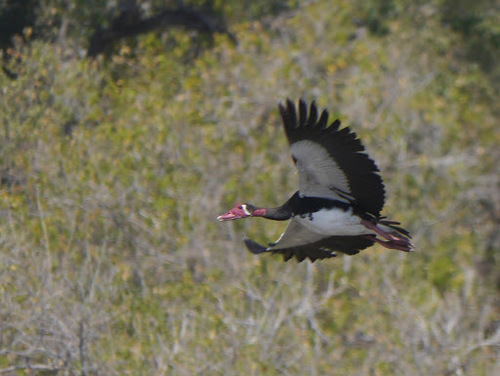
ツメバガン (Plectropterus gambensis) ツメバガン
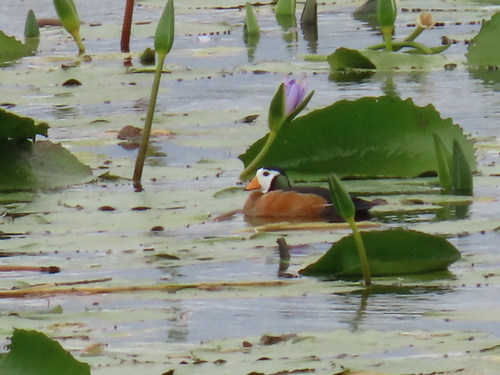
アフリカマメガン (Nettapus auritus) アフリカマメガン

メディア

読み込み中…

要点

ツメバガンとアフリカマメガンは、サイズと構造が劇的に異なり、ほとんどのフィールド状況で簡単に区別できます。ツメバガンはアフリカの水鳥の中で最大で、小さくてコンパクトなアフリカマメガンを圧倒しています。成鳥のツメバガンは主に黒で、白い顔と大きな白い翼の斑点がありますが、成鳥のオスのマメガンは白い顔、黒い冠、金属的な緑と栗色の体で目を引く模様をしています。幼鳥と雌の羽毛も異なりますが、サイズと全体的な形状は常に信頼できます。両種とも翼に白がありますが、文脈、構造、羽毛の詳細は決して重複しません。

識別のコツ

  1. Size is absolute: ツメバガンは巨大で白鳥サイズ; アフリカマメガンは小さく、ティールサイズです。重複はありません—これを最初に使用してください。
  2. Structure: ツメバガンは長い脚、重い体、長い首、大きなくちばしを持っています; マメガンはコンパクトで、短い首、小さくて太いくちばしを持っています。
  3. Bill and face: ツメバガンは赤いくちばしを持ち、オスには大きな赤い顔の斑点と突起があります; マメガンは黄色(オス)または黄色と茶色(雌)のくちばしを持ち、突起はなく、特徴的な白(オス)または灰色(雌)の顔があります。
  4. Adult male plumage: ツメバガンは主に黒で、白い顔と大きな白い翼の斑点があります; オスのマメガンは白い顔、黒い冠、緑の耳の斑点、栗色の側面、金属的な緑の背中を持つ大胆な模様です。
  5. Adult female plumage: ツメバガンの雌はオスに似ていますが、より小さく、顔の赤が少ないです; マメガンの雌は灰色の顔に茶色の目のストライプがあり、全体的にコントラストが少ないです。
  6. Juvenile plumage: ツメバガンの幼鳥はまだ大きく、暗く、重いくちばしを持っています; マメガンの幼鳥は小さく、白い顔、暗い冠、ピンクがかったくちばしの基部を持っています。
  7. Wing pattern in flight: ツメバガンはそれ以外は黒い翼に大きな白い斑点を示します; マメガンは暗い金属的な緑黒の翼に白いバーを示します。
  8. Leg color: ツメバガンは長いピンクがかった赤い脚を持っています; マメガンは短い暗灰色から黒の脚を持っています。
  9. Behavior: ツメバガンはしばしば陸で草を食べたり、開けた場所で休んでいるのが見られ、大きな群れで見られることもあります; マメガンはほぼ常に水の上にいて、ユリの間で餌を食べ、陸にいることはほとんどありません。
  10. Habitat: ツメバガンは広範囲の湿地や時には農地を利用します; マメガンはユリに覆われた静かな水域に密接に結びついています。
  11. Flight style: ツメバガンは重く、遅く、飛ぶのが苦労します; マメガンは迅速で、直接的で、敏捷です。
  12. Sexual dimorphism: ツメバガンのオスはより大きく、顔により広範な赤があります; マメガンのオスと雌は主に顔の色とコントラストが異なります。
  13. Voice: ツメバガンは通常静かですが、オスは警戒したり飛び立つときに柔らかい泡立つ呼び声を出すことがあります; マメガンは特徴的な呼び声では知られていません。
  14. Sociality: ツメバガンは特に繁殖外では大きな群れでいることがあります; マメガンは通常ペアまたは小さなグループでいます。
  15. Common pitfalls: 遠くからでも、ツメバガンのサイズと長い脚はユニークです; 混乱は遠くの孤立した鳥で最も起こりやすいですが、サイズ、構造、そして生息地は常に識別を解決するはずです。

大きさ

サイズは最も即時的で信頼できる違いです。ツメバガンは平均して約5 kg (4887.5 g) [wikidata]で、長さは75–115 cm、翼幅は150–200 cm [wikipedia]です。それに対して、アフリカマメガンは非常に小さく、オスは平均約285 g、雌は260 gで、翼の長さはわずか142–165 mm [wikipedia]です。フィールドでは、ツメバガンは白鳥サイズですが、アフリカマメガンはほとんどの水辺のカモよりも小さく、ほぼティールやハトサイズに見えることがあります。サイズに重複はありません。

羽色

これら二つの間には混乱を招く年齢特有の上翼パターンはありません: 両方とも翼に白がありますが、ツメバガンの白はそれ以外は黒い翼に大きな斑点として存在し、アフリカマメガンは暗い金属的な緑黒の翼に対して遠位の二次羽に白いバーを示します。成鳥のツメバガンは主に黒で、白い顔と大きな白い翼の斑点があります; オスはより大きな赤い顔の斑点とくちばしの基部に突起があります。アフリカマメガンのオスは黒い目の斑点を持つ白い顔、黒い冠、粉緑の耳の斑点、栗色の側面、金属的な緑の背中を持っています。雌は鈍い色で、灰色の顔、茶色の目のストライプ、そしてコントラストが少ないです。両方の幼鳥は模様がありますが、ツメバガンの幼鳥はまだ大きく、暗く、重いくちばしを持っているのに対し、マメガンの幼鳥は小さく、白い顔と暗い冠を持っています。くちばしの色と顔の模様は常に異なります。飛行中、ツメバガンのサイズと大きな白い斑点のある広い翼は間違いなく、マメガンは小さく、速く、白い翼のバーを示します。

行動

ツメバガンはしばしば小さな群れから大きな群れで水のそばで草を食べたり休んでいるのが見られ、大きな群れで見られることもあります; アフリカマメガンはより水生で、通常はペアまたは小さなグループで見られ、水草や浮遊植物を積極的に食べ、ほとんど水から遠くに行くことはありません。彼らの飛行は迅速で直接的であり、陸で見られる可能性は低いです。

生息環境

両種はサハラ以南のアフリカに生息していますが、好む生息地は異なります。ツメバガンは川、湖、湿地の周りに見られ、しばしば開けた湿地や時には農業地域にいます。アフリカマメガンは豊富な水草のある流れの遅いまたは静止した水に強く関連しており、静かな内陸の湿地、湿地、川のプールなどで見られます。マメガンは密な浮遊植物から離れているのはめったに見られませんが、ツメバガンはより柔軟で、開けた農地で草を食べているのが見られることがあります。

声

ツメバガンは一般的に静かで、オスは警戒したり飛び立つときに柔らかい泡立つ呼び声("cherwit")を出します。アフリカマメガンの声は情報源には記載されていませんが、どちらの種もフィールドで目立つ呼び声では知られていません。

より良い説明を送る

比較と同じ項目を使ってください。文章はすぐに公開されます。

The Spur-winged Goose and African Pygmy-Goose are dramatically different in size and structure, making them straightforward to separate in most field situations. The Spur-winged Goose is the largest African waterfowl, towering over the tiny, compact African Pygmy-Goose. Adult Spur-winged Geese are mostly black with a white face and large white wing patches, while adult male Pygmy-Geese are strikingly patterned with a white face, black crown, and metallic green and chestnut body. Juvenile and female plumages differ as well, but the size and overall shape are always reliable. Both species have white in the wing, but the context, structure, and plumage details are never truly overlapping.

  1. Size is absolute: Spur-winged Goose is massive, swan-sized; African Pygmy-Goose is tiny, teal-sized. There is no overlap—use this first.
  2. Structure: Spur-winged Goose is long-legged, heavy-bodied, with a long neck and large bill; Pygmy-Goose is compact, short-necked, with a small, stubby bill.
  3. Bill and face: Spur-winged Goose has a red bill and, in males, a large red facial patch and knob; Pygmy-Goose has a yellow (male) or yellow-and-brown (female) bill, with no knob, and a distinctive white (male) or gray (female) face.
  4. Adult male plumage: Spur-winged Goose is mostly black with a white face and large white wing patches; male Pygmy-Goose is boldly patterned with a white face, black crown, green ear patch, chestnut flanks, and metallic green back.
  5. Adult female plumage: Spur-winged Goose female is similar to male but smaller and with less extensive red on the face; Pygmy-Goose female is gray-faced with a brown eye stripe and less contrast overall.
  6. Juvenile plumage: Spur-winged Goose juveniles are still large, dark, and heavy-billed; Pygmy-Goose juveniles are tiny, with a white face, dark crown, and pinkish bill base.
  7. Wing pattern in flight: Spur-winged Goose shows large white patches on otherwise black wings; Pygmy-Goose shows a white bar on the dark, metallic green-black wing.
  8. Leg color: Spur-winged Goose has long, pinkish-red legs; Pygmy-Goose has short, dark-gray to black legs.
  9. Behavior: Spur-winged Goose is often seen grazing on land or resting in open, sometimes in large flocks; Pygmy-Goose is almost always on water, feeding among lilies, and rarely on land.
  10. Habitat: Spur-winged Goose uses a wide range of wetlands and sometimes fields; Pygmy-Goose is closely tied to lily-covered, still waters.
  11. Flight style: Spur-winged Goose is heavy, slow, and labored in flight; Pygmy-Goose is rapid, direct, and agile.
  12. Sexual dimorphism: Spur-winged Goose males are larger and have more extensive red on the face; Pygmy-Goose males and females differ mainly in face color and contrast.
  13. Voice: Spur-winged Goose is usually silent, but males may give a soft bubbling call; Pygmy-Goose is not known for distinctive calls.
  14. Sociality: Spur-winged Goose can be in large flocks, especially outside breeding; Pygmy-Goose is usually in pairs or small groups.
  15. Common pitfalls: Even at a distance, the Spur-winged Goose's size and long legs are unique; confusion is most likely with distant, lone birds, but the size, structure, and habitat should always resolve the ID.

Size is the most immediate and reliable difference. The Spur-winged Goose averages nearly 5 kg (4887.5 g) [wikidata], with a length of 75–115 cm and a wingspan of 150–200 cm [wikipedia]. In contrast, the African Pygmy-Goose is minute, with males averaging about 285 g and females 260 g, and a wing length of just 142–165 mm [wikipedia]. In the field, a Spur-winged Goose is swan-sized, while the African Pygmy-Goose is smaller than most dabbling ducks and can look almost teal- or dove-sized. There is no overlap in size.

There are no confusing age-specific upperwing patterns between these two: both have white in the wing, but the Spur-winged Goose's white is in large patches on otherwise black wings, while the African Pygmy-Goose shows a white bar on the distal secondaries against a dark, metallic green-black wing. Adult Spur-winged Geese are mainly black with a white face and large white wing patches; males have a larger red facial patch and a knob at the bill base. African Pygmy-Goose males have a white face with black eye patches, a black crown, powder green ear patches, chestnut flanks, and a metallic green back. Females are duller, with a gray face, brown eye stripe, and less contrast. Juveniles of both are patterned, but the Spur-winged Goose juvenile is still large, dark, and heavy-billed, while the pygmy-goose juvenile is tiny, with a white face and dark crown. Bill color and facial pattern are always different. In flight, the Spur-winged Goose's size and broad wings with large white patches are unmistakable; the pygmy-goose is small, fast, and shows a white wing bar.

Spur-winged Geese are often seen in small to large flocks, grazing or resting by water, and are aggressive during breeding. They are mostly terrestrial, feeding by grazing, and spend much of the day loafing near water. African Pygmy-Geese are more aquatic, typically seen in pairs or small groups, actively feeding on water lilies and floating vegetation, and rarely venturing far from water. Their flight is rapid and direct, and they are less likely to be seen on land.

Both species occur in sub-Saharan Africa, but their preferred habitats differ. Spur-winged Geese are found around rivers, lakes, and swamps, often in open wetlands and sometimes in agricultural areas. African Pygmy-Geese are strongly associated with slow-flowing or stagnant water with abundant water lilies, such as quiet inland wetlands, swamps, and river pools. Pygmy-geese are rarely seen away from dense floating vegetation, while Spur-winged Geese are more flexible and may be seen grazing in open fields.

Spur-winged Goose is generally quiet, with males giving a soft bubbling call ("cherwit") when alarmed or taking flight. African Pygmy-Goose vocalizations are not described in the sources, but neither species is known for prominent calls in the field.

変更を破棄しますか?

保存していない編集があります。今離れると失われます。

ツメバガン · アフリカマメガン · 苦手な鳥