

Motmot

ホシスミレフウキンチョウ 対 キバラクロヒワ

Euphonia imitans 対 Spinus xanthogastrus

ホシスミレフウキンチョウとキバラクロヒワのクイズ
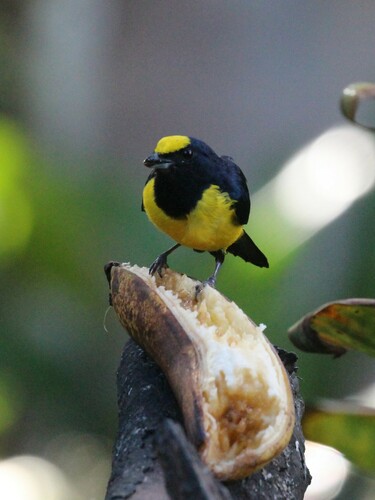
ホシスミレフウキンチョウ (Euphonia imitans) ホシスミレフウキンチョウ
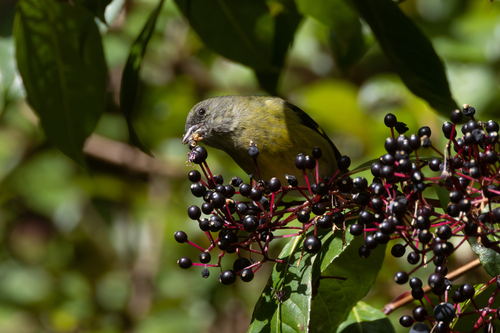
キバラクロヒワ (Spinus xanthogastrus) キバラクロヒワ

メディア

読み込み中…

要点

ホシスミレフウキンチョウとキバラクロヒワの最も信頼できるフィールドマークは、特にオスにおける頭部と翼のパターンです:オスのホシスミレフウキンチョウは明るい黄色の黒い斑点のある額を示し、オスのキバラクロヒワは光沢のある真っ黒な頭部と上面を持ち、頭頂に黄色はありません。飛んでいる時や止まっている時、すべての年齢のキバラクロヒワは翼と尾に広範囲な黄色を示しますが、ホシスミレフウキンチョウにはそれがありません。メスはより難しいですが、ホシスミレフウキンチョウのメスは赤褐色の額とオリーブグリーンの上面を持ち、メスのキバラクロヒワは鈍いオリーブグリーンで淡い眉斑と翼に黄色があります。幼鳥のキバラクロヒワは淡いバフ色の翼の覆羽の先端と、ホシスミレフウキンチョウよりも多くの黄色を翼に持っています。嘴の形状と構造も役立ちます:ホシスミレフウキンチョウは短くてフィンチのような嘴を持ち、キバラクロヒワはより細くて尖った嘴を持っています。両種はコスタリカとパナマに生息していますが、キバラクロヒワは南方に広く分布しています。

識別のコツ

  1. Male head pattern: オスのホシスミレフウキンチョウは明るい黄色の黒い斑点のある額を持ち、オスのキバラクロヒワは光沢のある真っ黒な頭部で黄色はありません。これは成鳥のオスにとって最も良いフィールドマークです。
  2. Yellow in wings and tail: すべての年齢のキバラクロヒワは、飛んでいる時や止まっている時に見える一次羽、二次羽、外尾羽の明るい黄色の基部を示します。ホシスミレフウキンチョウは翼や尾に黄色がなく、その黄色は下部と額(オス)または下部と額(メス、ただし赤褐色で黄色ではない)に限られています。
  3. Female forehead color: メスのホシスミレフウキンチョウは赤褐色の額を持ち、オリーブグリーンの頭頂と対照的です。メスのキバラクロヒワは鈍いオリーブグリーンの頭部を持ち、淡い眉斑と赤褐色の色調はありません。
  4. Supercilium in females: メスのキバラクロヒワは淡い眉斑と暗い目のストライプを持ち、わずかにマスクされた外観を与えます。メスのホシスミレフウキンチョウは眉斑がなく、よりシンプルな顔を持っています。
  5. Bill shape: ホシスミレフウキンチョウは短くて太いフィンチのような嘴を持ち、キバラクロヒワはより細くて尖った嘴を持っています。これは微妙ですが、近距離で見ると明らかです。
  6. Underpart color and pattern: 両種は黄色の下部を持っていますが、オスのホシスミレフウキンチョウは下胸から下が明るい黄色で、オスのキバラクロヒワは脇腹にオリーブ色の色合いのある黄色の下部を持っています。メスのホシスミレフウキンチョウは下胸と腹部に赤褐色を持ち、メスのキバラクロヒワは下部がより均一にオリーブ黄色です。
  7. Upperparts color: オスのホシスミレフウキンチョウは上面が鋼青黒色で、オスのキバラクロヒワは光沢のある黒です。メスのホシスミレフウキンチョウは上面がオリーブグリーンで灰色がかった青の色合いがあり、メスのキバラクロヒワは鈍いオリーブグリーンで薄い暗いストライプがあります。
  8. Juvenile wing pattern: 幼鳥のキバラクロヒワは翼の覆羽の淡いバフ色の先端と完全に黒い尾と飛翔羽を持ち、翼と尾に黄色があります。幼鳥のホシスミレフウキンチョウはこれらの特徴がありません。
  9. Wing coverts: メスと幼鳥のキバラクロヒワは、淡い黄色またはオリーブ黄色の先端を持つ黒っぽい上翼の覆羽を持ち、ホシスミレフウキンチョウは暗い覆羽を持ち、黄色がかったオリーブの縁(メス)がありますが、同じパネル効果はありません。
  10. Tail pattern: キバラクロヒワはすべての羽衣で外尾羽の黄色の基部を示し、ホシスミレフウキンチョウは青黒色の色合いのある暗い尾を持ち、黄色はありません。
  11. Flight jizz: キバラクロヒワは飛んでいる時にわずかに長くて細く見えることがあり、翼と尾のフラッシュがより明らかです;ホシスミレフウキンチョウはコンパクトで太い嘴を持っています。
  12. Sexual dimorphism: 両種は性差があり、しかしホシスミレフウキンチョウの違い(オスの黄色の額とメスの赤褐色)ほどキバラクロヒワの違い(オスの黒とメスのオリーブグリーンの頭)は際立っていません。
  13. Range context: コスタリカまたはパナマの外で見られた場合、キバラクロヒワの方がはるかに可能性が高いです;ホシスミレフウキンチョウはこれらの2カ国に制限されています。
  14. Perched vs. flight views: 止まっている鳥では、頭部と翼のパターンに注目してください;飛んでいる時は、翼と尾の黄色のフラッシュがキバラクロヒワを指し示します。
  15. Habitat context: 両種は生息地が重なっているため、生息地だけに頼って分離しないでください。

大きさ

両種は非常にサイズが近く、ホシスミレフウキンチョウは約10 cmで14 g、キバラクロヒワは10–11.5 cmで11–14 gです。手に持ったり近距離で見ると、キバラクロヒワはわずかに長くて細く見えることがありますが、双眼鏡で見るとサイズは信頼できる区別にはなりません。

羽色

行動

ノートには強い行動の違いは記載されていません。両種は小さくて活発なフィンチのような鳥で、しばしば木や低木で餌を探しているのが見られます。キバラクロヒワは特に繁殖期の外で群れを形成する可能性が高いですが、ホシスミレフウキンチョウはしばしばペアや小さなグループで見られます。両種は敏捷で、果物や種子を食べているのが見られます。

生息環境

両種はコスタリカとパナマに生息していますが、キバラクロヒワはアンデス山脈の南方に広がっています。生息地の好みはノートには強く区別されていませんが、両種は森林や半開放的な地域で見られます。ホシスミレフウキンチョウは巣作りのためにエピフィットが豊富な枝により密接に関連している可能性がありますが、これは信頼できるフィールドマークではありません。

より良い説明を送る

比較と同じ項目を使ってください。文章はすぐに公開されます。

The most reliable field mark between Spot-crowned Euphonia and Yellow-bellied Siskin is the head and wing pattern, especially in males: male euphonias show a bright yellow, black-spotted forehead, while male siskins have a glossy all-black head and upperparts with no yellow on the crown. In flight or perched, siskins of all ages show extensive yellow in the wings and tail, which euphonias lack. Females are trickier, but euphonia females have a rufous-chestnut forehead and olive-green upperparts, while female siskins are dull olive-green with a pale supercilium and yellow in the wings. Juvenile siskins have pale buff wing covert tips and more yellow in the wings than any euphonia. Bill shape and structure also help: euphonias have a stubby, finch-like bill, while siskins have a finer, more pointed bill. Both species occur in Costa Rica and Panama, but siskin is more widespread further south.

  1. Male head pattern: Male Spot-crowned Euphonia has a bright yellow, black-spotted forehead; male Yellow-bellied Siskin has a glossy all-black head with no yellow. This is the single best field mark for adult males.
  2. Yellow in wings and tail: Siskins of all ages show bright yellow bases to the primaries, secondaries, and outer tail feathers, visible in flight and often when perched. Spot-crowned Euphonia lacks any yellow in the wings or tail—its yellow is confined to the underparts and forehead (male) or underparts and forehead (female, but rufous-chestnut, not yellow).
  3. Female forehead color: Female euphonias have a rufous-chestnut forehead, contrasting with the olive-green crown. Female siskins have a dull olive-green head with a pale supercilium and no rufous tones.
  4. Supercilium in females: Female siskins have a pale supercilium and a dusky eye-stripe, giving a faintly masked look. Female euphonias lack a supercilium and have a plainer face.
  5. Bill shape: Euphonias have a short, stubby, finch-like bill; siskins have a finer, more pointed bill. This is subtle but visible at close range.
  6. Underpart color and pattern: Both species have yellow underparts, but male euphonias are bright yellow from the lower breast down, while siskin males have yellow underparts with an olive tinge on the flanks. Female euphonias have tawny-rufous on the lower breast and belly, while female siskins are more uniformly olive-yellow below.
  7. Upperparts color: Male euphonias are steely blue-black above; male siskins are glossy black. Female euphonias are olive-green above with a grayish blue tinge; female siskins are dull olive-green with thin darker streaks.
  8. Juvenile wing pattern: Juvenile siskins have pale buff tips to the wing coverts and entirely black tail and flight feathers, plus yellow in the wings and tail. Juvenile euphonias lack these features.
  9. Wing coverts: Female and juvenile siskins have blackish upperwing coverts with pale yellow or olive-yellow tips; euphonias have dusky coverts with yellowish olive edges (female) but not the same panel effect.
  10. Tail pattern: Siskins show yellow bases to the outer tail feathers in all plumages; euphonias have a dusky tail with a blue-black tinge and no yellow.
  11. Flight jizz: Siskins may appear slightly longer and slimmer in flight, with more obvious wing and tail flashes; euphonias are compact and stubby-billed.
  12. Sexual dimorphism: Both species are sexually dimorphic, but the differences are more striking in euphonias (male's yellow forehead vs. female's rufous-chestnut) than in siskins (male's black vs. female's olive-green head).
  13. Range context: If seen outside Costa Rica or Panama, siskin is much more likely; euphonia is restricted to these two countries.
  14. Perched vs. flight views: In perched birds, focus on head and wing pattern; in flight, yellow flashes in wings and tail point to siskin.
  15. Habitat context: Both species overlap in habitat, so do not rely on habitat alone for separation.

Both species are very close in size, with Spot-crowned Euphonia at about 10 cm and 14 g, and Yellow-bellied Siskin at 10–11.5 cm and 11–14 g. In the hand or at close range, siskins may appear slightly longer and slimmer, but with binoculars, size is not a reliable separator.

  • Juveniles/immatures: Juvenile Yellow-bellied Siskins resemble adult females but can be picked out by their entirely black tail and flight feathers, and pale buff tips to the wing coverts. Juvenile euphonias are not described in detail, but would lack the siskin's strong yellow wing and tail panels.

  • Adult males: Spot-crowned Euphonia males have a bright yellow, black-spotted forehead and blue-black upperparts, with no yellow in the wings or tail. Yellow-bellied Siskin males are glossy black above with no yellow on the head, but show bold yellow bases to the primaries, secondaries, and outer tail feathers.

  • Adult females: Female euphonias have a rufous-chestnut forehead, olive-green crown and upperparts, and yellowish olive edges to the flight feathers, but no bright yellow wing patches. Female siskins are dull olive-green with a pale supercilium, blackish wings with pale yellow or olive-yellow tips to the coverts, and yellow bases to the flight feathers and tail.

  • In flight: Siskins of all ages show obvious yellow in the wings and tail; euphonias do not.

No strong behavioral differences are described in the notes. Both are small, active finch-like birds, often seen foraging in trees or shrubs. Siskins may be more likely to form flocks, especially outside the breeding season, while euphonias are often seen in pairs or small groups. Both species are agile and can be seen feeding on fruit or seeds.

Both species occur in Costa Rica and Panama, but siskins range further south into the Andes. Habitat preferences are not strongly differentiated in the notes, but both are found in forested or semi-open areas. Spot-crowned Euphonia may be more closely associated with epiphyte-laden branches for nesting, but this is not a reliable field mark.

変更を破棄しますか?

保存していない編集があります。今離れると失われます。

ホシスミレフウキンチョウ · キバラクロヒワ · 苦手な鳥