

Motmot

ウロコカワラバト 対 キビタイハタオリ

Columba guinea 対 Ploceus olivaceiceps

ウロコカワラバトとキビタイハタオリのクイズ
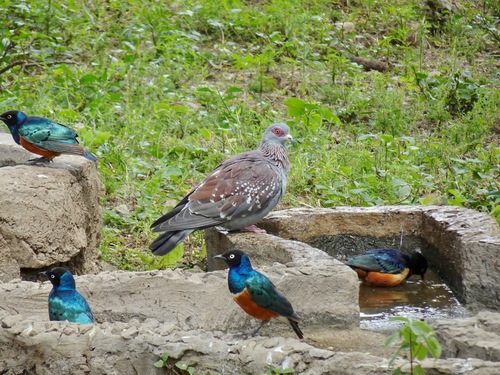
ウロコカワラバト (Columba guinea) ウロコカワラバト
キビタイハタオリ (Ploceus olivaceiceps) キビタイハタオリ

メディア

読み込み中…

要点

ウロコカワラバトとキビタイハタオリを区別する最も信頼できる方法は、その劇的なサイズの違いと全体的な構造です:ウロコカワラバトは大きく、重い体を持つ鳩で、赤褐色の翼に白い斑点があります。一方、キビタイハタオリは小さく、細長い歌鳥で、平坦なオリーブ色の頭と非常に細いくちばしを持っています。未熟なウロコカワラバトは成鳥の赤い目のパッチが欠けていますが、いずれにしてもどのハタオリよりもはるかに大きく、茶色です。飛んでいるときや止まっているとき、鳩の広く丸い翼と目の周りの赤い裸の皮膚(成鳥の場合)は独特です。生息地も役立ちます:鳩はしばしば開けた場所や建物の周りで見られ、一方ハタオリは乾燥した森林に生息します。距離があっても、鳩のサイズと形は小さく活発なハタオリと比べて明確です。

識別のコツ

  1. Size is decisive: ウロコカワラバトはキビタイハタオリの15倍以上の重さです。もしその鳥が鳩のサイズかそれ以上に見えるなら、それはハタオリではありません(すべての年齢)。
  2. Structure and jizz: 鳩は太い首、広い胸、大きく丸い翼を持っています;ハタオリは細長く、細いくちばしと短く尖った翼を持っています(すべての年齢)。
  3. Bill shape: 鳩のくちばしは太く鈍く、種子に適しています;ハタオリのくちばしは細く尖っており、円錐形です(すべての年齢)。
  4. Wing pattern in flight: ウロコカワラバト(成鳥と未熟)は赤褐色の翼に目立つ白い斑点を示します;ハタオリの翼は平坦で無地です。
  5. Head pattern: 成鳥の鳩は灰色の頭を持ち、目の周りに目立つ赤い裸のパッチがあります;未熟なものは赤が欠けていますが、依然として灰色の頭を持ち、どのハタオリよりもはるかに大きいです。
  6. Neck and breast: 鳩の首は茶色がかっており、白い筋があります;ハタオリの羽毛はより均一で、筋や対照的なパッチがありません。
  7. Leg color: 鳩は赤い脚を持ち、止まっているときに見えます;ハタオリの脚はメモに特に記載されていません。
  8. Plumage contrast: 鳩の羽毛は赤褐色、白、灰色、茶色で大胆に模様が付けられています;ハタオリは平坦なオリーブ色の頭を持ち、強いコントラストがありません。
  9. Behavior: 鳩はしばしば地面を歩いたり、建物や岩に止まったりします;ハタオリは木や低木の中で活動的で、地面にはほとんどいません。
  10. Habitat: 鳩は開けた国、都市、農地に一般的で、ハタオリは乾燥した森林に制限され、都市部を避けます。
  11. Flocking: 鳩は特に穀物や食料源の近くで大きな群れを作ることがあります;ハタオリは木の中で小さなグループやペアでいることが多いです。
  12. Voice: 深く繰り返される「ドゥードゥー」という鳴き声は鳩を示します;ハタオリの鳴き声はおそらく高音で、共鳴が少ないです。
  13. Immature confusion: 若い鳩は赤い目のパッチが欠けていますが、依然としてどのハタオリよりもはるかに大きく、茶色です;斑点のある翼は依然として見えます。
  14. Perched posture: 鳩は直立して太っています;ハタオリはより水平に止まり、繊細に見えます。
  15. Geographic overlap: マラウイ、モザンビーク、タンザニア、ザンビアの外にいる場合、ハタオリはあり得ません;鳩はサハラ以南のアフリカ全体に広がっていますが、いくつかのギャップがあります。

大きさ

サイズは最も即座に区別できる要素です:ウロコカワラバトの平均は328gで、キビタイハタオリの約21gの15倍以上の重さです [wikidata]。鳩は中型の鳥で、32〜35cmの長さで、カワラバトに似たが、ずんぐりした体と広い翼を持っています。ハタオリは小さく、スズメサイズの鳥で、はるかに繊細でコンパクトです。直接比較しなくても、鳩のサイズと質量はフィールドで明らかで、特に止まっているときや飛んでいるときに顕著です。

羽色

羽毛の違いはすべての年齢で顕著です。成鳥のウロコカワラバトは赤褐色の背中と翼に白い斑点が多く、青灰色の上面と下面、目の周りに目立つ赤い裸の皮膚を持つ灰色の頭、茶色がかった白い筋のある首を示します。未熟なものは全体的に茶色がかり、赤い目のパッチが欠けていますが、依然として特徴的な斑点のある翼の模様を示します。対照的に、キビタイハタオリは平坦なオリーブ色の頭を持ち、一般的に大胆な模様や斑点がありません。その羽毛ははるかに均一で、鳩の対照的な色やマーキングが欠けています。鳩の赤い脚と裸の目の皮膚は、ハタオリには決して匹敵しません。飛んでいるとき、鳩の広く丸い翼と白い斑点は明らかで、ハタオリの翼は短く尖っており、無地です。

行動

ウロコカワラバトはしばしば地面を歩いたり、屋根や岩の突起に止まったり、人間の居住地の近くで食べ物が豊富な場所で群れを成すのが見られます。その飛行は強く直接的で、定期的な翼の拍動と時折の鋭いひねりがあります。キビタイハタオリははるかに活動的で敏捷で、通常は木や低木の中で餌を探し、地面にはほとんどいません。ハタオリの行動は小さな雀類に典型的で、落ち着きがなく、アクロバティックで、しばしば小さなグループで行動します。

生息環境

ウロコカワラバトは開けた生息地を好み、都市部、農業地、岩の突起を含み、サハラ以南のアフリカの多くで人間の集落の近くで頻繁に見られます [wikipedia]。キビタイハタオリはマラウイ、モザンビーク、タンザニア、ザンビアの亜熱帯または熱帯の乾燥した森林に制限され、開けた場所や都市部を避けます。もしその鳥が都市、屋根、または開けた農地で見られた場合、ほぼ確実にウロコカワラバトです;乾燥した森林の樹冠にいる場合、ハタオリの可能性が高いです。

声

ウロコカワラバトは大きく繰り返される「ドゥードゥー」という鳴き声を出し、鳩に典型的です [wikipedia]。キビタイハタオリの鳴き声は提供されたメモには記載されていませんが、ハタオリとして、より高音で、より複雑またはおしゃべりな鳴き声を出す可能性が高く、深く共鳴する鳩の鳴き声とは非常に異なります。もしクラシックな鳩の鳴き声を聞いたら、それはハタオリではありません。

より良い説明を送る

比較と同じ項目を使ってください。文章はすぐに公開されます。

The most reliable way to separate Speckled Pigeon from Olive-headed Weaver is by their dramatic size difference and overall structure: Speckled Pigeon is a large, heavy-bodied pigeon with rufous wings speckled white, while Olive-headed Weaver is a small, slender songbird with a plain olive-toned head and much finer bill. Immature Speckled Pigeons lack the adult's red eye patch but are still much larger and browner than any weaver. In flight or perched, the pigeon's broad, rounded wings and red bare skin around the eye (in adults) are unique. Habitat can help: pigeons are often seen in open areas and around buildings, while weavers stick to dry forests. Even at a distance, the pigeon's size and shape are unmistakable compared to the tiny, active weaver.

  1. Size is decisive: Speckled Pigeon is over 15 times heavier than Olive-headed Weaver. If the bird looks pigeon-sized or larger than a dove, it cannot be the weaver (all ages).
  2. Structure and jizz: Pigeon has a thick neck, broad chest, and large, rounded wings; weaver is slender, with a fine bill and short, pointed wings (all ages).
  3. Bill shape: Pigeon’s bill is thick and blunt, suited for seeds; weaver’s bill is thin, pointed, and conical (all ages).
  4. Wing pattern in flight: Speckled Pigeon (adult and immature) shows rufous wings with prominent white speckling; weaver’s wings are plain and unmarked.
  5. Head pattern: Adult pigeon has a grey head with a striking red bare patch around the eye; immatures lack the red but are still grey-headed and much larger than any weaver.
  6. Neck and breast: Pigeon’s neck is brownish with white streaks; weaver’s plumage is more uniform and lacks streaking or contrasting patches.
  7. Leg color: Pigeon has red legs, visible when perched; weaver’s legs are not described as distinctive in the notes.
  8. Plumage contrast: Pigeon’s plumage is boldly patterned with rufous, white, grey, and brown; weaver is plain olive-headed and lacks strong contrasts.
  9. Behavior: Pigeon often walks on the ground or perches on buildings and rocks; weaver is active in trees and shrubs, rarely on the ground.
  10. Habitat: Pigeon is common in open country, cities, and farmland; weaver is restricted to dry forests and avoids urban areas.
  11. Flocking: Pigeon can gather in large flocks, especially near grain or food sources; weaver is more likely in small groups or pairs in trees.
  12. Voice: A deep, repetitive 'doo-doo-doo' call indicates pigeon; weaver’s calls are likely higher-pitched and less resonant.
  13. Immature confusion: Young pigeons lack the red eye patch but remain much larger and browner than any weaver; the speckled wings are still visible.
  14. Perched posture: Pigeon sits upright and bulky; weaver perches more horizontally and appears delicate.
  15. Geographic overlap: If outside Malawi, Mozambique, Tanzania, or Zambia, the weaver is unlikely; pigeon is widespread in sub-Saharan Africa but with some gaps.

Size is the most immediate separator: Speckled Pigeon averages 328 g, making it over 15 times heavier than Olive-headed Weaver at just under 21 g [wikidata]. The pigeon is a medium-sized bird, 32–35 cm long, similar to a Rock Dove, with a bulky body and broad wings. The weaver is a small, sparrow-sized bird, much more delicate and compact. Even without direct comparison, the pigeon’s size and mass are obvious in the field, especially when perched or in flight.

Plumage differences are stark at all ages. Adult Speckled Pigeon shows rufous back and wings heavily speckled with white, blue-grey upperparts and underparts, a grey head with conspicuous red bare skin around the eye, and a brownish, white-streaked neck. Immatures are browner overall and lack the red eye patch, but still show the distinctive speckled wing pattern. Olive-headed Weaver, by contrast, has a plain olive-toned head and generally lacks any bold patterning or speckling. Its plumage is much more uniform and lacks the pigeon's contrasting colors and markings. The pigeon's red legs and bare eye skin are never matched by the weaver. In flight, the pigeon's broad, rounded wings and white speckling are obvious, while the weaver's wings are short, pointed, and unmarked.

Speckled Pigeon is often seen walking on the ground, perching on rooftops or rocky outcrops, and gathering in flocks where food is abundant, especially near human habitation. Its flight is strong and direct, with regular wingbeats and occasional sharp flicks. Olive-headed Weaver is much more active and agile, typically foraging in trees and shrubs, rarely on the ground, and often seen moving quickly through foliage. The weaver’s behavior is more typical of small passerines: restless, acrobatic, and often in small groups.

Speckled Pigeon prefers open habitats, including urban areas, agricultural fields, and rocky outcrops, and is frequently found near human settlements across much of sub-Saharan Africa [wikipedia]. Olive-headed Weaver is restricted to subtropical or tropical dry forests in Malawi, Mozambique, Tanzania, and Zambia, and avoids open or urban habitats. If the bird is seen in a city, on a roof, or in open farmland, it is almost certainly a Speckled Pigeon; if in a dry forest canopy, the weaver is more likely.

Speckled Pigeon gives a loud, repetitive 'doo-doo-doo' call, typical of pigeons [wikipedia]. Olive-headed Weaver’s vocalizations are not described in the provided notes, but as a weaver, it is likely to give higher-pitched, more complex or chattering calls, very different from the deep, resonant pigeon coo. If you hear a classic pigeon call, it is not the weaver.

変更を破棄しますか?

保存していない編集があります。今離れると失われます。

ウロコカワラバト · キビタイハタオリ · 苦手な鳥