

Motmot

オビナシショウドウツバメ 対 キツネツバメ

Stelgidopteryx ruficollis 対 Alopochelidon fucata

オビナシショウドウツバメとキツネツバメのクイズ
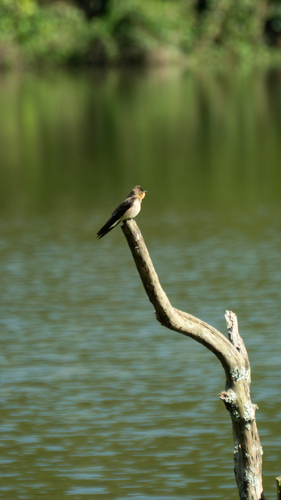
オビナシショウドウツバメ (Stelgidopteryx ruficollis) オビナシショウドウツバメ
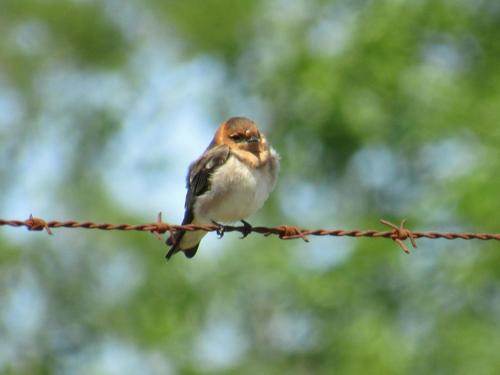
キツネツバメ (Alopochelidon fucata) キツネツバメ

メディア

読み込み中…

要点

オビナシショウドウツバメとキツネツバメの間で最も信頼できるフィールドマークは、頭部と喉部の赤褐色または黄褐色の色合いと範囲です:キツネツバメは、全体の冠、額、眉、喉にわたって広く豊かな黄褐色の洗いが見られ、オビナシショウドウツバメは、より限られたシナモン色の喉と暗い灰褐色の冠を持っています。両種の幼鳥はより鈍い色合いですが、キツネツバメは依然として淡い頭部を示します。両者はサイズと形が似ており、尾は四角く、上面は褐色がかっていますが、特に止まっている鳥の頭部と喉部の色に注意を払うことで区別できます。飛行中は、両者とも下側はかなり地味ですが、キツネツバメの頭部と胸部の色は良い光の下で際立つことがあります。

識別のコツ

  1. Head and throat color (all ages): キツネツバメは、全体の冠、額、眉、後頭部、耳羽、喉、胸にわたって広く豊かな黄褐色の洗いを示します。オビナシショウドウツバメは、冠と顔が暗い灰褐色で、赤褐色は喉に限られています。
  2. Juvenile head pattern: 幼鳥のキツネツバメは、淡い(赤褐色ではない)頭部と淡い羽毛を持ち、上面の他の部分よりもまだ淡いです。幼鳥のオビナシショウドウツバメは、上面がより均一な灰褐色で、鈍い喉と背中の羽毛の縁が淡いです。
  3. Upperparts: 両種は灰褐色の上面と淡い尾を持っていますが、オビナシショウドウツバメは一部の亜種(特に S. r. uropygialis)でやや淡いまたは白っぽい尾を示すことがあり、これは落とし穴になる可能性があります。
  4. Underparts: キツネツバメは淡い白色の下部と淡い灰褐色の側面を持ち、オビナシショウドウツバメは下側が黄褐色の灰色で、白い尾羽の覆いがあります。これは微妙で、良い光の下で使用するのが最適です。
  5. Tail shape: 両者は四角またはほぼ四角い尾を持っています;尾の形は信頼できる区別要因ではありません。
  6. Wing features: どの年齢でも、これらの種を区別する特有の上翼パターンや飛行マークはありません;両者とも飛行中は地味な暗褐色です。
  7. Sex differences: 両種は羽毛において性別による形態的差異はありませんが、オビナシショウドウツバメのオスは外側の初列風切羽に硬い反り返ったバーブを持っています(フィールドでは見えません)。
  8. Bill: 両者は形とサイズが似た黒いくちばしを持ちます;くちばしの色と構造は診断的ではありません。
  9. Size: オビナシショウドウツバメは平均してやや大きいですが、その違いはフィールドで役立つほど大きくありません。
  10. Habitat context: 開けた草原やサバンナ、特に南アメリカ南部では、キツネツバメがより可能性があります。水の近く、森林の開けた場所、または高い標高では、オビナシショウドウツバメがより可能性がありますが、頭の色を注意深く確認してください。
  11. Flocking: オビナシショウドウツバメは繁殖期以外に大きな群れを形成することがあります;キツネツバメは通常、小さな群れで見られます。
  12. Voice: もし柔らかい、トリルのある「ツリーブ」と呼ばれる声を聞いたら、これはキツネツバメを指します。オビナシショウドウツバメの声は音符において特有ではありません。
  13. Pitfalls: 淡い尾のオビナシショウドウツバメの亜種に注意してください。これは悪い光の中でキツネツバメに見た目が似ることがあります。常に頭部と喉部の黄褐色/赤褐色の範囲と強度を確認してください。
  14. Perched birds: 顔と喉の色に焦点を当ててください—キツネツバメの広い黄褐色の洗いは、静止時に診断的です。
  15. In flight: 頭部と喉部の色は良い光の下で見ることができますが、そうでなければ、これらの種は飛行のシルエットとパターンにおいて非常に似ています。

大きさ

オビナシショウドウツバメはやや大きく、平均して約13 cmおよび14–18 gで、キツネツバメは約12 cmおよび13–15 gです。この違いは微妙で、フィールドで役立つことは通常ありません。両者は四角またはほぼ四角い尾と似た翼の長さを持っているため、サイズだけでは信頼できる区別要因ではありません。

羽色

行動

両種は飛行中に昆虫を食べ、しばしば開けた場所や水の上を低く飛びます。オビナシショウドウツバメは、遅く低い飛行で小さな群れで採餌することが知られており、繁殖期以外に大きな群れを形成します。キツネツバメの採餌行動は似ていますが、開けた草原やサバンナにより密接に関連しています。両者はワイヤーや露出した枝に止まり、フィールドでは飛行スタイルに明確な違いはありません。

生息環境

オビナシショウドウツバメは、特に水の近くで、低地から高い標高(時には3,600 mまで)までの広範囲の開けた生息地に見られ、チリを除く中央および南アメリカ全体に広がっています。キツネツバメは、特に南アメリカ南部の乾燥したサバンナや季節的に湿ったまたは洪水の低地草原により制限されており、森林の開けた場所や高い標高では見られる可能性が低いです。開けた国では重複が可能ですが、キツネツバメは草原やパンパスの生息地により結びついています。

声

キツネツバメは柔らかいトリルのある「ツリーブ」と呼ばれる飛行音を出します。提供されたメモにはオビナシショウドウツバメの特有の声は記載されていないため、声は信頼できる区別要因にはなりにくいですが、キツネツバメの声が明確に聞こえた場合は別です。

より良い説明を送る

比較と同じ項目を使ってください。文章はすぐに公開されます。

The most reliable field mark between Southern Rough-winged Swallow and Tawny-headed Swallow is the color and extent of rufous or tawny on the head and throat: Tawny-headed Swallow shows a broad, rich tawny-rufous wash across the entire crown, forehead, eyebrow, and throat, while Southern Rough-winged Swallow has a more limited cinnamon throat with a darker gray-brown crown. Juveniles of both species are duller, but Tawny-headed still shows a buffy head. Both are similar in size and shape, with square tails and brownish upperparts, but careful attention to head and throat color—especially in perched birds—will separate them. In flight, both are fairly plain below, but Tawny-headed Swallow's head and breast color can stand out in good light.

  1. Head and throat color (all ages): Tawny-headed Swallow shows a broad, rich tawny-rufous wash across the entire crown, forehead, eyebrow, hindcrown, ear coverts, throat, and breast. Southern Rough-winged Swallow is darker gray-brown on the crown and face, with rufous limited to the throat.
  2. Juvenile head pattern: Juvenile Tawny-headed Swallow has a buff (not rufous) head and buff-tinged feathers, still paler than the rest of the upperparts. Juvenile Southern Rough-winged Swallow is more uniformly gray-brown above, with a duller throat and pale feather edges on the back.
  3. Upperparts: Both species have gray-brown upperparts and a paler rump, but Southern Rough-winged Swallow may show a slightly paler or even whitish rump in some subspecies (notably S. r. uropygialis), which can be a pitfall.
  4. Underparts: Tawny-headed Swallow has dull white underparts with pale gray-brown sides, while Southern Rough-winged Swallow is yellowish gray-brown below with white undertail coverts. This is subtle and best used in good light.
  5. Tail shape: Both have square or nearly square tails; tail shape is not a reliable separator.
  6. Wing features: No distinctive upperwing pattern or flight mark separates these species in any age; both are plain dark brown above in flight.
  7. Sex differences: Both species are sexually monomorphic in plumage, though male Southern Rough-winged Swallow has stiff recurved barbs on the outer primaries (not visible in the field).
  8. Bill: Both have black bills of similar shape and size; bill color and structure are not diagnostic.
  9. Size: Southern Rough-winged Swallow is slightly larger on average, but the difference is too small to be useful in the field.
  10. Habitat context: In open grassland or savanna, especially in southern South America, Tawny-headed Swallow is more likely. Near water, forest clearings, or at higher elevations, Southern Rough-winged Swallow is more likely, but check head color carefully.
  11. Flocking: Southern Rough-winged Swallow may form large flocks outside the breeding season; Tawny-headed is usually seen in smaller groups.
  12. Voice: If you hear a soft, trilled 'treeeeb' call, this points to Tawny-headed Swallow. Southern Rough-winged's call is not distinctive in the notes.
  13. Pitfalls: Beware of paler-rumped Southern Rough-winged Swallow subspecies, which can look superficially similar to Tawny-headed in poor light. Always check the extent and intensity of tawny/rufous on the head and throat.
  14. Perched birds: Focus on the face and throat color—Tawny-headed's broad tawny wash is diagnostic at rest.
  15. In flight: Head and throat color can be seen in good light, but otherwise, these species are very similar in flight silhouette and pattern.

Southern Rough-winged Swallow is slightly larger, averaging about 13 cm and 14–18 g, while Tawny-headed Swallow is around 12 cm and 13–15 g. This difference is subtle and not usually helpful in the field, as their proportions and jizz are very similar. Both have square or nearly square tails and similar wing lengths, so size alone is not a reliable separator.

  • Juvenile/immature birds: Both species have duller plumage as juveniles, but Tawny-headed Swallow juveniles have a buff (not rufous) head and buff-tinged feathers, while Southern Rough-winged Swallow juveniles show a duller throat and pale edges to the back feathers. The head of juvenile Tawny-headed is still distinctly paler than the rest of the upperparts, while juvenile Southern Rough-winged is more uniform gray-brown above with less contrast.
  • Adults: Tawny-headed Swallow adults have a prominent tawny-rufous wash across the forehead, eyebrow, hindcrown, ear coverts, throat, and breast, contrasting with gray-brown upperparts and a paler rump. Southern Rough-winged Swallow adults have a cinnamon throat but a mostly dark gray-brown crown and upperparts, with less extensive rufous and a more uniform dark face. Both have dark wings and square tails, but Southern Rough-winged Swallow may show a slightly paler rump in some subspecies. Underparts are pale in both, but Tawny-headed has a dull white belly with pale gray-brown sides, while Southern Rough-winged is yellowish gray-brown below with white undertail coverts.

Both species feed on insects in flight, often low over open areas or water. Southern Rough-winged Swallow is known to forage in small flocks with slow, low flight, and forms large flocks outside the breeding season. Tawny-headed Swallow's foraging behavior is similar, but it is more closely associated with open grasslands and savannas. Both perch on wires or exposed branches, and their flight styles are not distinctly different in the field.

Southern Rough-winged Swallow is found in a wide range of open habitats, especially near water, from lowlands up to high elevations (occasionally up to 3,600 m), and is widespread across Central and South America except Chile. Tawny-headed Swallow is more restricted to dry savanna and seasonally wet or flooded lowland grassland, especially in southern South America, and is less likely to be found in forest clearings or at higher elevations. Overlap is possible in open country, but Tawny-headed is more tied to grassland and pampas habitats.

Tawny-headed Swallow gives a soft, trilled 'treeeeb' flight call. No distinctive vocalization is described for Southern Rough-winged Swallow in the provided notes, so voice is unlikely to be a reliable separator unless the Tawny-headed's call is heard distinctly.

変更を破棄しますか?

保存していない編集があります。今離れると失われます。

オビナシショウドウツバメ · キツネツバメ · 苦手な鳥