

Motmot

ミナミゴシキタイヨウチョウ 対 オオゴシキタイヨウチョウ

Cinnyris chalybeus 対 Cinnyris afer

ミナミゴシキタイヨウチョウとオオゴシキタイヨウチョウのクイズ
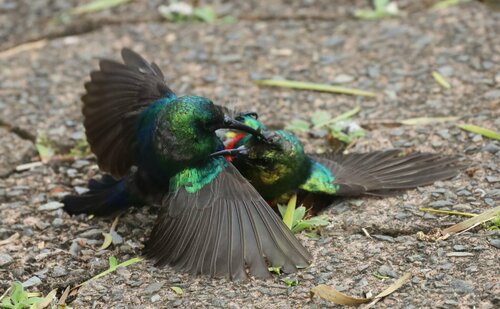
ミナミゴシキタイヨウチョウ (Cinnyris chalybeus) ミナミゴシキタイヨウチョウ
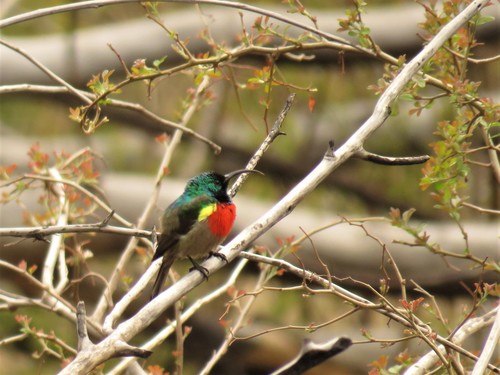
オオゴシキタイヨウチョウ (Cinnyris afer) オオゴシキタイヨウチョウ

メディア

読み込み中…

要点

ミナミゴシキタイヨウチョウとオオゴシキタイヨウチョウを区別する最も信頼できる方法は、成鳥のオスにおけるサイズと赤い胸のバンドの幅によるものです:ミナミは明らかに小さく、赤いバンドがはるかに狭いのに対し、オオは大きく、赤い胸のバンドが広いです。両種は金属的な緑の頭部と上面、狭い青のバンド、そして下向きのくちばしを共有していますが、オオのくちばしは長いです。雌と幼鳥は区別が難しいですが、ミナミは上面がより茶色く、下面がより灰色がかっている傾向があり、オオは全体的により淡い灰色です。構造的な違いと微妙な羽毛の手がかりが重要であり、特に成鳥のオスの繁殖羽毛以外ではそうです。

識別のコツ

  1. 赤い胸のバンドの幅(成鳥のオス): ミナミは明らかに狭い赤い胸のバンドを持ち、オオのものは広くて目立ちます。これは良好な光の下で成鳥のオスのための最も信頼できるフィールドマークです。
  2. 全体のサイズ: ミナミは小さくてコンパクト(12 cm、8 g)で、オオは大きく(14 cm)てより大きいです。一緒に見たり経験があれば、この違いは明確です。
  3. くちばしの長さ: オオはより長く、目立つ下向きのくちばしを持っています。ミナミでは、くちばしは短く、あまり目立ちません。
  4. 下面の色(成鳥のオス): ミナミは赤いバンドの下に白っぽい下面を示し、オオのものは淡い灰色です。これは微妙ですが、良好な光の下では役立ちます。
  5. 雌/幼鳥の色: ミナミの雌/幼鳥は上面が茶色で、下面が黄灰色で、オナガゴシキタイヨウチョウよりも灰色がかっており、ウスグロタイヨウチョウよりも暗いです。オオの雌は全体的に淡い灰色で、翼が暗いです。これは慎重に使用してください。重なりや光が違いを隠す可能性があります。
  6. 黄色い肩の房毛: 両種はディスプレイ時に黄色い房毛を示すため、これは区別には役立ちません。
  7. 目、くちばし、脚、足: 両種ともに暗いです;区別には役立ちません。
  8. 飛行スタイル: 両種は短い翼で速く、直接的に飛びます;区別にはなりません。
  9. 歌と呼び声: ミナミは「チー・チー」と呼び、音色の高い、きらきらした歌を歌います;オオの呼び声は「チュッ・チュッ・チュッ」で、歌はより豊かなツイートやツイッターの混ざり合いです。これらの違いは微妙で、補足的な証拠として使用するのが最適です。
  10. 生息地と範囲: 両種は南アフリカに生息し、重なることがあります。ミナミは居住している可能性が高く、一部の部分的な移動がありますが、これは信頼できるフィールドマークではありません。
  11. 幼鳥/未成熟の羽毛: 両種に特有の上翼や飛行のマークは記載されていないため、非成鳥のオスの構造と微妙な色の違いに依存してください。
  12. 群れのサイズ: ミナミは小さな群れで見られることが多く、オオはペアで見られますが、これは強い区別にはなりません。
  13. 他のタイヨウチョウとの文脈: ミナミの雌はオナガゴシキタイヨウチョウよりも下面が灰色がかっており、ウスグロタイヨウチョウよりも暗いです。これは混合群れで役立つかもしれませんが、オオとの区別にはなりません。
  14. マークが失敗したとき: 悪い光の下や遠くの/雌/幼鳥の鳥では、サイズとくちばしの長さに依存して最も一貫した手がかりを得てください。
  15. 落とし穴: 未成熟の雌鳥は非常に似ており、これらの年齢では胸のバンドの色や幅に依存しないでください。常にサイズ、構造、微妙な色の手がかりの組み合わせを使用してください。

大きさ

ミナミゴシキタイヨウチョウはオオゴシキタイヨウチョウ(14 cm、質量は指定されていませんが、明らかに直接比較で大きい)に比べて小さい(12 cm、8 g)です。フィールドでは、ミナミはより繊細でコンパクトに見え、オオはより大きく、全体的に長く見えます。オオのくちばしも明らかに長く、鳥が並んでいるときには遠くからでも明らかです。

羽色

成鳥のオスは赤い胸のバンドの幅によって最もよく区別されます:ミナミははるかに狭い赤いバンドを持ち、オオのものは広くて目立ちます。両者は金属的な緑の頭部、喉、上胸を持ち、赤い胸のバンドとは狭い金属的な青い線で区切られています。ミナミの下面は白っぽく、オオのものは淡い灰色です。両種のディスプレイするオスは黄色い肩の房毛を示します。雌と幼鳥はより難しいです:ミナミの雌は上面が茶色で、下面が黄灰色で、雌のオナガゴシキタイヨウチョウよりも明らかに灰色がかっており、ウスグロタイヨウチョウよりも暗いです。一方、オオの雌は全体的に淡い灰色で、翼が暗いです。幼鳥は両種の雌に似ているため、構造的および微妙な色の違いが最も役立ちます。両種に特有の年齢に応じた上翼や飛行のマークは記載されていません。

行動

両種は通常、単独または小さな群れ(ミナミ)またはペア(オオ)で見られます。彼らの飛行は速く、短い翼で直接的です。両者は主に止まって蜜を吸いますが、ハチドリのように短時間ホバリングすることもできます。フィールドでの区別のために強い行動の違いは、情報源では強調されていません。

生息環境

両種は南アフリカで繁殖し、範囲が重なることがあります。ミナミゴシキタイヨウチョウは主に居住しており、その範囲の北東部では一部の部分的な移動があります。情報源では強い生息地の区別は記載されていないため、文脈は信頼できる区別にはなりません。

声

両種は高音できらきらした歌と硬い呼び声を持っています。ミナミの呼び声は「チー・チー」と表現され、その歌は高音のきらきらした音符の混ざり合いで、3〜5秒間上昇し下降します。オオの呼び声は「チュッ・チュッ・チュッ」で、その歌は高音のツイートやツイッターの混ざり合いで、ミナミのものよりも豊かだと言われています。実際には、これらの違いは微妙で、両者に非常に精通していない限り診断的ではないかもしれません。

より良い説明を送る

比較と同じ項目を使ってください。文章はすぐに公開されます。

The most reliable way to separate Southern Double-collared Sunbird from Greater Double-collared Sunbird is by size and the width of the red chest band in adult males: Southern is distinctly smaller and has a much narrower red band, while Greater is larger with a broader red chest band. Both species share a metallic green head and upperparts, a narrow blue band, and a decurved bill, but the bill is longer in Greater. Females and immatures are much harder to distinguish, but Southern tends to be browner above and greyer below, while Greater is paler grey overall. Structural differences and subtle plumage cues are key, especially outside adult male breeding plumage.

  1. Red chest band width (adult males): Southern has a noticeably narrower red chest band, while Greater's is broad and bold. This is the single most reliable field mark for adult males in good light.
  2. Overall size: Southern is smaller and more compact (12 cm, 8 g), while Greater is larger (14 cm) and bulkier. If seen together or with experience, this difference is clear.
  3. Bill length: Greater has a longer, more prominent decurved bill. In Southern, the bill is shorter and less striking.
  4. Underparts color (adult males): Southern shows whitish underparts below the red band; Greater's are pale grey. This can be subtle but is useful in good light.
  5. Female/juvenile color: Southern females/juveniles are brown above and yellowish-grey below, tending greyer below than Orange-breasted Sunbird and darker than Dusky Sunbird. Greater females are paler grey overall with darker wings. Use this cautiously, as overlap and light can obscure differences.
  6. Yellow shoulder tufts: Both species show yellow tufts when displaying, so this is not helpful for separation.
  7. Eye, bill, legs, and feet: All are dark in both species; not useful for separation.
  8. Flight style: Both have fast, direct flight on short wings; not a separator.
  9. Song and call: Southern gives a 'chee-chee' call and a high-pitched, tinkling song; Greater's call is 'chut-chut-chut' and its song is a richer jumble of tweets and twitters. These differences are subtle and best used as supporting evidence.
  10. Habitat and range: Both occur in southern Africa and can overlap. Southern is more likely to be resident, with some partial migration, but this is not a reliable field mark.
  11. Juvenile/immature plumage: No distinctive upperwing or flight marks are described for either species, so rely on structure and subtle color differences in non-adult males.
  12. Group size: Southern is more often seen in small groups, Greater in pairs, but this is not a strong separator.
  13. Context with other sunbirds: Southern female is greyer below than Orange-breasted Sunbird and darker than Dusky Sunbird, which may help in mixed flocks but not for separating from Greater.
  14. When marks fail: In poor light or with distant/female/immature birds, rely on size and bill length as the most consistent clues.
  15. Pitfalls: Immature and female birds are very similar; do not rely on chest band color or width in these ages. Always use a combination of size, structure, and subtle color cues.

Southern Double-collared Sunbird is smaller (12 cm, 8 g) compared to Greater Double-collared Sunbird (14 cm, mass not specified but clearly larger in direct comparison). In the field, Southern appears more delicate and compact, while Greater looks bulkier and longer overall. The bill of Greater is also noticeably longer, which can be apparent even at a distance if the birds are side by side.

Adult males are best separated by the width of the red chest band: Southern has a much narrower red band, while Greater's is broad and prominent. Both have a metallic green head, throat, and upper breast, separated from the red chest band by a narrow metallic blue line. The underparts of Southern are whitish, while Greater's are pale grey. Displaying males of both species show yellow shoulder tufts. Females and juveniles are more challenging: Southern females are brown above and yellowish-grey below, noticeably greyer than female Orange-breasted Sunbird and darker below than Dusky Sunbird, while Greater females are pale grey with darker wings. Juveniles resemble females in both species, so structural and subtle color differences are most helpful. There are no distinctive age-specific upperwing or flight marks described for either species.

Both species are usually seen singly or in small groups (Southern) or pairs (Greater). Their flight is fast and direct on short wings. Both take nectar primarily by perching, but can hover briefly like hummingbirds. There are no strong behavioral differences highlighted in the sources for field separation.

Both species breed in southern Africa and can overlap in range. Southern Double-collared Sunbird is mainly resident, with some partial migration in the northeast of its range. No strong habitat separation is noted in the sources, so context is not a reliable separator.

Both species have high-pitched, tinkling songs and hard calls. Southern's call is described as a 'chee-chee' and its song as a high-pitched jumble of tinkling notes, rising and falling for 3–5 seconds. Greater's call is a 'chut-chut-chut', and its song is a high-pitched jumble of tweets and twitters, said to be richer than Southern's. In practice, these differences are subtle and may not be diagnostic unless you are very familiar with both.

変更を破棄しますか?

保存していない編集があります。今離れると失われます。

ミナミゴシキタイヨウチョウ · オオゴシキタイヨウチョウ · 苦手な鳥