

Motmot

ハシブトホオダレムクドリ 対 ホオダレムクドリ

Callaeas cinereus 対 Heteralocha acutirostris

ハシブトホオダレムクドリとホオダレムクドリのクイズ
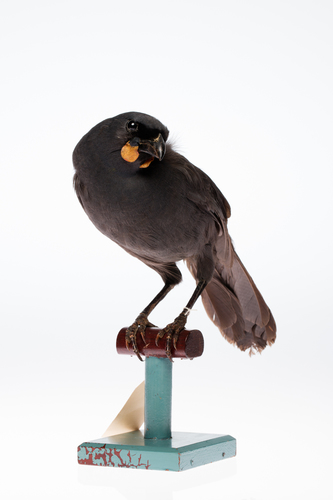
ハシブトホオダレムクドリ (Callaeas cinereus) ハシブトホオダレムクドリ
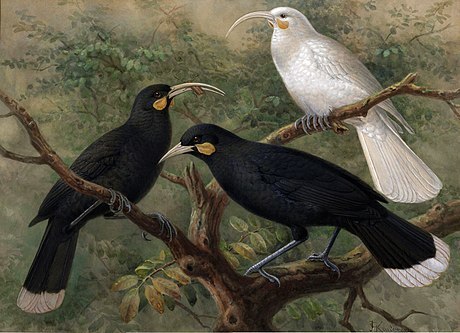
ホオダレムクドリ (Heteralocha acutirostris) ホオダレムクドリ

メディア

読み込み中…

要点

南島コカコとホオダレムクドリを区別する最も信頼できる方法は、ワットルと尾を観察することです:南島コカコは主にオレンジ色のワットルを持ち、青い基部と平坦なスレートグレーの尾を持っていますが、ホオダレムクドリは明るいオレンジ色のワットルと大胆な白い先端を持つ長い黒い尾を示します。飛んでいる時や止まっている時でも、ホオダレムクドリの尾の模様はユニークで、未成熟個体でも確認できます。くちばしの形も診断的です:ホオダレムクドリは極端な性差を示し、雌は長く湾曲した象牙色のくちばしを持ち、雄ははるかに短く、わずかに弓なりのくちばしを持っていますが、南島コカコのくちばしは短くて暗いです。どちらも絶滅またはほぼ絶滅していますが、歴史的記録や稀な目撃情報では混乱が生じる可能性があります。未成熟のホオダレムクドリは小さな淡いワットルと茶色の斑点のある羽毛で区別できますが、それでも尾の模様は重要な特徴です。

識別のコツ

  1. 尾の模様は最も信頼できるフィールドマークです: すべての年齢のホオダレムクドリは、幅広い白い先端を持つ長い黒い尾(2.5〜3 cm)を持ち、飛んでいる時や止まっている時に確認できます。南島コカコの尾は平坦なスレートグレーで白はありません。
  2. ワットルの色と形: 南島コカコは主にオレンジ色のワットルを持ち、小さな青い基部がありますが、ホオダレムクドリのワットルは明るいオレンジ色で丸みを帯びています。若いコカコは淡いワットルを持ち、若いホオダレムクドリは小さな淡いワットルを持っています。
  3. くちばしの形(特にホオダレムクドリの場合): ホオダレムクドリは極端な性差を示します:雌は長く、細く、湾曲した象牙色のくちばしを持ち、雄は短く、わずかに曲がったくちばしを持っています。南島コカコのくちばしは短く、暗く、決して湾曲していません。長く下向きに湾曲した象牙色のくちばしを持つ鳥を見た場合、それは雌のホオダレムクドリです。
  4. 羽毛の色: 南島コカコは小さな黒いマスクを持つ淡いスレートグレーの鳥ですが、ホオダレムクドリは光沢のある黒で緑がかった光沢があります。未成熟のホオダレムクドリは鈍い色合いで茶色の斑点があり、全体的には黒っぽいです。
  5. 未成熟/幼鳥の特徴: 若いホオダレムクドリは茶色の斑点のある鈍い羽毛と白い尾の先端に赤褐色の色合いを持っていますが、尾の模様は常に存在します。若いコカコは淡いワットルを持っていますが、その他は成鳥に似ています。
  6. サイズと構造: ホオダレムクドリはより大きく、より細長く、はるかに長い尾を持ち、雌は長い湾曲したくちばしを持っています。コカコはよりコンパクトで、尾と脚が短いです。
  7. 飛行と印象: 飛行中、ホオダレムクドリの長い白い先端の尾は明らかです;コカコはよりコンパクトで平坦に見えます。
  8. 生息地と範囲: 南島コカコは南島/スチュワート島の森林にのみ見られ、ホオダレムクドリは特定の山脈において北島に厳密に生息していました。これらの地域外での目撃はほぼ確実に無効です。
  9. 行動: コカコは地面で過ごす時間が多く、ホオダレムクドリはより樹上性で木を探ることに特化していました。
  10. 声: 聞こえた場合、コカコの柔らかくオルガンのような二重唱は特徴的です;ホオダレムクドリの鳴き声はあまり知られていません。
  11. 性差: ホオダレムクドリだけが極端なくちばしの性差を示し、コカコの両性は似ています。
  12. 落とし穴: 照明が悪い場合、コカコの淡い灰色は暗く見えることがありますが、白い尾の先端がないこととワットルの色は診断的です。
  13. 歴史的背景: 両者は絶滅またはほぼ絶滅しており、現代の目撃情報は確認されておらず、これらの特徴を精査する必要があります。
  14. 北島コカコとの混同: 南島コカコはわずかに淡く、北島の親戚とは異なるワットルの色を持っていますが、尾とくちばしのためにホオダレムクドリと混同されることはありません。
  15. 写真証拠: 目撃が主張される場合、同定を確認するために尾とくちばしの明確な視界を要求してください。

大きさ

ホオダレムクドリは二者の中で大きく、雄は約45 cm、雌は最大48 cmの長さに達し、特に長い尾(約20 cm)を持っています。南島コカコはより小さく、よりコンパクトで、平均体重は230gですが、直接の長さは示されていません;全体的に見てあまり細長くありません。ホオダレムクドリの翼幅(20〜22 cm)はコカコの体よりも大きくはありませんが、尾がその長く優雅な外観を引き立てています。コカコは比較的頑丈で、尾が短いです。

羽色

幼鳥と未成熟のホオダレムクドリは尾によって南島コカコと簡単に区別できます:若いホオダレムクドリでも幅広い白い先端を持つ長い黒い尾を示し、時には赤褐色の色合いを持っていますが、コカコの尾は平坦なスレートグレーです。未成熟のホオダレムクドリは小さな淡いワットルと茶色の斑点のある鈍い羽毛を持っていますが、尾の模様は常に存在します。成鳥の南島コカコは全体的に淡いスレートグレー(北島コカコよりやや明るい)で、小さな黒いマスクと青い基部を持つ特徴的なオレンジ色のワットルを持っています;若いコカコははるかに淡いワットルを持っています。成鳥のホオダレムクドリは光沢のある黒で緑がかった光沢があり、目立つオレンジ色のワットルと間違いのない白い先端の尾を持っています。ホオダレムクドリはくちばしの形において性差を示しますが、両性は同じ羽毛と尾の模様を共有しています。要約すると、尾の模様(ホオダレムクドリ)とワットルの色(コカコ)は最も年齢に依存しない特徴です。

行動

南島コカコは北島の親戚よりも地上性が強く、しばしば地面近くで採餌や巣作りを行っていましたが、飛ぶのが得意でした。対照的にホオダレムクドリは樹上性で、無脊椎動物を探ることに特化しており、くちばしの形の違いにより、性別で異なる採餌技術を使用していました。コカコの行動には地面で過ごす時間が多く、ホオダレムクドリはより頻繁に木や幹に見られました。両者は密な森林を静かに移動することができましたが、ホオダレムクドリの採餌はしばしばより体系的で特化していました。

生息環境

南島コカコは南島とスチュワート島の成熟した密な森林に見られ、しばしば湿った、より完全な地域に生息していました。ホオダレムクドリは北島の南部の山の森林に限定されており、特にルアヒネ、タラルア、レムタカ、カイマナワの山脈に生息していました。両者は古い成長の森林を必要としましたが、その範囲は決して重なりませんでした。これらの歴史的な範囲外での現代の報告は非常に疑わしいです。

声

南島コカコはオルガンやフルートのような二重唱で知られ、柔らかく甘い音色で音符は少ないです。ホオダレムクドリの声はこれらのメモに詳細に記述されていませんが、同様の二重唱で知られていません。コカコの歌は聞こえた場合、より音楽的で特徴的ですが、実際には両種の希少性/絶滅のため、鳴き声はフィールドマークになる可能性は低いです。

より良い説明を送る

比較と同じ項目を使ってください。文章はすぐに公開されます。

The most reliable way to separate South Island Kokako from Huia is by looking at the wattles and tail: South Island Kokako has mainly orange wattles with a blue base and a plain, slate-grey tail, while Huia shows bright orange wattles and a striking long black tail with bold white tips. In flight or perched, Huia’s tail pattern is unique and visible even on immatures. Bill shape is also diagnostic: Huia shows extreme sexual dimorphism, with the female’s long, decurved ivory bill and the male’s much shorter, slightly arched bill, while South Island Kokako’s bill is short and dark. Both are extinct or nearly so, but confusion can arise in historical records or rare sighting claims. Immature Huia can be told by their smaller pale wattles and brown-flecked plumage, but even then, the tail pattern remains a key mark.

  1. Tail pattern is the most reliable field mark: Huia of all ages has a long black tail with broad white tips (2.5–3 cm), visible in flight and when perched. South Island Kokako’s tail is plain slate-grey with no white.
  2. Wattle color and shape: South Island Kokako has mostly orange wattles with a small blue base, while Huia’s wattles are bright orange and rounded. Young Kokako have paler wattles; young Huia have small pale wattles.
  3. Bill shape (especially in Huia): Huia shows extreme sexual dimorphism: females have a long, slender, decurved ivory bill; males have a shorter, slightly curved bill. South Island Kokako’s bill is short, dark, and never decurved. If you see a bird with a long, downcurved ivory bill, it is a female Huia.
  4. Plumage color: South Island Kokako is a paler, slate-grey bird with a small black mask; Huia is glossy black with a greenish sheen. Immature Huia is duller, flecked with brown, but still blackish overall.
  5. Immature/juvenile marks: Young Huia have brown-flecked, duller plumage and a reddish-buff tinge to the white tail tips, but the tail pattern is always present. Young Kokako have lighter wattles but otherwise resemble adults.
  6. Size and structure: Huia is larger and more elongated, with a much longer tail and, in females, a long decurved bill. Kokako is more compact, with a shorter tail and legs.
  7. Flight and jizz: In flight, Huia’s long white-tipped tail is obvious; Kokako appears more compact and plain.
  8. Habitat and range: South Island Kokako was only found in South Island/Stewart Island forests; Huia was strictly North Island, in specific mountain ranges. Any sighting outside these areas is almost certainly not valid.
  9. Behavior: Kokako spent more time on the ground; Huia was more arboreal and specialized in probing wood.
  10. Voice: If heard, Kokako’s mellow, organ-like duets are distinctive; Huia’s call is less well known.
  11. Sexual dimorphism: Only Huia shows extreme bill dimorphism; both sexes of Kokako look similar.
  12. Pitfalls: In poor light, Kokako’s paler grey can look dark, but the lack of a white tail tip and the wattle color remain diagnostic.
  13. Historical context: Both are extinct or nearly so; modern sightings are unconfirmed and should be scrutinized for these marks.
  14. Confusion with North Island Kokako: South Island Kokako is slightly paler and has different wattle color than its North Island relative, but neither can be confused with Huia due to tail and bill.
  15. Photographic evidence: For any claimed sighting, insist on a clear view of the tail and bill to confirm identity.

Huia was the larger of the two, with males reaching about 45 cm and females up to 48 cm in length, and a notably long tail (about 20 cm). South Island Kokako was smaller and more compact, with an average weight of 230g but no direct length given; it was less elongated overall. Huia’s wingspan (20–22 cm) is not much greater than Kokako’s body, but the tail adds to its long, elegant appearance. Kokako is more robust and shorter-tailed in comparison.

Juvenile and immature Huia are easily separated from South Island Kokako by their tail: even young Huia show a long black tail with broad white tips, sometimes with a reddish-buff tinge, while Kokako’s tail is plain slate-grey. Immature Huia also have small pale wattles and brown-flecked, duller plumage, but the tail pattern is always present. Adult South Island Kokako is overall paler slate-grey (slightly lighter than North Island Kokako), with a small black mask and distinctive orange wattles with a blue base; young Kokako have much paler wattles. Adult Huia is glossy black with a greenish sheen, prominent orange wattles, and the unmistakable white-tipped tail. Huia also shows sexual dimorphism in bill shape, but both sexes share the same plumage and tail pattern. In summary, tail pattern (Huia) and wattle color (Kokako) are the best age-independent marks.

South Island Kokako was more terrestrial than its North Island relative, often foraging and nesting close to the ground but was a better flier. Huia, in contrast, was arboreal and specialized in probing wood for invertebrates, with the sexes using different foraging techniques due to their bill shapes. Kokako’s behavior included more time on the ground, while Huia was more often seen in trees or on trunks. Both could move quietly through dense forest, but Huia’s foraging was often more methodical and specialized.

South Island Kokako was found in mature, dense forests of the South Island and Stewart Island, often in wetter, more intact tracts. Huia was confined to southern North Island mountain forests, especially in the Ruahine, Tararua, Rēmutaka, and Kaimanawa ranges. Both required old-growth forest, but their ranges never overlapped. Any modern report outside these historical ranges is highly suspect.

South Island Kokako was known for its organ- and flute-like duets, with mellow, sweet, and few notes. Huia’s voice is not described in detail in these notes, but is not known for similar duetting. Kokako’s song would be more musical and distinctive if heard, but in practice, vocalizations are unlikely to be a field mark due to both species’ rarity/extinction.

変更を破棄しますか?

保存していない編集があります。今離れると失われます。

ハシブトホオダレムクドリ · ホオダレムクドリ · 苦手な鳥