

アオシギ 対 オオジシギ
Gallinago solitaria 対 Gallinago hardwickii
アオシギとオオジシギのクイズ
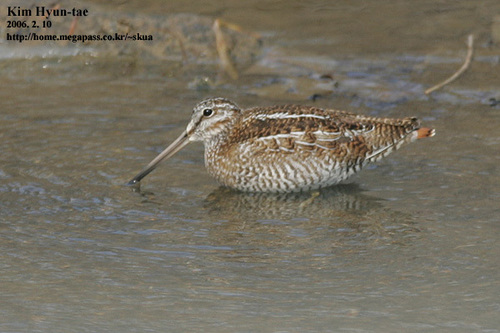 アオシギ
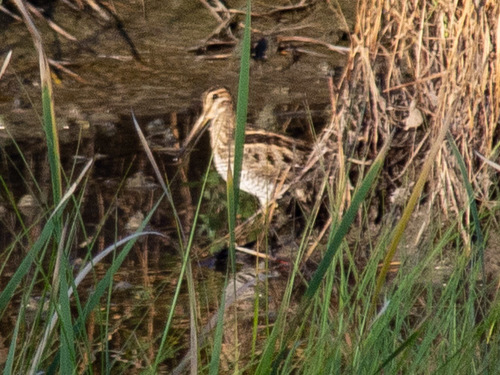 オオジシギ
要点
The most reliable field mark between Solitary Snipe and Latham's Snipe is overall structure and jizz: Solitary Snipe is distinctly stockier with shorter legs, and shows a slower, heavier flight, while Latham's Snipe is slimmer and longer-legged, with a more typical snipe flight. Both species have cryptic brown, black, and white plumage, and are very similar in size, but Solitary Snipe’s heavier build and relatively short legs are distinctive when seen well. In perched or flushed views, focus on body shape and leg length rather than subtle plumage details, as both species share similar streaked and barred patterns. Separation in the field can be challenging, especially in poor light or at a distance, so structural differences are key.
識別のコツ
- Structure is key: Solitary Snipe is stockier and heavier-bodied, with noticeably shorter legs for a snipe. Latham's Snipe is slimmer and longer-legged, with a more typical snipe silhouette. This is most apparent when birds are standing or walking.
- Flight jizz: Solitary Snipe has a slow, heavy, and direct flight, often dropping quickly back into cover. Latham's Snipe flushes more rapidly and with a lighter, zigzag flight typical of Gallinago snipes.
- Leg color and length: Solitary Snipe has yellowish-olive to yellowish-brown legs that look short for a snipe; Latham's Snipe's legs are longer and more typical for the group, but color is not a strong separator.
- Bill: Both have long, straight, fairly slender bills; bill shape and length are not reliably different in the field.
- Upperpart pattern: Both species have heavily streaked and lined upperparts with brown, black, and white, but Solitary Snipe's feather edges form more distinct lines down the back. This is subtle and not always visible.
- Face and breast: Solitary Snipe shows a whitish face and a ginger-brown breast; Latham's Snipe has a similar face pattern but is less distinctly described. Use with caution.
- Belly and flanks: Both have white bellies with brown barring on the flanks. This is not a separator.
- Behavior when flushed: Solitary Snipe often crouches and relies on camouflage, flushing only when closely approached and then flying slowly and dropping back into cover. Latham's Snipe is more likely to flush at a greater distance and fly further.
- Habitat context: If in a high-altitude bog or river valley above the timberline in the Palearctic, Solitary Snipe is more likely. In lowland or migratory wetlands in East Asia or Australasia, Latham's Snipe is more probable.
- Vocalizations: If you hear a hoarse 'kensh' or a far-carrying 'chok-a-chok-a' call, or the drumming of tail feathers in aerial display, it's Solitary Snipe. Latham's Snipe's calls are not described here.
- Subspecies variation: Solitary Snipe japonica is richer red above, but this is subtle and not a primary field mark.
- Sex and age: Females of both species are slightly larger, but this is not useful in the field. No age-specific wing or flight pattern differences are noted.
- Plumage pitfalls: Both species are extremely similar in plumage and can be confused with other Gallinago snipes; structure and behavior are more reliable than color or pattern.
- Seasonal context: Solitary Snipe is resident or altitudinal migrant in the Palearctic; Latham's Snipe is a long-distance migrant, so timing and location can help.
- When in doubt: If plumage is ambiguous, rely on jizz (structure and flight) and habitat context for the best chance of a correct ID.
大きさ
Both species are very similar in length, with Solitary Snipe at 29–31 cm and Latham's Snipe at 29–33 cm. Latham's Snipe has a recorded mean body mass of about 153 g, but both overlap broadly in weight (Latham's: 150–230 g). Size alone is not a reliable separator in the field, but Solitary Snipe appears heavier and bulkier, while Latham's Snipe is more medium-built and slightly longer-winged. Females of both species may be larger, but this is not useful for field identification.
羽色
No age-specific wing or upperwing pattern differences are documented between these two species in the available sources, so focus shifts to overall plumage and structure. Both show cryptic, streaked upperparts with brown, black, and buff tones, and both have white bellies with barring on the flanks. Solitary Snipe has a ginger-brown breast and a whitish face, with medium brown stripes and whitish feather edges forming lines down the back. Latham's Snipe is described as having a similar cryptic pattern, with no unique field marks noted for juveniles or immatures. Subspecies of Solitary Snipe (notably japonica) may appear richer red above, but this is subtle and not a primary field mark. In summary, plumage is not reliably diagnostic; structure and behavior are more useful.
行動
Solitary Snipe is notably approachable and tends to crouch and rely on camouflage when disturbed, often dropping back into marsh vegetation after a short, slow flight. Its flight is heavy and relatively slow for a snipe. Latham's Snipe, while not specifically described in the notes for behavior, is implied to have a more typical snipe flush and flight, which is faster and less heavy than Solitary Snipe. Both forage by probing mud with their long bills, but Solitary Snipe’s tendency to remain motionless and its sluggish flush are distinctive.
生息環境
Solitary Snipe breeds in high-altitude mountain bogs and river valleys above the timberline (2,400–5,000 m), and uses similar marshes and swamps at lower elevations outside the breeding season. Latham's Snipe is migratory along the East Asian–Australasian Flyway and breeds in northern Japan (Hokkaido) and migrates to Australia, using a variety of wetland habitats. Both can be found in marshes and swamps, but Solitary Snipe is more closely tied to high-altitude or northern Palearctic locations, while Latham's Snipe is more likely in lowland or migratory stopover wetlands in East Asia and Australasia.
声
Solitary Snipe gives a hoarse 'kensh' call when flushed and a far-carrying 'chok-a-chok-a' call during display, as well as a drumming sound produced by its tail feathers in aerial display. No specific vocalizations are described for Latham's Snipe in the available notes, so vocal differences are not a reliable separator unless Solitary Snipe's display is heard.