

Motmot

ハクガン 対 マガン

Anser caerulescens 対 Anser albifrons

ハクガンとマガンのクイズ
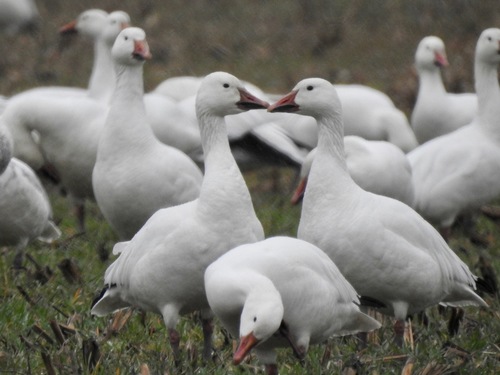
ハクガン (Anser caerulescens) ハクガン
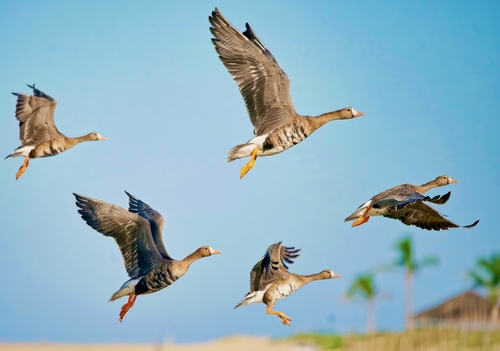
マガン (Anser albifrons) マガン

メディア

読み込み中…

要点

ハクガンとマガンを区別するための最も信頼できるフィールドマークは全体の羽色です:成鳥のハクガンは、黒い翼先端を持つ純白(白色型)または主に青灰色で白い頭(青色型)を持つのに対し、マガンは常に灰褐色で、くちばしの基部に白い顔の斑点があり、変動する暗い腹部の縞模様があります。幼鳥のハクガン(特に青色型)は地味な灰色で、マガンの白い顔の斑点がありません。くちばしの色と形も異なります:ハクガンは明確な黒い「笑いの斑点」を持つピンクのくちばしを持ち、マガンはそのような斑点のないピンクがかったまたはオレンジ色のくちばしを持ちます。飛行中、ハクガンは白(または青灰色)の翼と対照的な黒い初級羽を示し、マガンは微妙な淡い翼の縞模様を持つ均一な灰褐色の翼を示します。両種は移動中や冬に大きな群れで一緒に見られることがありますが、これらのマークに注意を払うことで区別できます。

識別のコツ

  1. Plumage morphs (all ages): ハクガンは二つの形態—白(全て白で黒い翼先端)と青(青灰色の体で白い頭/首)があります。マガンは常に灰褐色で白い顔の斑点を持ち、ハクガンの純白または青灰色のパターンを示すことはありません。
  2. Juvenile/immature contrast: 幼鳥のハクガン(特に青色型)は地味な灰色で白い顔の斑点がなく、幼鳥のマガンは灰褐色ですが、すでにくちばしの基部に白い斑点を示します。
  3. Facial pattern: マガンは常にくちばしの基部に白い斑点(「白い前面」)を持ち、幼鳥でもそうです。ハクガンはこの特徴を示しません。
  4. Bill color and pattern: ハクガンは明確な黒い「笑いの斑点」(くちばしの暗い縁)を持つピンクのくちばしを持ち、近距離で見えます。マガンはピンクがかったまたはオレンジ色のくちばしを持ち、時には暗い爪がありますが、黒い笑いの斑点はありません。
  5. Leg color: 両者は赤みがかったまたはオレンジ色の脚を持ちますが、ハクガンの脚はバラ色で、マガンの脚は明るいオレンジ色です。これは微妙で、フィールドでは常に信頼できるわけではありません。
  6. Belly barring: 成鳥のマガンはしばしば腹部に暗い斑点や縞模様を示しますが、これは変動的で常に存在するわけではありません。ハクガンは腹部の縞模様を示しません。
  7. Flight pattern (all ages): 飛行中、ハクガンは白(または青灰色)の翼と対照的な黒い初級羽を示し、マガンは均一な灰褐色の翼を持ち、微妙な淡い翼の縞模様があり、初級羽と覆羽の間に強い対照はありません。
  8. Head and neck color: 青色型のハクガンは白い頭と首を持ち、青灰色の体と対照的です;マガンは均一な灰褐色の頭と首を持ち、白い顔の斑点があります。
  9. Rusty head staining: ハクガンは鉄分の多い土壌で餌を食べることから頭に錆びた汚れを示すことがありますが、これはマガンのマークではありません。
  10. Size and structure: 両者はサイズと形が似ています;フィールドで区別するためにサイズに頼らないでください。
  11. Vocalizations: ハクガンの鳴き声は大きく、鼻にかかったホーンです;マガンは高音のカッカッという音を出し(「へへ」)、音の間に明確な間があります。群れの中でこれらの違いを聞いてください。
  12. Flock composition: ハクガンはしばしば巨大で密な群れを形成します;マガンは少数または混合群れで存在することがあります。
  13. Bill shape: ハクガンのくちばしはより三角形で、顕著な笑いの斑点があります;マガンのくちばしは短く、よりテーパー状で、笑いの斑点がありません。
  14. Tail pattern: 北アメリカでは、両者は白い縁を持つ暗い尾を持ち、これら二つの間で診断的ではありませんが、マガンの白は一部の亜種でより広いです。
  15. Season and context: 両種は移動中や冬に一緒に発生します;特に混合群れでは、羽色、くちばし、顔のパターンの組み合わせを常に確認してください。

大きさ

両種はサイズが似ており、ハクガンは平均約2630 g [wikidata]、マガンは1.93–3.31 kg [wikipedia]の範囲です。長さと翼幅は重なります:ハクガンは64–79 cmの高さで、135–165 cmの翼幅を持ち、マガンは64–81 cmの長さで、130–165 cmの翼幅を持ちます。フィールドでは、サイズだけでは信頼できる区別にはならず、特に距離がある場合や混合群れでは似て見えることがあります。

羽色

幼鳥と未成熟のハクガン、特に青色型は全体的に地味またはスレートグレーで、頭、首、腹部にほとんど白がなく、マガンの白い顔の斑点がありません。成鳥のハクガンは、黒い翼先端を持つ全て白(白色型)または青灰色の体に白い頭と首(青色型)を持ちます;両方の形態はピンクのくちばしと脚を持ち、くちばしには黒い「笑いの斑点」があります。マガンは年齢に関係なく灰褐色で、くちばしの基部に白い斑点(「白い前面」)を持ち、オレンジ色またはピンクがかった脚を持ち、黒い笑いの斑点のないピンクがかったまたはオレンジ色のくちばしを持ちます。成鳥は腹部に変動する暗い縞模様を持ち、広範囲にわたることがありますが、常に存在するわけではありません。飛行中、ハクガン(すべての年齢)は翼の残りと鋭く対照的な黒い初級羽を示し、マガンは均一な灰褐色の翼を持ち、微妙な淡い翼の縞模様があり、初級羽と覆羽の間に強い対照はありません。幼鳥のマガンは腹部の縞模様がありませんが、白い顔の斑点は示します。

行動

両種は非常に群れを成す傾向があり、特に移動中や冬に大きな群れで見られます。彼らは開けた野原や湿地で餌を食べ、通常は残った穀物や自然の植物を食べます。ハクガンは特に巨大で騒がしい群れを形成することで知られ、時には数千羽に達します。マガンも大きな群れを形成しますが、しばしばやや密度が低く、ハクガンを含む他のガチョウ種と混ざることがあります。

生息環境

両種は移動中や冬に似た生息地を共有します:開けた農業用地、湿地、そして沼地。ハクガンはより数が多く、特に農業地域では大きな群れの中で支配的な種であることが多いです。マガンは同じ地域に見られることがありますが、一般的には数が少なく、同じ景観内でやや湿ったり、あまり干渉されていない場所を好むことがあります。

声

ハクガンは非常に声が大きく、遠くからでも聞こえる大きな鼻にかかったホーンの鳴き声を出します。マガンは特徴的な高音のカッカッという鳴き声を持ち、しばしば「へへ」と表現され、音の間に明確な間があります。鳴き声はトーンとリズムがかなり異なり、ハクガンはより騒がしく、マガンはより音楽的でカッカッとしたものです。

より良い説明を送る

比較と同じ項目を使ってください。文章はすぐに公開されます。

The most reliable field mark for separating Snow Goose from Greater White-fronted Goose is overall plumage: adult Snow Geese are either pure white with black wingtips (white morph) or mostly bluish-gray with a white head (blue morph), while Greater White-fronted Geese are always gray-brown with a white face patch at the bill base and variable dark belly barring. Juvenile Snow Geese (especially blue morph) are drab gray and lack the white facial blaze of Greater White-fronted. Bill color and shape also differ: Snow Goose has a pink bill with a distinct black 'grin patch,' while Greater White-fronted has a pinkish or orange bill without such a patch. In flight, Snow Geese show black primaries contrasting with white (or blue-gray) wings, while Greater White-fronted show uniform gray-brown wings with subtle pale wing bars. Both species can be found together in large flocks in migration and winter, but careful attention to these marks will separate them.

  1. Plumage morphs (all ages): Snow Goose comes in two morphs—white (all white with black wingtips) and blue (bluish-gray body with white head/neck). Greater White-fronted Goose is always gray-brown with a white face patch and never shows the pure white or blue-gray patterns of Snow Goose.
  2. Juvenile/immature contrast: Juvenile Snow Geese (especially blue morph) are drab gray with no white facial blaze, while juvenile Greater White-fronted Geese are gray-brown but already show the white patch at the bill base.
  3. Facial pattern: Greater White-fronted Goose always has a white patch at the base of the bill ('white front'), even in juveniles. Snow Goose never shows this feature.
  4. Bill color and pattern: Snow Goose has a pink bill with a distinct black 'grin patch' (the dark edge of the bill), visible at close range. Greater White-fronted Goose has a pinkish or orange bill, sometimes with a dark nail but never a black grin patch.
  5. Leg color: Both have reddish or orange legs, but Snow Goose's are rose-red, while Greater White-fronted's are bright orange. This is subtle and not always reliable in the field.
  6. Belly barring: Adult Greater White-fronted Geese often show dark blotches or bars on the belly, but this is variable and not always present. Snow Geese never show belly barring.
  7. Flight pattern (all ages): In flight, Snow Geese show black primaries sharply contrasting with white (or blue-gray) wings; Greater White-fronted Geese have uniform gray-brown wings with subtle pale wing bars and no strong contrast between primaries and coverts.
  8. Head and neck color: Blue-morph Snow Geese have a white head and neck contrasting with a blue-gray body; Greater White-fronted Geese have a uniform gray-brown head and neck with a white face patch.
  9. Rusty head staining: Snow Geese may show rusty staining on the head from feeding in iron-rich soils, but this is not a mark of Greater White-fronted.
  10. Size and structure: Both are similar in size and shape; do not rely on size to separate them in the field.
  11. Vocalizations: Snow Goose calls are loud, nasal honks; Greater White-fronted Goose gives high-pitched cackling notes ('he-he'). Listen for these differences in flocks.
  12. Flock composition: Snow Geese often form massive, dense flocks; Greater White-fronted Geese may be present in smaller numbers or mixed flocks.
  13. Bill shape: Snow Goose bill is more triangular with a pronounced grin patch; Greater White-fronted bill is shorter, more tapered, and lacks the grin patch.
  14. Tail pattern: Not diagnostic between these two in North America, as both have dark tails with white edges, but Greater White-fronted's white is broader on some subspecies.
  15. Season and context: Both species occur together in migration and winter; always check for the combination of plumage, bill, and face pattern, especially in mixed flocks.

Both species are similar in size, with Snow Goose averaging about 2630 g [wikidata] and Greater White-fronted Goose ranging from 1.93–3.31 kg [wikipedia]. Length and wingspan overlap: Snow Goose stands 64–79 cm tall with a 135–165 cm wingspan, while Greater White-fronted is 64–81 cm long with a 130–165 cm wingspan. In the field, size alone is not a reliable separator, as both can appear similar, especially at a distance or in mixed flocks.

Juvenile and immature Snow Geese, especially blue morphs, are drab or slate-gray overall with little to no white on the head, neck, or belly, and lack the white facial blaze of Greater White-fronted Goose. Adult Snow Geese are either all white with black wingtips (white morph) or have a white head and neck with a bluish-gray body (blue morph); both morphs have pink bills and legs, with a black 'grin patch' on the bill. Greater White-fronted Geese, regardless of age, are grayish-brown with a white patch at the base of the bill (the 'white front'), orange or pinkish legs, and a pinkish or orange bill without a black grin patch. Adults have variable dark barring on the belly, which can be extensive but is not always present. In flight, Snow Geese (all ages) show black primaries contrasting sharply with the rest of the wing, while Greater White-fronted show uniform gray-brown wings with subtle pale wing bars and no strong contrast between primaries and coverts. Juvenile Greater White-fronted Geese lack the belly barring but still show the white facial blaze.

Both species are highly gregarious, often seen in large flocks, especially during migration and winter. They feed in open fields and wetlands, usually on leftover grain or natural vegetation. Snow Geese are particularly known for forming massive, noisy flocks, sometimes numbering in the thousands. Greater White-fronted Geese also form large groups but are often somewhat less dense and may mix with other goose species, including Snow Geese.

Both species share similar habitats in migration and winter: open agricultural fields, wetlands, and marshes. Snow Geese tend to be more numerous and are often the dominant species in large flocks, especially in agricultural areas. Greater White-fronted Geese may be found in the same areas but are generally less abundant and may prefer slightly wetter or less disturbed sites within the same landscape.

Snow Geese are extremely vocal, producing loud, nasal honking calls that can be heard from a great distance. Greater White-fronted Geese have a distinctive high-pitched cackling call, often described as 'he-he,' with a noticeable break between notes. The calls are quite different in tone and rhythm, with Snow Goose being more raucous and Greater White-fronted more musical and cackling.

変更を破棄しますか?

保存していない編集があります。今離れると失われます。

ハクガン · マガン · 苦手な鳥