

Motmot

オオハシカッコウ 対 キバラオオタイランチョウ

Crotophaga ani 対 Pitangus sulphuratus

オオハシカッコウとキバラオオタイランチョウのクイズ
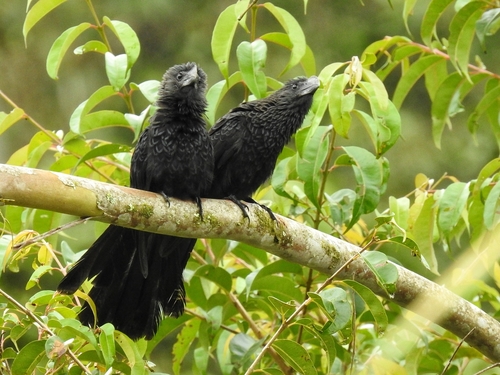
オオハシカッコウ (Crotophaga ani) オオハシカッコウ
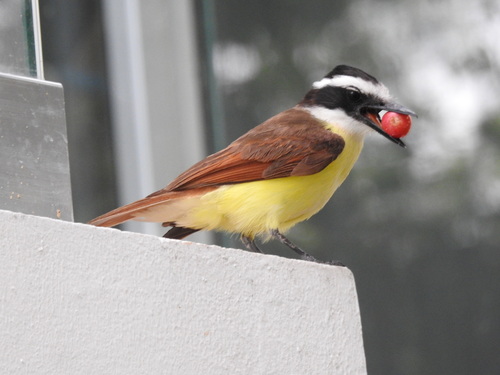
キバラオオタイランチョウ (Pitangus sulphuratus) キバラオオタイランチョウ

メディア

読み込み中…

要点

最も信頼できるフィールドマークは羽毛です:キバラオオタイランチョウは黒と白の頭部と明るい黄色の腹部で大胆に模様が描かれていますが、オオハシカッコウは完全に光沢のある黒です。遠くからでも、または飛行中でも、カッコウの長くて柔らかい尾と全体が黒い外観は、タイランチョウの目を引く頭の模様と黄色い腹部と鮮やかに対比します。構造的には、カッコウはより大きくて細長く、長くて深く溝のあるくちばしを持っていますが、タイランチョウはずんぐりしていて短くて太いくちばしを持っています。どちらも騒がしく目立ちますが、彼らの鳴き声や社会的行動は著しく異なります。

識別のコツ

  1. 羽毛:全体が黒い vs. 黄色と模様がある – オオハシカッコウは全体が光沢のある黒です;キバラオオタイランチョウは明るい黄色の腹部、茶色の上面、そして大胆な黒と白の頭部の模様を持っています。これは、どの年齢や季節でも最も即時的で信頼できる違いです。
  2. 頭の模様 – カッコウの頭は単色の黒で、茶色の虹彩があります;タイランチョウは黒い冠とマスク、白い眉斑、時には黄色の冠のストライプ(しばしば隠れている)を持っています。カッコウはこの頭の模様を示すことはありません。
  3. くちばしの形とサイズ – カッコウは長くて深く、強く溝のあるくちばしを持っています(滑らかで弓状の上嘴);タイランチョウのくちばしは短くて太く、まっすぐで、カッコウの深い溝がありません。
  4. 尾の長さと形 – カッコウの尾は長くて柔らかく、しばしば低く持たれたり扇状に広げられたりします;タイランチョウの尾は短くてまっすぐで、フライキャッチャーに典型的です。
  5. 飛行スタイル – カッコウの飛行は弱くて不安定で、尾が揺れます;タイランチョウは強くて直接的に飛び、しばしば止まり木から飛び出します。
  6. 群れの行動 – カッコウはほぼ常に密集した騒がしい群れで見られ、特に地面で;タイランチョウは通常一人またはペアで、高いところに止まり、鳴いています。
  7. 採餌スタイル – カッコウは地面を走り、しばしば家畜の近くで昆虫やダニを探します;タイランチョウは止まり木から狩りをし、フライキャッチングや急襲を行い、小さな脊椎動物や魚を含む広範囲の獲物を捕まえます。
  8. 生息地の文脈 – カッコウは開けた草地や低木のある地域を好み、特に家畜がいるところ;タイランチョウは開けた森林、都市公園、庭、そして水辺でより一般的です。
  9. 鳴き声 – カッコウの鳴き声は鼻にかかった、うめき声のような 'ooo-leeek';タイランチョウの鳴き声は大きく、響き渡る 'BEE-tee-WEE' または 'bem-te-vi' です。
  10. 文脈におけるサイズ – カッコウはタイランチョウよりも大きくて長い(97 g, 35 cm)ですが、サイズは直接比較なしでは判断が難しいことがあります。
  11. 虹彩の色 – カッコウは茶色の虹彩を持っています;タイランチョウの虹彩の色は特に目立つものではありません。
  12. 翼と尾の色 – カッコウの翼と尾は光沢のある黒です;タイランチョウの翼は茶色で、特に良い光や飛行中に目立つ赤褐色の縁があります。
  13. 幼鳥/未成熟の混同 – 年齢特有の翼や飛行パターンの重複はありません:幼鳥のカッコウはまだ全体が黒であり、若いタイランチョウは成鳥と同じ基本的な色のパターンを保持しています。
  14. 採餌の関連 – カッコウは家畜からダニを取り除くのが見られることがあります;タイランチョウはフィーダーで見られたり、止まり木から獲物を捕まえたりすることがより一般的です。
  15. 止まり木での姿勢 – カッコウはしばしば丸まって細長く見え、特に走っているとき;タイランチョウは直立して警戒し、よりコンパクトなシルエットを持っています。

大きさ

オオハシカッコウはキバラオオタイランチョウ(74 g, 25–28 cm)と比較して、より重くて長い鳥です(97 g, ~35 cm)。カッコウは細長く見え、相対的に長い尾を持っていますが、タイランチョウは頑丈でコンパクトです。フィールドでは、カッコウのより大きな長さと尾が明らかで、特に止まっているときや地面を走っているときに顕著です。タイランチョウはフライキャッチャーとしては大きいですが、カッコウよりも目立って小さく、ずんぐりしています。

羽色

これらの種の間に年齢特有の上翼や飛行パターンの混同はありません:オオハシカッコウのすべての年齢は完全に光沢のある黒であり、淡いまたは赤褐色の模様がありません。キバラオオタイランチョウはすべての年齢で大胆な黒と白の頭部の模様(黒い冠とマスク、白い眉斑、時には隠れた黄色の冠のストライプ)、茶色の上面、そして明るい黄色の腹部を示します。翼と尾は茶色で、強い赤褐色の縁があり、良い光や飛行中に最も目立ちます。カッコウの均一な黒い羽毛、翼と尾を含むものは、この2種の中でユニークであり、タイランチョウの黄色い腹部と頭部の模様はカッコウによって決して一致しません。どちらの種にも季節的または性別に基づく違いは記載されていません。

行動

オオハシカッコウは非常に群れを成し、ほぼ常に騒がしい群れで見られ、しばしば地面で採餌したり、放牧動物の間を走ったりします。その飛行は弱くて不安定で、柔らかい尾を持っています。それに対して、キバラオオタイランチョウは通常一人またはペアで見られ、目立つように止まり、昆虫を捕まえたり獲物に急襲したりします。タイランチョウは混合群れに参加することはまれで、高い止まり木から狩りをしたり、フィーダーを訪れたりすることがより一般的です。カッコウの地面ベースの群れでの採餌は、タイランチョウのフライキャッチングや雑食的な習慣と比較して独特です。

生息環境

両種は開けたまたは半開けた生息地を好みますが、オオハシカッコウは最も頻繁に開けた国、耕作地、そして牧草地で見られ、特に家畜がいるところで見られます。キバラオオタイランチョウは高い木のある開けた森林、都市公園、庭、そして水辺や人間の居住地の近くで好まれます。彼らの生息範囲は重なりますが、カッコウは草地や低木のある地域での地面レベルの活動により密接に関連しているのに対し、タイランチョウはより樹上性で都市に適応しています。

声

オオハシカッコウは鼻にかかった、引き伸ばされた 'ooo-leeek' の鳴き声を出し、しばしば群れ全体で繰り返されます。キバラオオタイランチョウは非常に声が大きく、特徴的でしばしばその存在の最初の手がかりとなる大きく、活気のある 'BEE-tee-WEE' または 'bem-te-vi' の鳴き声を持っています。カッコウの鳴き声はより鼻にかかり、音楽的ではなく、タイランチョウの鳴き声は鋭く、響き渡り、簡単に模倣されます。

より良い説明を送る

比較と同じ項目を使ってください。文章はすぐに公開されます。

The most reliable field mark is plumage: Great Kiskadee is boldly patterned with a black-and-white head and bright yellow underparts, while Smooth-billed Ani is entirely glossy black. Even at a distance or in flight, the Ani’s long, floppy tail and all-black appearance contrast sharply with the Kiskadee’s striking head pattern and yellow belly. Structurally, the Ani is larger and more elongated, with a long, deeply ridged bill, whereas the Kiskadee is stockier with a short, thick bill. Both are noisy and conspicuous, but their calls and social behavior differ markedly.

  1. Plumage: All-black vs. yellow and patterned – Smooth-billed Ani is glossy black all over; Great Kiskadee has a bright yellow belly, brown upperparts, and a boldly patterned black-and-white head. This is the most immediate and reliable difference at any age or season.
  2. Head pattern – Ani’s head is plain black with a brown iris; Kiskadee has a black crown and mask, white supercilium, and sometimes a yellow crown stripe (often concealed). No Ani ever shows this head pattern.
  3. Bill shape and size – Ani has a long, deep, and strongly ridged bill (smooth, arched culmen); Kiskadee’s bill is short, thick, and straight, lacking the Ani’s deep grooves.
  4. Tail length and shape – Ani’s tail is long, floppy, and often held low or fanned; Kiskadee’s tail is shorter, straighter, and more typical of flycatchers.
  5. Flight style – Ani’s flight is weak and wobbly, with the tail swinging; Kiskadee flies strongly and directly, often sallying from a perch.
  6. Group behavior – Ani is almost always in tight, noisy groups, especially on the ground; Kiskadee is usually alone or in pairs, perching high and calling.
  7. Foraging style – Ani runs on the ground, often near livestock, searching for insects and ticks; Kiskadee hunts from perches, flycatching or pouncing, and will take a wide range of prey including small vertebrates and even fish.
  8. Habitat context – Ani prefers open, grassy, or shrubby areas, especially with livestock; Kiskadee is more common in open woodland, urban parks, gardens, and near water.
  9. Vocalizations – Ani’s call is a nasal, whining 'ooo-leeek'; Kiskadee’s is a loud, ringing 'BEE-tee-WEE' or 'bem-te-vi'.
  10. Size in context – Ani is larger and longer (97 g, 35 cm) than Kiskadee (74 g, 25–28 cm), but size can be hard to judge without direct comparison.
  11. Iris color – Ani has a brown iris; Kiskadee’s iris color is not noted as distinctive.
  12. Wing and tail color – Ani’s wings and tail are glossy black; Kiskadee’s are brown with rufous fringes, especially obvious in good light or flight.
  13. Juvenile/immature confusion – No age-specific wing or flight pattern overlap: juvenile Anis are still all-black, and young Kiskadees retain the same basic color pattern as adults.
  14. Feeding associations – Ani may be seen removing ticks from livestock; Kiskadee is more likely to be seen at feeders or catching prey from perches.
  15. Perched posture – Ani often appears hunched and elongated, especially when running; Kiskadee is upright and alert, with a more compact silhouette.

Smooth-billed Ani is the heavier and longer bird (97 g, ~35 cm) compared to Great Kiskadee (74 g, 25–28 cm). The Ani looks lankier and has a proportionally longer tail, while the Kiskadee is robust and compact. In the field, the Ani’s greater length and tail are obvious, especially when perched or running on the ground. Kiskadee, though large for a flycatcher, is still noticeably smaller and chunkier than the Ani.

There is no age-specific upperwing or flight pattern confusion between these species: all ages of Smooth-billed Ani are entirely glossy black, lacking any pale or rufous markings. Great Kiskadee, at all ages, shows a bold black-and-white head pattern (black crown and mask, white supercilium, sometimes a hidden yellow crown stripe), brown upperparts, and bright yellow underparts. Its wings and tail are brown with strong rufous fringes, most noticeable in good light or flight. The Ani’s uniform black plumage, including wings and tail, is unique among these two, and the Kiskadee’s yellow belly and head pattern are never matched by the Ani. No seasonal or sex-based differences are noted for either species.

Smooth-billed Ani is highly gregarious, almost always seen in noisy groups, often foraging on the ground or running among grazing animals. Its flight is weak and wobbly, with a floppy tail. In contrast, Great Kiskadee is usually seen singly or in pairs, perching conspicuously and sallying out to catch insects or pounce on prey. Kiskadees rarely join mixed flocks and are more likely to be seen hunting from a high perch or visiting feeders. Ani’s ground-based, group foraging is distinctive compared to the Kiskadee’s flycatching and omnivorous habits.

Both species favor open or semi-open habitats, but Smooth-billed Ani is most often found in open country, cultivated areas, and pastures, especially where livestock are present. Great Kiskadee prefers open woodland with tall trees, urban parks, and gardens, often near water or human habitation. While their ranges overlap, the Ani is more closely associated with ground-level activity in grassy or shrubby areas, whereas the Kiskadee is more arboreal and urban-adapted.

Smooth-billed Ani gives a whining, drawn-out 'ooo-leeek' call, often repeated by the whole group. Great Kiskadee is extremely vocal, with a loud, exuberant 'BEE-tee-WEE' or 'bem-te-vi' call that is distinctive and often the first clue to its presence. The Ani’s calls are more nasal and less musical, while the Kiskadee’s are sharp, ringing, and easily imitated.

変更を破棄しますか?

保存していない編集があります。今離れると失われます。

オオハシカッコウ · キバラオオタイランチョウ · 苦手な鳥