

ノゴマ 対 オジロビタキ
Calliope calliope 対 Ficedula albicilla
ノゴマとオジロビタキのクイズ
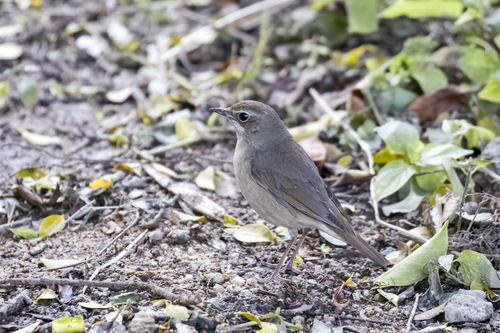 ノゴマ
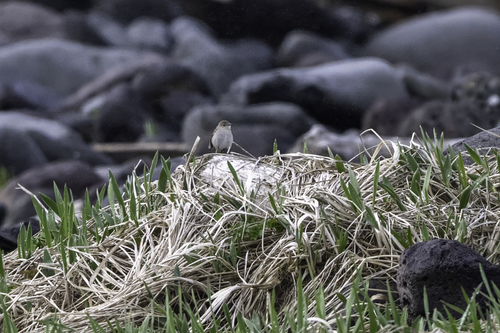 オジロビタキ
要点
The most reliable field mark is the throat: adult male Siberian Rubythroat shows a vivid red throat bordered with black and white, while male Taiga Flycatcher in breeding plumage has a smaller, orange-red throat patch without bold borders. Females and immatures are trickier, but Siberian Rubythroat always has a strong white supercilium and plain brown upperparts, whereas Taiga Flycatcher females show a subtler face pattern and a blackish tail with white flanks. If seen in flight or from behind, the tail pattern is key: Taiga Flycatcher has a blackish tail with white sides, while Siberian Rubythroat’s tail is dark with reddish side patches. Both are small, upright chats, but careful attention to face, throat, and tail patterns will separate them in most views.
識別のコツ
- Adult male throat color and borders: Siberian Rubythroat males have a vivid red throat sharply bordered by black and then white; Taiga Flycatcher males have a smaller, orange-red throat patch without bold borders. This is the single most reliable mark in spring/summer.
- Supercilium strength: Siberian Rubythroat (all ages/sexes) shows a bold, strong white supercilium, very prominent even in dull light. Taiga Flycatcher’s supercilium is faint or weak, especially in females and immatures.
- Tail pattern in flight or fanned: Taiga Flycatcher of all ages shows a blackish tail with crisp white flanks, often visible when the tail is spread. Siberian Rubythroat has a dark tail with reddish side patches, lacking any white—look for this difference in flight or when the bird flicks its tail.
- Upperparts and general tone: Siberian Rubythroat is plain brown above, with no contrast between mantle and back. Taiga Flycatcher is also brown above, but the tail is distinctly blackish against the brown back, and the white tail sides can create a contrast.
- Female/immature throat and underparts: Female Siberian Rubythroat lacks any bright throat color, but still shows the strong supercilium and plain brown upperparts. Female Taiga Flycatcher has a buffish breast and mostly white underparts, with no strong supercilium.
- Face pattern: Siberian Rubythroat’s face is marked by the strong supercilium and, in males, the black and white throat borders. Taiga Flycatcher males in breeding have blue-grey tones on the ear coverts and neck sides, but the face pattern is otherwise plain.
- Bill and structure: Both species have similar small, fine bills typical of chats/flycatchers. Structure is not a reliable separator.
- Posture and jizz: Both are upright, but Taiga Flycatcher may appear more active and sally for insects, while Siberian Rubythroat can be more skulking. Use with caution.
- Song: If heard, Siberian Rubythroat’s song is a hard, warbler-like series; Taiga Flycatcher’s song is not described in the notes and should not be relied upon.
- Habitat context: Both can occur in similar habitats on migration or as vagrants. If in dense undergrowth, consider Siberian Rubythroat; if in open woodland or edge, Taiga Flycatcher is more likely, but this is not diagnostic.
- Season and sex: Only adult males in breeding plumage show the diagnostic throat colors; females and immatures require careful attention to supercilium and tail pattern.
- Pitfall—female/immature confusion: Female and immature Siberian Rubythroat can be mistaken for Taiga Flycatcher, but always check for the strong supercilium and absence of white in the tail.
- Pitfall—tail view: If only the tail is seen, look for white flanks (Taiga Flycatcher) vs reddish patches (Siberian Rubythroat). Lighting can obscure these marks, so try for multiple views.
- Pitfall—face pattern in dull light: In poor light, the supercilium of Siberian Rubythroat may appear less bold, but is still stronger than in Taiga Flycatcher.
- Always combine multiple marks: No single mark is perfect for all ages and sexes; use throat, supercilium, and tail pattern together for the most reliable ID.
大きさ
Both species are small passerines in the Muscicapidae family, and size is not a reliable separator in the field. Siberian Rubythroat is described as slightly larger than a European Robin, while Taiga Flycatcher is similar in size to other small flycatchers. Any difference is subtle and easily masked by posture or distance.
羽色
- Adult males in breeding plumage: Siberian Rubythroat stands out with a bright red throat bordered by a narrow black and then a broad white band, plus a strong white supercilium. Taiga Flycatcher males have a smaller orange-red throat patch (not as extensive or bordered), with blue-grey tones on the ear coverts and neck sides, and a less conspicuous supercilium.
- Females and immatures: Both are brown above, but Siberian Rubythroat females have a strong white supercilium and plainer brown upperparts. Taiga Flycatcher females are brown above with a blackish tail flanked by white, and a buffish breast with mostly white underparts. The supercilium is less bold than in rubythroat.
- Tail pattern (all ages): Taiga Flycatcher shows a blackish tail with white flanks, especially obvious in flight or when the tail is fanned. Siberian Rubythroat has a dark tail with reddish side patches, lacking the crisp white of Taiga Flycatcher.
- Juvenile/immature wing and tail: No specific juvenile wing pattern is described for either species, but the tail pattern remains a useful mark for all ages.
行動
Both species behave as typical chats: upright posture, frequent tail flicking, and ground feeding. There is no strong behavioral separator in the notes, but Taiga Flycatcher may appear more active and flycatcher-like, often sallying for insects, while Siberian Rubythroat may skulk more in dense cover. These differences are subtle and not always reliable.
生息環境
Both species breed in northern Eurasia and can overlap in migration. Siberian Rubythroat is less likely to be seen in open woodland or edge habitats, preferring dense undergrowth. Taiga Flycatcher is associated with taiga forest but is a regular migrant and winter visitor in a wide range of wooded habitats. In Europe, both are rare vagrants, so context is not a strong separator unless in typical breeding or wintering grounds.
声
Siberian Rubythroat’s song is described as similar to a harder version of the garden warbler. No detailed description is given for Taiga Flycatcher’s song in the notes, so voice is not a practical separator unless the rubythroat’s distinctive song is heard.