

Motmot

アメリカオオハシシギ 対 アメリカイソシギ

Limnodromus griseus 対 Actitis macularius

アメリカオオハシシギとアメリカイソシギのクイズ
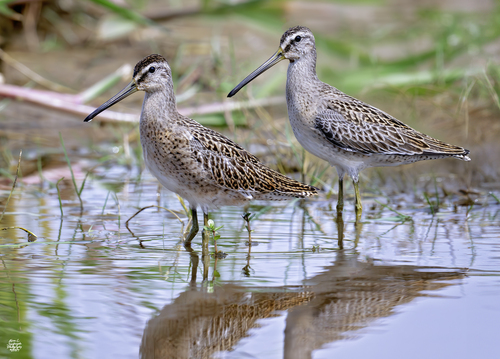
アメリカオオハシシギ (Limnodromus griseus) アメリカオオハシシギ
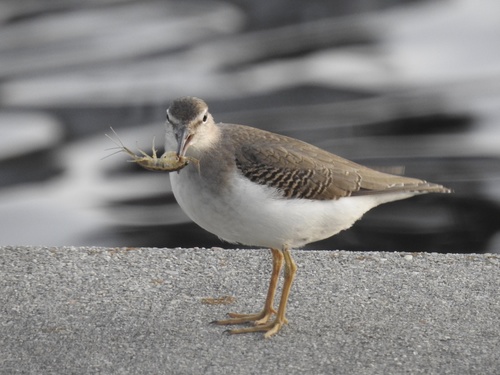
アメリカイソシギ (Actitis macularius) アメリカイソシギ

メディア

読み込み中…

要点

アメリカオオハシシギとアメリカイソシギを区別する最も信頼できる方法は、全体的な構造とくちばしの長さです:オオハシシギは非常に大きく、まっすぐな長いくちばしを持ち、アメリカイソシギは小さく、スリムで、短くまっすぐなくちばしを持っています。飛行中、アメリカオオハシシギはずんぐりした形と黒と白の縞模様の尾を示し、アメリカイソシギはより繊細で、翼が硬く、尾の縞模様がありません。繁殖羽はまた特徴的です:オオハシシギは下側が赤みがかっており(亜種によって変動する縞模様や斑点があります)、アメリカイソシギは白い下側に大胆な黒い斑点を持っています。非繁殖羽と幼鳥の羽はより地味ですが、構造とくちばしの長さは信頼できます。鳴き声はかなり異なりますが、必ずしも聞こえるわけではありません。

識別のコツ

  1. くちばしの長さと形:アメリカオオハシシギは非常に長く、まっすぐなくちばし(ほぼ体の長さ)を持ち、アメリカイソシギのくちばしは短く、まっすぐで、オレンジ色で暗い先端があります。これはすべての季節と年齢で最も一貫したフィールドマークです。
  2. 体のサイズと形:オオハシシギはスリムで繊細なアメリカイソシギよりもはるかに大きく、ずんぐりしています。遠くからでも、オオハシシギはより重く、頑丈に見えます。
  3. 飛行中の尾のパターン:オオハシシギは飛行中に目を引く黒と白の縞模様の尾を示し(すべての年齢)、アメリカイソシギはこれを欠き、尾の側面は単純な白です。
  4. 脚の色:両者とも黄色がかった脚を持っていますが、これは変動や泥の汚れのために単独では信頼できません。
  5. 繁殖羽の下側:オオハシシギは下側が赤みがかっており、変動する縞模様や斑点があります(決して白に鮮明な黒い斑点ではありません)。アメリカイソシギは白い下側に大胆な黒い斑点を持っています(繁殖時のみ)、これはオオハシシギには見られません。
  6. 非繁殖/幼鳥の羽:両者とも下側がより地味になりますが、オオハシシギはより大きく、長いくちばしを持ち続けます。アメリカイソシギは白い眉斑を保持し、より繊細な外観を持っています。
  7. 採餌行動:オオハシシギはグループで急速に泥を探ることで餌を取ります。アメリカイソシギは孤独で、常に尾を上下に揺らしながら歩きます。
  8. 飛行スタイル:オオハシシギは強く、直接的な飛行をし、急速な翼の動きがあります。アメリカイソシギは水面を低く飛び、硬く浅い翼の動きで飛びます。
  9. 生息地の文脈:オオハシシギは沿岸の干潟や潮間帯で、特に移動中に見られる可能性が高いです。アメリカイソシギは淡水の流れ、池、湖の周辺で見られることが多く、沿岸の生息地にはあまり依存しません。しかし、両者は泥のある海岸で移動中に重なることがあります。
  10. 鳴き声:聞こえた場合、オオハシシギは柔らかく穏やかな鳴き声を出します。アメリカイソシギは明確な「ピート-ウィート」と呼ばれる鳴き声を出し、水際から飛び立つときによく聞こえます。鳴き声は聞こえた場合に役立ちますが、常に利用できるわけではありません。
  11. 群れのサイズ:オオハシシギは群れで見られることが多いですが、アメリカイソシギは通常一人またはペアでいます。
  12. くちばしの色:オオハシシギのくちばしはほとんどが暗く、基部にオレンジ色があります。アメリカイソシギのくちばしは全体的にオレンジ色が強く、暗い先端があります。
  13. 眉斑:アメリカイソシギは明確な白い眉斑を持っていますが、オオハシシギはこの特徴をはっきりと示しません。
  14. 尾の長さ:オオハシシギはサイズに対して比較的短い尾を持っていますが、イソシギと比較して診断的ではありません。
  15. 落とし穴:非繁殖と幼鳥の羽は最も難しい—サイズ、くちばしの長さ、飛行中の尾のパターンに頼り、下側の色や斑点には頼らないでください。これらは両者において欠けていたり、薄い場合があります。

大きさ

アメリカオオハシシギはアメリカイソシギ(34–50 g)と比較して、かなり大きく、重いです(体重約113 g)。オオハシシギは23–32 cmの長さで、46–56 cmの翼幅を持ち、アメリカイソシギはわずか18–20 cmの長さで、37–40 cmの翼幅です。オオハシシギの体格と長いくちばしは、特に両種が一緒に見られるとき、遠くからでも明らかです。

羽色

幼鳥と非繁殖のアメリカオオハシシギは、上面と下面が主に灰色で、繁殖期のアメリカイソシギの大胆な斑点が欠けていますが、その地味さから非繁殖のシギと混同されることがあります。飛行中、オオハシシギは黒と白の縞模様の尾を示し、アメリカイソシギにはこれがありません。繁殖期のアメリカオオハシシギは、亜種によって変動する縞模様や斑点のある赤みがかった下側を持ちますが、繁殖期のアメリカイソシギの白に鮮明な黒い斑点は決してありません。繁殖羽のアメリカイソシギは、茶色の上面、白い下側に大胆な黒い斑点、白い眉斑を持っています。繁殖期以外では、アメリカイソシギは斑点を失い、下側がより地味になりますが、白い眉斑と、ユーラシアの仲間よりも飛行中により洗練された翼のパターンを保持します。くちばしの色も異なります:オオハシシギは長く、まっすぐで、暗い先端のくちばしを持ち、アメリカイソシギは短いオレンジ色のくちばしを持ち、暗い先端があります。

行動

アメリカオオハシシギは、急速に泥を探ることで餌を取り、しばしばグループで行動します。アメリカイソシギはより孤独で、独特の揺れ動く動き(尾が上下に揺れる)で歩き、水面を低く飛ぶ硬い翼の飛行を持っています。オオハシシギはずんぐりしていて慎重に見え、シギはより活発で優雅です。

生息環境

アメリカオオハシシギは、移動中に干潟、潮間帯、沿岸地域で最もよく見られ、北部の湿地や沼地で繁殖します。アメリカイソシギは淡水の流れ、池、湖の周辺で見られることが多く、沿岸の生息地にはあまり依存しません。しかし、両者は泥のある海岸で移動中に重なることがあります。

声

アメリカオオハシシギは柔らかい鳴き声を持ち、これはオオハシシギよりも鋭く刺さるようなものではありませんが、アメリカイソシギとは依然として異なります。アメリカイソシギは明確な笛のような「ピート-ウィート」と呼ばれる鳴き声を出し、水際から飛び立つときによく聞こえます。鳴き声は聞こえた場合に役立ちますが、常に利用できるわけではありません。

より良い説明を送る

比較と同じ項目を使ってください。文章はすぐに公開されます。

The most reliable way to separate Short-billed Dowitcher from Spotted Sandpiper is by overall structure and bill length: dowitchers are much bulkier with very long, straight bills, while spotted sandpipers are smaller, slimmer, and have short, straight bills. In flight, Short-billed Dowitchers show a stocky shape and barred black-and-white tails, while Spotted Sandpipers have a more delicate, stiff-winged flight and lack bold tail barring. Breeding plumage is also distinctive: dowitchers are reddish below (with variable barring or spotting by subspecies), while spotted sandpipers have bold black spots on white underparts. Non-breeding and juvenile plumages are plainer, but structure and bill length remain reliable. Calls are quite different but may not always be heard.

  1. Bill length and shape: Short-billed Dowitcher has a very long, straight bill (almost body length), while Spotted Sandpiper's bill is short, straight, and orange with a dark tip. This is the most consistent field mark in all seasons and ages.
  2. Body size and shape: Dowitchers are much bulkier and stockier than the slim, delicate Spotted Sandpiper. Even at a distance, dowitchers look heavier and more robust.
  3. Tail pattern in flight: Dowitchers show a striking black-and-white barred tail in flight (all ages), while Spotted Sandpiper lacks this and shows plain white sides to the tail.
  4. Leg color: Both have yellowish legs, but this is not reliable on its own due to variation and mud staining.
  5. Breeding plumage underparts: Dowitchers are reddish below with variable barring or spotting (never crisp black spots on white). Spotted Sandpiper has bold black spots on white underparts (breeding only), which are never matched by dowitchers.
  6. Non-breeding/juvenile plumage: Both become plainer below, but dowitchers remain larger and longer-billed. Spotted Sandpiper retains a white supercilium and a more delicate look.
  7. Feeding behavior: Dowitchers feed in groups with rapid, sewing-machine probing. Spotted Sandpipers are solitary, walking with a constant tail-bob.
  8. Flight style: Dowitchers have a strong, direct flight with rapid wingbeats; Spotted Sandpipers fly low over water with stiff, shallow wingbeats.
  9. Habitat context: Dowitchers are more likely on coastal mudflats and tidal marshes, especially during migration. Spotted Sandpipers are more often at freshwater edges, but can overlap in muddy habitats.
  10. Vocalizations: If heard, dowitchers give a mellow, soft call; Spotted Sandpipers give a clear "peet-weet."
  11. Group size: Dowitchers often occur in flocks, while Spotted Sandpipers are usually alone or in pairs.
  12. Bill color: Dowitchers' bills are mostly dark with some orange at the base; Spotted Sandpiper's bill is more orange overall with a dark tip.
  13. Supercilium: Spotted Sandpiper has a clear white eyebrow; dowitchers do not show this feature as distinctly.
  14. Tail length: Dowitchers have a relatively short tail for their size, but it is not diagnostic compared to the sandpiper.
  15. Pitfalls: Non-breeding and juvenile plumages are the trickiest—rely on size, bill length, and tail pattern in flight, not underpart color or spots, which can be absent or faint in both.

Short-billed Dowitcher is substantially larger and heavier (body mass ~113 g) compared to Spotted Sandpiper (34–50 g). Dowitchers measure 23–32 cm in length with a 46–56 cm wingspan, while Spotted Sandpipers are only 18–20 cm long with a 37–40 cm wingspan. The dowitcher's bulk and long bill are obvious even at a distance, especially when both species are seen together.

Juvenile and non-breeding Short-billed Dowitchers are mostly gray above and below, lacking the bold spots of breeding Spotted Sandpipers, but can be confused with non-breeding sandpipers due to their plainness. In flight, dowitchers show a black-and-white barred tail, which is absent in Spotted Sandpiper. Breeding Short-billed Dowitchers have reddish underparts with variable barring or spotting (depending on subspecies), but never the crisp black spots on white of breeding Spotted Sandpiper. Spotted Sandpipers in breeding plumage have brown upperparts, white underparts with bold black spots, and a white supercilium. Outside the breeding season, Spotted Sandpipers lose their spots and become plainer below, but still retain a white supercilium and a more washed-out wing pattern in flight than their Eurasian counterpart. Bill color also differs: dowitchers have a long, straight, dark-tipped bill; spotted sandpipers have a short orange bill with a dark tip.

Short-billed Dowitchers feed by rapidly probing mud with a sewing-machine motion, often in groups. Spotted Sandpipers are more solitary, walk with a distinctive teetering motion (tail bobbing up and down), and have a stiff-winged, low flight over water. Dowitchers appear stocky and deliberate, while sandpipers are more active and dainty.

Short-billed Dowitchers are most often found on mudflats, tidal marshes, and coastal areas during migration, and breed in northern bogs and marshes. Spotted Sandpipers are more likely to be seen along the edges of freshwater streams, ponds, and lakes, and are less tied to coastal habitats. However, both can overlap on migration at muddy shorelines.

Short-billed Dowitchers have a mellow call, which is less sharp and piercing than the Long-billed Dowitcher, but still distinct from the Spotted Sandpiper. Spotted Sandpipers give a clear, whistled "peet-weet" call, often heard as they flush from the water's edge. Calls are helpful if heard, but not always available.

変更を破棄しますか?

保存していない編集があります。今離れると失われます。

アメリカオオハシシギ · アメリカイソシギ · 苦手な鳥