

Motmot

コバシカマドドリ 対 シロアゴカマドドリ

Asthenes baeri 対 Asthenes anthoides

コバシカマドドリとシロアゴカマドドリのクイズ
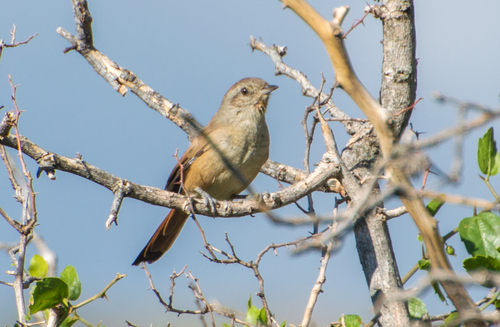
コバシカマドドリ (Asthenes baeri) コバシカマドドリ
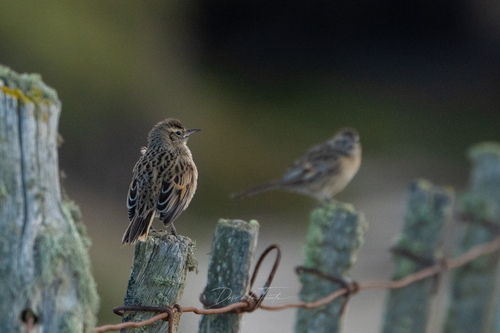
シロアゴカマドドリ (Asthenes anthoides) シロアゴカマドドリ

メディア

読み込み中…

要点

ショートビルドカナステロとオーストラルカナステロを区別する最も信頼できる方法は、上面と胸部の太い黒っぽい縞模様の有無によるものです:オーストラルカナステロ(すべての年齢)は、頭頂、背中、側面に強い暗い縞模様を示し、一方ショートビルドカナステロは上面と下面が無地で縞模様がありません。幼鳥のオーストラルカナステロも胸部と側面に重い黒っぽい縞模様があり、より斑点の多い、模様の少ない幼鳥のショートビルドとは異なります。構造も役立ちます:ショートビルドカナステロは、明らかに短くて太いくちばしを持ち、よりコンパクトに見えますが、オーストラルカナステロは大きくて体重が重いです。両者はアルゼンチンの似たような開けた生息地に出現することがありますが、オーストラルはより南に分布し、アルゼンチンとチリに限定され、ショートビルドは北と東に広がります。声と行動は、これらのメモでは区別するために十分に記述されていません。

識別のコツ

  1. Upperpart Streaking (All Ages): オーストラルカナステロは常に頭頂、背中、側面に太い黒っぽい縞模様を示し、ショートビルドカナステロは上面と下面が無地で縞模様がありません。これは最も信頼できるフィールドマークです。
  2. Juvenile Breast Pattern: 幼鳥のオーストラルカナステロは胸部と側面に強い黒っぽい茶色の縞模様があり、ショートビルドカナステロの幼鳥は上胸部にのみ斑点があり、明確な縞模様がありません。
  3. Bill Structure: ショートビルドカナステロは短くて太いくちばしを持ち、オーストラルのものよりも明らかに短いです。これは止まっている鳥や時にはフィールドでの横顔で見ることができます。
  4. Supercilium: オーストラルカナステロはより明瞭な淡いバフまたは白っぽいスーパシリウムを持ち、ショートビルドカナステロのものは鈍い、広い灰色のストライプであまり目立ちません。
  5. Throat Color (Adults): ショートビルドカナステロの成鳥は上喉に明確なオレンジがかった茶色の斑点を示し、下には暗い縁があります;オーストラルカナステロの喉は白っぽく、時には淡いオレンジがかった赤褐色の斑点がありますが、ショートビルドのように目立つことはありません。
  6. Underparts: ショートビルドカナステロは下部が無地の淡い鈍い灰色で、淡い赤褐色の側面があります;オーストラルカナステロは全体的により淡いですが、胸部と側面に暗い縞模様があります。
  7. Tail Pattern: オーストラルカナステロの尾はより多様で、中央の羽はオリーブブラウンで、他は鈍い色合いで白っぽい黄土色の先端があります;ショートビルドカナステロの尾は主に鈍い赤褐色で、内側の2対は暗い茶色です。
  8. Size in the Field: オーストラルカナステロは明らかに大きくて重い、しばしばショートビルドカナステロよりも体重が重く、尾が長く見えます。
  9. Leg Color: 両種は灰色から鈍い脚を持ちますが、オーストラルカナステロは時々ピンクがかった色合いを示すことがあります;これは微妙で、常に信頼できるわけではありません。
  10. Face Pattern: オーストラルカナステロの顔は砂色の茶色で、暗い鈍い顔の部分がありますが、ショートビルドカナステロの顔は全体的に鈍い灰色の茶色です。
  11. Habitat Context: 南アルゼンチンまたはチリ、特にパタゴニアのステップまたは南の開けた低木地にいる場合、オーストラルカナステロの可能性が高いです。チャコ、モンテ砂漠、またはより北/東の低地ではショートビルドが期待されます。
  12. Range: オーストラルカナステロはブラジル、パラグアイ、ウルグアイ、ボリビアには生息しません;ショートビルドはチリと南端には存在しません。
  13. Sexes: 両種は性別が同形であり、性別は識別に役立ちません。
  14. Season: 両者は南半球の春/夏に繁殖しますが、羽毛のマークは年間を通じて一貫しています;年齢に関連する違い(特に幼鳥の縞模様)は、特に春の終わりと夏に最も重要です。
  15. Confusion Risk: オーストラルカナステロの個体変異に注意してください—一部の鳥は縞模様が少ないように見えるかもしれませんが、常にショートビルドカナステロよりも多くの縞模様があります。疑わしい場合は、縞模様の有無とくちばしの形状に焦点を当ててください。

大きさ

オーストラルカナステロは明らかに大きくて重い:長さ15.5–16.5 cm、質量21–23 gで、ショートビルドカナステロの14–15 cmおよび10–18 gと比較されます。フィールドでは、オーストラルカナステロはしばしばより大きく、長い体に見え、ショートビルドカナステロはよりコンパクトで全体的に小さいです。くちばしの構造も異なります:ショートビルドは短くて太いくちばしを持ち、オーストラルのものは相対的に長くて細いです。

羽色

行動

両種は地上性で、低木や開けた森林で低い位置で採餌し、しばしば密な植生を通って移動します。フィールドでの区別において強い行動の違いは記録されていません。両者は枝で作られたドーム型または球状の巣を作りますが、巣の構造はフィールドマークではありません。

生息環境

ショートビルドカナステロはアルゼンチン、ボリビア、ブラジル、パラグアイ、ウルグアイの乾燥した低地の低木地、グランチャコの低木と森林、モンテ砂漠の森林に生息しています。オーストラルカナステロはより南に分布し、アルゼンチンとチリに生息し、通常は開けた低木の生息地を占め、しばしばパタゴニアのステップや南の低木地に見られます。重複する地域(中央/南アルゼンチン)では、生息地だけでは診断できませんが、オーストラルはチャコやより北/東の低地には存在しません。

より良い説明を送る

比較と同じ項目を使ってください。文章はすぐに公開されます。

The most reliable way to separate Short-billed Canastero from Austral Canastero is by the presence or absence of bold blackish streaking on the upperparts and breast: Austral Canastero (all ages) shows strong dark streaks on the crown, back, and flanks, while Short-billed Canastero is plain and unstreaked above and below. Juvenile Austral Canastero also has heavy blackish streaks on the breast and sides, unlike the more mottled, less patterned juvenile Short-billed. Structure helps: Short-billed Canastero has a notably short, thick bill and a more compact look, while Austral Canastero is larger and heavier-bodied. Both can occur in similar open habitats in Argentina, but Austral is more southern and restricted to Argentina and Chile, while Short-billed ranges farther north and east. Voice and behavior are not well described for separation in these notes.

  1. Upperpart Streaking (All Ages): Austral Canastero always shows bold blackish streaks on the crown, back, and flanks; Short-billed Canastero is plain and unstreaked above and below. This is the single most reliable field mark.
  2. Juvenile Breast Pattern: Juvenile Austral Canastero has strong blackish-brown streaks on the breast and sides, while Short-billed Canastero juveniles are only mottled on the upper breast and lack clear streaks.
  3. Bill Structure: Short-billed Canastero has a short, thick bill—noticeably stubbier than Austral's, which is longer and finer. This is visible on perched birds and sometimes in profile in the field.
  4. Supercilium: Austral Canastero has a pale buff or whitish supercilium that is more distinct, while Short-billed Canastero's is a dull, broad, grayish stripe that is less obvious.
  5. Throat Color (Adults): Short-billed Canastero adults show a distinct orange-tawny patch on the upper throat, bordered below by a darker margin; Austral Canastero's throat is whitish, sometimes with a faint pale orange-rufous patch, but never as bold as Short-billed's.
  6. Underparts: Short-billed Canastero is plain pale dull grayish below with pale rufescent flanks; Austral Canastero is paler overall, but with dark streaks on the sides of the breast and flanks.
  7. Tail Pattern: Austral Canastero's tail is more varied, with central feathers olive-brown and others dusky with whitish ochre tips; Short-billed Canastero's tail is mostly dull rufous except for the inner two pairs, which are dark brownish.
  8. Size in the Field: Austral Canastero is noticeably larger and bulkier, often appearing heavier-bodied and longer-tailed than Short-billed Canastero.
  9. Leg Color: Both species have gray to dusky legs, but Austral Canastero may show a pinkish tinge at times; this is subtle and not always reliable.
  10. Face Pattern: Austral Canastero's face is sandy brownish with dark dusky lores, while Short-billed Canastero's is dull grayish brown overall.
  11. Habitat Context: If in southern Argentina or Chile, especially in Patagonian steppe or open southern scrub, Austral Canastero is more likely. In Chaco, Monte Desert, or more northern/eastern lowlands, Short-billed is expected.
  12. Range: Austral Canastero does not occur in Brazil, Paraguay, Uruguay, or Bolivia; Short-billed is absent from Chile and the far south.
  13. Sexes: Both species are sexually monomorphic—sex does not help with identification.
  14. Season: Both breed in austral spring/summer, but plumage marks are consistent year-round; age-related differences (especially juvenile streaking) are most important in late spring and summer.
  15. Confusion Risk: Beware of individual variation in Austral Canastero—some birds may appear less streaked, but always more so than any Short-billed Canastero. If in doubt, focus on the presence or absence of streaking and bill shape.

Austral Canastero is distinctly larger and heavier: 15.5–16.5 cm in length and 21–23 g in mass, compared to Short-billed Canastero's 14–15 cm and 10–18 g. In the field, Austral Canastero often appears bulkier and longer-bodied, while Short-billed Canastero is more compact and smaller overall. Bill structure also differs: Short-billed has a short, thick bill, while Austral's is proportionally longer and finer.

  • Juveniles: Austral Canastero juveniles show blackish-brown streaks on the breast and sides, and bold streaking on the upperparts. Short-billed Canastero juveniles lack these streaks, instead showing a mottled upper breast and little or no orange-tawny on the throat.
  • Adults: Austral Canastero stands out with strong blackish streaks on the crown, back, and flanks, as well as some streaks on the sides of the breast. Its supercilium is pale buff or whitish, and the face is sandy brownish. Short-billed Canastero adults are plain grayish-brown above, with only a faint, wide grayish supercilium and no streaking; the throat is orange-tawny (except in juveniles), and the underparts are pale dull grayish with pale rufescent flanks.
  • Wings and Tail: Austral Canastero's wings are brownish with cinnamon to brown coverts and dusky flight feathers, and the tail has a mix of olive-brown and dusky feathers with whitish ochre tips. Short-billed Canastero's wings are dull grayish brown with paler edges, and the tail is mostly dull rufous except for the inner feathers which are dark brownish.

Both species are terrestrial and forage low in scrub or open woodland, often moving through dense vegetation. There is no strong behavioral difference noted for field separation. Both build domed or globular nests of sticks, but nest structure is not a field mark.

Short-billed Canastero is found in arid lowland scrublands, Gran Chaco scrub and woodlands, and Monte Desert woodlands across Argentina, Bolivia, Brazil, Paraguay, and Uruguay. Austral Canastero is more southern, found in Argentina and Chile, and typically occupies open, shrubby habitats, often in Patagonian steppe or southern scrub. In areas of overlap (central/southern Argentina), habitat alone is not diagnostic, but Austral is absent from the Chaco and more northern/eastern lowlands.

変更を破棄しますか?

保存していない編集があります。今離れると失われます。

コバシカマドドリ · シロアゴカマドドリ · 苦手な鳥